
Do employers read cover letters?
Understand when employers are likely to read a cover letter, when an optional letter adds value, and when a generic submission can work against you.
Some do and some do not. There is no reliable percentage that applies across employers, roles, and hiring stages. A recruiter may skim the resume first, while a hiring manager reads the letter only for shortlisted candidates. Treat the posting and the value you can add as the decision criteria.
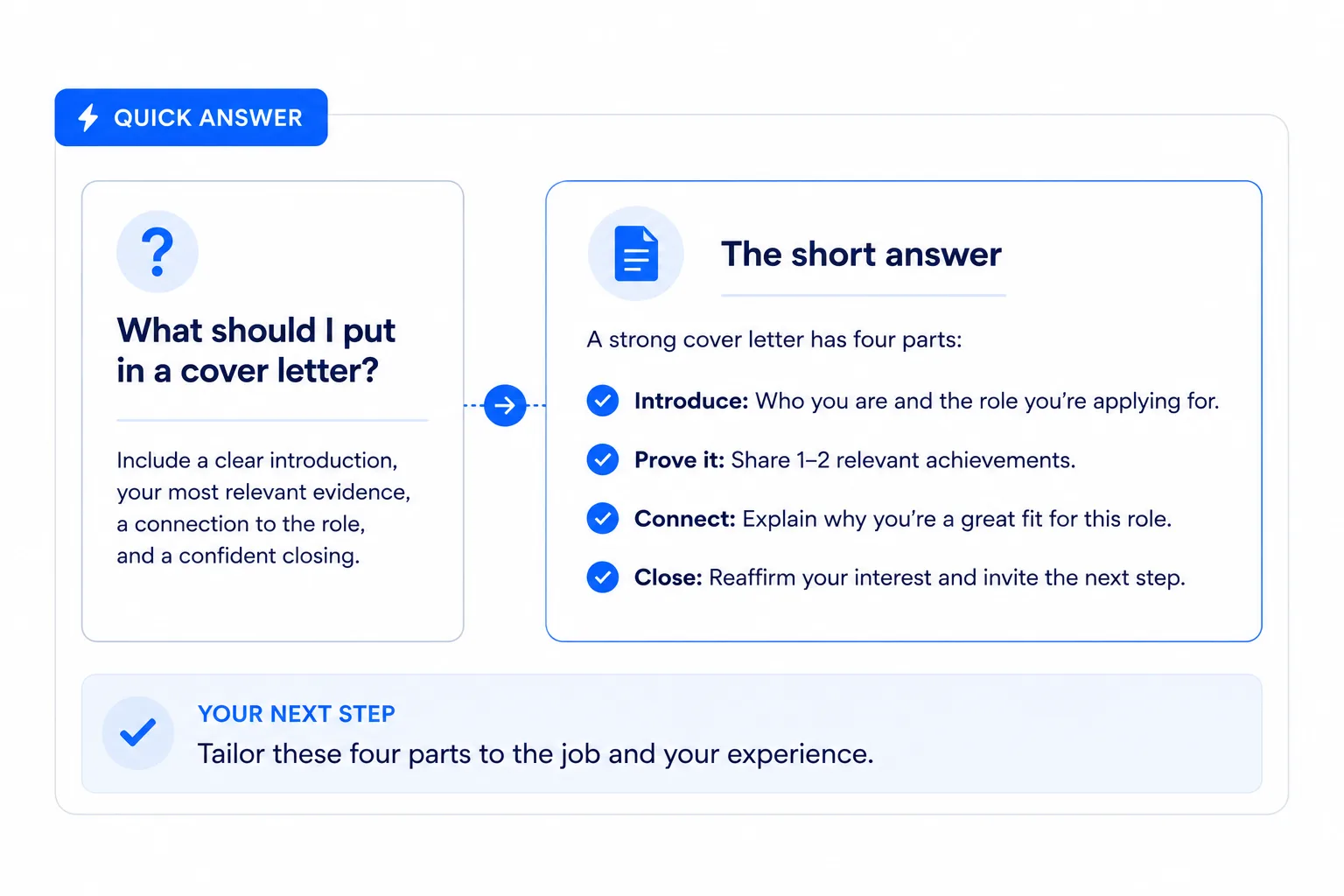
Required: Submit a tailored letter that follows the stated instructions. Optional: Submit one when it adds evidence or context that the resume cannot show clearly. Not requested: Use judgment. A letter can help for a thoughtful career transition, a strong employer-specific reason, or a role where written communication matters. Explicitly excluded: Do not add one through another field or send it separately. An optional letter is most useful when you can explain a real connection between the employer's needs and your experience. It may also clarify a relocation, career change, employment gap, or unusual career path without turning the resume into a personal narrative. Skip the letter when the application does not accept one, the employer says not to send one, or you would only repeat the resume in generic language. A rushed letter with the wrong company name or unsupported praise can weaken an otherwise careful application. Open with the role and a specific reason for fit. Use one or two examples that answer important requirements, then close concisely. The goal is not to prove that every employer reads cover letters. It is to make yours useful if the right decision-maker does.
Review what to put in a cover letter before deciding whether you have enough specific material to submit one.
Related articles
What should I put in a cover letter?
Build a focused cover letter with an employer-specific opening, relevant evidence, useful context, and a concise close that complements your resume.
Can I use AI to write a cover letter?
Use AI to plan or revise a cover letter without inventing experience, exposing private data, or submitting generic language that weakens your application.
Can an ATS read a PDF resume?
Learn when applicant tracking systems can parse PDF resumes, which PDF features cause problems, and how to test your file before applying.