
Can I use AI to write a cover letter?
Use AI to plan or revise a cover letter without inventing experience, exposing private data, or submitting generic language that weakens your application.
Yes, unless the employer or assessment rules prohibit it. AI can help you organize evidence, compare a draft with a job description, or improve clarity. It should not decide what happened in your career or create claims you cannot defend. You remain responsible for every sentence you submit.
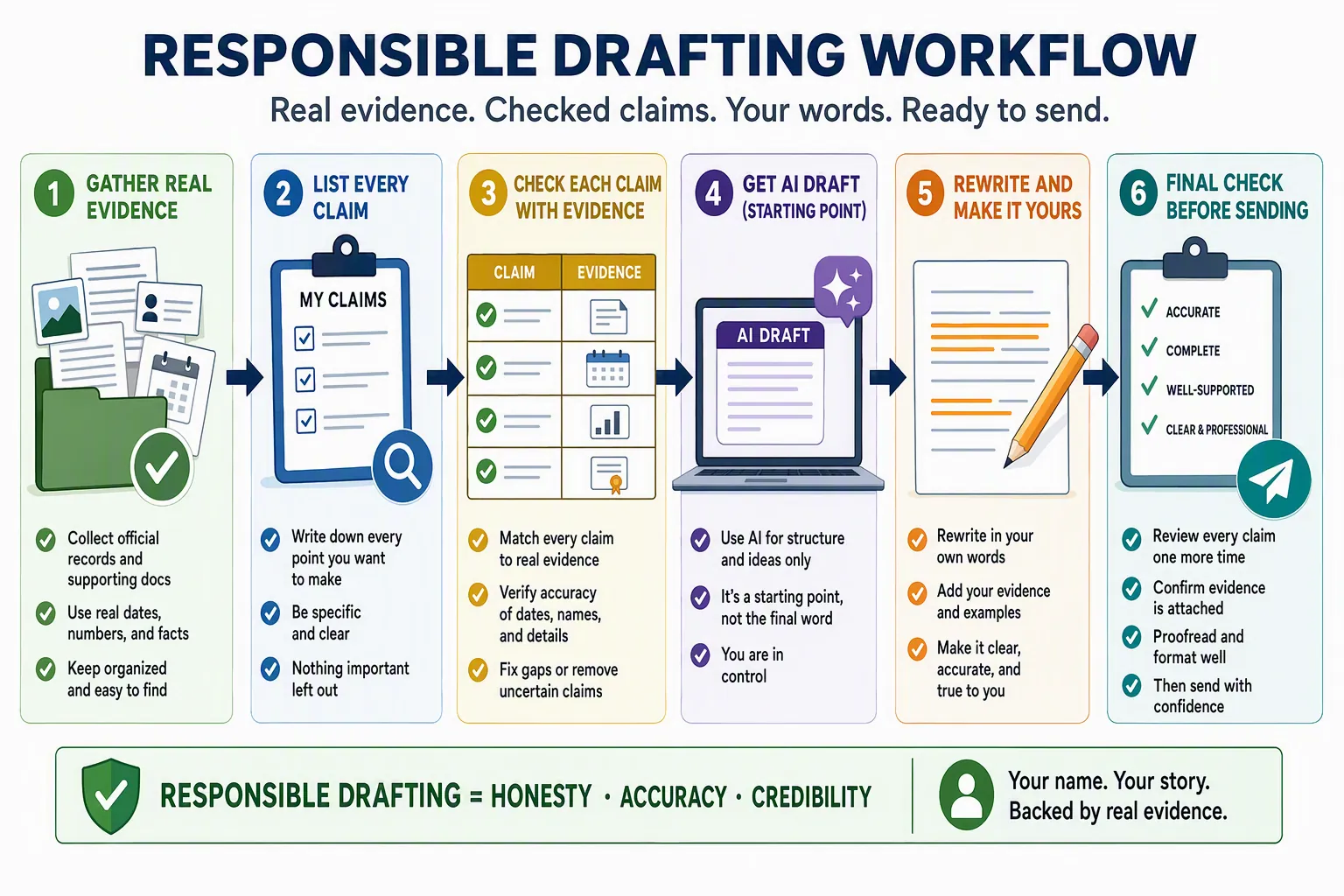
Start with your own notes: the target role, why the employer interests you, and two relevant examples from your experience. Ask for help identifying the clearest structure or shortening a paragraph. Then rewrite the result in language you would naturally use and verify every fact against your resume. For example, AI may suggest that you “led a cross-functional transformation.” If your actual contribution was coordinating weekly status updates for one project, replace the inflated claim with that precise work and its real outcome. Do not paste confidential employer information, private customer data, identification numbers, or material covered by an agreement into an AI service. Review the service's data controls before sharing personal information. Remove invented metrics, tools, job titles, and responsibilities, even when they sound plausible. A useful final check is to ask: Can I explain this example in an interview?. Does the letter name the correct employer and role?. Does the wording sound like me?. Does each claim match my actual experience?. Has the employer restricted AI use for this application?. AI cannot know why you genuinely want this role, which accomplishment best represents your work, or whether a claim is true. A polished but generic letter may be less useful than a shorter letter with one specific, credible example.
Build the substance first with the cover letter content framework. If you need stronger evidence, use the resume bullet guide to identify actions and outcomes you can reuse accurately.
Related articles
How to Write Strong Resume Bullet Points
Write resume bullet points that connect specific actions, useful context, and credible results to the skills and outcomes employers need.
What should I put in a cover letter?
Build a focused cover letter with an employer-specific opening, relevant evidence, useful context, and a concise close that complements your resume.
Do employers read cover letters?
Understand when employers are likely to read a cover letter, when an optional letter adds value, and when a generic submission can work against you.