
Soft Skills
Soft skills are interpersonal behaviors and work habits such as communication, judgment, collaboration, adaptability, and conflict resolution.
Soft skills are interpersonal behaviors and work habits that affect how someone communicates, collaborates, decides, adapts, and handles conflict. Examples include active listening, judgment, facilitation, and time management.
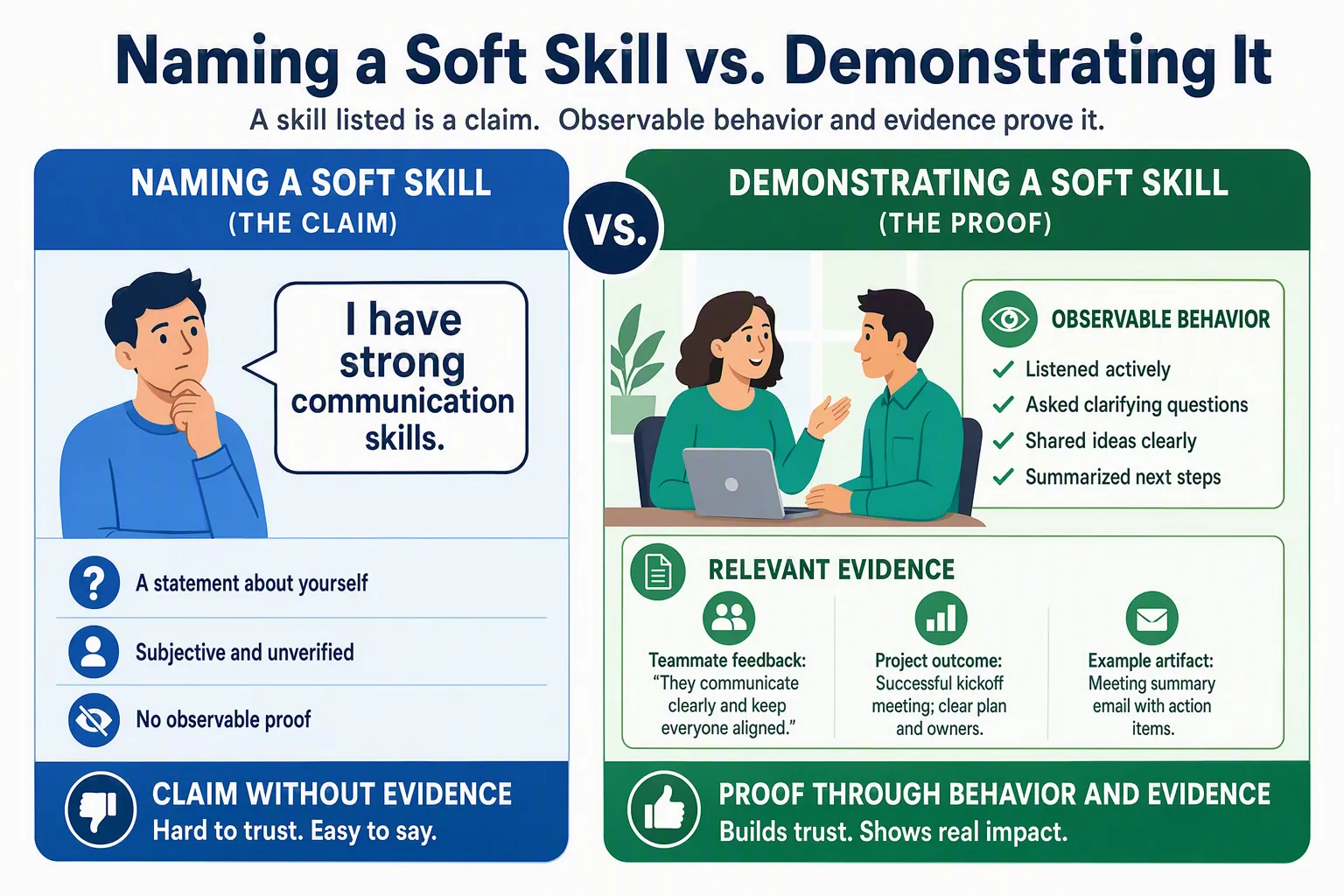
Writing “excellent communicator” on a resume gives little evidence; show the setting and action: “Facilitated weekly risk reviews with engineering, support, and sales owners, documenting decisions and unresolved dependencies. ” The example does not prove every aspect of communication, but it gives the reader a concrete behavior to explore; soft skills differ from hard skills, which are more directly teachable and observable, such as SQL or equipment operation. The distinction is imperfect; project management combines methods, tools, communication, and judgment; different roles require different behavior, so a manager may emphasize coaching and conflict while a support specialist may need listening and de-escalation evidence.
For example, facilitating a risk review across engineering, support, and sales provides evidence of communication and coordination.
Related concept: Star Method