
How long should a resume be?
Choose a one-page or two-page resume by weighing relevant evidence, experience level, readability, and any length instructions from the employer.
Most resumes should be one or two pages. One page often works for students, early-career applicants, and people with a focused history. Two pages are appropriate when relevant experience, projects, credentials, or leadership scope cannot be shown clearly on one page. Follow an employer's stated limit when one exists.
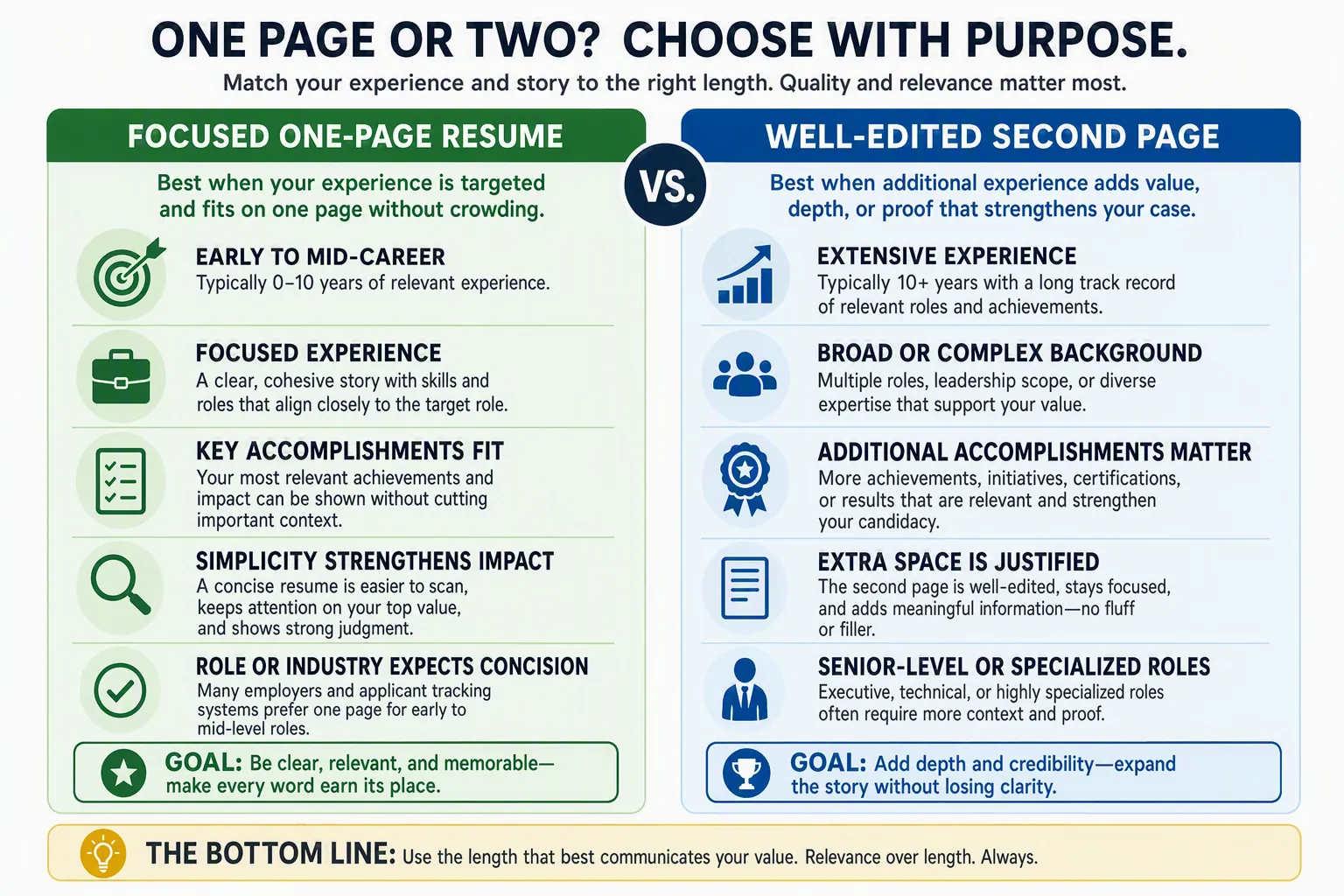
Use one page when it can show the qualifications needed for the target role without tiny type, crowded margins, or missing context. Use two pages when the second page contains material that could influence the hiring decision. Good reasons for a second page include: several relevant roles with distinct achievements, required technical projects or publications, licenses or clinical experience that must be documented, and senior leadership scope that needs more explanation. Unrelated early jobs, repeated duties, long skill lists, references, and generic summaries are not good reasons. Ask whether each section proves a requirement, explains the timeline, or makes important evidence easier to find. Remove repetition before shrinking the font. A readable two-page resume is usually stronger than a dense one-page document that hides results. If page two contains only two lines, edit the document as a whole. Shorten repeated bullets, adjust spacing conservatively, or move a genuinely useful item so the page feels intentional. Do not delete a strong achievement simply to obey an informal one-page myth. Academic CVs, federal resumes, and some regulated applications follow different length conventions. International expectations also vary. This answer applies to a typical private-sector resume, not every career document.
Your final length should make relevant evidence easy to scan and verify. Review what a resume is designed to do and apply ATS-friendly formatting before export.
Related articles
How to Write an ATS-Friendly Resume
Learn how to format, tailor, and proofread a resume that applicant tracking systems and recruiters can read clearly.
Resume
A resume is a targeted summary of relevant experience, skills, education, and achievements used to support a specific job application.
Should I include a photo on my resume?
Decide whether a resume photo fits local hiring norms, employer instructions, and the application context without sacrificing relevant evidence.