
A plumber resume earns attention when it shows more than tool familiarity. Hiring managers need evidence that you can isolate a fault, select a safe repair, install piping to plan, protect the building during shutdowns, test completed work, and document what happened. Whether your target is residential service, commercial maintenance, multifamily work, or construction plumbing, write for the systems and conditions of that job. Use this guide alongside an ATS-friendly resume to make technical evidence easy for both software and field supervisors to find.
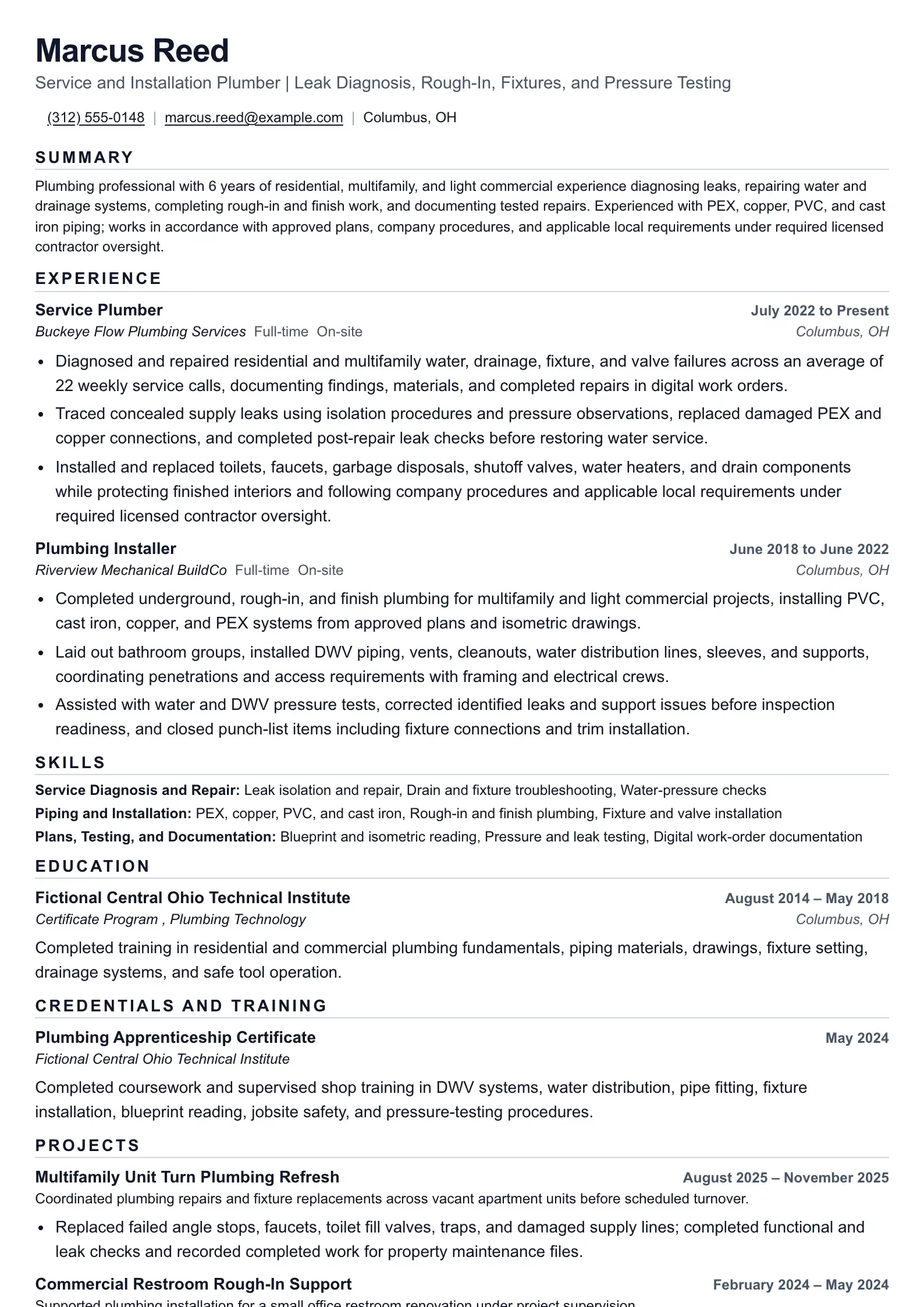
Plumber resume example for service and installation work
A focused layout for presenting service diagnosis, piping systems, testing, fixtures, and code-aware project evidence.
What Plumbing Employers Look For on the First Read
Service candidates should make diagnosis visible. Mention tracing leaks, assessing water pressure, clearing or repairing drainage issues, replacing valves, identifying fixture failures, and explaining repair options. Construction candidates should lead with layout, underground, rough-in, top-out, fixture set, hangers, sleeves, coordination with trades, and punch-list correction. A general claim such as “experienced in plumbing” does not show where you add value.
What a plumbing hiring manager wants to verify
- Hiring signal
- Safe, repeatable diagnosis and installation work
- Evidence to show
- Name the system, fault or installation phase, materials used, test performed, code or drawing reference, and outcome. Clarify when work was completed under a licensed contractor or supervisor where jurisdiction rules require it.
Plumbing Skills That Prove Field Readiness
Organize skills by plumbing work rather than listing every hand tool. This makes your resume distinguishable from general maintenance, HVAC, and construction labor resumes. Include only systems you have actually handled. A service employer may prioritize drain, water distribution, fixtures, water heaters, and customer communication. A commercial contractor may prioritize plan reading, copper, cast iron, PVC, PEX, supports, cleanouts, pressure testing, and coordination.
Do not imply authority you do not hold. “Code-aware installation” is credible when you followed approved plans and site procedures. “Approved permits” or “performed final inspections” should appear only if that was actually within your role and jurisdictional authority. State licensing carefully because city, county, and state requirements can differ.
Service diagnosis
- Leak isolation
- Water-pressure checks
- Drain and fixture troubleshooting
Installation and piping
- PEX, copper, PVC, and cast iron
- Rough-in and finish work
- Valves, fixtures, and water heaters
Quality and documentation
- Plan and isometric reading
- Pressure and leak testing
- Work-order documentation and code awareness
Turn Service Work Into Outcome-Based Bullets
Strong plumber bullets follow the work sequence: diagnose or install, explain the method, then show a verifiable result. Start with a specific action verb such as traced, repaired, installed, roughed-in, pressure-tested, coordinated, or documented. Add system details that matter to the target opening. For example, “Repaired leaks” becomes more persuasive when it identifies a failed supply connection, the pipe material, the repair method, and confirmation testing.
Use numbers only when your records support them. A metric can describe service calls, fixtures, apartment turns, linear feet of piping, tests completed, or callback reduction. These are illustrative examples, not plumbing industry benchmarks. Avoid claiming that an individual repair guaranteed compliance; instead, describe following approved drawings, local requirements, company procedures, and inspection direction as applicable.
Action
Trace or install a named plumbing system
Method
Specify the diagnosis, piping material, fitting method, drawing reference, isolation step, or pressure-test procedure
Result
Report a documented repair, passed test, completed fixture set, reduced callback, or on-time turnover when supported by records
For more patterns, study strong resume bullet points, then replace generic project language with the exact plumbing task you performed. A useful service bullet might describe tracing a concealed leak, isolating the affected branch, replacing damaged fittings, restoring water service, and recording the repair. A useful rough-in bullet might describe laying out bathroom groups from plans, installing waste and vent piping, and assisting with the required test before wall close-in.
ATS Keywords for Plumbing Positions
Applicant tracking systems and recruiters often search the wording used in job orders, work tickets, plans, and local trade postings. Match terms that are true for your experience, especially materials, systems, work phases, and testing methods. Do not copy a keyword simply because it appears in a posting. A hiring manager can quickly identify whether a candidate has worked on a specified system.
Read the job description for its customer type and building type. “Multifamily turns,” “commercial tenant improvements,” “residential service,” and “new construction” are not interchangeable. When relevant, pair the setting with the task: commercial restroom fixture replacement, residential water-heater service, multifamily leak repair, or new-construction underground rough-in. Learn how keyword placement works in this guide to resume keywords.
Plumber resume keywords
- Service plumbing
- Leak repair
- Drainage systems
- Water distribution
- Rough-in plumbing
- Finish plumbing
- PEX
- Copper piping
- PVC and cast iron
- Fixture installation
- Water heaters
- Pressure testing
- Leak testing
- Blueprint reading
- Plumbing code awareness
- Preventive maintenance
Show Seniority From Apprentice to Lead Work
As responsibility increases, the resume evidence should shift from task participation to planning, diagnosis ownership, quality control, and crew coordination. An apprentice can show supervised work, material staging, measurements, tool use, and testing assistance. A journeyman-level candidate, where that classification is valid in the relevant jurisdiction, can show independent service diagnosis or installation within authorized scope. A lead plumber can show plan review, work sequencing, junior crew guidance, material coordination, test readiness, and punch-list closeout.
For every level, avoid overstating license authority. An employer may require a particular state credential, local registration, or work under a designated licensed contractor. Include your actual status, expiration details only if requested and current, and the jurisdiction associated with the credential.
Match plumbing evidence to the target opening
| Job requirement | Matching evidence | Keyword |
|---|---|---|
| Residential service diagnosis | Traced fixture, supply, and drain faults; documented repair options and completed work orders. | service plumbing |
| New-construction rough-in | Installed DWV and water lines from approved plans, coordinated sleeves and penetrations, and assisted with pressure tests. | rough-in plumbing |
| Code-conscious work | Followed approved drawings, company procedures, and applicable inspection direction while working under required license supervision. | plumbing code awareness |
Plumber Resume Mistakes That Weaken Credibility
A common plumber resume mistake is listing tools without showing plumbing judgment. “Used pipe wrench, auger, and power tools” says little about whether you can diagnose a cross-connection concern, isolate a leak, select compatible materials, set a fixture correctly, or protect finished spaces during a repair. Another mistake is mixing every trade into one vague maintenance description. If you also performed HVAC or electrical support, keep the plumbing bullets specific and separate.
Do not write “licensed plumber” unless the credential, jurisdiction, and active status are accurate. Do not use another worker’s license status as your own. If you worked under a licensed contractor, say so plainly. Avoid unsupported compliance claims, such as “guaranteed all work met code.” Better language explains that you followed applicable approved plans, local requirements, and inspection procedures within your assigned scope.
Replace vague repair claims with field evidence
- Why it hurts
- Fixed plumbing problems and installed pipes as needed.
- Better approach
- Diagnosed residential supply and drainage issues, replaced failed valves and damaged PEX connections, completed pressure checks after repairs, and recorded materials and repair notes in service tickets.
Frequently asked questions
- What should a plumber put at the top of a resume?
- Lead with the plumbing environment you know, such as residential service, commercial tenant improvement, new construction rough-in, or multifamily maintenance, followed by diagnosis, piping, fixtures, testing, and applicable licensing status.
- How should a plumber describe licensing on a resume?
- State the exact license, registration, apprenticeship status, or supervised work arrangement only when accurate. Plumbing license classes, renewal rules, and permitted scope vary by state and local jurisdiction.
- Which plumber resume metrics are useful?
- Useful illustrative metrics include service calls completed, first-visit repairs, pressure tests passed, fixtures installed, rework avoided, customer callbacks reduced, and work orders documented accurately.
- How can an apprentice plumber make a strong resume?
- Document supervised installation tasks, material preparation, drawing interpretation, safety training, tool proficiency, test assistance, and the licensed plumber or contractor oversight required in the applicable jurisdiction.

Ready to build your Plumber resume?
Choose sample data or build your own resume, then personalize it before you download.