
A strong phlebotomist resume makes the pre-analytical process visible. Hiring teams need evidence that you can identify the correct patient, collect the correct specimen, label it at the bedside or collection site, and protect specimen quality through transport. Your resume should also show calm communication with anxious patients and safe judgment when a vein is difficult to access.
What Phlebotomy Hiring Teams Check First
A laboratory supervisor or clinic manager often scans first for a reliable collection workflow. Put your setting near the top: outpatient laboratory, hospital, blood draw center, mobile service, pediatric clinic, long-term care, or donor collection. Then name the collection methods you performed and the safeguards you followed. A statement such as experienced phlebotomist is too broad because it does not show whether you can prevent identification, labeling, or specimen integrity failures.
Your summary and first experience bullets should answer four questions quickly: Which patients did you serve? Which collections did you perform? How did you follow identification and infection-control procedures? What happened to the specimens after collection? Include difficult-draw judgment if it is genuine, but do not imply authority to use procedures outside your training, employer policy, or applicable scope.
What hiring teams notice
- Hiring signal
- Specific collection workflow evidence
- Evidence to show
- Name two patient identifiers, venipuncture or capillary collection, order of draw, immediate labeling, transport conditions, and escalation for unsuccessful or difficult draws.
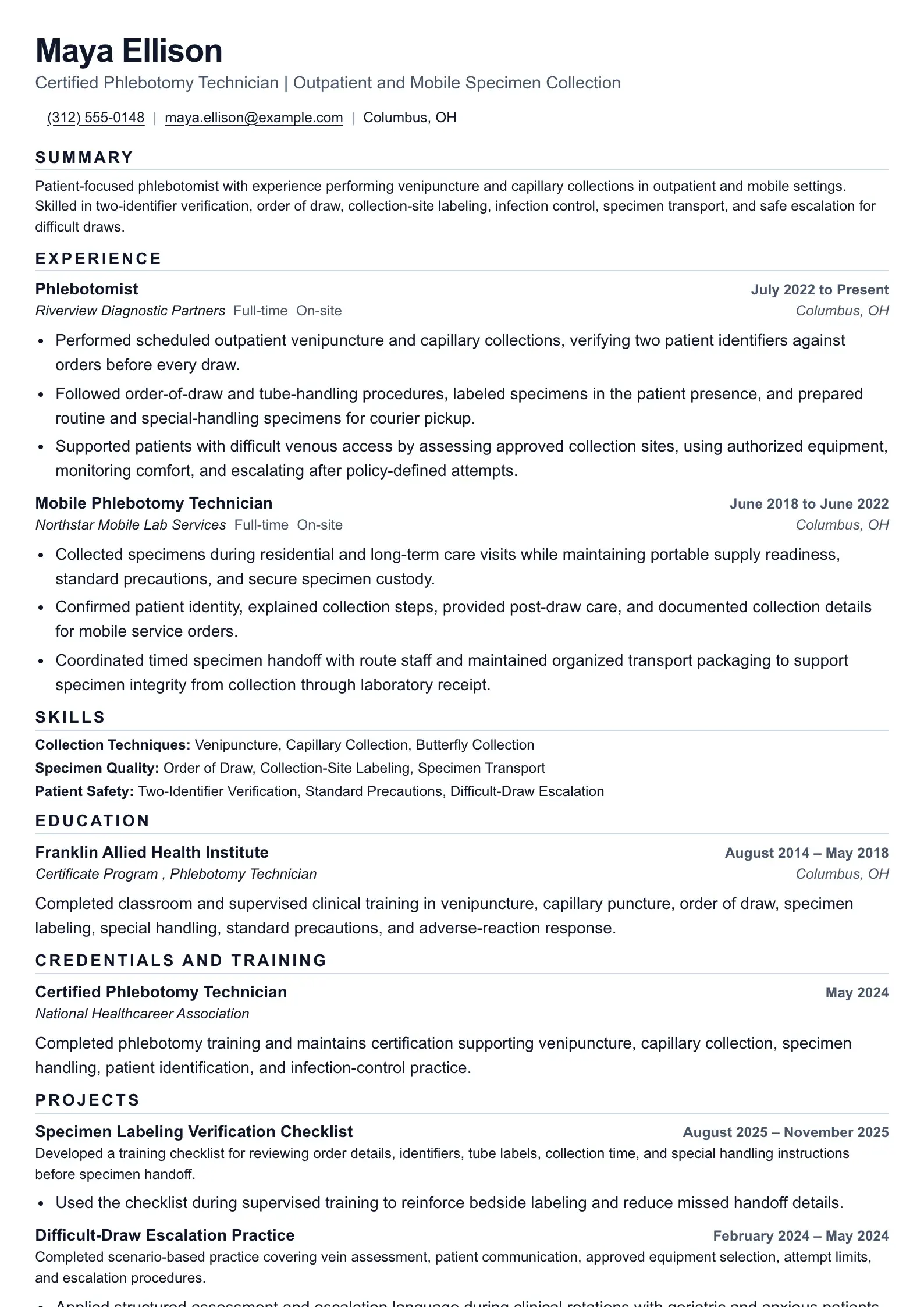
Phlebotomist resume example
Use a focused layout to connect collection techniques, safety controls, and specimen handling outcomes.
Clinical Collection Skills to Demonstrate
Prioritize skills that distinguish phlebotomy from general patient service work. Technical terms should include venipuncture, capillary puncture, butterfly collection when used, syringe transfer when approved, specimen processing support, and special handling requirements you have actually followed. Pair those techniques with the controls that make a collection usable: two-identifier verification, order review, order of draw, tube inversion, bedside labeling, centrifugation handoff, and timely transport.
Patient-facing skill also matters when it is operational. Rather than listing communication alone, explain that you confirmed readiness, explained collection steps, monitored for dizziness, applied post-draw care, and documented or escalated adverse reactions according to procedure. For difficult draws, credible evidence includes assessing vein options, using approved collection equipment, preserving patient comfort, limiting attempts under policy, and requesting qualified assistance when needed.
Use the language in each posting only when it accurately reflects your work. The guide to an ATS-friendly resume can help you place these terms in a readable summary, skills section, and experience bullets without stuffing them into one paragraph.
Build Bullets From Safe Collection Outcomes
Each bullet should connect a collection action to a quality or patient-care result. Start with what you did, specify the procedure or safeguard, then show the result. Metrics can strengthen the story when they are documented in your records or are clearly presented as illustrative examples in a guide. Never invent a collection volume, redraw rate, or turnaround result just to sound competitive.
Before
Collected blood specimens and helped patients.
After
Collected outpatient venipuncture and capillary specimens, verified two identifiers against orders, labeled tubes at the collection site, and prepared specimens for scheduled laboratory transport.
Why it works
The revised bullet proves collection method, patient identification, labeling discipline, and the next custody step.
A good difficult-draw bullet does not claim every attempt was successful. It shows safe decision-making: assessed viable sites, selected approved equipment, maintained patient comfort, and escalated after the permitted number of attempts. For a hospital position, mention coordination with nursing or laboratory staff. For a mobile route role, mention portable supply control, labeling, and secure specimen handoff.
Action
Performed the collection task
Method
State the patient-safety or specimen-integrity control used
Result
Show the documented outcome, workflow contribution, or appropriate escalation
For additional phrasing patterns, review strong resume bullet points, then replace broad claims with details from your own collection logs, training records, supervisor feedback, and quality procedures.
ATS Keywords for Phlebotomy Roles
Applicant tracking systems and recruiters look for role-specific language, but the best keywords appear inside evidence. Match the job description to your actual background. A hospital role may request inpatient rounds, timed draws, blood cultures, specimen receiving, electronic health record documentation, or pediatric experience. An outpatient role may emphasize high-volume venipuncture, fasting patients, insurance-linked orders, courier handoff, and customer service.
Use terms such as patient identification, venipuncture, capillary collection, order of draw, specimen labeling, specimen integrity, infection control, standard precautions, biohazard disposal, difficult draws, tube handling, specimen transport, and chain of custody when applicable. Review the broader approach in resume keywords, but avoid listing a method you only observed during training.
Translate phlebotomist requirements into proof
| Job requirement | Matching evidence | Keyword |
|---|---|---|
| Accurate patient identification | Verified two identifiers against the order before collection and labeled tubes in the patient presence. | patient identification |
| Specimen quality control | Followed order of draw, tube inversion guidance, and special transport instructions for assigned specimens. | specimen integrity |
| Difficult-draw capability | Assessed accessible sites, used approved equipment, and escalated after policy-defined attempts. | difficult draws |
How Phlebotomy Scope Grows With Seniority
An entry-level phlebotomist resume should foreground supervised clinical training, completed venipuncture and capillary collections, patient identification steps, infection-control practice, and readiness to follow local procedures. Be precise about whether work occurred during an externship, practicum, or paid role. Certification and licensing requirements vary, so state only completed credentials and verify the rules for the target state and employer.
With experience, shift from task lists to consistency across patient populations and settings. Show independent route organization, successful handling of timed or special collections, quality-focused documentation, specimen handoff, and appropriate support for new team members. If you serve pediatric, geriatric, oncology, inpatient, or difficult-access patients, name the population and the techniques or escalation practices used.
At lead level, evidence can include supply readiness, collection workflow coordination, competency support, audit preparation, incident reporting, and coaching on identification or labeling procedures. Keep leadership claims connected to actual responsibilities. A lead phlebotomist is not automatically responsible for laboratory quality decisions unless that authority was formally assigned.
Phlebotomist Resume Mistakes That Raise Concern
The most damaging phlebotomist resume mistake is treating collection as a simple needle skill. A tube filled without correct identification, order of draw, labeling, handling, or transport can create a rejected specimen or a serious patient-safety risk. Make those controls visible in your bullets. Also avoid claiming that you performed blood cultures, arterial collection, donor procedures, pediatric collections, or specialized processing unless you were trained and authorized to do so.
Do not write zero errors unless you can substantiate that claim and explain the measurement period. Replace unsupported superlatives with concrete practices. Similarly, do not list certification as active if it has expired, and do not describe a training certificate as a state license. Employers have different credentialing, background, vaccination, and competency expectations, so tailor your resume to the stated requirements.
Turn a vague collection claim into credible evidence
- Why it hurts
- Experienced in blood draws, labeling, and patient care.
- Better approach
- Performed venipuncture and capillary collections for scheduled outpatient patients; verified identifiers, followed order-of-draw requirements, labeled specimens at the collection site, and escalated difficult access within clinic policy.
Frequently asked questions
- What should a phlebotomist put at the top of a resume?
- Lead with a summary that names your collection settings, venipuncture and capillary collection skills, patient identification practice, and specimen handling strengths.
- How do I show difficult-draw experience on a phlebotomist resume?
- Describe the patient population, the assessment steps you used, when you selected an alternate collection method, and when you escalated within policy.
- Should a phlebotomist list certification on a resume?
- List completed phlebotomy training and current certification when applicable. State credentials accurately because certification, licensing, and scope requirements vary by state and employer.
- Which phlebotomist resume keywords matter most?
- Use terms supported by your experience, such as venipuncture, capillary puncture, specimen labeling, order of draw, chain of custody, infection control, specimen transport, and patient identification.

Ready to build your Phlebotomist resume?
Choose sample data or build your own resume, then personalize it before you download.