
Introduction
A networking cover letter is often a short note to someone whose perspective or professional connections may help you learn about an area of work. The phrase is used broadly. This guide focuses on a practical task: asking a contact for advice or an introduction, not asking them to find you a job.
Give the recipient enough context to understand why you chose them and what you hope to learn. A request for advice, an introduction, or a referral can overlap in real conversations, but they ask the contact to do different things. An introduction connects you with someone; a referral asks the contact to recommend you for a specific opportunity. If you are applying to an employer about possible work, use an application intended for that purpose. The guide to asking for a referral explains that different request in more detail.
What to address directly
Will my note sound like a hidden job request?
- Hiring manager concern
- A note framed as a request for advice can feel misleading if it mainly asks the contact to find an opening or pass along your application.
- What your letter should prove
- Be clear about your immediate goal. Ask for advice or an introduction if that is what you want. If you want a referral for a specific opportunity, say so directly and give the person room to decline.
What if we barely know each other?
- Hiring manager concern
- A new contact may not have enough context to understand why you reached out. A general compliment does not explain why their perspective is relevant.
- What your letter should prove
- Mention one genuine point of connection, such as where you met, who introduced you, or a specific piece of work you found useful. Then ask a focused question that fits their experience.
How can I make the request easy to answer?
- Hiring manager concern
- A broad request to discuss your whole career takes effort to interpret. Asking for an introduction without explaining the connection you hope to make can also put the contact in an awkward position.
- What your letter should prove
- Choose one bounded next step, such as answering a question, suggesting a resource, or deciding whether to introduce you to someone in a particular area. Acknowledge that they may be busy and make declining easy.
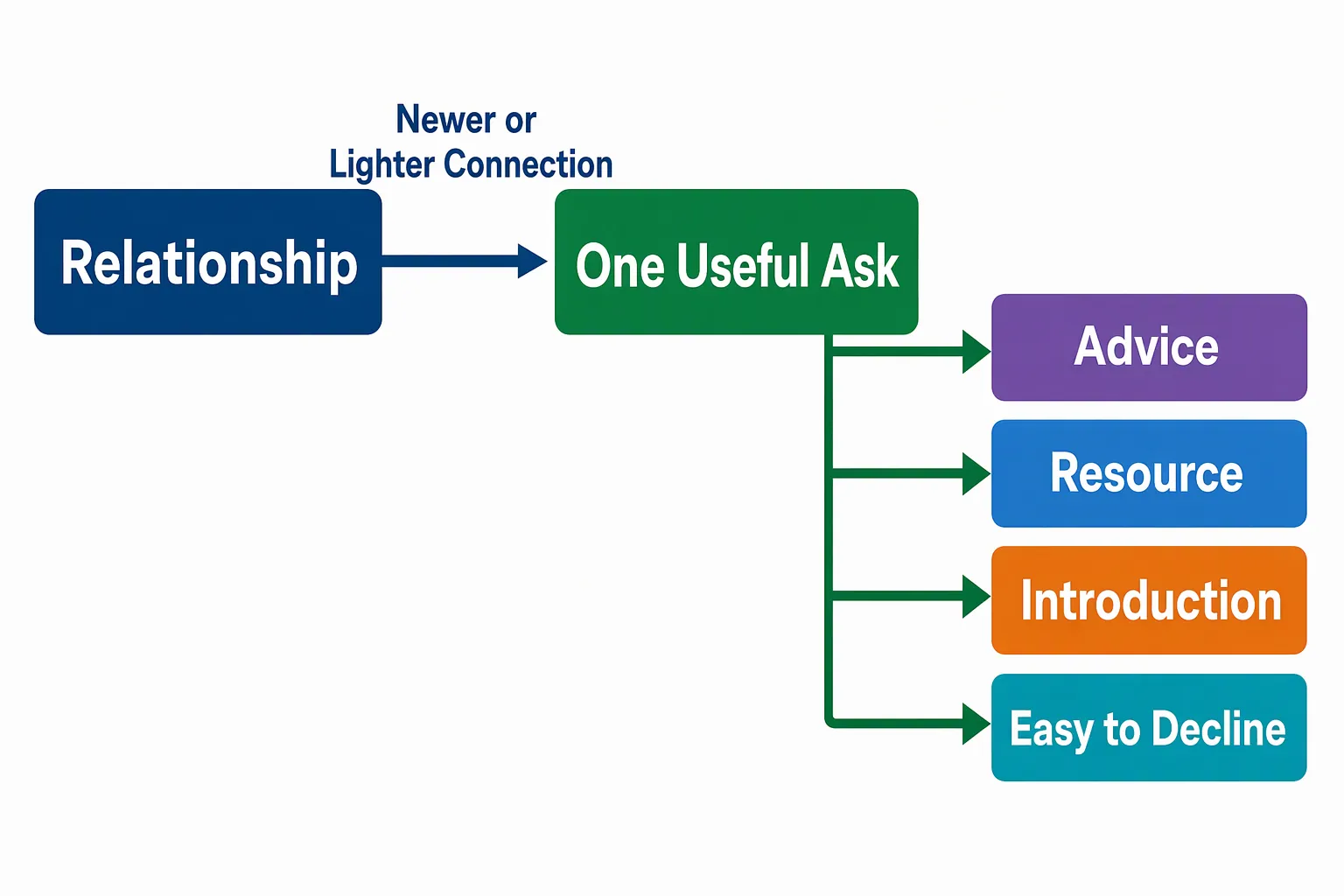
Structural approach for a focused networking request
Build the note around why you chose this person and what you are trying to learn, not your complete work history. A short, relevant detail about your background can help explain your question, but include it only when it makes the request clearer.
Match the size of the request to the relationship. A new contact may be more comfortable suggesting a resource than making an introduction. Someone who knows your work may be able to consider a more direct request, but familiarity does not obligate them to recommend you.
- 01
Identify the connection
Start with the real reason for reaching out: a mutual contact, an event where you spoke, or specific work you both know. If there is no shared connection, briefly explain why this person’s perspective is relevant.
- 02
Give only useful context
Name the area you are exploring or the question you are trying to answer. Add one true detail about your experience only if it helps the contact understand your request. Leave out a full career history.
- 03
Make one clear ask
Ask for one next step, such as a brief conversation, a resource suggestion, or an introduction to someone with relevant experience. If asking for an introduction, describe the kind of person who could help and let your contact decide whether to connect you.
- 04
Close without pressure
Thank the person and acknowledge that their schedule may not allow them to help. You can offer a smaller alternative, such as a resource suggestion, but keep it connected to the same goal. Wait for a response rather than sending repeated requests.
Networking letter template
A fictional example of a networking note that asks for perspective without asking the contact to find a job or recommend the writer.
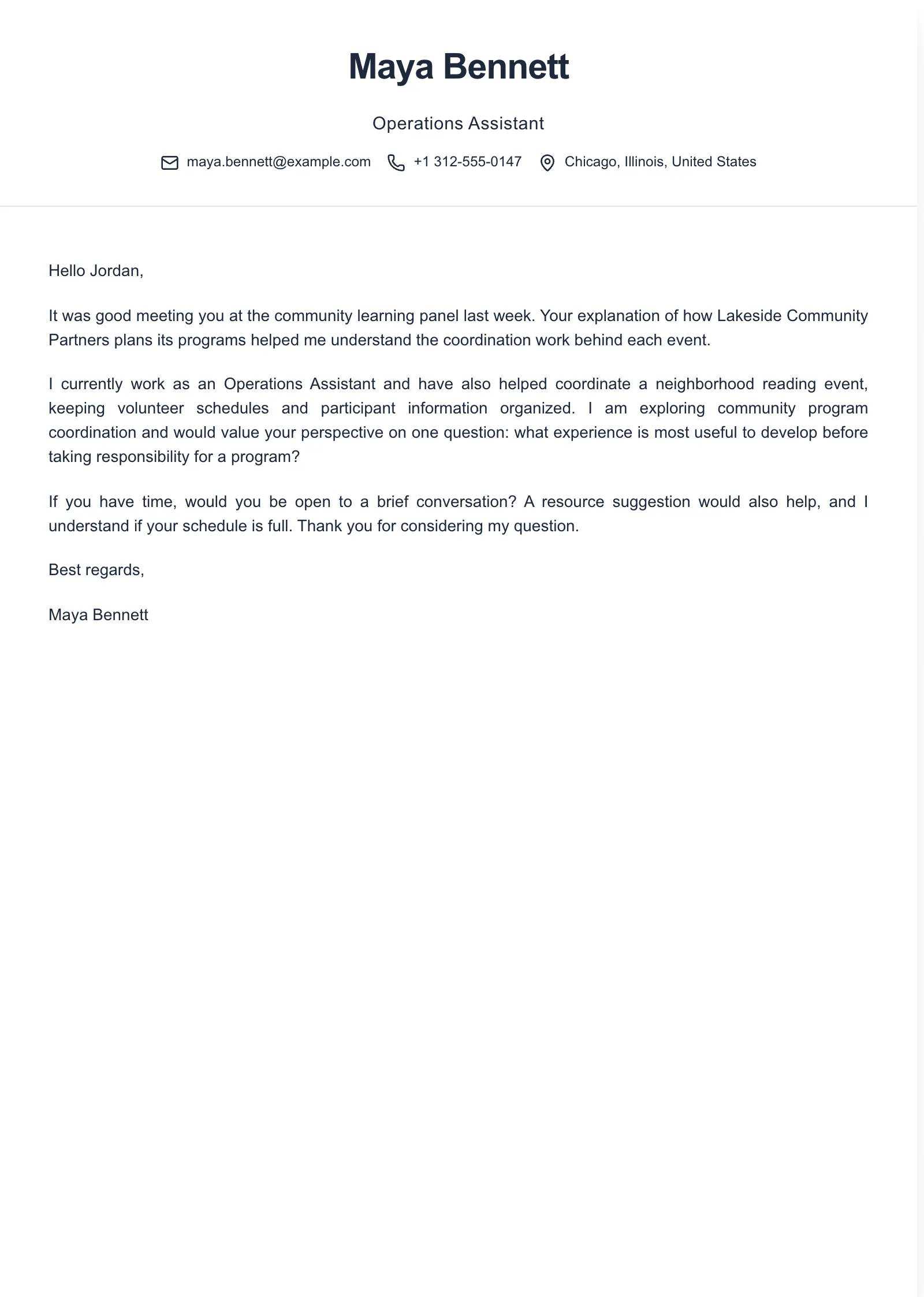
Example paragraphs
“Hello [Contact Name], it was good meeting you at [Event Name]. Your comments about [specific topic] helped me think more clearly about [area of work]. Would you be open to a brief conversation about one skill people in this area find useful? If you are busy, a resource suggestion would also help.”
“Hello [Contact Name], [Mutual Contact] suggested I reach out because of your experience with [specific area]. I am exploring [area of work] and would like to learn how people build experience in [specific skill]. Would you be comfortable suggesting a resource or, if appropriate, introducing me to someone who works in this area?”
“Hello [Contact Name], I appreciated your perspective on [specific topic] when we met through [shared project or event]. I am considering [area of work] and would value your view on what experience could be useful to develop next. Would you have time for a brief conversation, or could you suggest a question I should research?”
Replace each bracket with a true detail and keep only the request that matches your goal. Do not imply that a contact has agreed to introduce or recommend you. If you ask for an introduction, let them decide whether to make it.
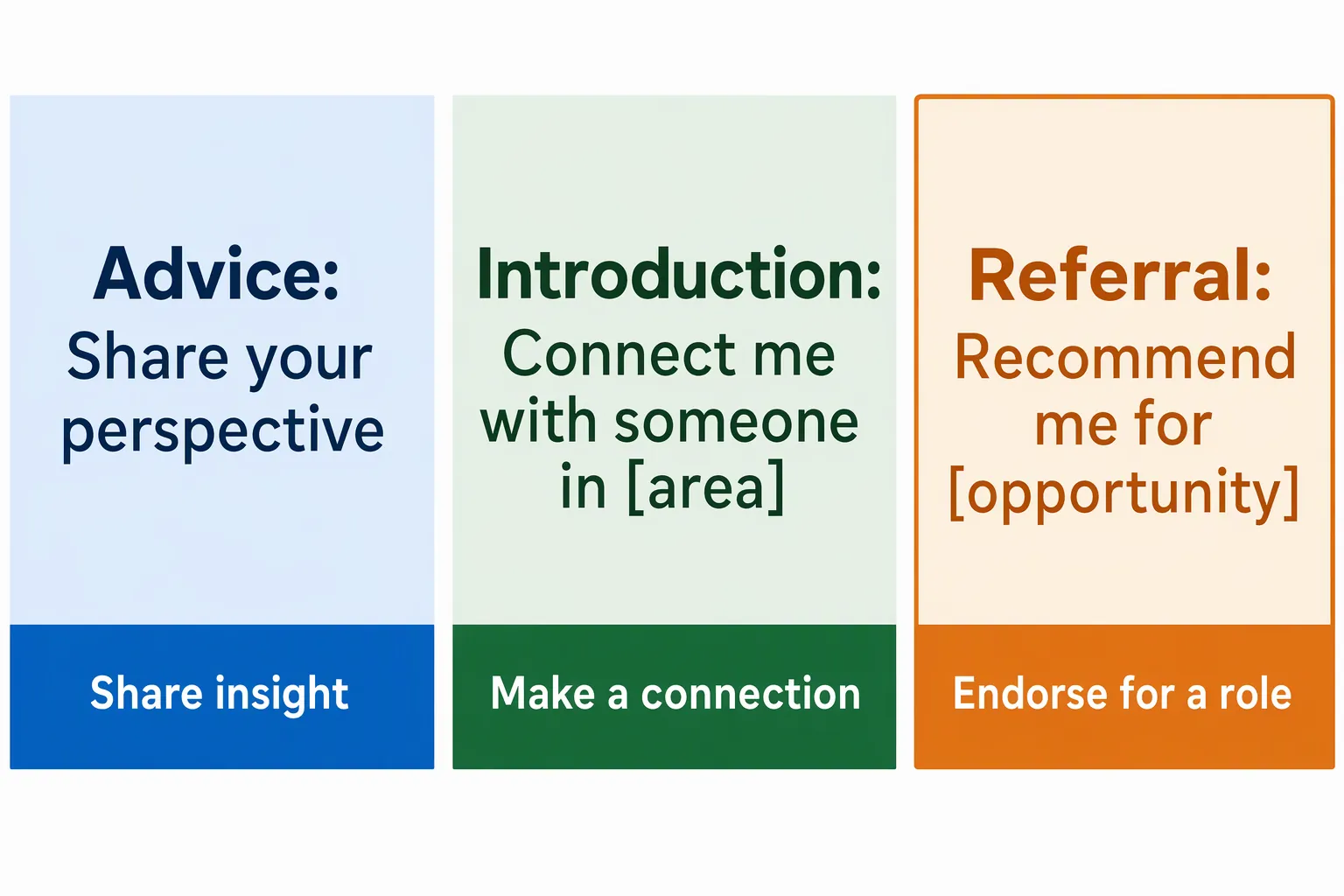
Scenario-specific mistakes in a networking letter
Using advice as a cover for a job request
- What goes wrong
- A note can damage trust if it asks for career advice but mainly expects the recipient to find an opening or forward an application.
- Better approach
- State what help you want. If you are seeking a referral for a specific opportunity, ask directly and separately from a request for advice.
Making the contact plan the conversation
- What goes wrong
- A general request to talk about your career leaves the person to decide what to discuss and what help you need.
- Better approach
- Name one question and a small next step. The contact can then accept, decline, or suggest an easier alternative.
Sending the same note to everyone
- What goes wrong
- A generic message gives no reason this person is a good match for your question and may not fit your relationship with them.
- Better approach
- Include one truthful detail that connects their experience to your goal. Keep praise specific and relevant, or leave it out.
Treating an introduction as an endorsement
- What goes wrong
- A contact may be willing to connect you with someone without recommending your work for a role.
- Better approach
- Ask for an introduction on its own terms. If you later want a recommendation for a specific opportunity, make that request clearly and give the person room to decide.
Frequently asked questions
- What does networking cover letter mean?
- People use the phrase in different ways, including for messages that seek advice or an introduction. This guide focuses on a short note to a professional contact with one clear request, rather than an application for a job.
- Can I ask someone I do not know for advice?
- Yes. Give a genuine reason for contacting them, ask one focused question, and make it easy to decline. A relevant shared connection or specific work of theirs can explain why you chose them, but do not imply they owe you time.
- Should I ask for a referral in my networking letter?
- Ask for a referral when you want the person to recommend you for a specific opportunity, and when the context makes that request appropriate. Advice or an introduction may be a better first step, but choose the request that honestly matches your goal.
- How long should a networking letter be?
- There is no universal length requirement. Keep the note brief enough to read easily and include only the connection, relevant context, one clear request, and a courteous close.

Put this career change approach into practice
Choose sample data or build your own cover letter, then personalize it before you download.