
Introduction
A planned gap year may fall between study and a first full-time role, or between stages of education. It can include travel, paid seasonal work, volunteering, study, or a mix of activities. Mention it when the timing needs context or an activity gives relevant evidence. State when it happened, what you did, and one accurate detail that connects to the role. The year itself is context, not a qualification.
This page focuses on planned time away that is often pre-career or part of a student-to-work transition. The useful distinction is the timeline: if you paused established employment, explain that work history directly instead. See the employment-gap cover letter guide. Do not describe a year as employment if you were not employed.
What to address directly
Making the year sound like an apology
- Hiring manager concern
- You may feel that travel, time away from study, or a nontraditional year needs a long defense.
- What your letter should prove
- Give a calm, factual account of when the year took place and what you did. You do not have to defend a planned choice. Keep the explanation brief and give more attention to your reasons for applying and relevant evidence.
Having little paid experience
- Hiring manager concern
- Your activities may not have produced a conventional job title or a measurable result.
- What your letter should prove
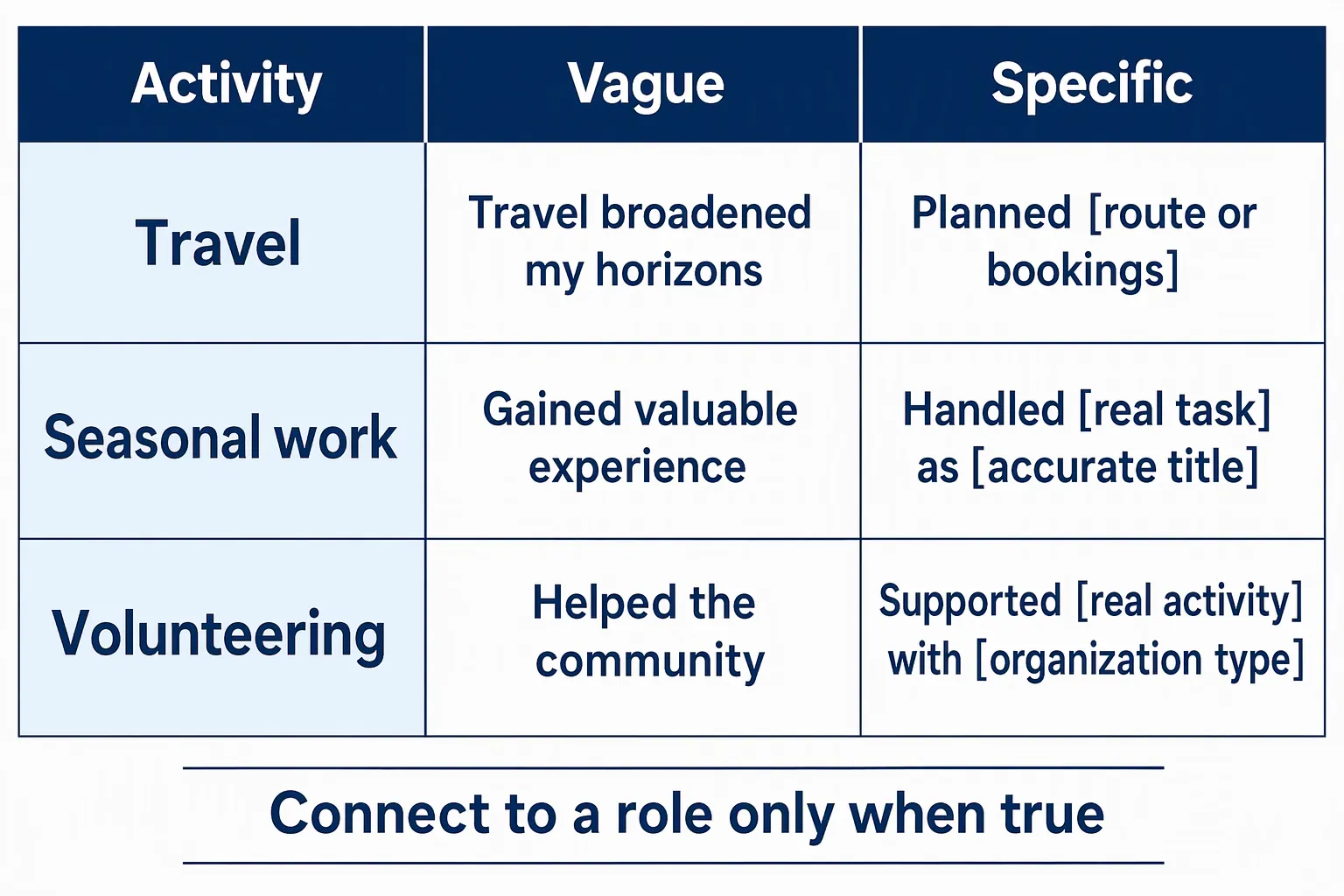
- Use details that accurately describe the activity, such as a task you handled, a schedule you maintained, or a group you supported. Label volunteering as volunteering and informal participation as informal. Do not present either as a formal paid position.
Choosing what to disclose
- Hiring manager concern
- You may be unsure whether to list every destination, personal reason, or event from the year.
- What your letter should prove
- Include only what helps clarify your timeline or supports your case for this role. A location or personal explanation is optional unless the application asks for specific information. Keep the focus on your actual activities and relevant experience.
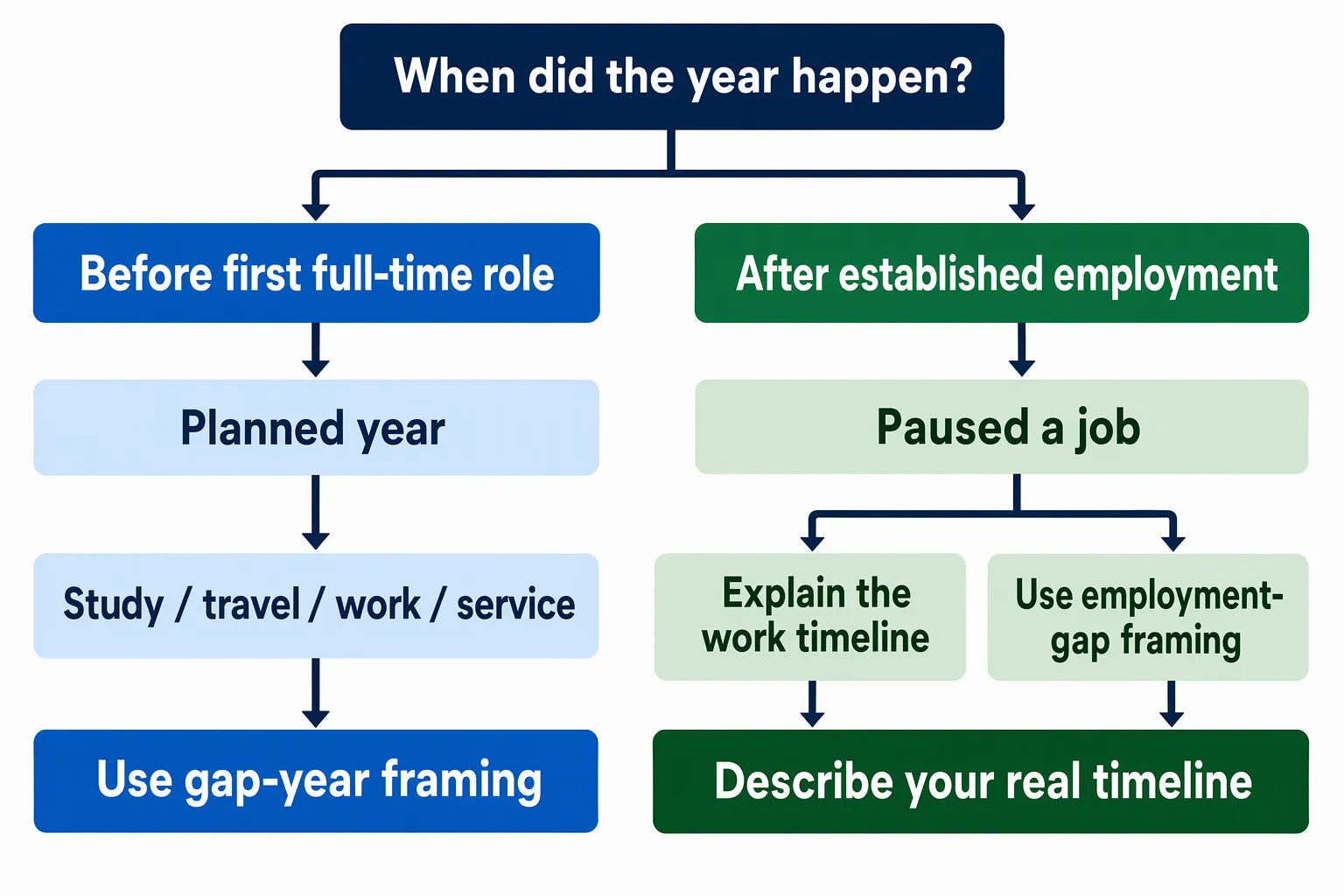
Structural approach: explain the year, then look forward
A useful order is to identify the planned year, name one or two activities, and give a specific task or detail that matters to the role. Connect it only when the connection is genuine. Travel, volunteering, and time away do not automatically demonstrate a particular skill. Use the rest of the letter to explain your interest and provide other relevant evidence from study, projects, work, or service.
Treat one short paragraph as a drafting target, not a universal requirement. Use enough space to make the timeline and relevant detail clear, and follow any instructions in the posting. For the general paragraph sequence, see the cover letter structure guide. The steps below show how to adapt that sequence to a planned gap year.
- 01
Place the year on your timeline
Decide what a reader needs to know, such as that the year followed graduation and was planned before your first full-time role. Use accurate dates or timing. If the year followed a previous job, do not use this pre-career framing; describe the work timeline instead.
- 02
Name what you did
Choose an accurate description, such as traveling, completing seasonal work, volunteering, or studying. Add a task when it clarifies your experience. If you had paid work, use its real title; if you volunteered, say so.
- 03
Select one relevant detail
Choose an activity that connects to a need in the posting. Describe what you personally did and, when known, its scope or result. Leave out a claim you cannot support with a real detail rather than turning an ordinary activity into an achievement.
- 04
Bridge to the role
Explain how the detail may help you contribute, without overstating what it proves. Then move to other evidence from your study, projects, work, or service. Keep the focus on the opportunity and your readiness, not on making the gap year the main qualification.
Gap year cover letter example
See a fictional example that explains a planned year through specific seasonal work and volunteering details, then connects those activities to the role.
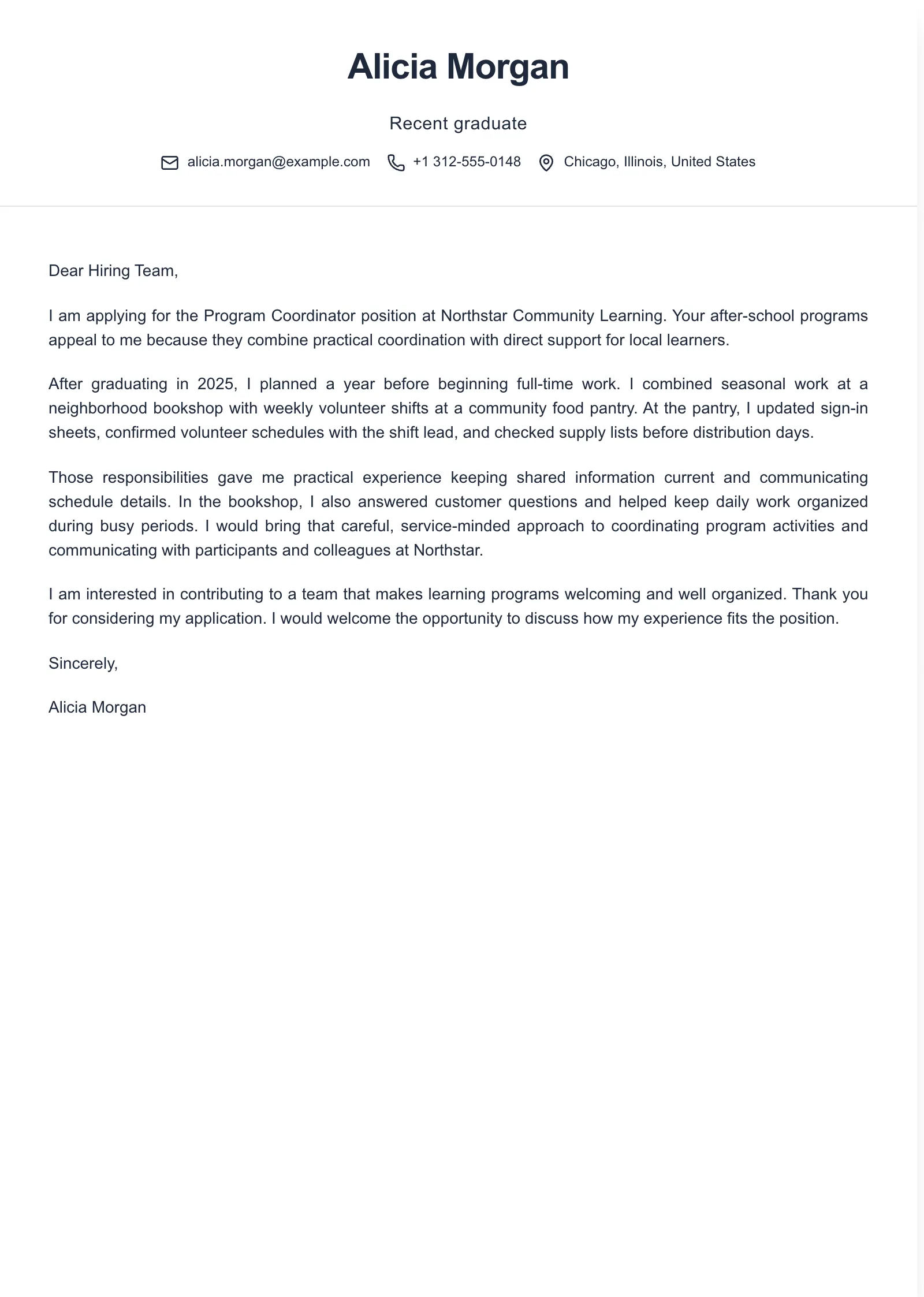
Example paragraphs
“After completing [study or training], I spent [duration] traveling in [places or region] and planned [specific itinerary or arrangements]. That task gave me experience with [accurate, relevant skill], which I would apply to the [Job Title] position at [Company Name].”
“During my planned year after [study or graduation], I worked as a [accurate job title] at [workplace type], where I handled [specific responsibility]. I would draw on that experience with [relevant task or skill] in the [Job Title] role at [Company Name].”
“I used part of my planned year to volunteer with [organization type], supporting [specific activity or task] on [schedule or scope]. This gave me practical experience with [relevant, evidenced skill] that I would bring to the [Job Title] position at [Company Name].”
Use one paragraph, not all three, and replace every bracket with a true detail. Remove any claim you cannot support. The travel example needs a task you actually completed; the work and volunteering examples need accurate activity labels and, where relevant, the real job title. Link the detail to something the posting asks for only when that connection is genuine. These examples are profession-neutral starting points, not claims to copy unchanged.
Common mistakes when explaining a gap year
Calling the year a sabbatical
- What goes wrong
- That word can suggest leave from an established job, which may give the wrong impression if the year came before your first full-time role.
- Better approach
- Describe the actual timeline plainly, such as a planned year after study or before full-time work. Do not imply an employment relationship that did not exist.
Claiming travel proves a skill
- What goes wrong
- A broad statement such as “travel made me adaptable” does not show what you did or why it matters to this role.
- Better approach
- Name a specific, accurate task and explain its relevance only if you can make that connection honestly. Leave out a skill claim based on the activity alone.
Listing the whole itinerary
- What goes wrong
- A long list of destinations and personal details can distract from your reason for applying without clarifying your experience.
- Better approach
- Keep only the location or activity that provides useful context. Use the rest of the letter for evidence relevant to the role.
Stretching a role or timeline
- What goes wrong
- Renaming informal volunteering as paid work, changing a job title, or altering dates can make the explanation misleading.
- Better approach
- Use accurate dates and titles. Describe your real responsibilities and let a relevant, specific detail support your application.
Frequently asked questions
- Do I need to mention a planned gap year in my cover letter?
- Mention it when the timing might otherwise be unclear or when an activity gives useful evidence for this role. If the timing is clear elsewhere and the year adds no relevant context, you do not need to repeat it just to fill space.
- How do I explain a gap year spent traveling?
- State that you traveled and add a specific, accurate detail only if it helps explain your experience for this role. For example, you could describe planning [a route or bookings] if you actually did that. Do not claim that travel automatically proves a skill.
- Is a gap year different from an employment gap?
- This guide focuses on a planned year, often before a first full-time role or during a transition between study and work. If you paused established employment, explain that work timeline directly. See the employment-gap cover letter guide for that situation.
- Should I describe every activity from my gap year?
- No. Choose one or two accurate activities that clarify the timeline or support your fit for the role. The letter does not need to be a complete account of the year.

Put this career change approach into practice
Choose sample data or build your own cover letter, then personalize it before you download.