
Introduction
Retirement is part of your work history, not a reason to frame your age as a problem or defend your personal choices. A cover letter after retirement should make three things clear: why you want to return to paid work now, what working arrangement you want, and what shows that your relevant skills are current.
This page focuses on choosing to work again after retirement. The broader returning-to-work guide covers other reasons for a period away from work. Here, focus on what makes this role a good fit now and whether its schedule matches the work you want.
You do not need a long account of your retirement. Give a brief explanation when it helps make your interest clear, then move to relevant experience and recent evidence. Earlier work can still matter. Keep its titles and dates accurate, and explain how useful skills connect to the current opening.
What to address directly
Why you want to return now
- Hiring manager concern
- If your work history shows a break, the reason you are applying now may not be obvious. Leaving that question unanswered can make your interest in this particular opening harder to understand.
- What your letter should prove
- Give a simple, true reason that connects to the job, such as wanting to use a relevant skill, contribute to a team, or take on a schedule that suits you now. Present your return as a choice, not an apology. You do not need to disclose private circumstances to explain why the role interests you.
The schedule you actually want
- Hiring manager concern
- You may be looking for fewer hours, particular days, or work during a specific season. Saying only that you are flexible does not show whether your availability matches the posting.
- What your letter should prove
- When schedule matters to your decision, state the days, hours, or dates you can genuinely work. Keep this consistent with your application and the opening. For a part-time role or seasonal role, use the relevant guide to make that detail specific to the stated arrangement. Do not promise availability you cannot sustain.
Evidence that your skills are current
- Hiring manager concern
- Tools, processes, or expectations may have changed since your earlier roles. Saying your skills are current does not show how you use them now.
- What your letter should prove
- Choose recent evidence connected to the opening, such as paid or volunteer work, a project, a course, or a task you still perform. Name the skill and what you did with it. Pair recent practice with relevant earlier experience instead of dismissing older work or claiming expertise without an example.
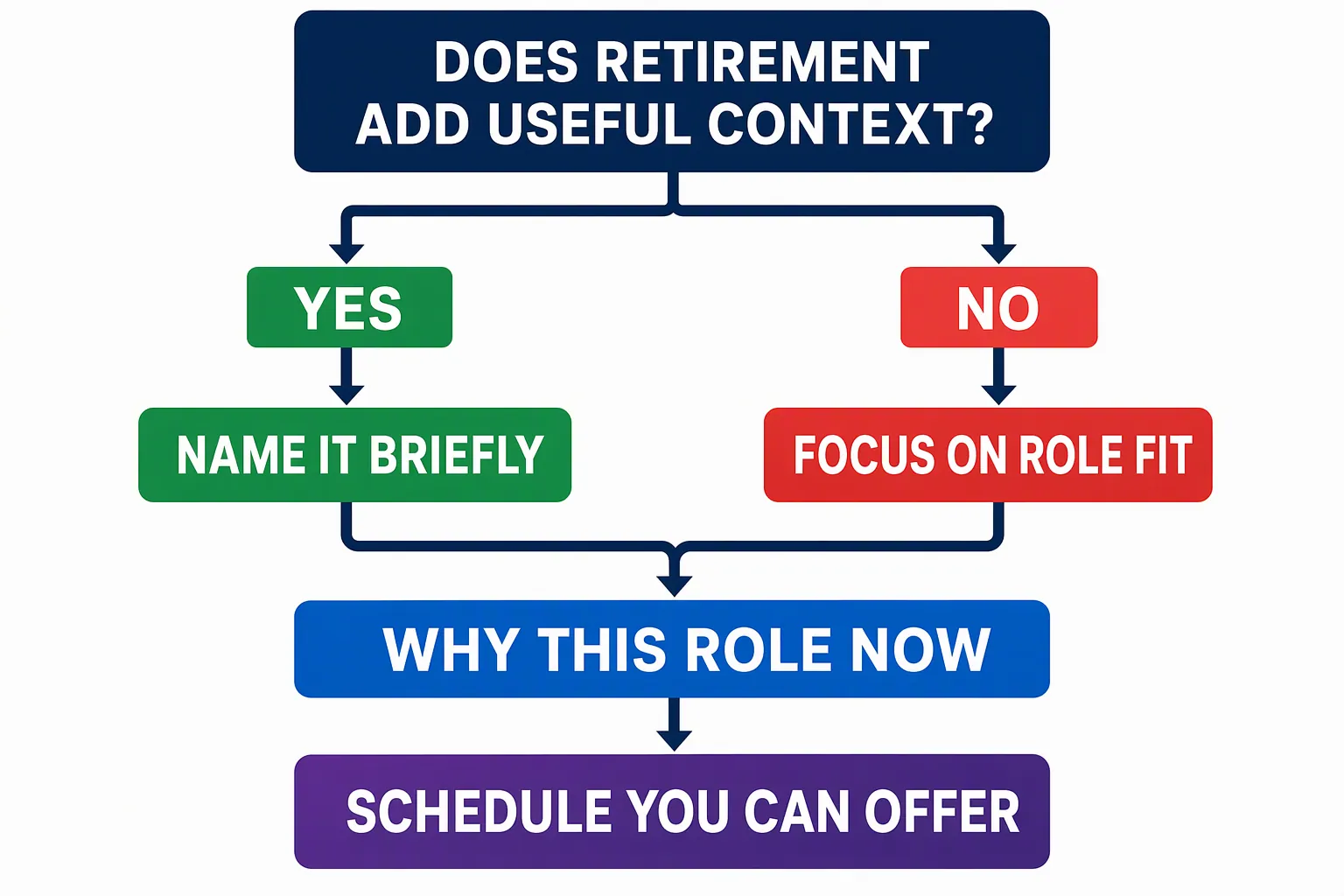
Structural approach: explain your return and working terms
Plan the letter around the opening, not your entire retirement story. A short reason for returning can provide context, but the main point is the contribution you can make in this particular role. The cover letter structure guide explains the general paragraph order; use these steps to make that structure specific to returning after retirement.
- 01
Decide whether retirement needs a mention
If a gap needs context, or your reason for applying would otherwise be unclear, state that you retired and have chosen to return. Keep it brief and factual. If it adds no useful context and the application does not ask, focus on your fit instead. Do not change a former title or date to disguise your history.
- 02
Connect your reason to this opening
Name the [Job Title] and [Company Name], then explain what attracts you to this work now. Give a concrete reason related to the role, its responsibilities, or the arrangement described in the posting. Avoid generic claims about wanting any job or assumptions about what people do after retirement.
- 03
Pair relevant experience with recent evidence
Choose an earlier responsibility or result that relates to the opening, then add a recent example showing how you use a related skill now. A volunteer task, project, course, or current tool use can help if it is true and relevant. Describe what you did rather than relying on a list of adjectives.
- 04
Make your availability precise
If schedule is important to your decision, give the days, hours, start date, or seasonal dates you can offer. Match the posting and your application, and avoid promising open availability unless that is accurate. Close by expressing interest in discussing how your experience and schedule fit the role.
See an after-retirement cover letter example
This fictional example shows one way to explain a return to work, provide recent skill evidence, and state a part-time schedule.
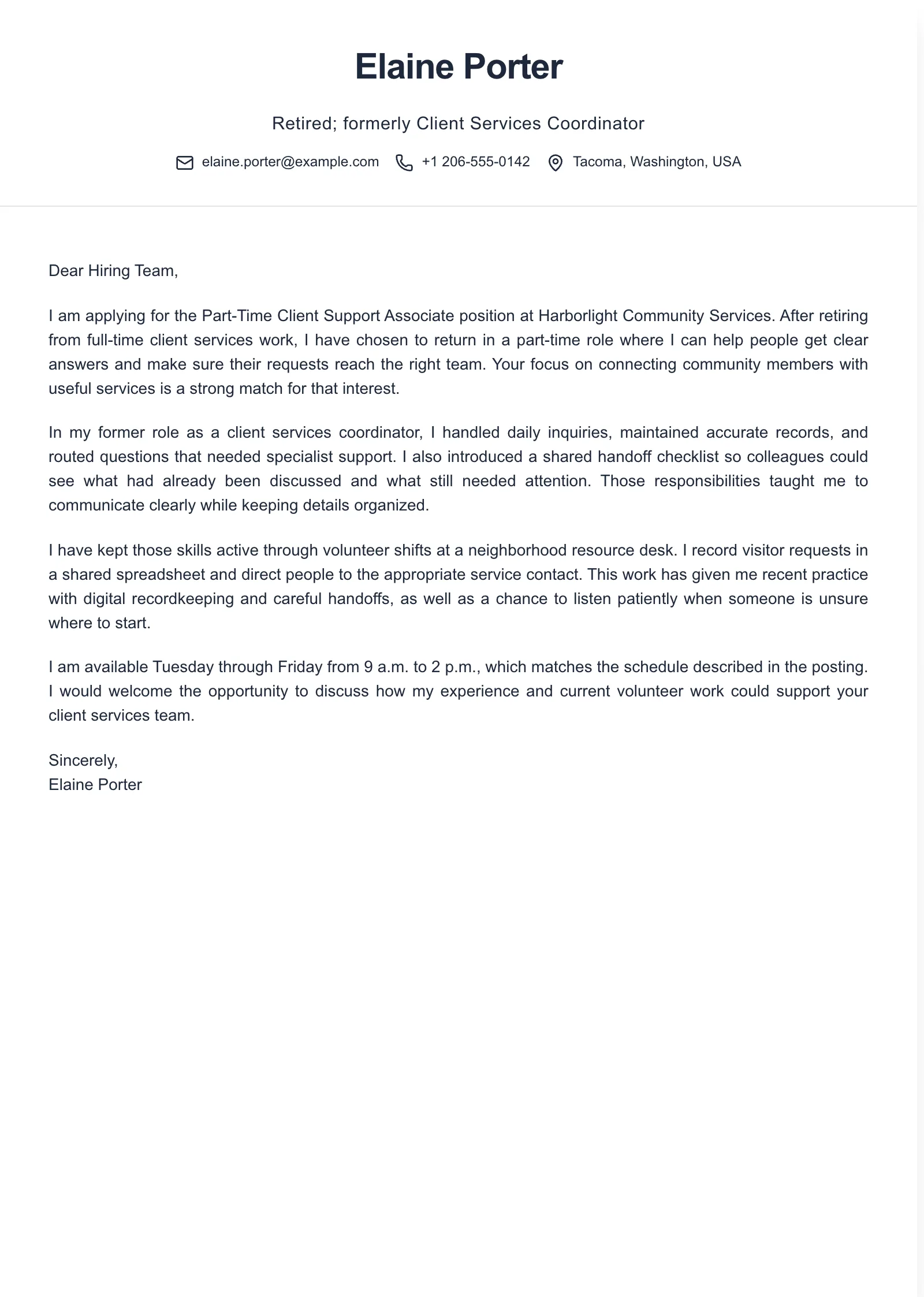
Example paragraphs
“I am applying for the [Job Title] role at [Company Name] because [specific responsibility or feature of the role] fits my interest in [truthful reason for returning]. After retiring from full-time work, I have chosen to return in a role where I can contribute [relevant strength].”
“In my former role as [accurate former job title], I [specific relevant responsibility or result]. More recently, [recent task or activity] has kept my [relevant skill or tool] in use, including [specific factual example].”
“For the [Job Title] position at [Company Name], I can work [specific days and hours or seasonal dates]. This schedule suits my current availability, and I can meet the schedule stated in the posting for [specific responsibility or shift, if applicable].”
Treat these as separate paragraph options, not a full letter to copy. Replace each bracket with a fact you can explain in a conversation. Keep any retirement context brief, make the recent example concrete, and give only the availability you can honor. Adapt the detail to the opening and any separate application questions.
Common mistakes in an after-retirement cover letter
Apologizing for retiring
- What goes wrong
- An apologetic tone can shift attention from your qualifications to a decision you do not need to defend.
- Better approach
- Describe your return as a clear choice. Give a brief reason if it helps explain your interest, then focus on the work you can do.
Making retirement the whole story
- What goes wrong
- A long account of when and why you retired can crowd out your fit for the opening and include personal details that are not needed.
- Better approach
- Use a concise explanation for context when useful. Use the rest of the letter to connect relevant experience, recent skills, and interest in the role.
Being vague about availability
- What goes wrong
- Saying you are flexible does not tell the employer whether your preferred schedule matches the job.
- Better approach
- State the days, hours, or dates you can work when the posting makes schedule relevant. Make sure those details match your application.
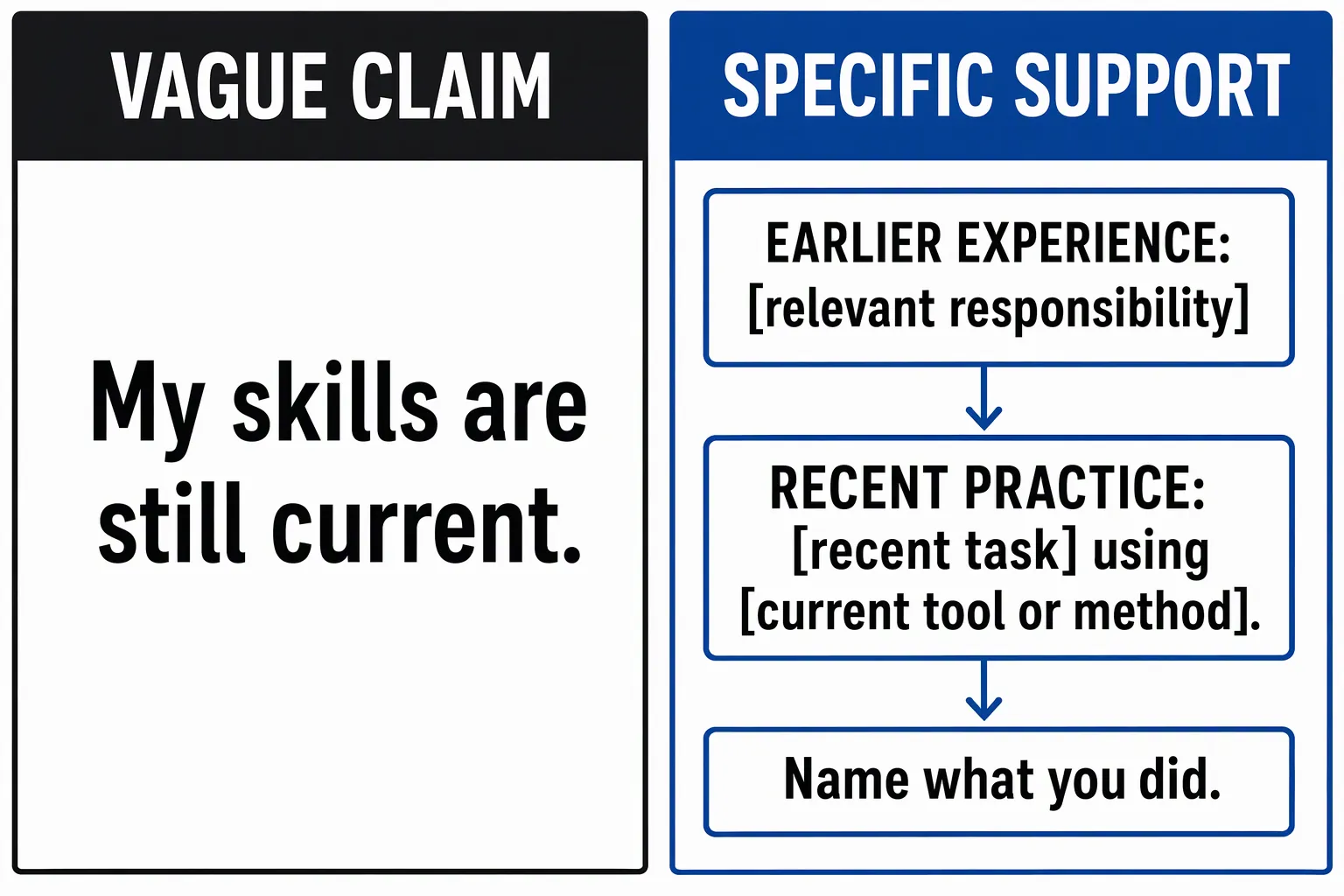
Claiming current skills without evidence
- What goes wrong
- A broad claim can leave the reader unsure whether you have used relevant tools or methods recently. Hiding older experience or changing its title does not solve that problem.
- Better approach
- Keep your work history accurate, select the earlier responsibilities that matter, and add a truthful recent example of related practice. Name what you did and, when useful, the tool or process you used.
Frequently asked questions
- Do I need to say that I am retired?
- Not in every letter. Mention retirement briefly if it helps explain your work history or why you are applying now. If an application asks directly, answer accurately. You do not need to include personal details that do not help explain your interest or readiness for the job.
- How much should I explain about leaving full-time work?
- A brief, factual explanation is usually enough when context is useful. Spend more space on why you want this role now, what you can contribute, and the schedule you can offer. You can keep private reasons private unless they are relevant to a direct question.
- Should I leave older work experience out?
- Keep earlier experience that supports your fit, even if it is not recent. Pair it with a current example, such as a recent project, volunteer task, course, or regular use of a relevant tool. Keep past titles and dates accurate.
- Can I use this approach for a part-time or seasonal job?
- Yes. Make the schedule you can work clear and connect it to the specific opening. Check the posting for its stated term and hours; do not assume a role is part-time or seasonal just because you prefer that arrangement.

Put this career change approach into practice
Choose sample data or build your own cover letter, then personalize it before you download.