
Reverse-Chronological Resume
A reverse-chronological resume lists the most recent role first, making career dates, progression, and recent evidence easy to follow.
A reverse-chronological resume lists the most recent role first and then moves backward through earlier experience. It is the most familiar format in many private-sector hiring contexts because it makes dates, progression, and recent work easy to review.
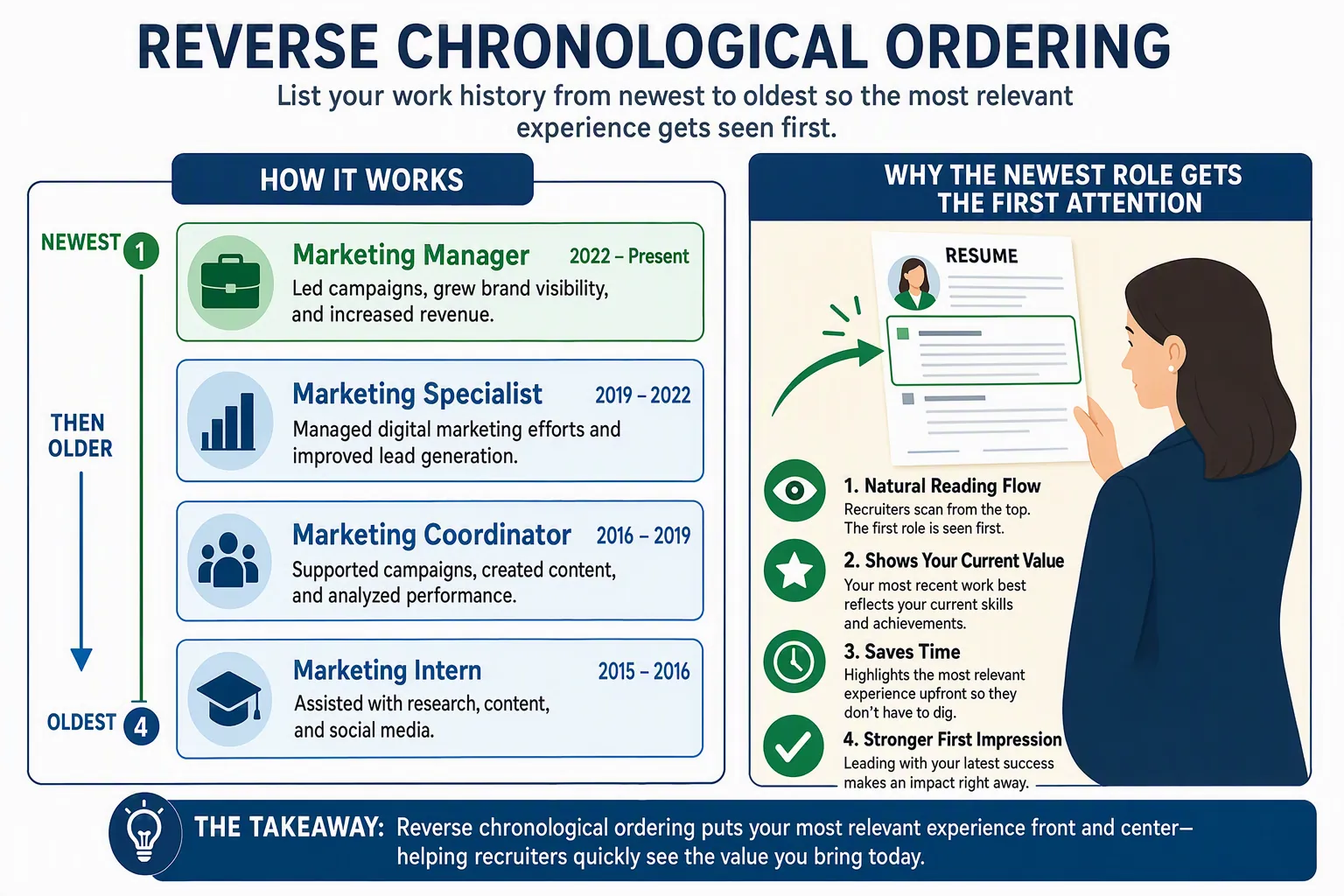
For each role, show the employer, title, dates, and selected evidence; give more detail to recent or relevant work and reduce older positions when they add less value. Reverse chronology does not require equal space for every job; the format can work for career changers when earlier relevant experience is still visible and transferable evidence is clearly framed. A short summary or skills section can add focus without removing chronology, creating a hybrid resume; a reverse-chronological resume differs from a functional resume, which groups content mainly by skill; concurrent freelance work, education, or caregiving should be labeled clearly, and roles should not be reordered by relevance while the section is presented as chronological.
For example, a candidate with three roles lists the current position first, followed by the previous two positions in descending date order.