
Background Check
A background check verifies selected information relevant to employment, with scope, consent, and candidate rights varying by role and jurisdiction.
A background check is a verification process an employer may use before or after making a conditional offer. Depending on the role and local law, it may cover identity, employment, education, professional licenses, driving records, criminal records, credit information, or work authorization.
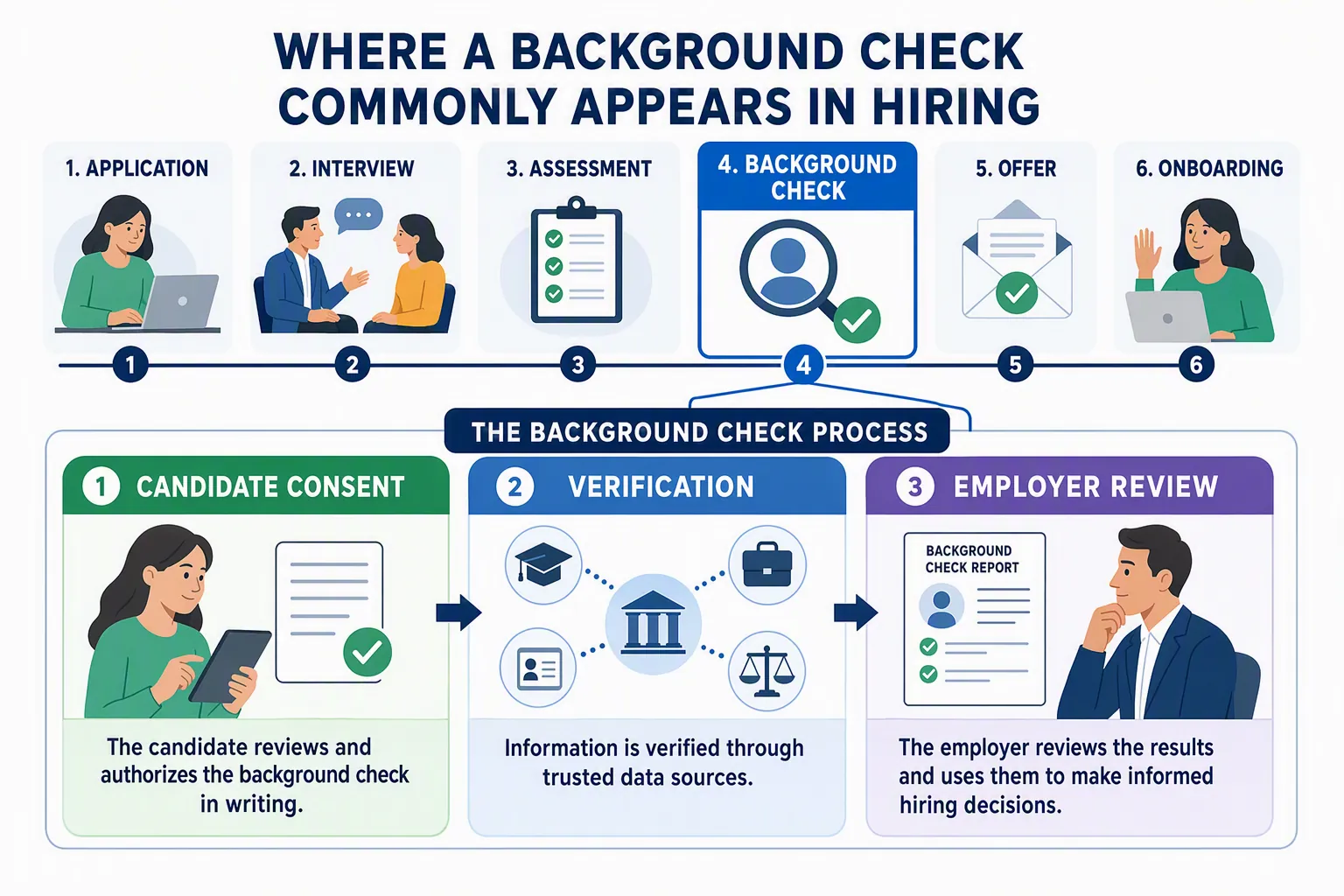
The scope is not universal; a financial role may involve checks that are unnecessary for a design role. Employers and screening providers must follow the laws that apply in the relevant jurisdiction, including rules about notice, consent, use of information, and disputes; provide accurate names, dates, institutions, and credentials on requested forms. A resume can be selective, but an official background form may ask for a complete history within a defined period; explain legitimate title or date differences clearly rather than changing records to make them match; candidates should read the authorization, retain submitted records, and use the provider’s dispute process when a report contains information they believe is inaccurate.
For example, an employer may verify the degree and employment dates a candidate reported after receiving the candidate’s consent.