
Introduction
A work experience cover letter is a short request for an organization to consider a school placement. Write as a student, not as an experienced worker applying for a permanent job. Say which school year you are in, why this particular organization interests you, and what you hope to learn.
This guide is for school work experience requests, including those from Year 10 and Year 12 students. An internship application and a school placement request can overlap, but the request here needs to make the learning aim, proposed dates, and any school coordination clear. Be specific without claiming experience or skills you do not have.
What to address directly
How to sound capable without pretending to be experienced
- Hiring manager concern
- A student may have little formal work experience and worry that the letter will sound empty. Copying adult job-application language can make the request sound unlike the student or imply experience they do not have.
- What your letter should prove
- Use a true example from school, a club, or a community activity to show how you approach a task. Briefly say what you did and what you learned, then connect that to a learning aim for the placement. Identify the setting as school or community activity; do not present it as professional work or invent results, duties, or qualifications.
How to explain what you want to learn
- Hiring manager concern
- A broad statement such as “I want work experience” gives the host little reason to understand why you contacted them or what you hope to gain.
- What your letter should prove
- Name one or two things you would like to understand by observing or taking part where appropriate, such as how a team plans its work or communicates with visitors. Make the aim a request, not a promise that the host will provide particular tasks or training. Choose something connected to a real feature of the organization.
How to make dates and arrangements easy to check
- Hiring manager concern
- The host may need to know when you are asking to attend and whether your school is involved. Unclear dates or language that assumes the placement is confirmed can cause confusion.
- What your letter should prove
- Give the dates provided or confirmed by your school, or say when they are expected. Mention the relevant school contact or process if there is one, and ask whether the host could consider the request. Rules for school-age placements can vary by age and local bylaws. Ask your school and the host to check the arrangements, and consult current UK government guidance on child employment. A letter is not confirmation that the placement is permitted.
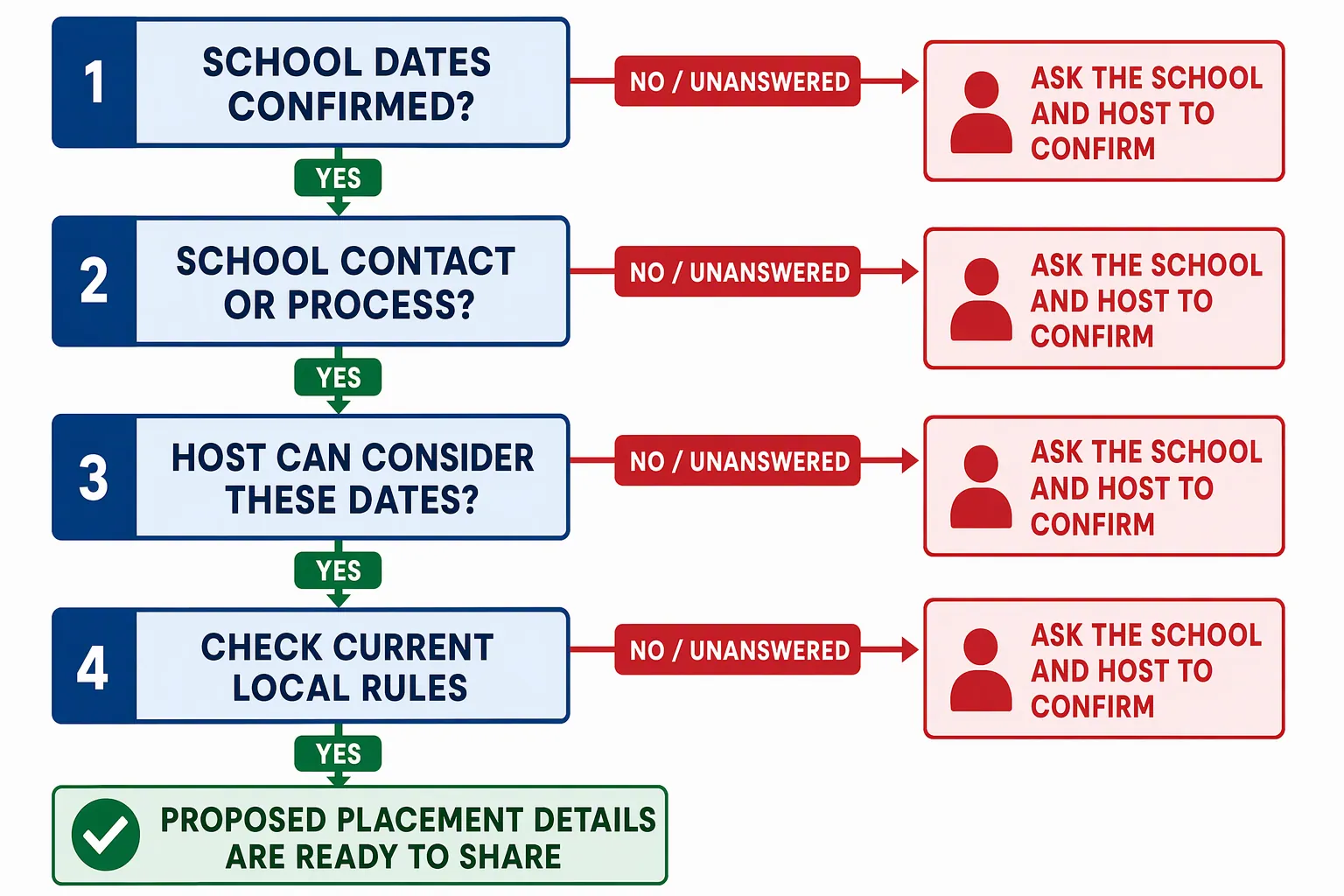
Structural approach for a school placement request
Keep the request focused on why you are contacting this host and what you hope to learn, rather than trying to fill it with a full work history. A useful cover letter structure can help organize the message. For a school placement, adapt it to cover who you are, why you chose this organization, your learning aim, and the proposed dates and coordination.
One workable structure has four steps. It is a guide, not a required format. Follow instructions from your school or the host first, since the requested process and format can vary.
- 01
Identify yourself and the placement
State your school year and the dates you are asking about. Name the opportunity in the host's terms if known. Make clear that this is a school work experience request, not an application for a permanent job.
- 02
Give a specific reason for choosing the host
Mention one accurate feature of the organization that interests you and explain what you hope to learn from seeing its work. Avoid general praise that could be sent unchanged to any organization.
- 03
Support your request with one true example
Choose a school, club, or community example that shows a useful habit, such as preparing carefully or working with others. Describe your own contribution plainly and keep the setting clear. Do not imply that a classroom task was professional work.
- 04
Make the next step clear
Ask whether the organization could consider the placement and say how your school can coordinate details, if applicable. Include a school contact only with permission. Check the host's requested format before sending.
Work experience placement cover letter template
Preview a fictional student request that explains a learning aim, gives proposed dates, and mentions school coordination.
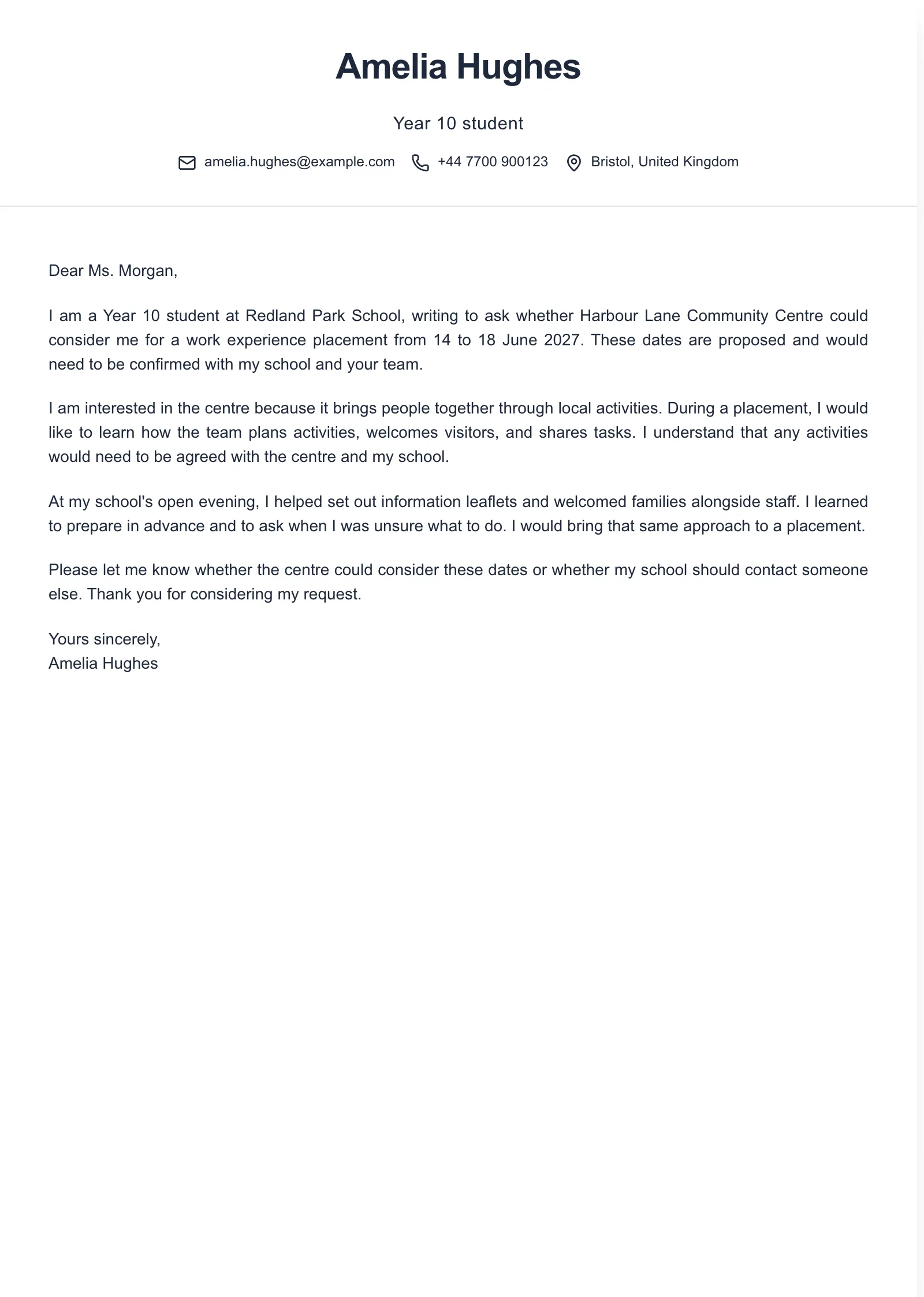
Example paragraphs
“I am a [school year] student at [School Name], writing to ask whether [Organization Name] could consider me for a [placement name] during [dates provided by my school]. My school contact is [school contact or process, if applicable], and I would be glad to provide information needed to check the arrangements.”
“I am interested in [Organization Name] because [specific, factual reason]. During a placement, I hope to learn how [specific activity or process] works in practice. At [school or club], I have [factual example of a relevant task], which made me curious to understand more.”
“For [school or community activity], I [factual action you took]. This taught me [specific lesson relevant to the placement]. I would like to learn how [related activity] is handled at [Organization Name], while following the arrangements agreed with the host and my school.”
Use these paragraphs as separate building blocks, not as a complete letter. Replace each bracket with a fact you can explain, and remove anything that does not apply. Keep the voice natural for a student and connect the learning aim to this host. If you mention dates, make clear whether they are proposed or confirmed. Follow the host's instructions for format and contact. Traditional UK sign-offs use “Yours sincerely” when you address a named person and “Yours faithfully” when you do not, but these are conventions, not a substitute for the host's instructions.
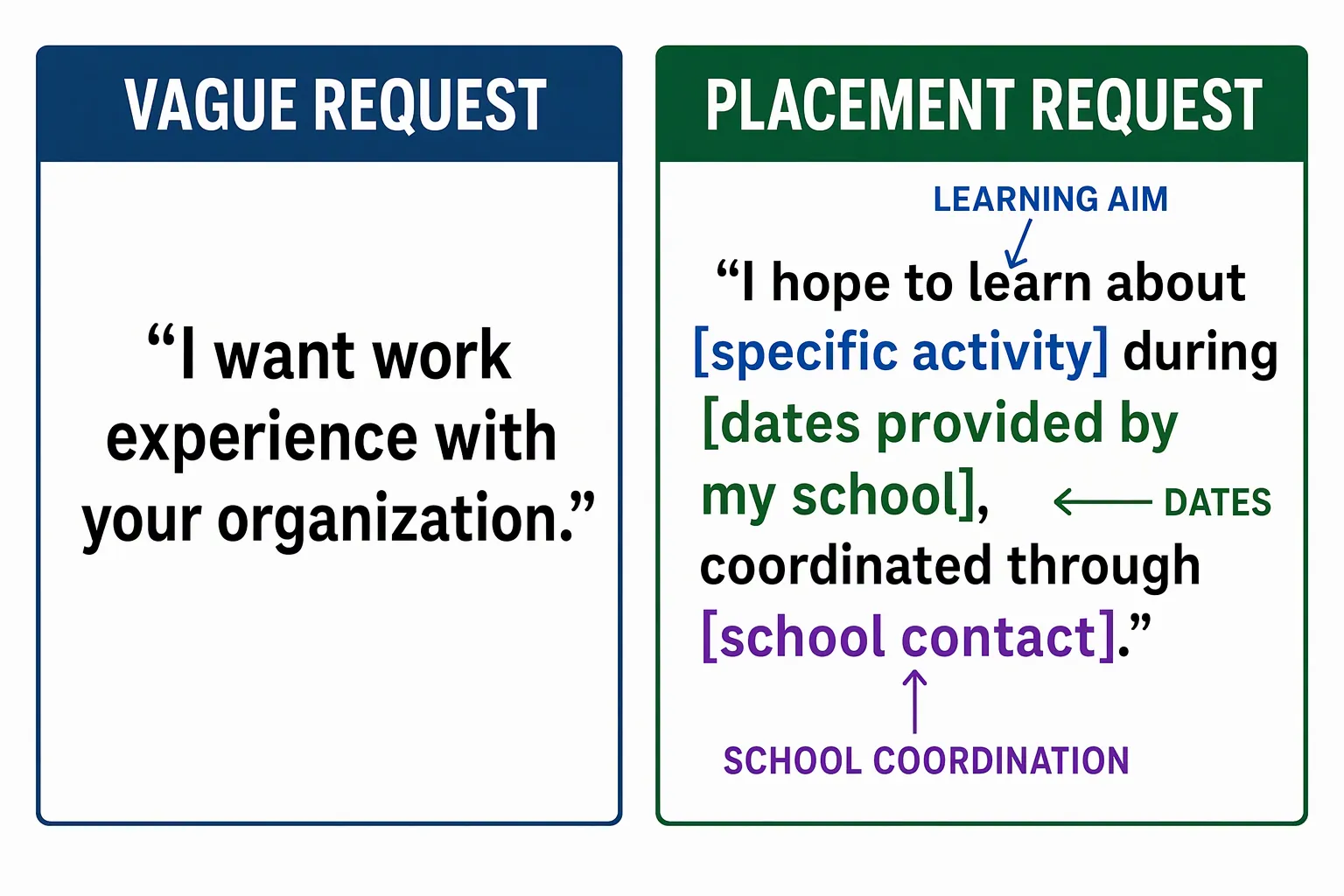
Common mistakes in a work experience placement letter
Writing as if you already have professional experience
- What goes wrong
- Calling school tasks professional duties or claiming expertise can make a student's account misleading.
- Better approach
- Describe the real setting and your own contribution. Explain what you hope to learn instead of presenting yourself as already qualified.
Sending the same request to every host
- What goes wrong
- A generic request does not show why this organization fits your learning aim.
- Better approach
- Add one accurate detail about the host and connect it to something specific you hope to observe or understand.
Leaving out dates or school coordination
- What goes wrong
- Without a date range or relevant school-process information, the host may not know what you are asking them to consider.
- Better approach
- Give the dates provided or confirmed by your school, or say when they are expected. Explain the relevant school contact or process without implying that the host has agreed.
Treating a placement as automatically allowed
- What goes wrong
- Arrangements can depend on age and local rules. A letter does not settle whether a proposed placement is permitted or available.
- Better approach
- Ask your school and the host to check the proposed arrangements against current official guidance for the relevant location. Do not promise availability or imply approval before it is confirmed.
Frequently asked questions
- Should a Year 10 or Year 12 student write the letter?
- Either can write in their own voice. State your school year, why you are contacting this organization, and what you hope to learn. If a school coordinator or parent is arranging the placement, explain their role rather than presenting the request as a standard job application.
- What dates should I include?
- Give the dates provided or confirmed by your school, or say when you expect to have them. Ask whether the host can consider those dates before treating the placement as settled. If your school has a placement process or contact person, include the relevant information.
- Is a work experience placement letter the same as an internship cover letter?
- The formats can overlap. This guide focuses on asking an organization to consider a school placement, so it foregrounds the learning you hope to gain, the dates, and any school coordination. An internship application may have different instructions or selection criteria, so follow the specific posting or program requirements.
- Do school-age placement rules vary across the UK?
- Yes. Rules and arrangements can depend on age and local bylaws. School-age children's rules differ from those for young workers over compulsory school age. Ask your school and the host to confirm the proposed arrangements, and check current official guidance for the relevant location. A letter does not establish that a placement is permitted or available.

Put this career change approach into practice
Choose sample data or build your own cover letter, then personalize it before you download.