
Introduction
A Work and Travel cover letter is an application to an employer, not a request for program approval. Make it easy to see why you are applying, when you can realistically work, and which relevant skills you can support with examples. If you are applying through the US J-1 Summer Work Travel program, use that name only when it describes your actual program.
The US Department of State describes Summer Work Travel as a program with approved sponsors, jobs, and dates. Check its official program guidance and ask your designated sponsor about your own circumstances before making program claims. A cover letter cannot establish approval or replace program requirements. This page focuses on the employer-facing application.
What to address directly
Dates and availability
- Hiring manager concern
- Your program dates, travel plans, and availability for shifts may not be identical. A broad promise to work the entire season can mislead an employer if part of that time is not confirmed or available to you.
- What your letter should prove
- Check which dates are confirmed and compare them with the employer's schedule. State a realistic work window. If dates are pending, say so rather than presenting an estimate as final.
Accurate program terminology
- Hiring manager concern
- Calling a different country's working holiday arrangement J-1 Summer Work Travel can give an employer the wrong impression about your program.
- What your letter should prove
- Name your actual program and describe only what you have confirmed. Ask your sponsor or consult current official guidance about program-specific questions. Do not suggest that a job offer or cover letter guarantees approval.
Evidence for skills and language claims
- Hiring manager concern
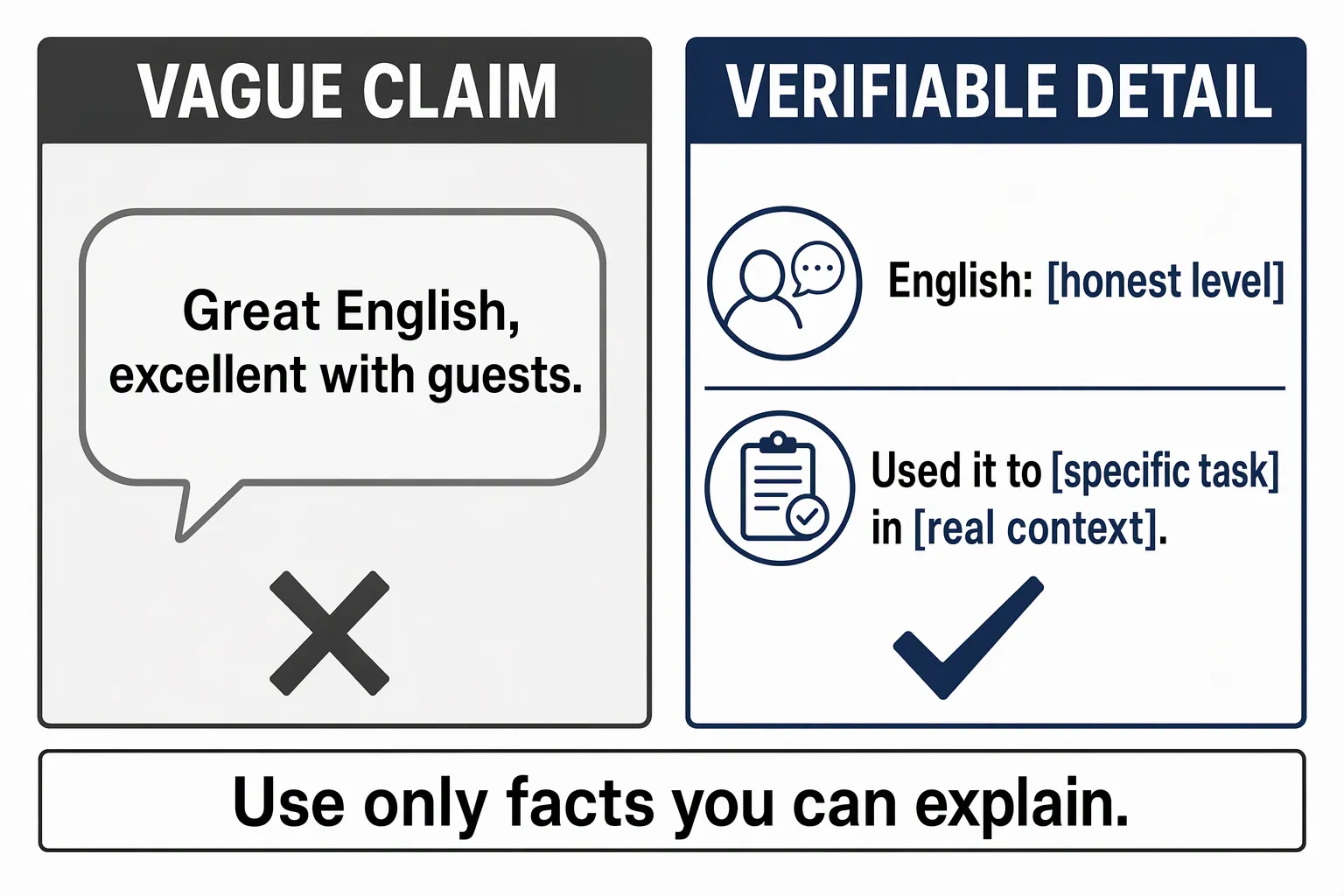
- Claims such as “fluent” or “excellent with guests” do not show what you can do in the role. Employers may need to understand how you communicate or contribute to a team.
- What your letter should prove
- Use a language description you can explain and pair it with a real example. If you have customer-service experience, name a task you actually handled. Otherwise, choose relevant evidence from another real setting.
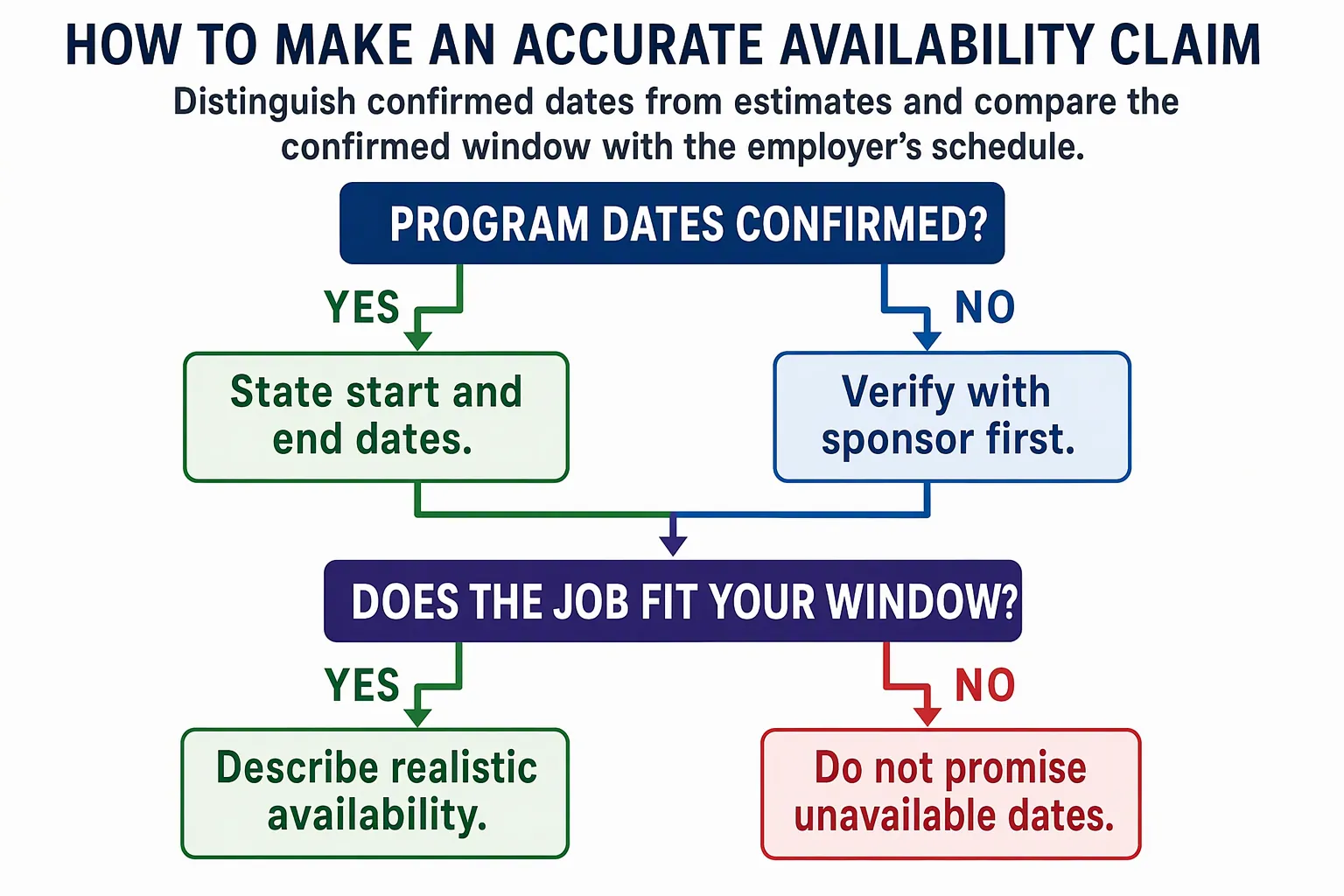
Structural approach: connect program facts to the posted job
Build the letter around the employer's actual opening: identify the role, explain your relevant availability, and give concise evidence for one or two skills the posting requests. For paragraph order, see the cover letter structure guide. The program-specific decisions about dates and terminology still belong in this letter.
Read the posting before choosing evidence. One seasonal role may need clear guest communication; another may emphasize teamwork, reliability, or a particular schedule. Connect your example to the stated need. Do not assume every Work and Travel job is in hospitality or that every employer uses the same application process.
- 01
Identify the opening
Use the job title and employer name from the posting. Refer to one specific task or requirement that interests you, rather than relying on general enthusiasm about travel or the location.
- 02
Check program details
Confirm the program name and relevant dates with your designated sponsor and current official guidance. Separate confirmed facts from plans. Do not use J-1 Summer Work Travel to describe a different arrangement.
- 03
Describe realistic availability
Give the work window and schedule details you can accurately discuss. If the employer's season extends beyond your confirmed availability, be clear about the period you can offer. Do not promise shifts or dates you cannot confirm.
- 04
Choose relevant evidence
Select one or two real examples that match the posting, such as communicating with customers, sharing information clearly, or coordinating with a team. State your language level honestly and explain where you used it.
Work and Travel cover letter example
A fictional example shows how an applicant can present a program window, relevant service experience, and an honest English level.
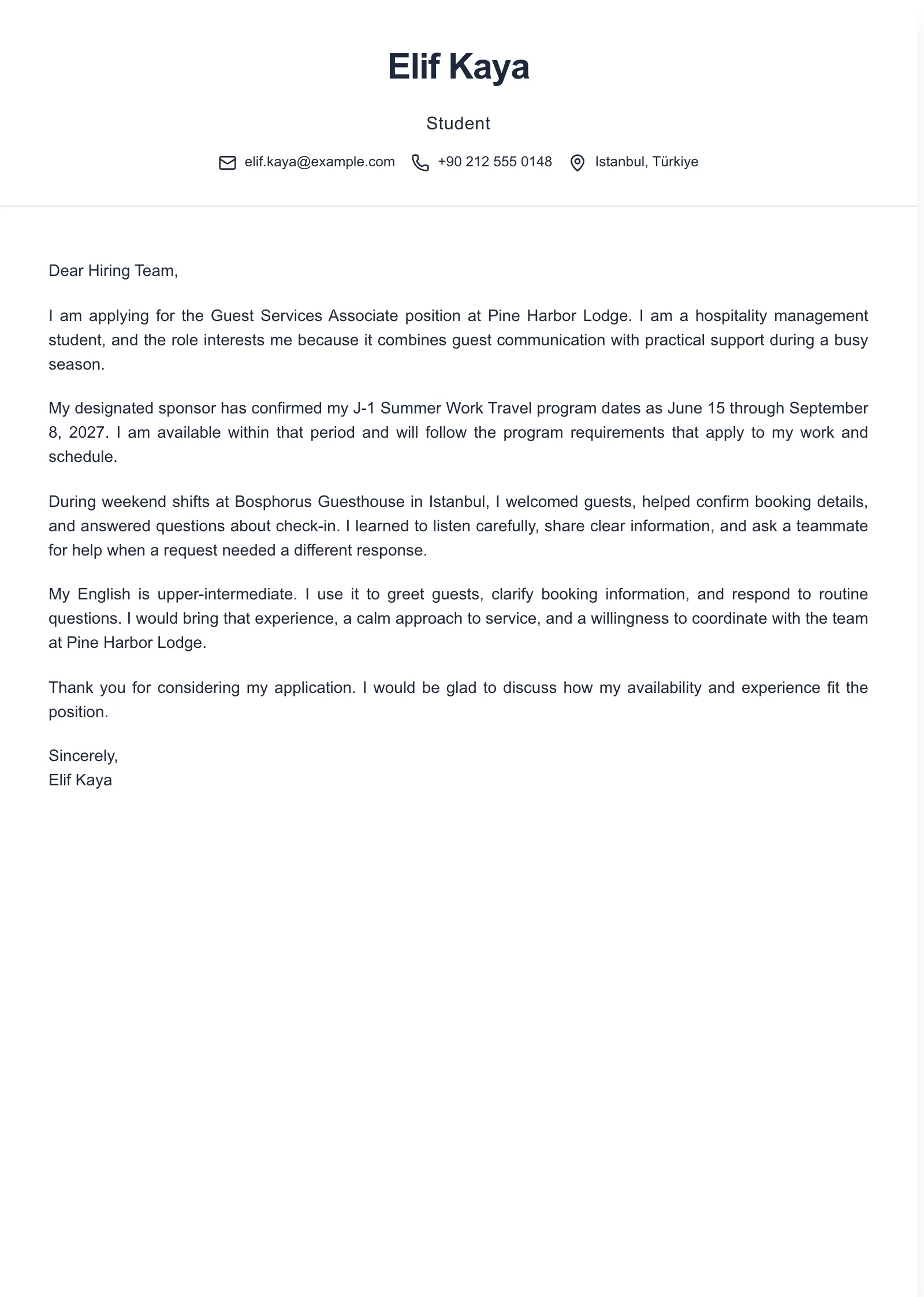
Example paragraphs
“I am applying for the [Job Title] position at [Company Name]. The role interests me because [specific task or detail from the posting] connects with my experience in [relevant, factual example].”
“My [accurate program name] dates are [confirmed start date] to [confirmed end date]. Within that period, I am available for [realistic schedule or availability], subject to the requirements that apply to my program.”
“I describe my [language] level as [honest level] and have used it to [specific communication task] in [real context], which is relevant to the [Job Title] position.”
Use these as paragraph patterns, not claims to copy. Replace each bracket with a fact you can verify and remove anything that does not fit. A language label is more useful when you can explain it with a real example. Hospitality experience may be relevant when the posting asks for it, but do not invent it; evidence from another customer-facing or team setting may also fit. Check every date against what you have confirmed with your sponsor.
Common mistakes in a Work and Travel cover letter
Making travel the main reason
- What goes wrong
- A letter focused on wanting to visit a destination may not explain your fit for the employer's opening.
- Better approach
- Keep travel motivation brief. Focus on the actual role, your realistic availability, and evidence that relates to the posting.
Claiming you can work any shift
- What goes wrong
- A promise to accept every shift can overstate your availability or leave the employer unclear about your actual work window.
- Better approach
- Give the schedule details you can support and discuss flexibility only when it is genuine and consistent with your circumstances.
Inflating language or service skills
- What goes wrong
- An unsupported claim such as “fluent” does not tell the employer how you communicate in a relevant situation.
- Better approach
- Choose an honest description and add a brief example of a real task or interaction. Do not inflate your level to mirror the posting.
Ignoring posting-specific instructions
- What goes wrong
- An employer may request additional documents or separate answers that a cover letter does not replace.
- Better approach
- Check the application instructions and submit the requested materials in the requested format. Keep the letter focused on its own purpose.
Frequently asked questions
- Is a J-1 Work and Travel program the same as a working holiday?
- No. Working holiday can refer to different country-specific arrangements, and those are not interchangeable with the US J-1 Summer Work Travel program. Use the name that matches your actual program and check its official guidance.
- What should I say if my program or work dates are not confirmed?
- Do not present estimates as confirmed dates. Check your designated sponsor's current instructions, describe your status accurately, and give confirmed dates only when you have them. Update the employer if your availability changes.
- Should I state my English level in the letter?
- Include it when it helps the employer assess the role's communication needs. Use a level you can support and add a brief, factual example of how you have used English in a relevant situation.
- Does a cover letter secure J-1 approval or permission to work?
- No. A job application letter does not grant program approval or work authorization. Confirm your program status, job requirements, and dates with your designated sponsor and current official guidance.

Put this career change approach into practice
Choose sample data or build your own cover letter, then personalize it before you download.