
Introduction
A cover letter with a portfolio should help a reader see why selected work matters to this application. It is not an inventory of everything you have made. Treat the letter as a short guide to a few relevant pieces, with enough context to explain what each demonstrates.
Choose two or three samples as a practical starting point, then name what you did and how it connects to [specific responsibility in the posting]. Use one clear portfolio address, and describe each sample accurately, including whether the work was individual, collaborative, academic, or practice work.
What to address directly
A link alone does not explain your fit
- Hiring manager concern
- A reader may not know where to look or why a sample matters if the letter only provides a portfolio address.
- What your letter should prove
- Name the relevant pieces in the letter and connect each to a responsibility, skill, or type of work in the posting. The portfolio gives more detail; your letter explains why that detail is relevant here.
A finished piece may hide your contribution
- Hiring manager concern
- A sample can involve several people or stages of work, which may not be clear from the finished result.
- What your letter should prove
- Briefly identify the project context and your role. For collaborative work, describe your own contribution instead of claiming the whole result. Choose evidence you can explain if asked.
Some samples are not appropriate to share
- Hiring manager concern
- A broken or restricted link prevents a reader from reviewing the work, while an unapproved sample could expose private information.
- What your letter should prove
- Check that the intended reader can open the link and that you are allowed to share the material. If you cannot share a sample, choose another one or describe your relevant contribution without revealing private details.
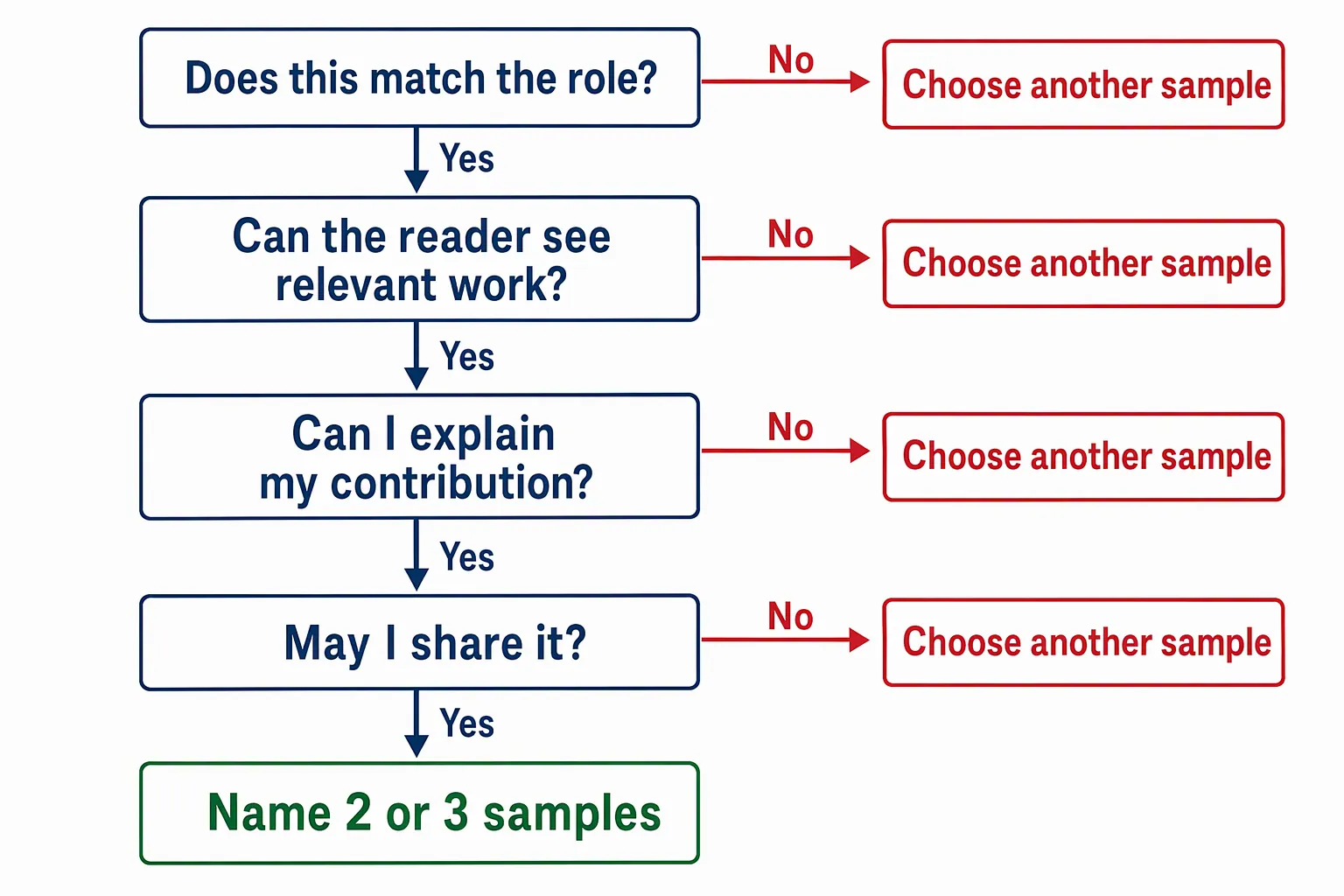
Structural approach: connect the role, the work, and the link
Keep the portfolio reference within a normal cover letter rather than turning the document into a project catalog. Open with the [Job Title] and a specific reason your work relates to [Company Name]. Then name selected samples, explain your contributions, and connect them to the posting. The cover letter structure guide explains how this focused paragraph can fit into the rest of a letter.
Let the portfolio expand on the letter instead of repeating it. Give the reader one clear address and make the sample titles and your role easy to find on the portfolio page. A concise label such as “Selected work” is more useful than several unexplained URLs. Check that the address works in the format you plan to submit, and follow the application instructions about supporting links.
- 01
Match samples to the posting
Choose two or three pieces that relate to work described in the posting. Look for a shared task, audience, process, or skill, rather than a similar-sounding title. If no sample is an exact match, explain the narrower connection honestly.
- 02
Identify the evidence in each piece
For every sample, note its purpose, your contribution, and what a reader can actually see. Prefer distinct examples over several pieces that make the same point. Do not add outcomes or numbers that the work does not support.
- 03
Name the work and your role
Use the sample's portfolio title, then briefly explain its relevance. For collaborative work, say which part was yours. Label academic, personal, and practice work accurately so the reader understands its context.
- 04
Make the link easy to use
Use one clear portfolio address rather than a string of separate links. Open it as a reader would and check that the named samples are easy to locate. Follow the application instructions and remove any material you cannot appropriately share.
Portfolio Cover Letter Template
This fictional example shows how a concise portfolio link and three named samples can support an application without turning the letter into an inventory.
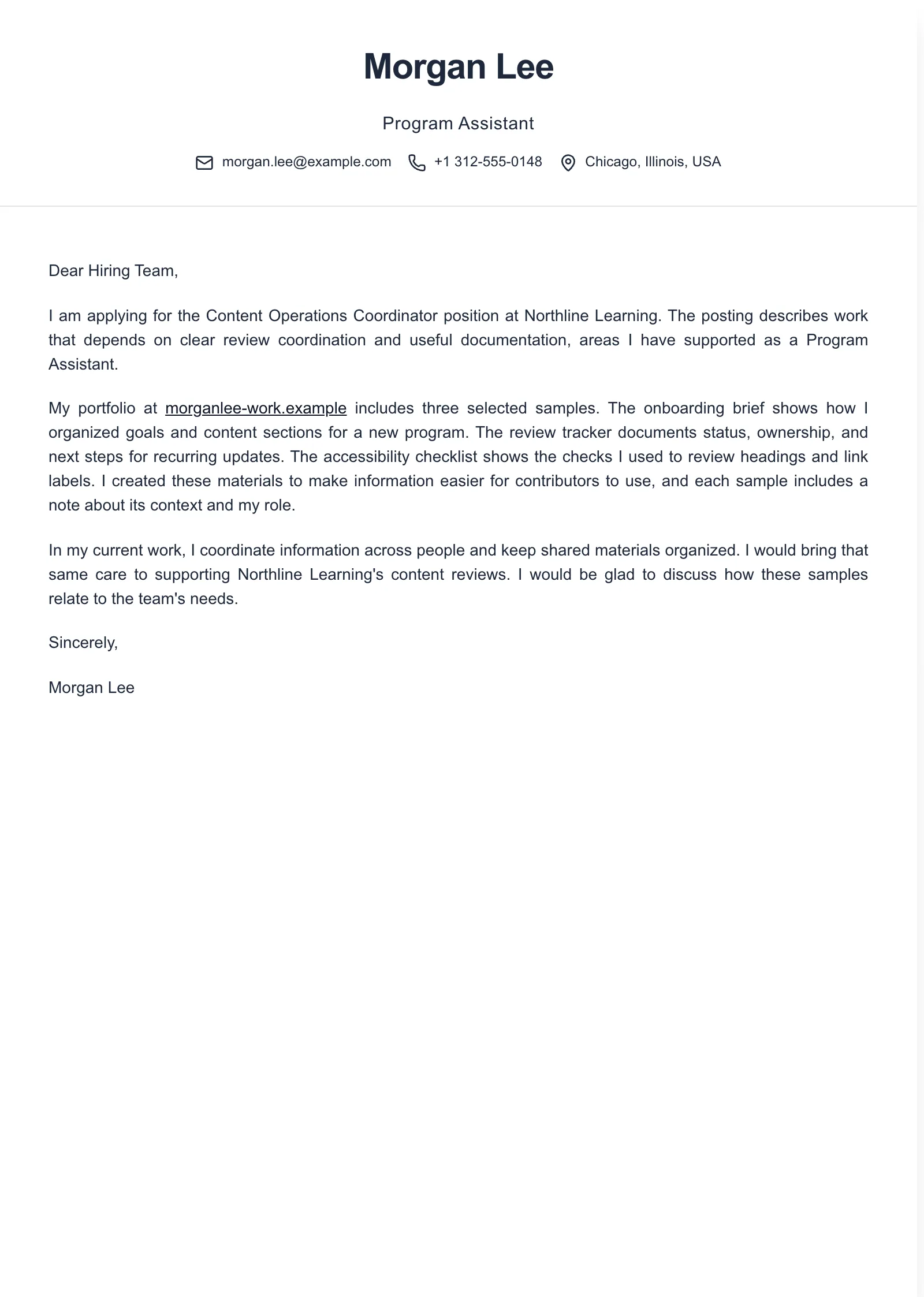
Example paragraphs
“For the [Job Title] role at [Company Name], I selected [Sample One], which shows my work on [factual contribution], and [Sample Two], which demonstrates [relevant process or skill]. Both connect to [specific responsibility in the posting] and are available at [Portfolio URL].”
“My portfolio includes [Project Name], a [type of work] created with [team, class, or other context]. I contributed [your factual contribution], which relates to [specific need in the posting]. The sample is labeled as collaborative so my role is clear.”
“Although [Sample Name] was created for [original context], it demonstrates [specific transferable skill] relevant to the [Job Title] role at [Company Name]. I contributed [factual task], and the sample shows [observable evidence]. You can view it at [Portfolio URL].”
Adapt a paragraph to match work you can show. Replace each bracket with a checkable detail, and remove any claim the linked sample cannot support. These are paragraph examples, not a complete letter. Keep the letter focused; the portfolio page can provide further context.
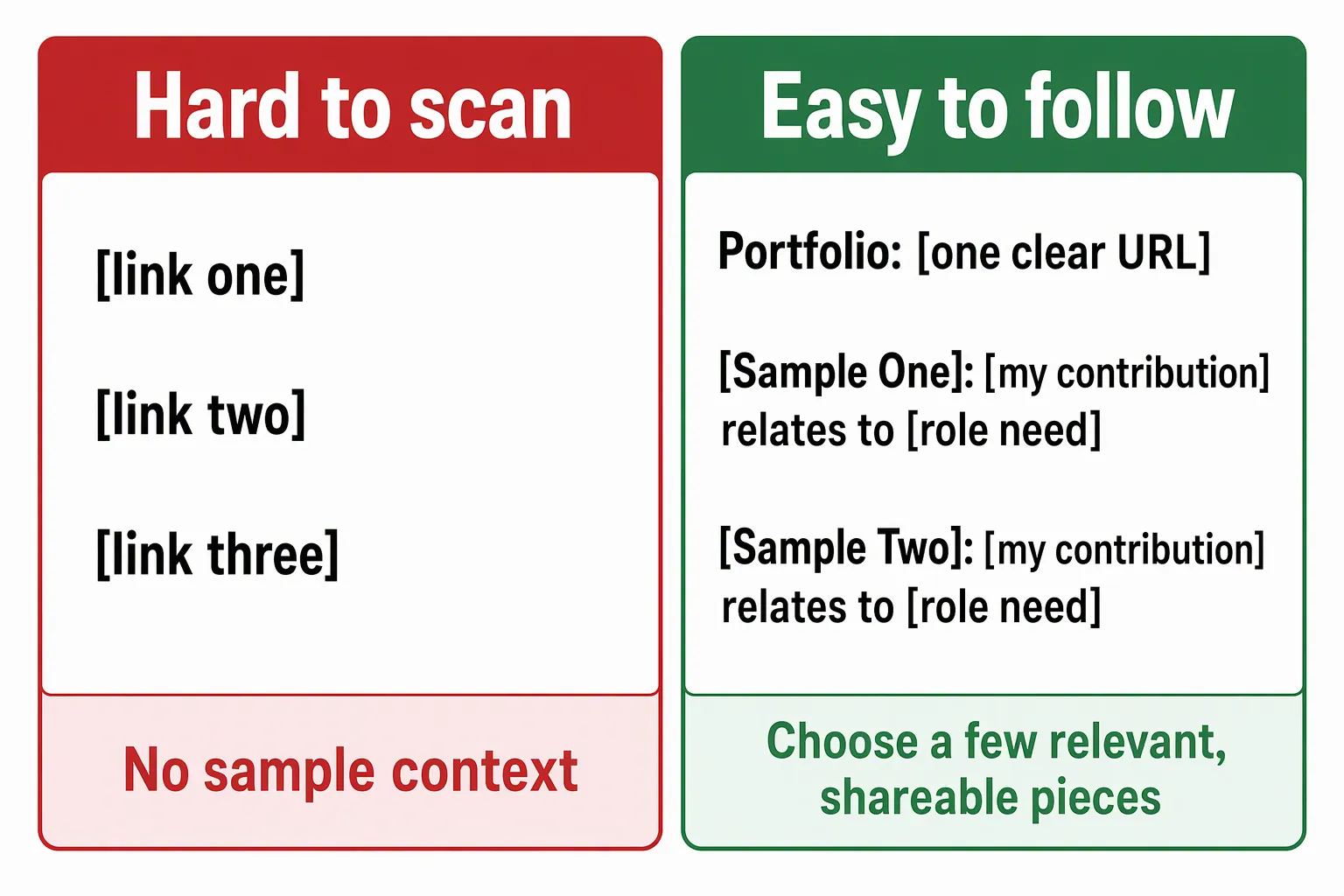
Scenario-specific mistakes to avoid
Listing the entire portfolio
- What goes wrong
- Naming many projects or pasting several separate URLs leaves the reader to decide which work supports your application.
- Better approach
- Choose a few relevant samples, name them in the letter, and use one clear portfolio address. Keep other work on the portfolio page.
Using praise instead of context
- What goes wrong
- Calling a sample impressive or successful does not explain what it contains, what you did, or why it relates to the role.
- Better approach
- Describe the work, your contribution, and its connection to the posting. Mention outcomes only when they are accurate and you can explain how they were established.
Claiming work completed by a team
- What goes wrong
- Presenting a collaborative project as individual work can mislead a reader and make your role difficult to discuss.
- Better approach
- Identify the project as collaborative and specify your contribution. Keep project descriptions factual so the reader understands the context of your work.
Sharing an inaccessible or inappropriate sample
- What goes wrong
- A broken, restricted, or confidential sample cannot support your explanation and may reveal information you should not disclose.
- Better approach
- Test the link and check that the material is appropriate to share. If permission or access is uncertain, choose another sample or describe your contribution without including private content.
Frequently asked questions
- How many portfolio pieces should I mention in a cover letter?
- Two or three is a useful editorial target, not a universal requirement. Name the pieces that best connect to the posting, and briefly explain what each shows. Keep the portfolio available for readers who want to explore other work.
- What if my portfolio is small?
- A small collection can still be useful when its pieces are relevant and clearly described. You may include personal, academic, or practice work if you label it accurately and explain your contribution. Do not imply that practice work was paid client work.
- Can I include work from a team project?
- Yes. Identify the project as collaborative and explain your own contribution. Describe the work you completed or supported, rather than presenting the whole team's work as yours.
- What if a sample is confidential or the application has no portfolio field?
- Do not share confidential material without permission. Use an approved or safely redacted sample if available, and follow the application's instructions. If there is no portfolio field, include a link in the letter only if supporting links are appropriate for that application.

Put this career change approach into practice
Choose sample data or build your own cover letter, then personalize it before you download.