
Introduction
Applying while employed calls for a focused explanation: show what your current experience contributes, explain why this opportunity interests you, and handle privacy or timing only if either matters. This is not a guide to explaining an employment gap or changing careers. Its narrower purpose is to help you apply while keeping your account of your current work accurate.
You do not have to announce your search to your current workplace in the letter. Nor should you promise an immediate start or a particular date before checking what you can manage. Follow the application instructions, keep private logistics brief, and make the opportunity itself the center of your case.
What to address directly
Keep the search discreet without hiding your work
- Hiring manager concern
- You may worry that mentioning your current job will draw attention to your search, or that leaving it out will make your work history unclear.
- What your letter should prove
- Describe your current role and relevant experience accurately, using facts consistent with your resume. Leave private search logistics out unless they affect the application. If you need a reference boundary, ask briefly that your current employer not be contacted without your permission. Do not present that request as a guarantee.
Explain your interest without criticizing your employer
- Hiring manager concern
- When explaining why you are looking, it can be tempting to focus on what is frustrating about your current workplace.
- What your letter should prove
- Make the reason about work you want to do next. Identify a responsibility, focus, or direction in this opportunity that genuinely interests you, then connect it to relevant experience or a goal. You can acknowledge what you have learned in your current role without describing it as a bad workplace. Avoid complaints and claims about the new employer that you have not verified.
Be realistic about notice and availability
- Hiring manager concern
- You may not know whether to state a notice period, when you could start, or how to answer a request for immediate availability.
- What your letter should prove
- Answer timing questions in the place and level of detail requested. Check the notice or transition commitments that apply to your situation before naming a timeframe. If you have not confirmed when you could start, say you can clarify later in the process. Do not imply that you can leave immediately if you cannot.
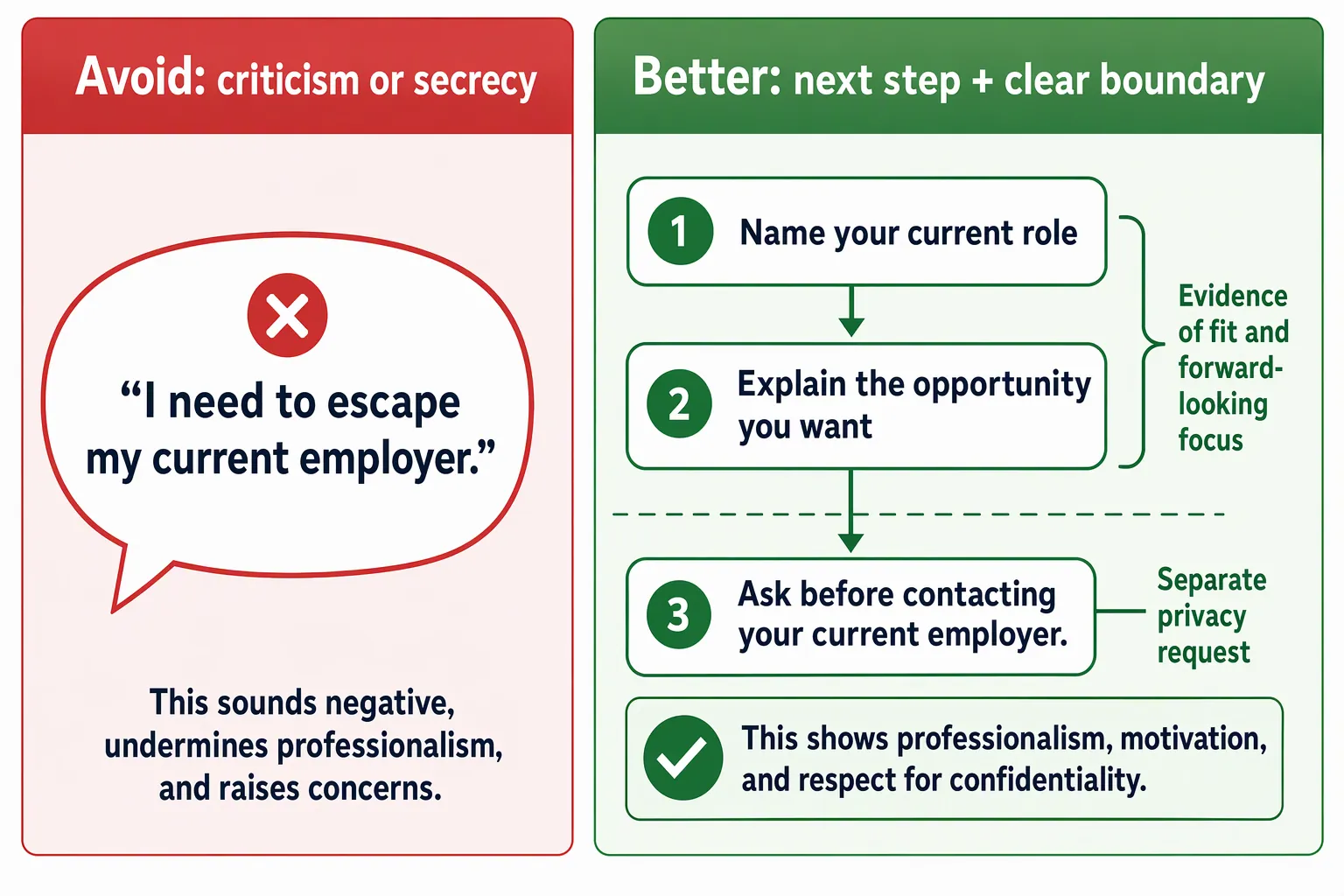
Structural approach: connect current work to a considered next step
Use the familiar cover letter structure, giving each part a clear purpose: identify the opportunity, connect your current experience to its needs, explain your reason for applying, and address confidentiality or timing only when useful. The cover letter structure guide covers general paragraph order; the decisions about your current employment are the focus here.
Make your reason specific enough to distinguish this opportunity from a generic desire for change. Name a real responsibility or direction in the posting, then connect it to relevant experience or a goal. Keep the explanation forward-looking without pretending that your current role has been perfect or making unsupported claims about the prospective employer.
- 01
Check the application instructions
Look for questions about availability, why you are moving, or contacting references. Answer them where requested, and do not add private details simply because the letter has room. If a form asks for timing, use the same confirmed information in your letter.
- 02
Choose relevant evidence from your current role
Select one or two accurate examples that connect your current work to the opportunity. Describe your own responsibilities and results, not confidential information about your employer. Keep job titles, dates, and other employment details consistent with your resume.
- 03
Give a specific, forward-looking reason
Name a real feature of the [Job Title] opportunity at [Company Name] that interests you, then connect it to relevant experience or a next step you want. Do not claim familiarity with the employer, its plans, or its culture unless you have checked the detail.
- 04
Set a boundary and confirm timing if needed
If you need discretion, make one short request about contacting your current employer and leave the explanation there. If availability matters, check the commitments that apply to you and state a realistic timeframe. If you are not sure, offer to confirm rather than making a premature promise.
A discreet application while employed
This fictional example shows how a candidate connects current experience to a new opportunity, requests a reference boundary, and describes individual start timing.
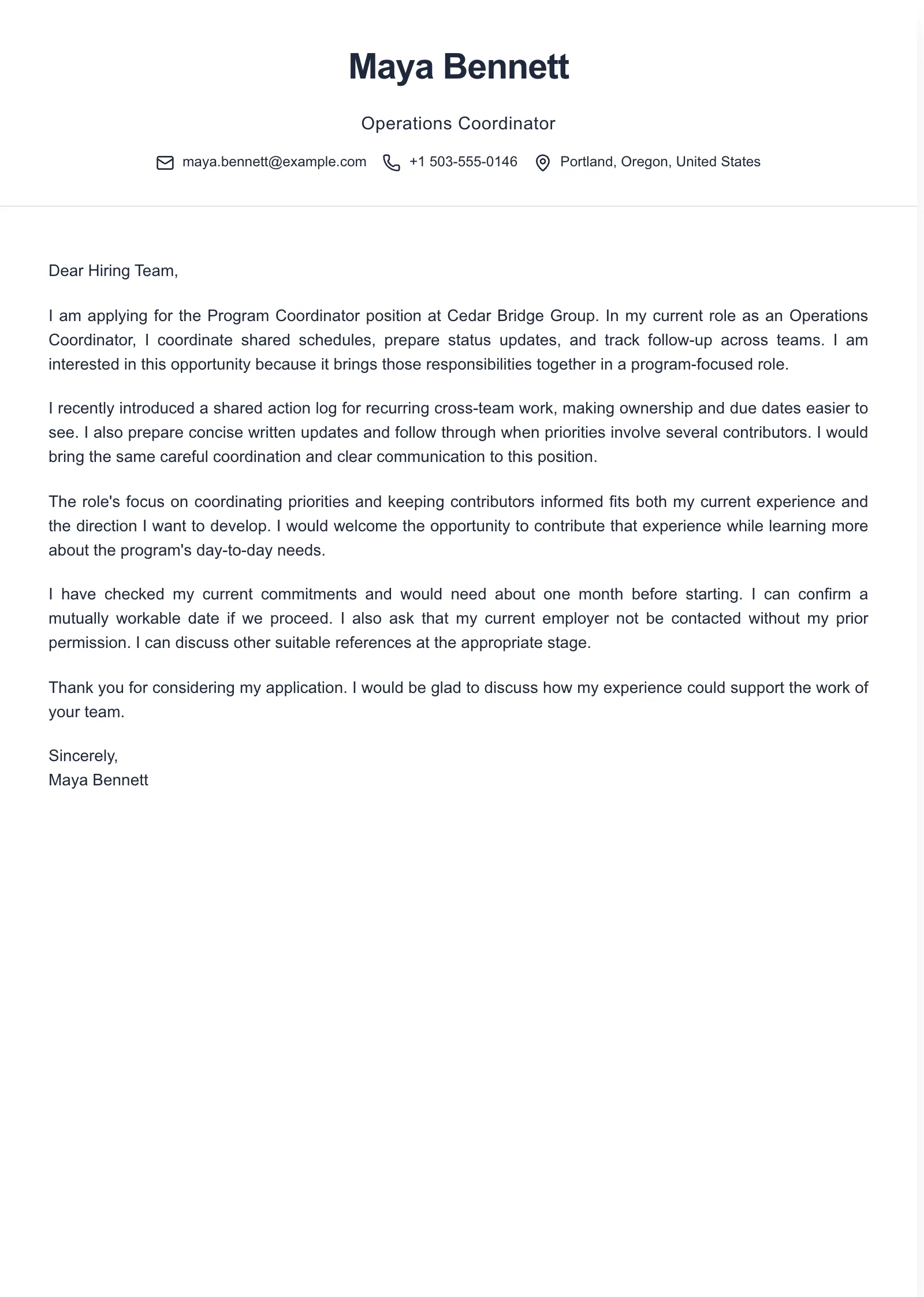
Example paragraphs
“I am considering the [Job Title] opportunity at [Company Name] because [specific responsibility or direction] aligns with my experience in [relevant, verifiable work]. I value what I have learned in my current role, and I am now looking for [specific next-step factor].”
“I am currently employed and ask that my current employer not be contacted without my prior permission. I would be glad to discuss suitable references at the appropriate stage of the process.”
“For the [Job Title] position at [Company Name], I would be available to start after [confirmed notice period], subject to agreeing on a date that allows a responsible transition from my current role.”
Use only statements that are true for your circumstances. Replace every bracketed phrase with a specific fact, and remove anything the application does not call for. A request about contacting your current employer is not a promise of confidentiality. If you do not need that boundary, leave it out.
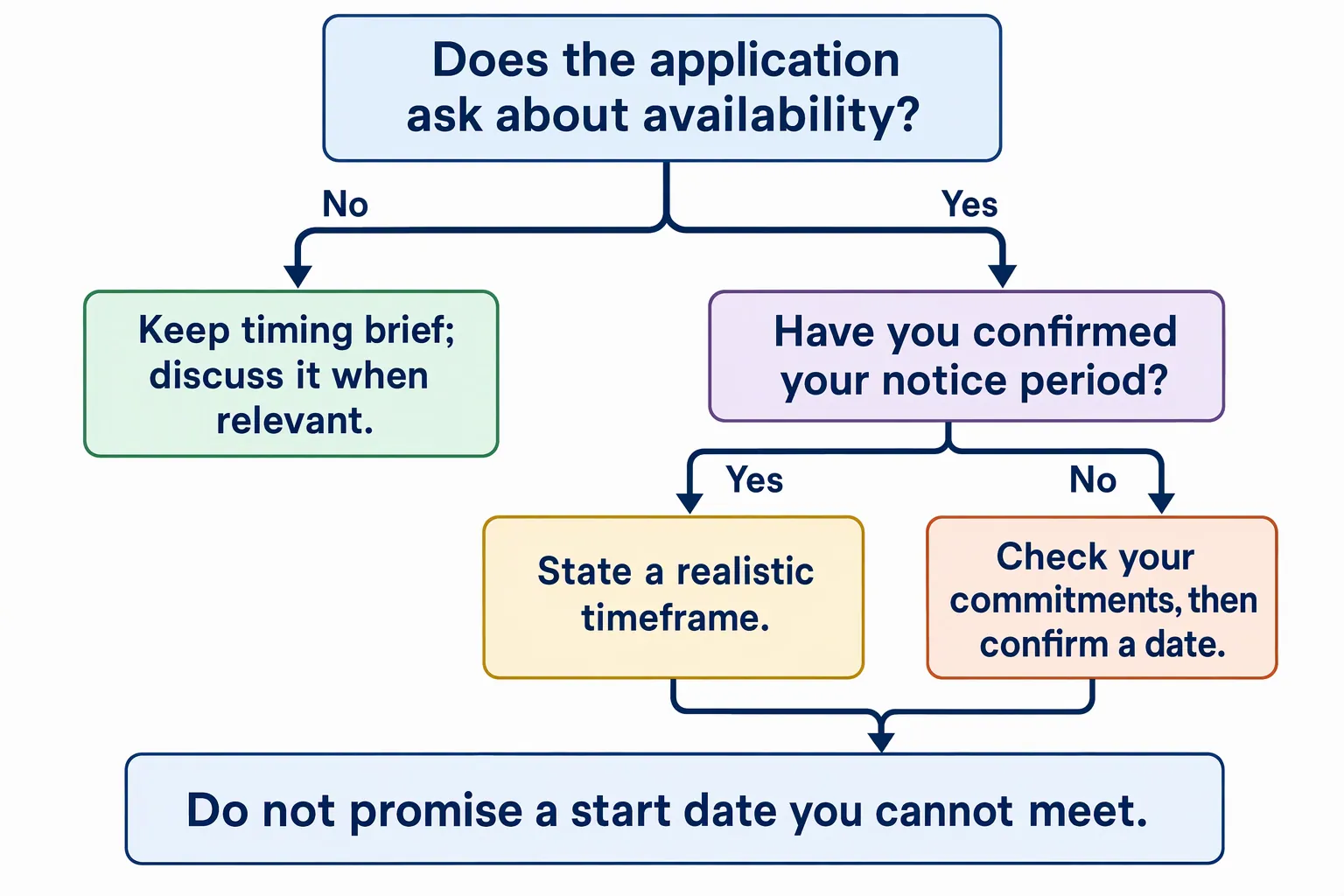
Common mistakes when applying while employed
Writing as if your current employer is the problem
- What goes wrong
- Complaints about a manager, workload, or workplace can distract from the opportunity and make your application sound like a reaction rather than a considered move.
- Better approach
- Focus on the responsibility or direction you want next, and connect it to this position. You do not need to claim that your current role is perfect; keep the letter centered on why you are applying.
Explaining confidentiality at length
- What goes wrong
- A long account of who must not find out can take over the letter and reveal more about your search than the application needs.
- Better approach
- If you need a boundary, make one direct request about contacting your current employer without permission. Keep your relevant experience and interest in the position central.
Promising an unverified start date
- What goes wrong
- Offering an immediate start or a precise date before checking your commitments can create a promise you may not be able to keep.
- Better approach
- Check the commitments that apply to your situation before naming a timeframe. If you cannot confirm a date yet, say that you can provide a realistic one later in the process.
Making the reason for moving generic
- What goes wrong
- A vague claim about wanting growth could apply to almost any application and does not explain why this opportunity is worth pursuing while you are employed.
- Better approach
- Name a real responsibility or direction in the posting and connect it to relevant evidence from your current work. Do not invent facts about the company to make the connection sound stronger.
Frequently asked questions
- Should I say in my cover letter that I am currently employed?
- Describe your current role accurately when it helps show relevant experience or the application asks about it. You do not need to explain private search arrangements. Keep the facts consistent with your resume, and do not hide or misrepresent your employment history.
- How do I ask an employer not to contact my current employer?
- If you need this boundary, make a brief, polite request that your current employer not be contacted without your permission. It is a request, not a guarantee of confidentiality. You can discuss suitable references and timing directly during the process.
- Do I need to give my notice period in the cover letter?
- Include availability if the application asks for it or timing is important to the role. Check the commitments that apply to your situation before naming a timeframe. If you have not confirmed when you could start, say you can clarify later rather than guessing.
- What should I say about why I am looking for another job?
- Give a truthful, forward-looking reason connected to this position, such as a responsibility or direction you genuinely want to pursue. You can value your current experience while explaining why this opportunity fits your next step. Do not invent a reason or criticize your current employer.

Put this career change approach into practice
Choose sample data or build your own cover letter, then personalize it before you download.