
Introduction
A volunteer cover letter should help the organization assess three things: why this particular cause or activity interests you, what you can contribute, and when you can reliably help. A specific, truthful reason is more useful than broad praise. A realistic schedule is clearer than saying you are available anytime.
First check whether the posting requires prior volunteer experience. If it does not, you can draw on an honest example from work, study, caregiving, a community activity, or a personal project to show a relevant skill. If you also list the service on a resume, keep its dates and responsibilities consistent with your letter; see this guide to listing volunteer work on a resume.
What to address directly
Your reason sounds too broad
- Hiring manager concern
- “I care about helping people” could describe many applicants and causes. It does not show why this particular opportunity interests you.
- What your letter should prove
- Name a real connection: an aspect of the cause that matters to you, a detail about the organization’s work from the posting or its published information, or a practical way you want to contribute. You can keep personal details private. The reason should be true, not dramatic.
You are unsure what experience counts
- Hiring manager concern
- You may assume that only previous volunteering can demonstrate your ability to contribute, or feel pressure to claim experience you do not have.
- What your letter should prove
- Choose one relevant task you have actually handled and explain what you did. Organizing materials, welcoming people, keeping information accurate, or following a process can show useful skills when they match the posting. Be clear about where the experience came from.
You do not want to promise too much
- Hiring manager concern
- A vague offer to help whenever needed can hide practical limits and create mismatched expectations about your schedule.
- What your letter should prove
- State the days or time range you can genuinely offer, when you could start, and any clear end or review point. If you have some flexibility, describe its limits. Do not promise a schedule you cannot maintain.
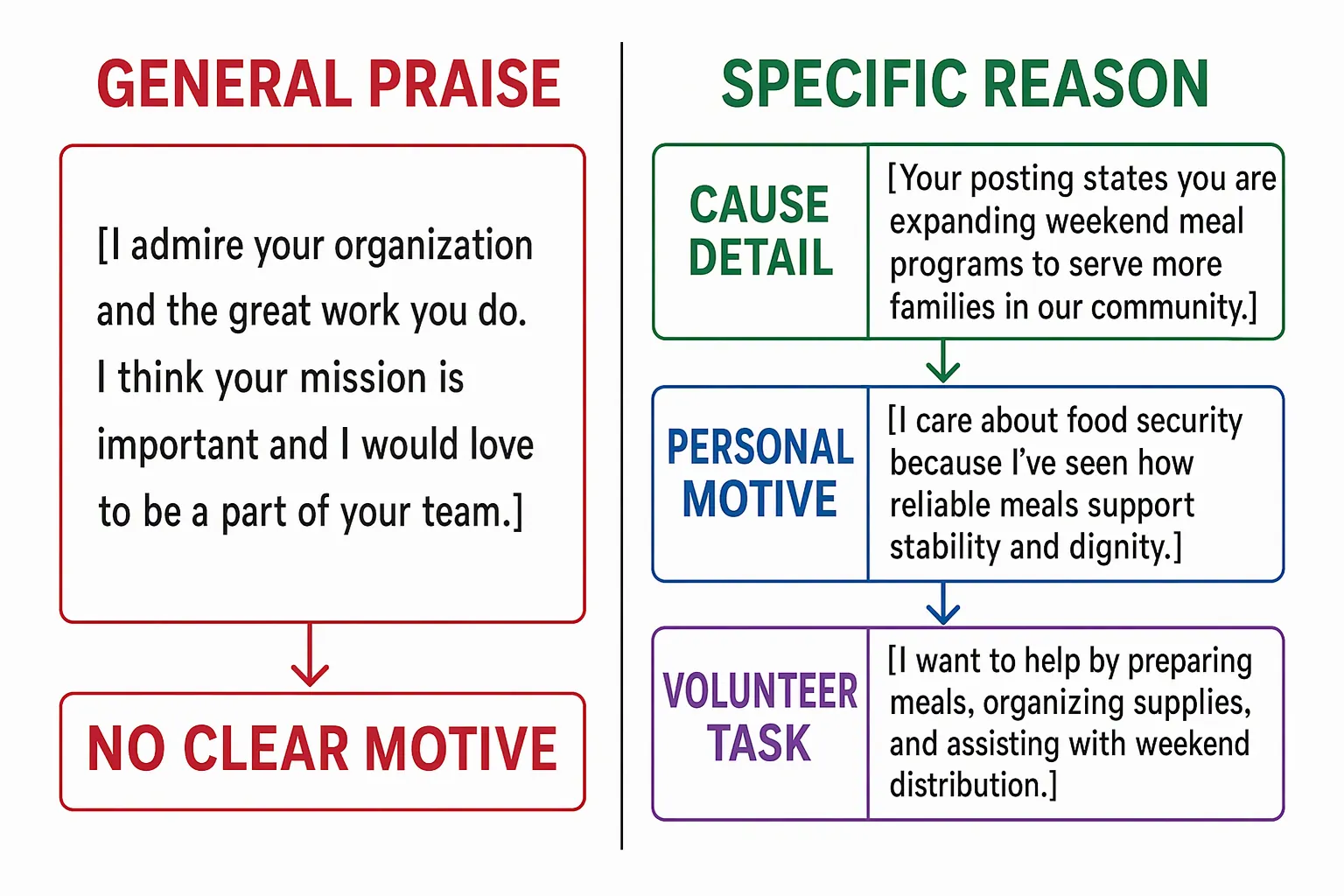
Structural approach: connect your reason, contribution, and schedule
Keep the letter focused on the volunteer opportunity rather than giving a full account of your life. Follow the posting’s instructions first, especially if it requests answers in a form or asks for particular information. Otherwise, use a brief opening, a paragraph on your reason and relevant skills, and a closing that makes your availability easy to understand.
Before drafting, mark the actual tasks, requested schedule, and any stated training or onboarding steps. Choose evidence for those tasks, not a list of every ability you have. A skill can transfer between settings, but explain the connection instead of expecting the reader to infer it.
- 01
Check what the role involves
Read the posting for the activity, who the role supports, the expected schedule, and application instructions. Separate stated requirements from details you still need to confirm. Do not assume the role includes duties or training that the posting does not mention.
- 02
Choose a truthful reason
Write one sentence about why this cause, activity, or organization interests you. Add a concrete detail that makes the reason personal and specific, while sharing only what feels appropriate. If your reason is that you want to contribute locally, say what kind of contribution you mean.
- 03
Match one skill to one task
Select a real example that shows a useful skill for a task in the posting. Briefly state the situation, what you did, and a verifiable result or responsibility. If you are new to the task, say what related skill you bring and show that you are ready to learn.
- 04
State your schedule and close
Give your available days or time range, possible start date, and any limit that affects the commitment. Close by expressing interest in discussing the role or completing a stated next step. Ask a concise question only if an important schedule or task detail is unclear.
Volunteer role cover letter example
Preview a fictional example that connects a personal reason for supporting a community reading program with relevant coordination skills and a specific, realistic schedule.
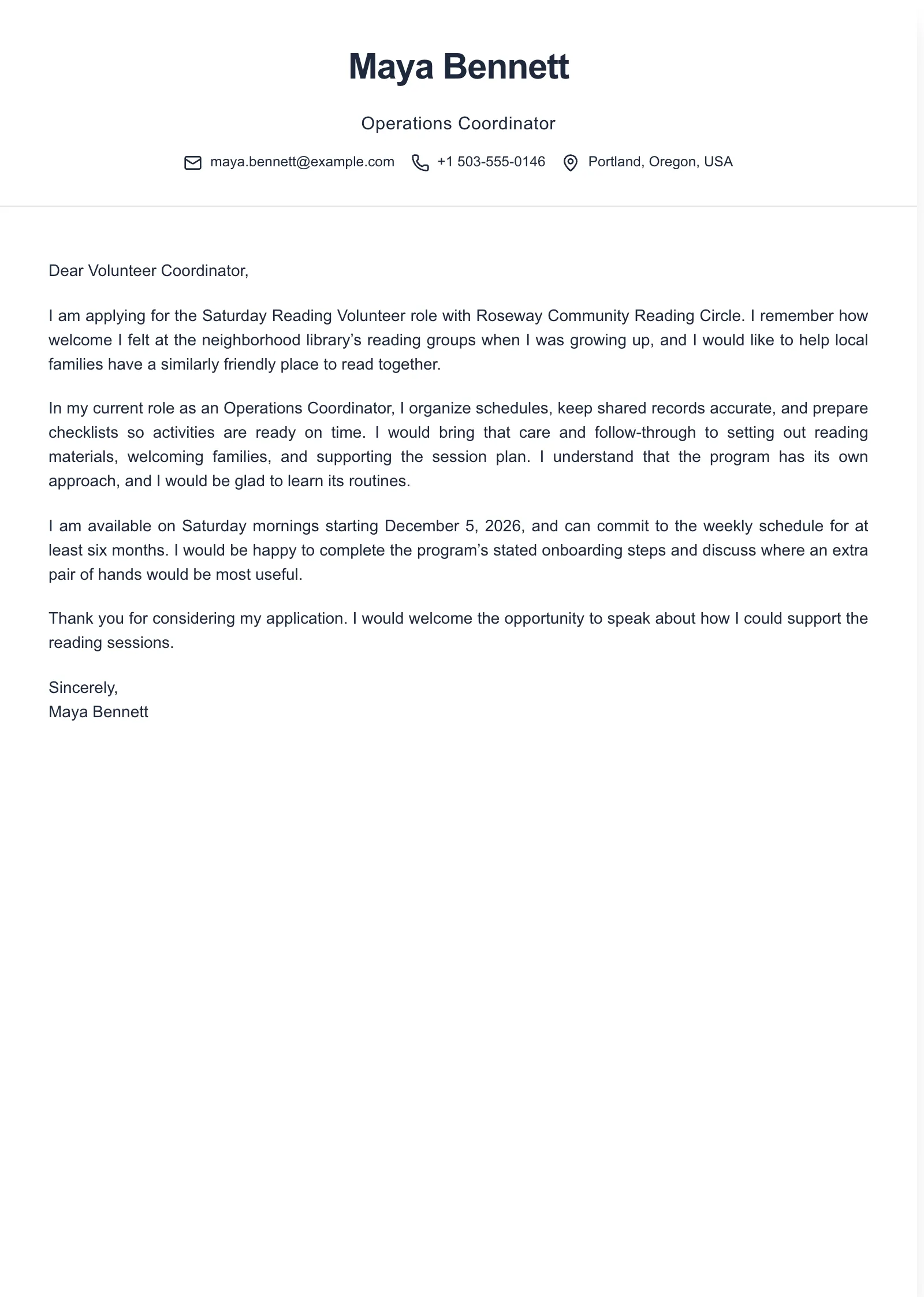
Example paragraphs
“I am interested in the [volunteer role] with [organization] because [specific aspect of the cause or activity] connects to [truthful personal reason]. I hope to contribute by [activity named in the posting], and I value [accurate detail about the organization’s approach].”
“In [work, study, caregiving, community activity, or personal project], I [specific action] using [relevant skill], which helped [verifiable result or responsibility]. I could apply that experience to [task in the volunteer posting]. Although I have not yet [honest limit], I am ready to learn [relevant process or task].”
“I can volunteer on [days] during [time range], starting [date], and can offer this schedule through [end date or review point]. I can also [specific flexibility, if true]. This availability fits my current commitments and would let me support [activity named in the posting] consistently.”
Treat these as adaptable paragraphs, not a complete letter. Replace every bracket with a fact you can stand behind, and remove any sentence that does not fit the posting. Keep the reason, evidence, and schedule distinct so each paragraph answers a different question. If the organization asks for separate responses or a particular format, use that format instead of forcing these paragraphs into it.
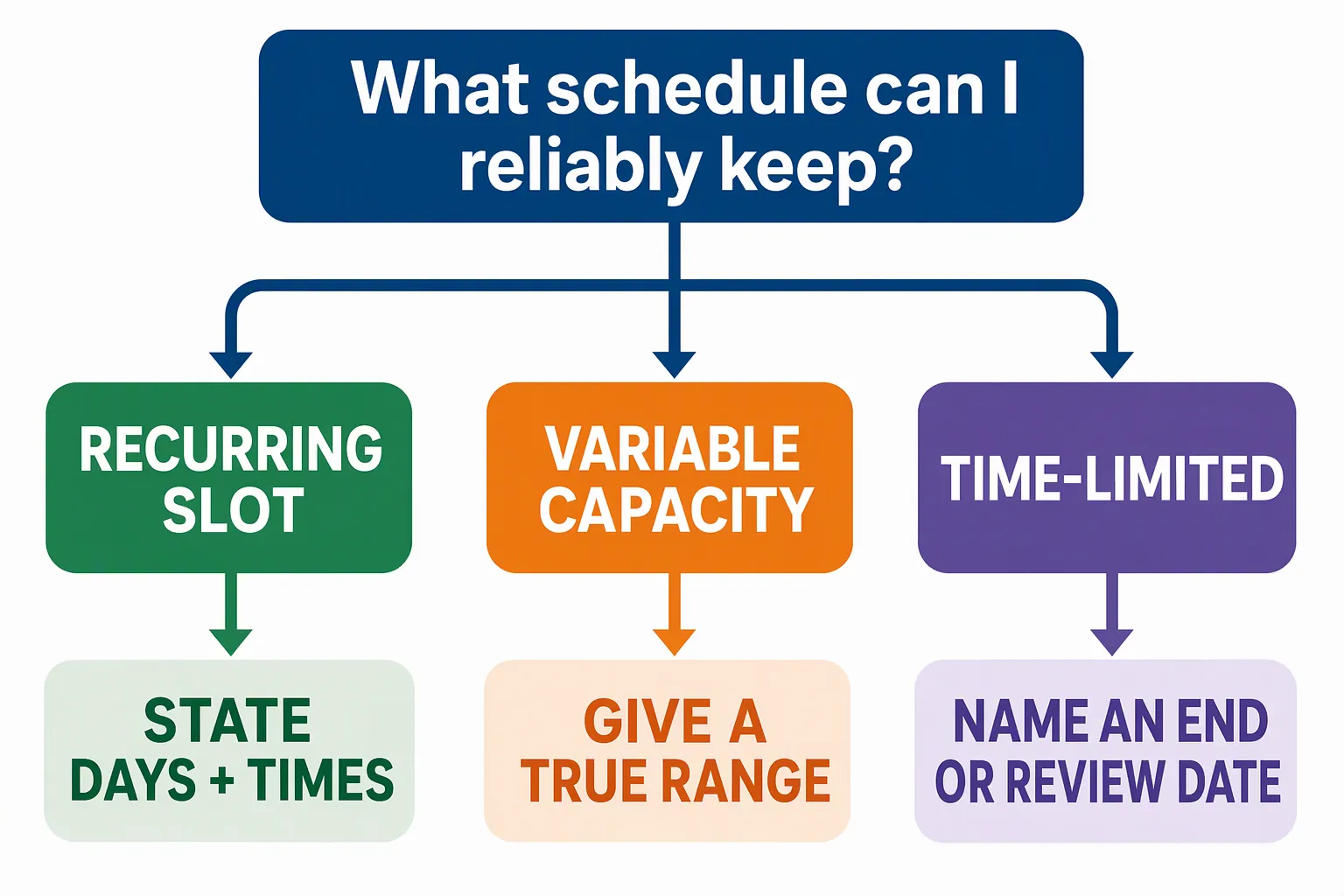
Common mistakes in volunteer role cover letters
Praising the cause without explaining your connection
- What goes wrong
- A string of broad statements about how important the work is can sound distant and leaves your reason unclear.
- Better approach
- Choose one specific reason you are interested and connect it to the activity you hope to support. Keep it honest and relevant; you do not need to disclose a private experience.
Listing skills without showing them
- What goes wrong
- Calling yourself caring, organized, or dependable does not show how you used those qualities or how they relate to this role.
- Better approach
- Give one short example of an action you took and its result or responsibility. Link it to a task in the posting instead of adding a long list of traits.
Claiming experience you do not have
- What goes wrong
- Implying you have done the same volunteer task before can create confusion about what you are prepared to do.
- Better approach
- Name the experience you actually have, explain the transferable skill, and be direct about what you would need to learn. Do not describe interest or informal exposure as formal experience.
Offering an unrealistic schedule
- What goes wrong
- Saying you can help whenever needed or leaving out a known limit can lead to expectations you may not be able to meet.
- Better approach
- State a dependable time range and any relevant boundary. If your schedule may change, give a realistic review point rather than promising indefinite availability.
Frequently asked questions
- What if I have never volunteered before?
- First check whether the posting requires prior volunteer experience. If it does not, you can use an honest example from work, study, caregiving, a community activity, or a personal project to show a relevant skill. Explain what you did and how it could help with a task in the posting. Do not present related experience as previous volunteer work.
- Do I need to explain a personal reason for supporting the cause?
- No. Share only what you are comfortable sharing. You can describe a specific aspect of the cause that interests you, what you value about the organization’s approach, or the kind of contribution you want to make.
- How much availability should I include?
- Give the schedule you can reliably meet, such as particular days, a time range, and when you could start. If your availability is temporary or may change, say so rather than promising an open-ended commitment.
- What if the application form asks the same questions?
- Follow the application instructions and answer the requested fields. You can adapt the same motivation, skills, and schedule details, but do not add a separate letter if the instructions ask for a different format or specific responses.

Put this career change approach into practice
Choose sample data or build your own cover letter, then personalize it before you download.