
Introduction
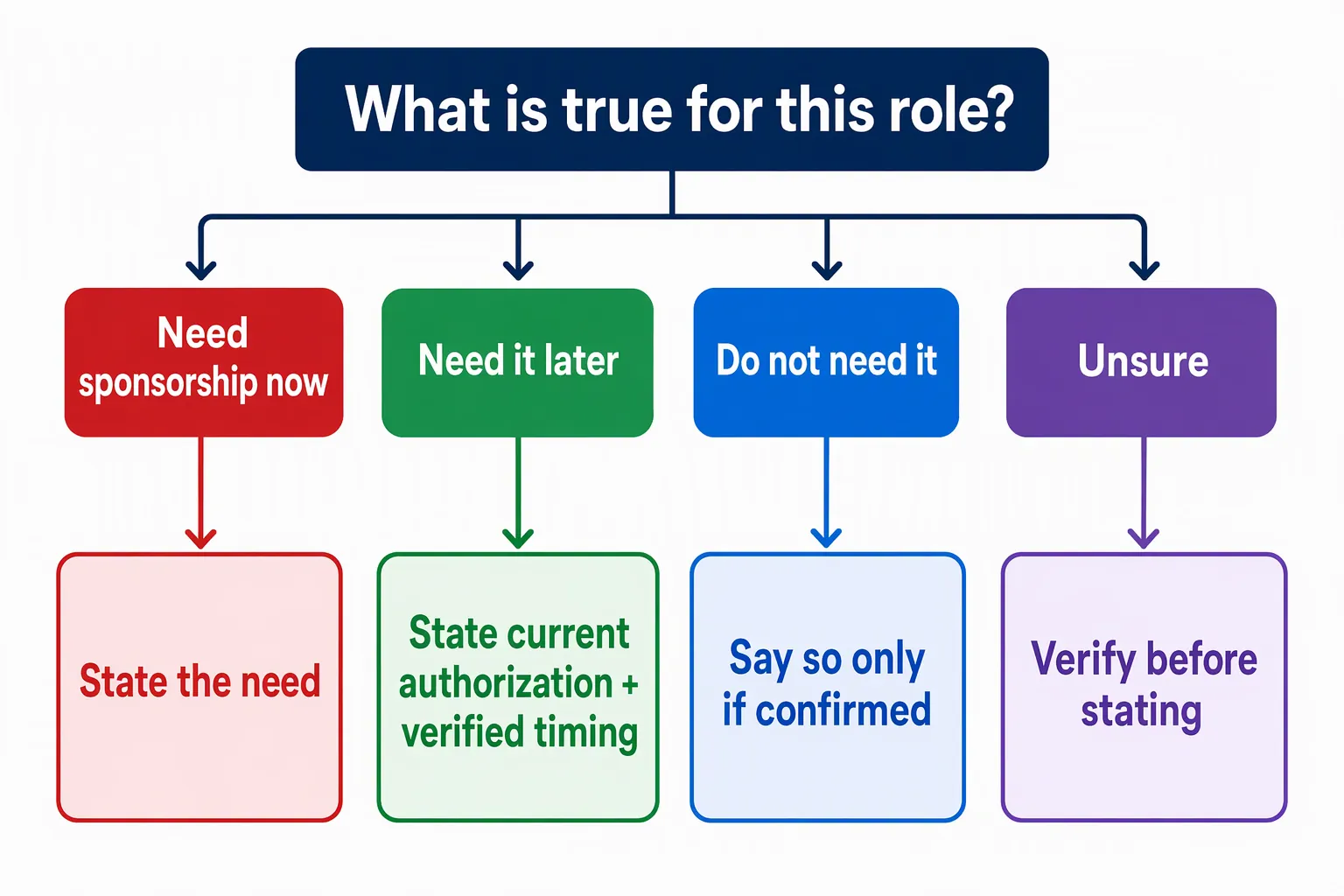
A cover letter can disclose a sponsorship need without becoming an immigration explanation. The reader needs a clear, accurate statement about whether you need employer sponsorship for this role, whether the need applies now or later, and any timing you have verified.
People use “visa sponsorship” to describe different employer actions and work arrangements. The meaning depends on the country, role, and individual circumstances. This guide helps with application wording; it does not determine eligibility or explain immigration rules.
Before drafting, read the posting and application questions. Use the work authorization glossary for a general definition of that term. For US students and exchange visitors, USCIS guidance explains that employment options depend on status and program rules. Confirm your own circumstances with current official guidance and, when relevant, your designated school official.
What to address directly
What do you need the employer to know?
- Hiring manager concern
- The employer needs to understand whether you need sponsorship for this position, not infer it from your location, nationality, or a document name.
- What your letter should prove
- Say whether you need employer sponsorship for this role. If you can work now but expect to need sponsorship later, distinguish those facts. Describe only what you have confirmed for your own situation; do not imply that an employer can or will provide sponsorship.
When would the need apply?
- Hiring manager concern
- A statement can be unclear if it does not distinguish an immediate need from a future one.
- What your letter should prove
- Include a date or other timing detail only when it is accurate and relevant. If a form asks directly about current or future sponsorship, answer it there as well. The letter does not replace a required answer or correct an answer you know is inaccurate.
What should you leave out?
- Hiring manager concern
- Trying to explain every detail can distract from your fit for the role and expose personal information that is not needed in a cover letter.
- What your letter should prove
- Share only the work-authorization information relevant to the application. Do not include passport or visa numbers or a long account of your immigration history. If you are unsure what your circumstances permit or what employer action applies, verify the facts before making a specific claim.
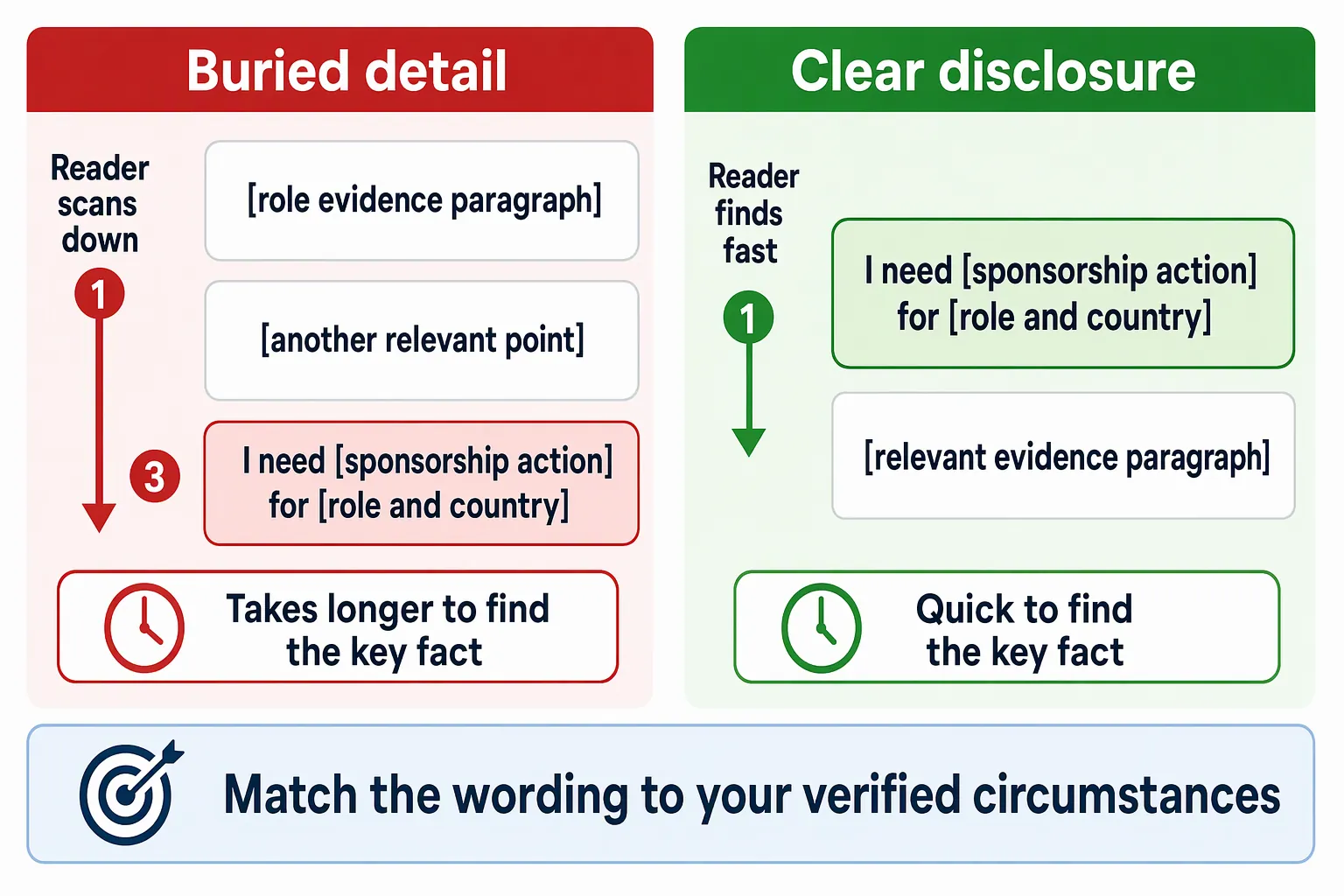
Structural approach: state the need, then show your fit
Keep the sponsorship information in the letter body, where it is easy to find. A brief opening can name the [Job Title] and [Company Name]. Then use a concise sentence or short paragraph to explain your current work situation and any sponsorship need. Use the remaining space to connect relevant evidence to the role.
There is no universal required length for this disclosure. One or two precise sentences are often enough unless the employer asks for more detail. Check that the wording matches your application answers and any information you can support. For the other parts of a letter, see cover letter structure.
- 01
Read the posting and application questions
Look for questions about current work authorization, future sponsorship, or employer support. Follow the employer's instructions and answer required form fields separately from the letter.
- 02
Confirm your own circumstances
Identify what is accurate for this role: whether you are authorized to work in the relevant country, whether that authorization is time-limited, and whether you understand sponsorship will be needed. Another applicant's status or wording may not apply to you.
- 03
Write a direct, accurate statement
Name the sponsorship need and include verified timing when it matters. Avoid legal labels or explanations you cannot support. If an important detail is uncertain, check it before applying rather than guessing in the letter.
- 04
Check consistency and tone
Compare the sentence with your application answers and the facts you can document. Keep the wording calm and direct. Do not apologize for needing sponsorship, promise an outcome, or suggest your application has already been approved.
See the disclosure in context
This fictional example shows a concise, factual sponsorship statement alongside evidence relevant to the role.
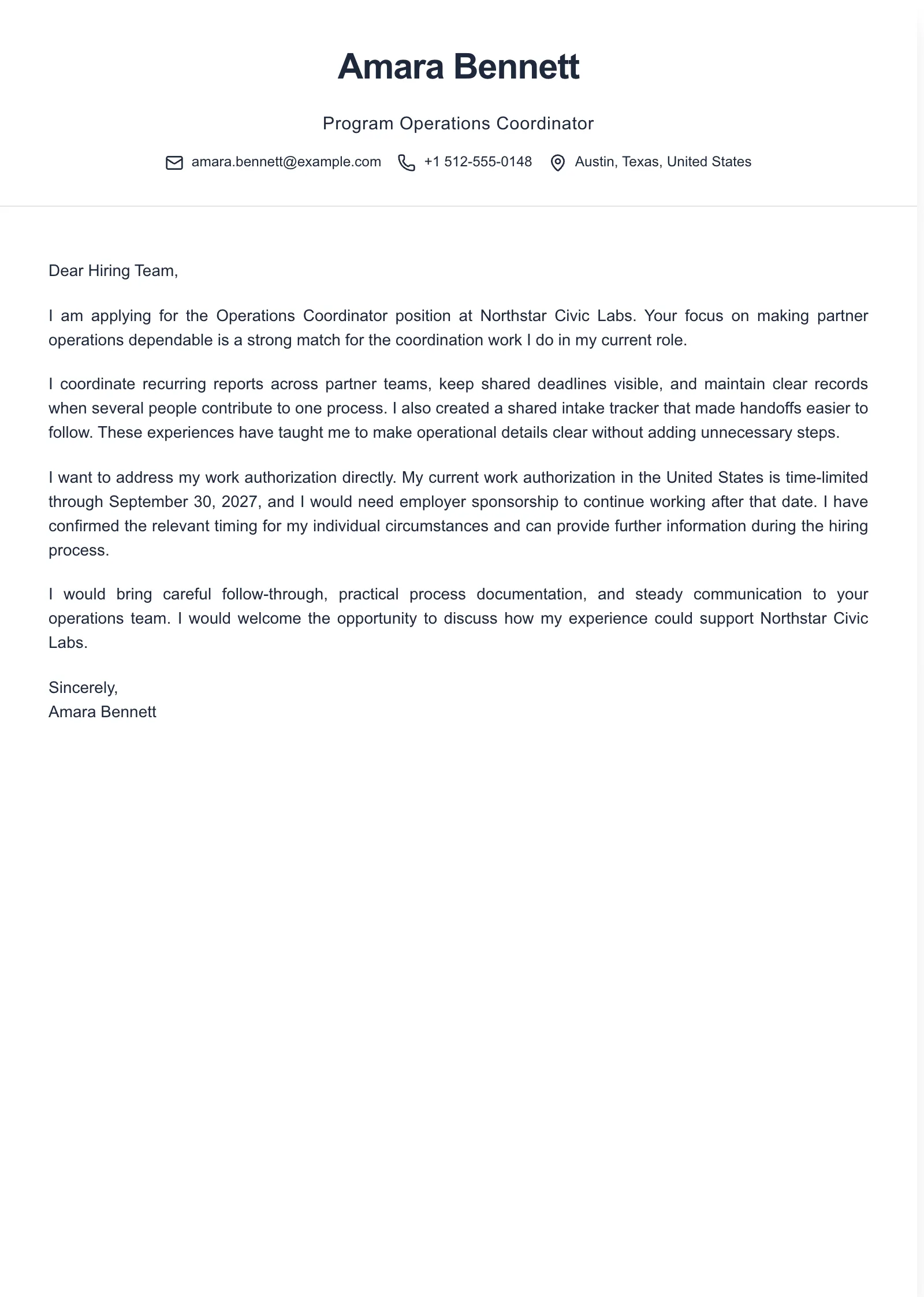
Example paragraphs
“I would need employer sponsorship to work in [Country] in the [Job Title] role at [Company Name]. I can provide further information about my circumstances if it would help assess my application.”
“I am currently authorized to work in [Country] through [verified date]. I would need employer sponsorship for the [Job Title] role at [Company Name] after that date.”
“I do not need employer sponsorship for the [Job Title] role at [Company Name] under my current circumstances. My application answers reflect the same information.”
Choose the wording that matches your circumstances, not the version that sounds most favorable. Replace each bracket with a fact you have checked, and remove details that do not apply. “Employer sponsorship” can refer to different actions in different places, so name a specific action only if you have confirmed it is relevant. Answer any direct form question accurately, even when the same information appears in your letter.
Scenario-specific mistakes to avoid
Leaving the timing unclear
- What goes wrong
- Saying only “I have a visa” or “I need sponsorship” may not show whether the need applies now or later.
- Better approach
- Separate your current work situation from a future sponsorship need. Add a date only if you have verified it and it helps explain the timing.
Treating a document label as a complete answer
- What goes wrong
- A visa or permit name alone may not establish whether you can do this job or whether you will need employer sponsorship.
- Better approach
- Check how your individual circumstances apply to the role and country. Describe what you have confirmed instead of drawing a conclusion from a general label.
Including unnecessary personal or legal detail
- What goes wrong
- A long explanation can distract from your fit and disclose private information that is not needed to assess the application.
- Better approach
- Keep the letter to relevant work-authorization facts and timing. Do not include identification numbers or use a legal argument in place of verified information.
Assuming the employer will sponsor
- What goes wrong
- Wording that treats sponsorship as settled can overstate what the posting or employer has confirmed.
- Better approach
- State what you need without promising an outcome. If the posting does not clarify whether the role can support it, ask a focused question rather than presenting availability as certain.
Frequently asked questions
- Should I mention future sponsorship if I can work now?
- If you know you will need employer sponsorship later for this role, state both facts plainly: what your current authorization allows and when sponsorship would be needed. Use only dates and details you have verified for your circumstances.
- Where should I put the sponsorship sentence?
- Place it near the start of the letter body, after a brief sentence about your interest in the role. If the application also asks about work authorization or sponsorship, answer that question separately and accurately.
- What if I am unsure whether I need sponsorship?
- Do not guess or copy another applicant's description of their status. Check current guidance from the relevant official authority and, when applicable, your school or a qualified adviser before making a specific claim.
- Should I ask whether the employer can sponsor me?
- If the posting does not clarify whether the role can support the sponsorship you need, you can ask a focused question. A cover letter cannot confirm that an employer will sponsor you or that you qualify for a particular route.

Put this career change approach into practice
Choose sample data or build your own cover letter, then personalize it before you download.