
Introduction
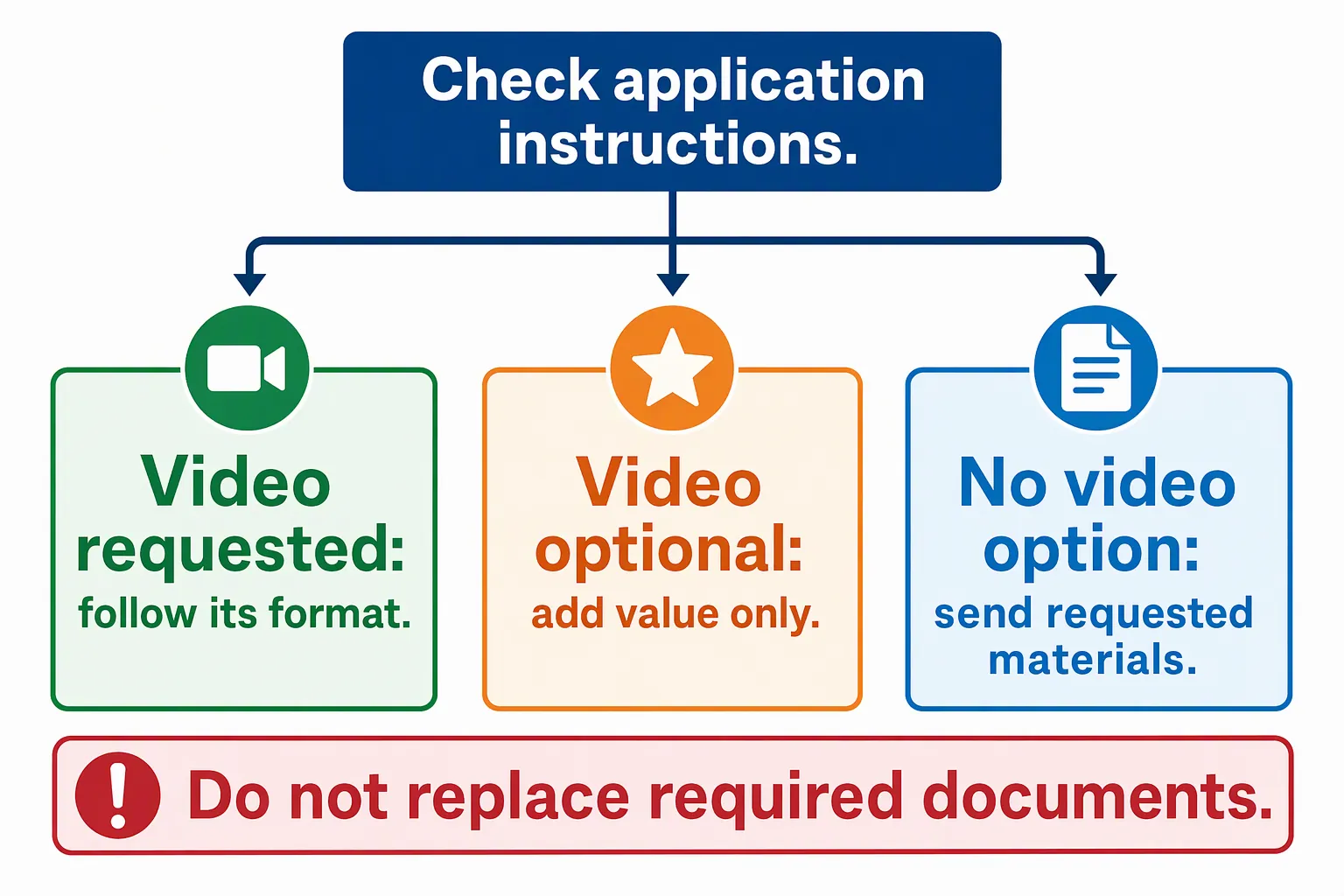
A video cover letter is a short spoken introduction for an application that requests or clearly accepts video. It is not a reason to record a video for every job. Check the employer’s instructions first, including whether video is optional, what it should cover, and how it should be delivered.
For a 60–90 second introduction, focus on one reason for applying, one relevant proof point, and a direct close. The spoken hook should name the [Job Title] and [Company Name] and give a specific reason to keep listening. These cover-letter opening examples can help you find a focused first sentence; adapt the idea for speech rather than reciting formal written phrasing.
What to address directly
Does this application call for video?
- Hiring manager concern
- A video can take time to prepare and may not fit the application channel. The employer may request a recording, mark it as optional, or provide no video option. A video cover letter is also different from a one-way video interview, which asks you to respond to interview prompts.
- What your letter should prove
- Follow the instructions for this application, not assumptions about what employers prefer. If video is optional, use it only when it adds relevant context. If it is not requested or accepted, submit the required written materials instead of substituting a recording.
Will the script sound natural?
- Hiring manager concern
- Written cover-letter language can become stiff when spoken aloud. Long sentences, repeated claims, and formal transitions make it harder to sound direct in a short recording.
- What your letter should prove
- Write short sentences that you would actually say. Keep each sentence’s point clear, then rehearse from a few notes instead of delivering a polished page from memory. A conversational tone still needs specific evidence.
Can the viewer see and hear the message clearly?
- Hiring manager concern
- A strong script loses value if the audio is hard to understand or the image distracts from what you are saying. Recording conditions vary, so a polished studio setup is not the goal.
- What your letter should prove
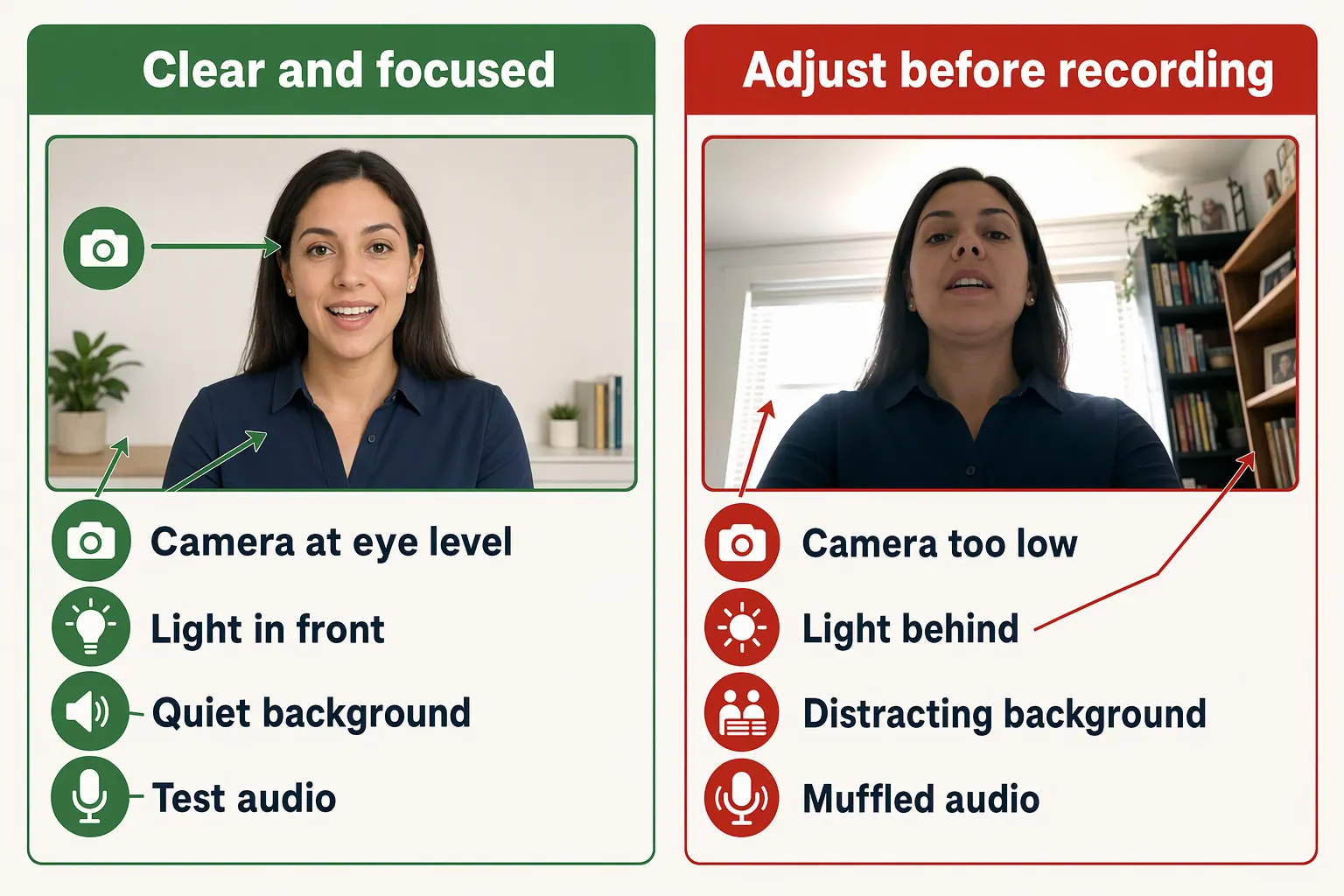
- Choose a quiet place, put light in front of you, and position the camera near eye level. Test the sound and framing before the final take. Prioritize understandable audio, a steady image, and a background that does not compete with your message.
Structural approach: build a short spoken case
A useful video has three parts: a specific reason for applying, one piece of evidence that supports your fit, and a close that invites the next step. Keep the same basic logic as a written cover letter, but remove details the viewer can already find in your application. This cover letter structure guide explains the broader sequence; for video, make each part brief enough to say clearly.
Treat 60–90 seconds as a planning target, not a platform limit or a universal employer requirement. Employer instructions take priority. Read the draft aloud and time it at a calm pace, leaving room for natural pauses. If it runs long, cut repeated context before removing the proof point that makes your case credible.
- 01
Confirm the request
Check whether the employer requires video, accepts it as an option, or requests a different format such as answers to interview questions. Note any requested topics, duration, file or link instructions, and accessibility needs. Follow the instructions shown for this application rather than guessing at a platform’s requirements.
- 02
Choose a specific hook
Name the [Job Title] and [Company Name], then state one factual reason the role interests you. Connect that reason to your experience, a relevant skill, or a specific aspect of the work. Avoid broad praise that could apply to any employer, and do not spend the opening repeating your whole career history.
- 03
Tell one proof point
Select one example that supports the reason you gave. Briefly explain the situation, what you did, and what changed or what you learned. Use a result only if you can verify it. If you do not have a numerical outcome, describe a concrete contribution without inventing a metric or overstating your role.
- 04
Close and rehearse
End by connecting your evidence to the opportunity and saying you would welcome a conversation. Rehearse with a timer, check that your voice is clear, and make a test recording to review framing and sound. Use the employer’s requested delivery channel, and keep a copy of any required written documents.
A concise spoken introduction
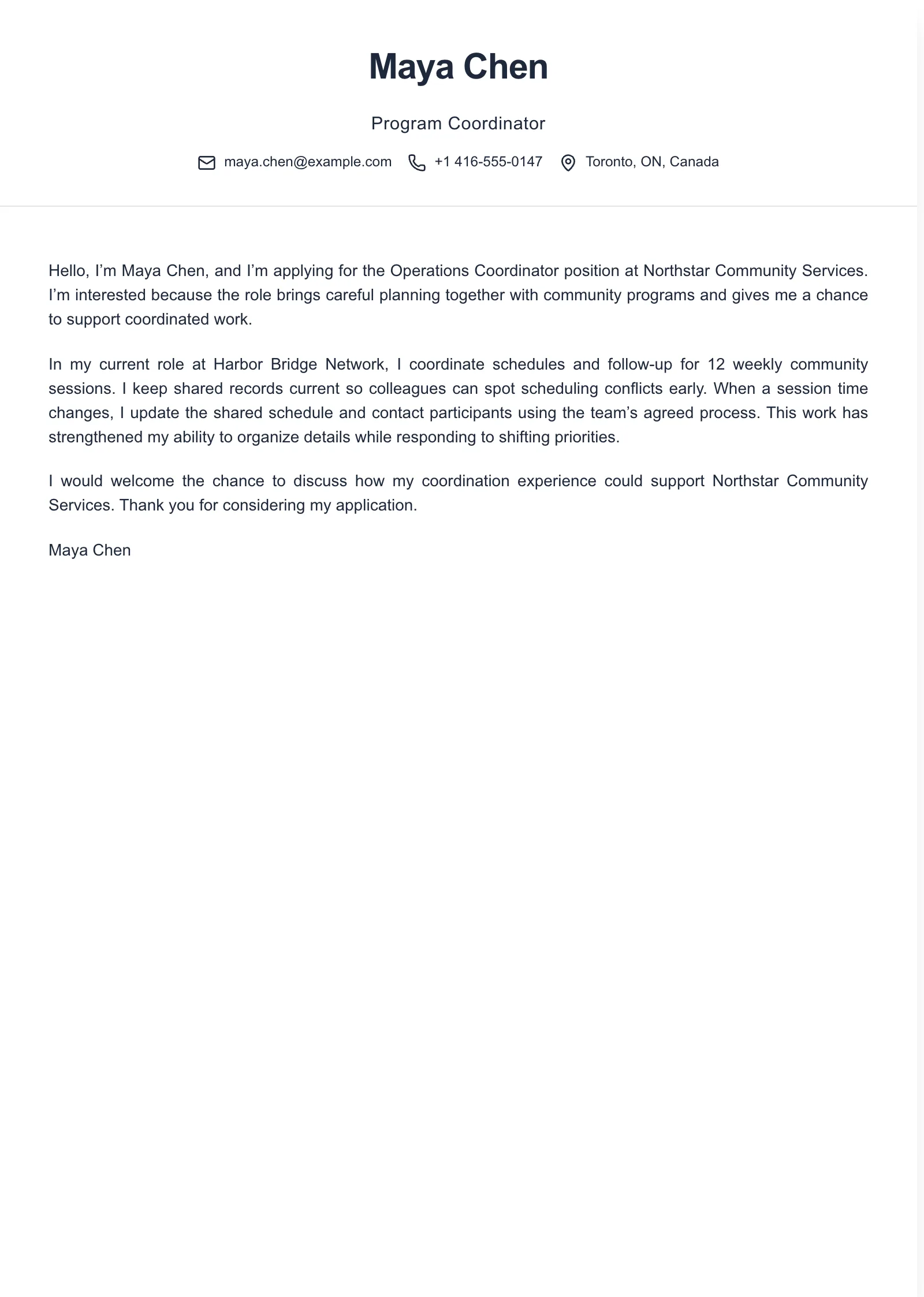
This fictional example shows how one specific reason, a verifiable proof point, and a direct close can form a short video cover-letter script.
Example paragraphs
““I’m applying for [Job Title] at [Company Name] because [specific part of the role or organization] connects with my experience in [relevant area].””
““In [project or situation], I [specific action you took], which led to [factual result or useful change]. That experience prepared me to [relevant responsibility in the role].””
““I’d welcome the chance to discuss how my experience with [relevant skill or task] could support [Company Name] in the [Job Title] role. Thank you for considering my application.””
Treat these as spoken building blocks, not a full script to use unchanged. Replace every bracket with a true, specific detail and remove any phrase that does not sound like you. Adapt a written draft into words you can say naturally. You handle the recording and delivery according to the employer’s instructions.
Common mistakes in a video cover letter
Recording without checking the application instructions
- What goes wrong
- A video may not be accepted, or the employer may have requested a different format. Sending an unrequested recording can distract from the materials they asked to review.
- Better approach
- Confirm that video is required or clearly optional. Follow the stated format and do not replace required documents unless the instructions say you can.
Reading a full written letter aloud
- What goes wrong
- Long, formal sentences and repeated résumé details can make a short recording sound unnatural and leave little time for relevant evidence.
- Better approach
- Turn the draft into concise spoken sentences. Keep one reason, one proof point, and a close, then rehearse from brief notes.
Making claims that the evidence cannot support
- What goes wrong
- A dramatic result or precise number may sound persuasive, but an invented or exaggerated detail can undermine trust if someone asks about it later.
- Better approach
- Use a result you can explain and verify. If the outcome was qualitative, describe your action and its concrete effect without adding unsupported numbers.
Letting the recording setup compete with the message
- What goes wrong
- Distracting movement, a camera pointed up from below, backlighting, or unclear audio can make it harder to follow your introduction.
- Better approach
- Choose a quiet background, face the light, place the camera near eye level, and test your sound. Aim for clear and steady rather than elaborate production.
Frequently asked questions
- Should I send a video cover letter if the employer does not ask for one?
- Follow the application instructions and provide the requested materials. If the employer clearly makes a video optional, consider whether it adds relevant context. Do not replace a required written cover letter or other document with a video unless the instructions allow that.
- How long should a video cover letter be?
- Use 60–90 seconds as a practical target when the employer gives no duration. If the employer specifies a different length, follow that instead. Rehearse with a timer and remove repeated points rather than rushing through the script.
- Is a video cover letter the same as a one-way video interview?
- No. A video cover letter is an applicant-led introduction and explanation of fit. A one-way video interview asks you to respond to interview prompts in a format specified by the employer. Follow the instructions for the format requested.
- Should I memorize my video cover letter?
- Rehearse the main points, but a word-for-word performance may sound stiff. Practice from a few notes, look toward the camera, and keep the delivery conversational. If the employer asks you to read a specific statement, follow that instruction.

Put this career change approach into practice
Choose sample data or build your own cover letter, then personalize it before you download.