
Introduction
A transferable-skills cover letter shows how you have used abilities that matter in the target role, even when the setting or job title was different. Rather than simply claiming that you are adaptable or a quick learner, connect a need in the job ad to a real task you handled and explain why that experience applies.
Start with two or three skills, not a long inventory. This method can support a career change, but it is not limited to one. A career-change cover letter also needs to explain the reason for the transition; this page focuses on connecting evidence to a target role. For help identifying evidence, see how to map transferable skills to a target role.
What to address directly
Will the employer see the skill as relevant?
- Hiring manager concern
- A skill can sound unrelated when you give only its old setting. Saying you handled communication does not tell the reader whether you can manage the communication this role requires.
- What your letter should prove
- Name the specific task, the people or process involved, and what followed. Then connect it to a need in the posting. The reader should be able to follow the reasoning without assuming that two different jobs are identical.
Can I prove this without direct experience?
- Hiring manager concern
- You may not have done the target job itself, so a claim that you can do the work can feel unsupported.
- What your letter should prove
- Use the closest honest example from work, study, a project, or volunteering. Be precise about your contribution and the setting. Show the action or judgment that carries over, and do not present adjacent experience as direct experience.
Will focusing on skills hide my work history?
- Hiring manager concern
- A letter that talks only about strengths can leave the reader unsure where they came from. Changing a past job title or skipping useful context creates a different problem.
- What your letter should prove
- Keep your actual titles and give enough context to understand each example. Select evidence that fits the target role rather than rewriting your history. If you are moving into a new field, reframing past roles for a new industry can help you explain the connection without changing the facts.
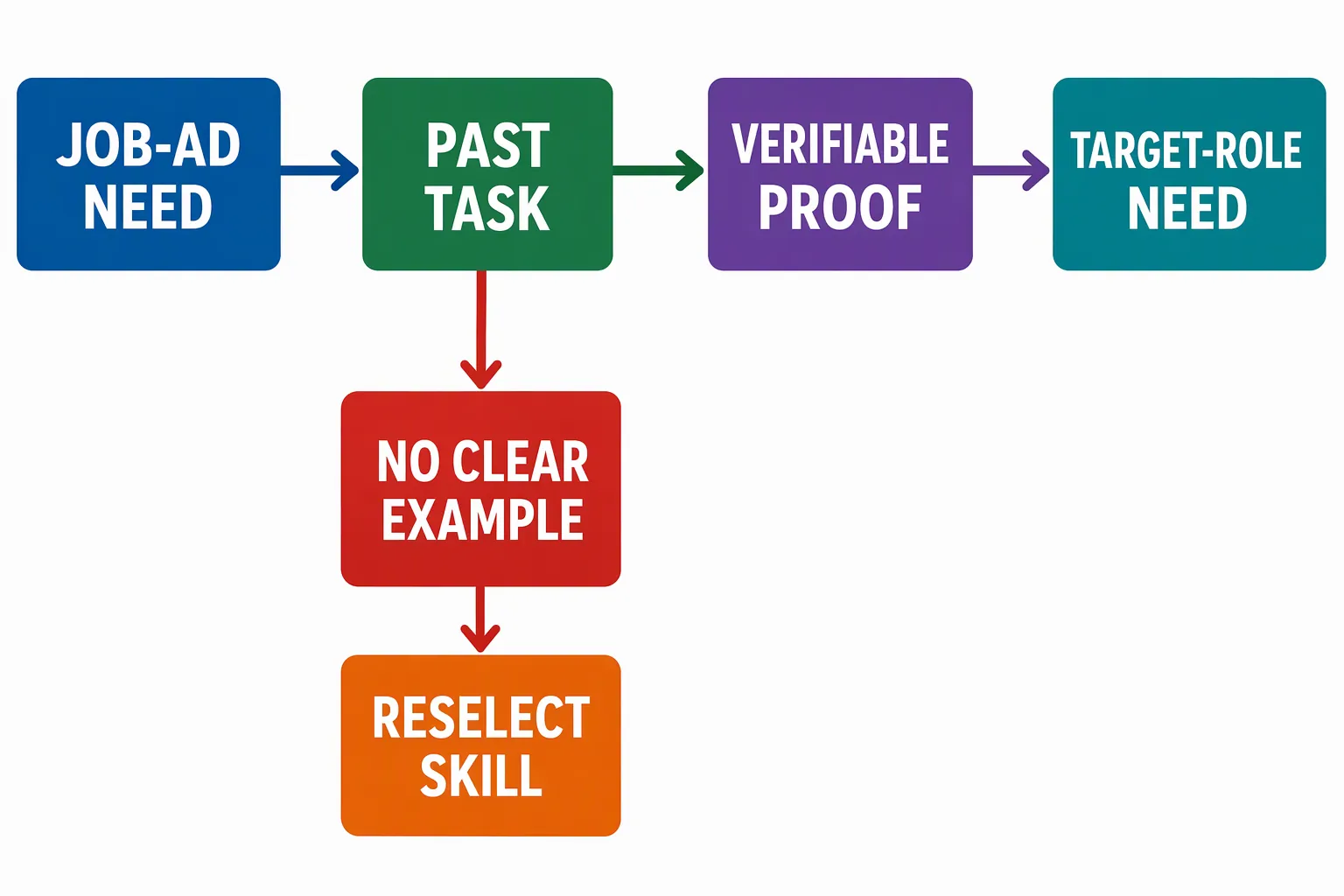
Structural approach: select, prove, connect
Treat the job ad as a set of needs, not a list of words to repeat. A useful connection has three parts: a need the employer states, a real example of you using a related ability, and a clear explanation of how that experience could help with the described work. If one part is missing, the connection may sound like a guess.
Use the opening to name the role and your relevant angle, the middle to show your strongest skill connections, and the close to restate the fit. This is one practical way to organize your reasoning, not a claim that your previous duties match the new role one for one.
- 01
Find important needs in the posting
Mark requirements tied to real tasks, decisions, or collaboration. If the posting distinguishes required from preferred abilities, note that distinction. Select two or three needs you can support with evidence; do not choose a skill only because it appears often.
- 02
Gather specific examples
For each selected need, note the situation, your action, and what followed. Include useful details such as the audience, tools, constraints, or handoff. Examples can come from paid work, study, projects, or volunteering, but label the context accurately.
- 03
Rank the strongest connections
Compare your examples with the role's stated priorities. Prefer evidence that shows a relevant action and a clear outcome. If an example needs several sentences of explanation before it makes sense, choose a closer one or briefly supply the missing context.
- 04
Explain the bridge to the target work
For each example, connect what it demonstrates to a named responsibility in the posting. Do not claim an unfamiliar technical skill as existing experience. If your evidence is adjacent rather than direct, say so and identify the specific part that carries over.
Transferable skills cover letter example
This fictional example shows how evidence from a different work setting can connect to a target role without changing the candidate's job history.
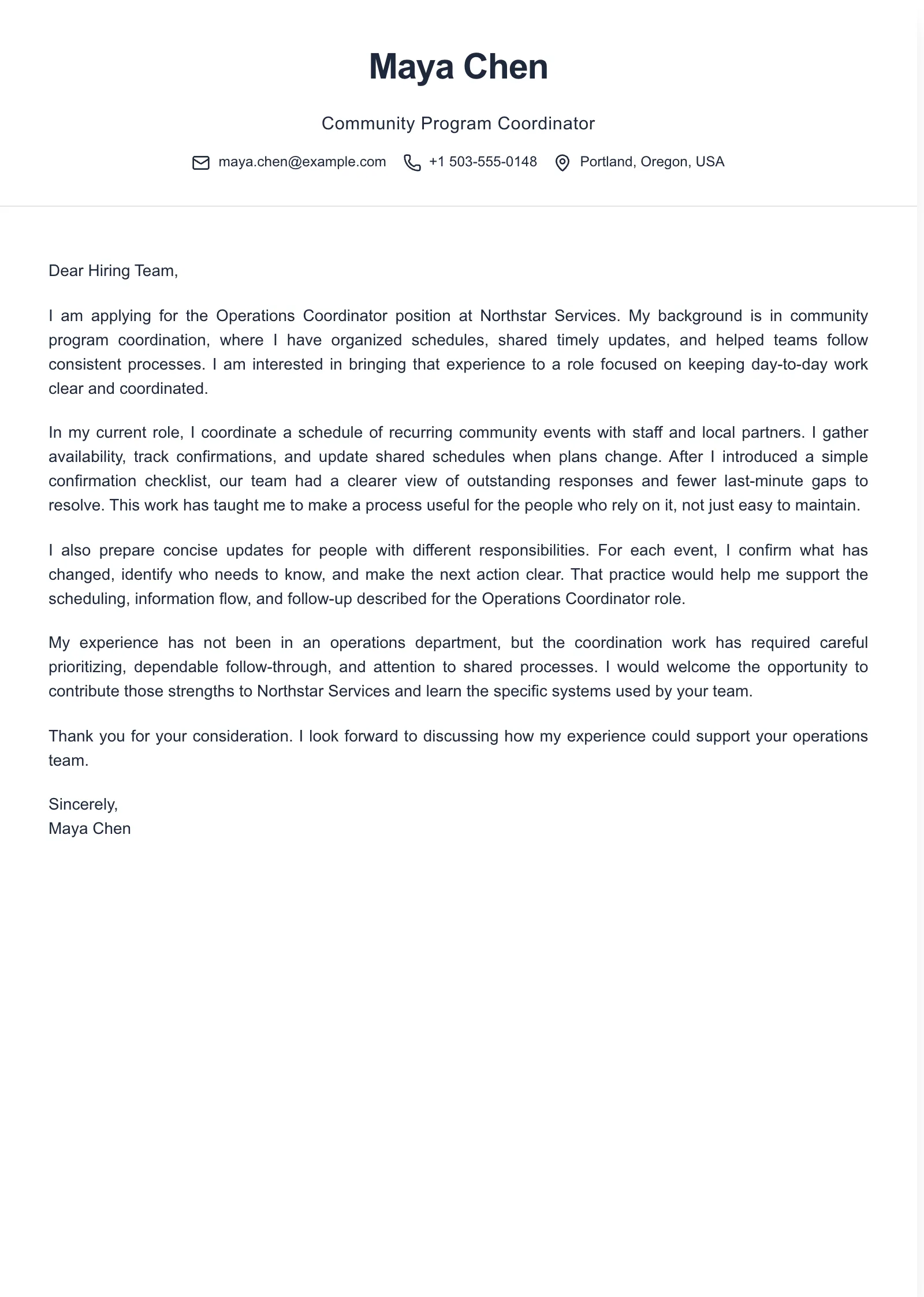
Example paragraphs
“In my role as [Previous Role], I coordinated [specific task or process] for [audience or team], using [tool or method] to keep [competing priorities] on track. The work led to [verifiable result]. I would bring the same planning approach to the [Job Title] role at [Company Name], where the posting emphasizes [related responsibility].”
“While supporting [project or service], I gathered updates from [groups involved] and shared [specific information] so that [decision, handoff, or task] could move forward. This experience developed my ability to make communication useful to different audiences, which connects to [specific need] in the [Job Title] position at [Company Name].”
“I noticed that [specific obstacle] was affecting [task or audience], so I [action you personally took] and checked whether [observable outcome] improved. That example shows how I approach [relevant skill] in practice. I would apply that approach to [related responsibility] at [Company Name] as a [Job Title].”
Replace every bracket with a fact you can explain in an interview. Use a different example for each skill when possible, so the letter shows range rather than repeating one story. Keep the bridge sentence specific by pointing to a responsibility or need in the posting. If a result cannot be measured, describe the observable change instead of adding an unsupported number. These are paragraph patterns, not a complete letter.
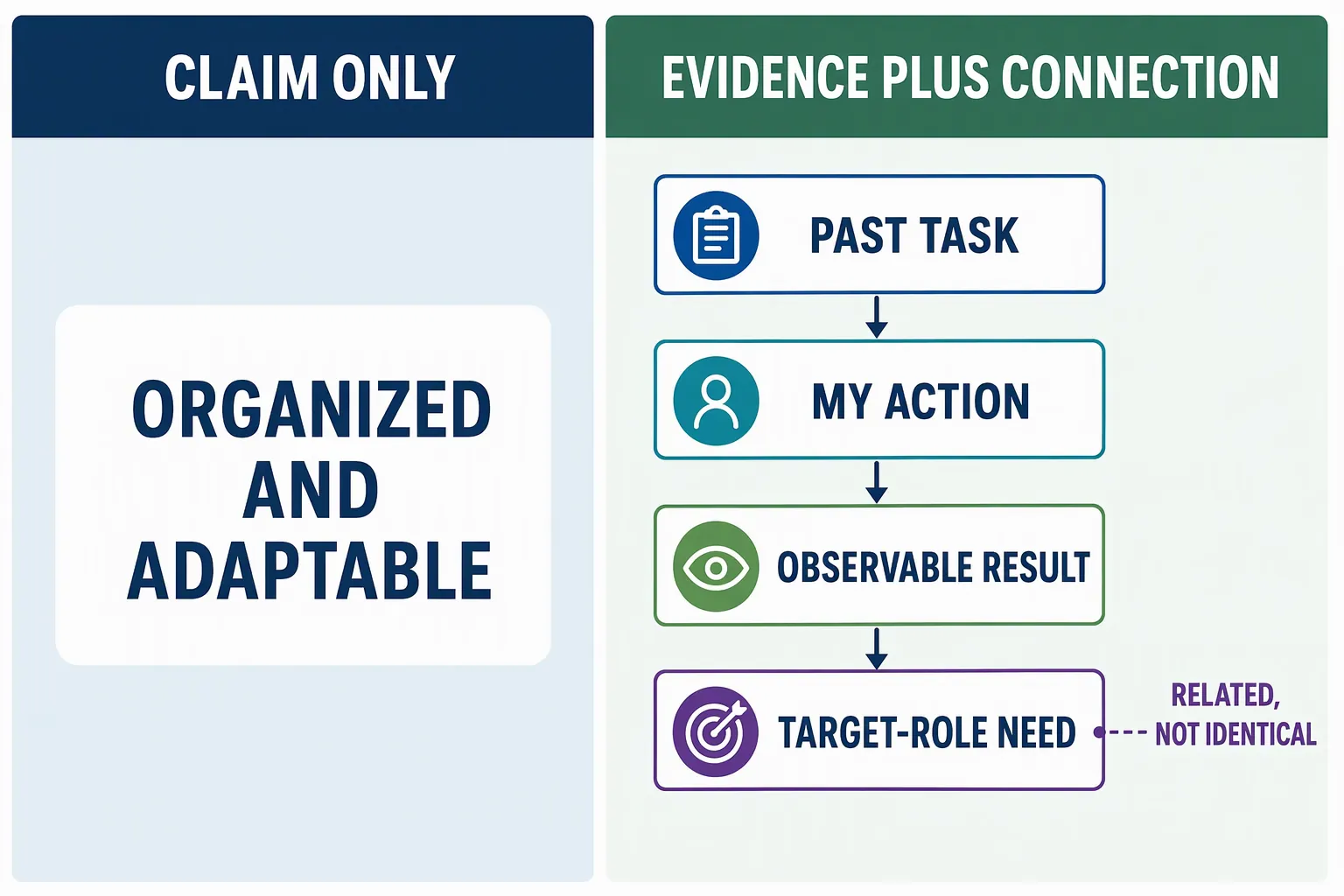
Common mistakes when highlighting transferable skills
Listing traits instead of showing proof
- What goes wrong
- Saying you are organized, collaborative, or adaptable gives the reader no example to assess.
- Better approach
- Choose a task that demonstrates the skill. Explain what you did and what followed, then connect that evidence to the target role.
Making a loose comparison
- What goes wrong
- Saying two roles both require communication or problem-solving does not show how your experience applies.
- Better approach
- Identify the specific work need and the related action you have taken. Explain the overlap and be clear about what is different.
Stretching an example beyond the facts
- What goes wrong
- Presenting a class project as professional work, claiming ownership of a team's outcome, or implying direct experience you do not have can undermine trust.
- Better approach
- Name the setting and describe your contribution accurately. Distinguish related experience from direct experience, and do not inflate the result to make the connection sound stronger.
Trying to cover every skill
- What goes wrong
- A long skills list can crowd out the examples that would make your fit understandable.
- Better approach
- Keep the two or three strongest matches for this approach. Remove a point if you cannot tie it to a real example and a specific need in the posting.
Frequently asked questions
- How many transferable skills should I include?
- For this approach, start with two or three that match important needs in the posting. Explain each with a real example. This is a way to focus your evidence, not a universal employer requirement.
- Can I use experience outside paid work?
- Yes, if it gives you relevant, verifiable evidence. A project, volunteer responsibility, course, or other experience can show how you used a skill. State the context clearly and do not imply it was paid employment if it was not.
- Is a transferable-skills letter only for a career change?
- No. You can use this approach when changing fields, moving between types of work, or applying to a role that values abilities you developed elsewhere. A career-change letter also needs to explain the reason for the transition.
- What if I do not have a number to show results?
- Use specific non-numeric evidence, such as what you organized, who used it, or what changed. Do not invent a metric. A clear task and outcome can make the connection without a percentage or total.

Put this career change approach into practice
Choose sample data or build your own cover letter, then personalize it before you download.