
Introduction
A traineeship cover letter should connect your reasons for applying to the specific programme and the evidence in your application. For a Blue Book application, motivation matters, but it cannot replace eligibility or supporting documents specified in the current instructions. Similar EU traineeships may have different conditions, so do not assume Blue Book rules apply to another programme.
First confirm what the application requests: a letter, a motivation response, language evidence, or separate criteria fields. Use the requested format and keep any separate response intact. Labels for these documents can overlap; follow the application instructions rather than assuming a universal distinction. See the overview of cover letters and related terms.
What to address directly
Check eligibility and documents before drafting
- Hiring manager concern
- Blue Book instructions include programme-specific eligibility and document requirements. Administrative and translation tracks can differ, and other traineeship programmes may set different conditions.
- What your letter should prove
- Before drafting, check the current official Blue Book application instructions or the relevant programme call. Compare each condition with your records and prepare required documents in the requested format. The letter can explain your motivation; it does not establish eligibility or replace evidence.
Make motivation specific to the call
- Hiring manager concern
- Broad enthusiasm for the EU does not show why a particular traineeship fits your preparation or interests.
- What your letter should prove
- Choose a task, subject, or learning focus actually named in the call. Connect it to one factual course, project, responsibility, or experience, then say what you hope to learn. Avoid repeating general programme language without explaining its connection to your experience.
Describe language skills with evidence
- Hiring manager concern
- A broad proficiency claim may not answer the call's requirement, and requirements can differ by programme and track.
- What your letter should prove
- Use only language claims you can support and describe them in the terms requested by the call. If it asks for a level or evidence, use that system faithfully. If it does not, give a concise, truthful description without inventing a threshold or implying that your languages establish eligibility.
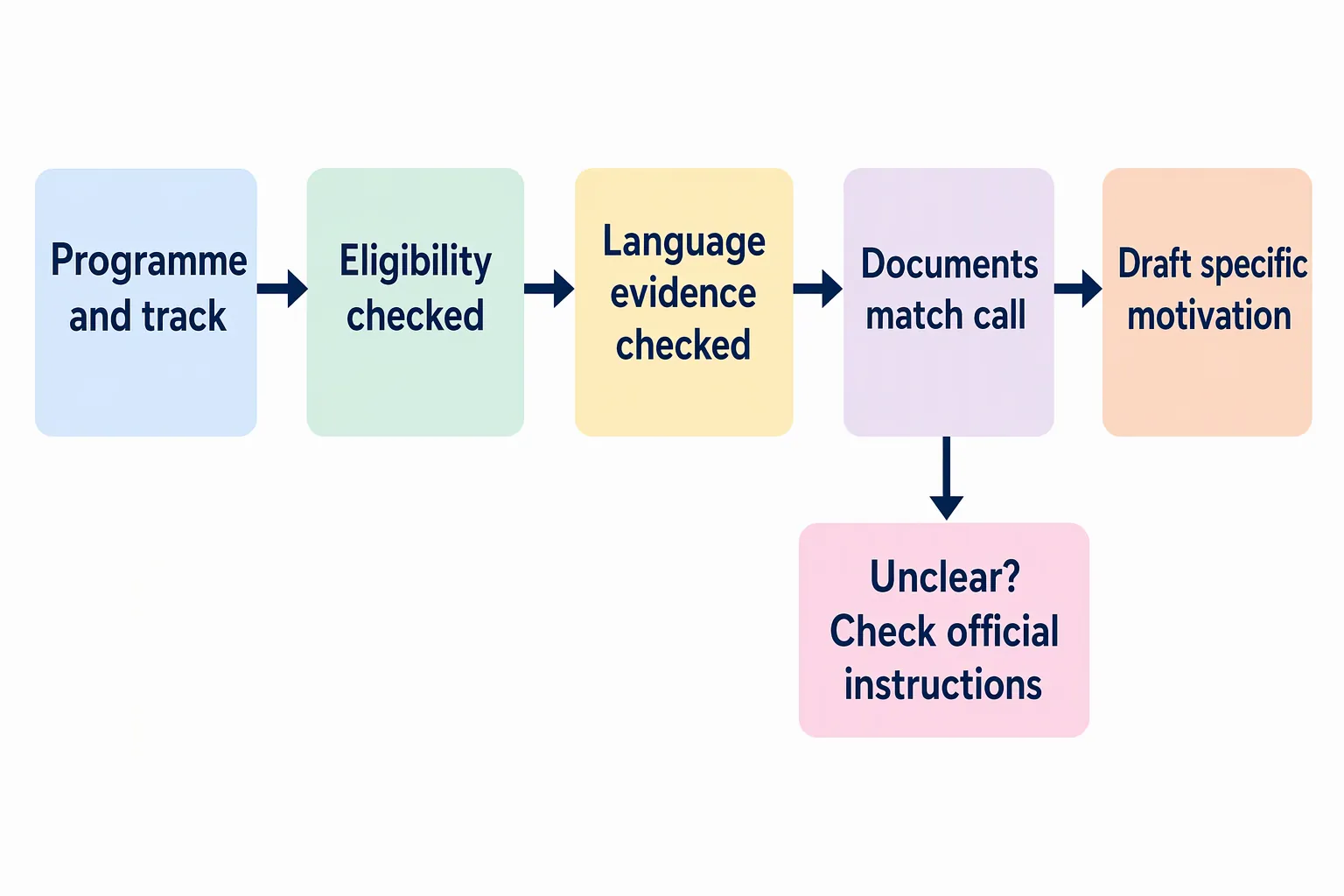
Structural approach for a traineeship cover letter
Organize the content so a reviewer can see what you are applying for, why it interests you, and what relevant evidence you bring. Keep formal eligibility checks separate from persuasive wording: the application documents, not the letter alone, must address the call's stated requirements.
Use these steps to prepare your content, then adapt it to the exact document or response format requested.
- 01
Read the specific call
Note the programme and track, stated work or learning focus, eligibility conditions, language instructions, and required documents. Separate formal requirements from subjects you can address in your motivation.
- 02
Select relevant evidence
Choose one or two real examples from study, work, volunteering, or a project. Explain your action and what it shows about your preparation, rather than listing every experience.
- 03
Connect evidence to motivation
Link one stated programme focus to an interest you can explain with facts from your experience. Add what you hope to learn without implying that your goals determine selection.
- 04
Verify every application claim
Check language descriptions, dates, eligibility statements, and document names against the current instructions and your records. Follow the required format and keep separate criteria responses when requested.
A focused traineeship application
Preview a fictional example showing programme-specific motivation, relevant evidence, and careful language claims.
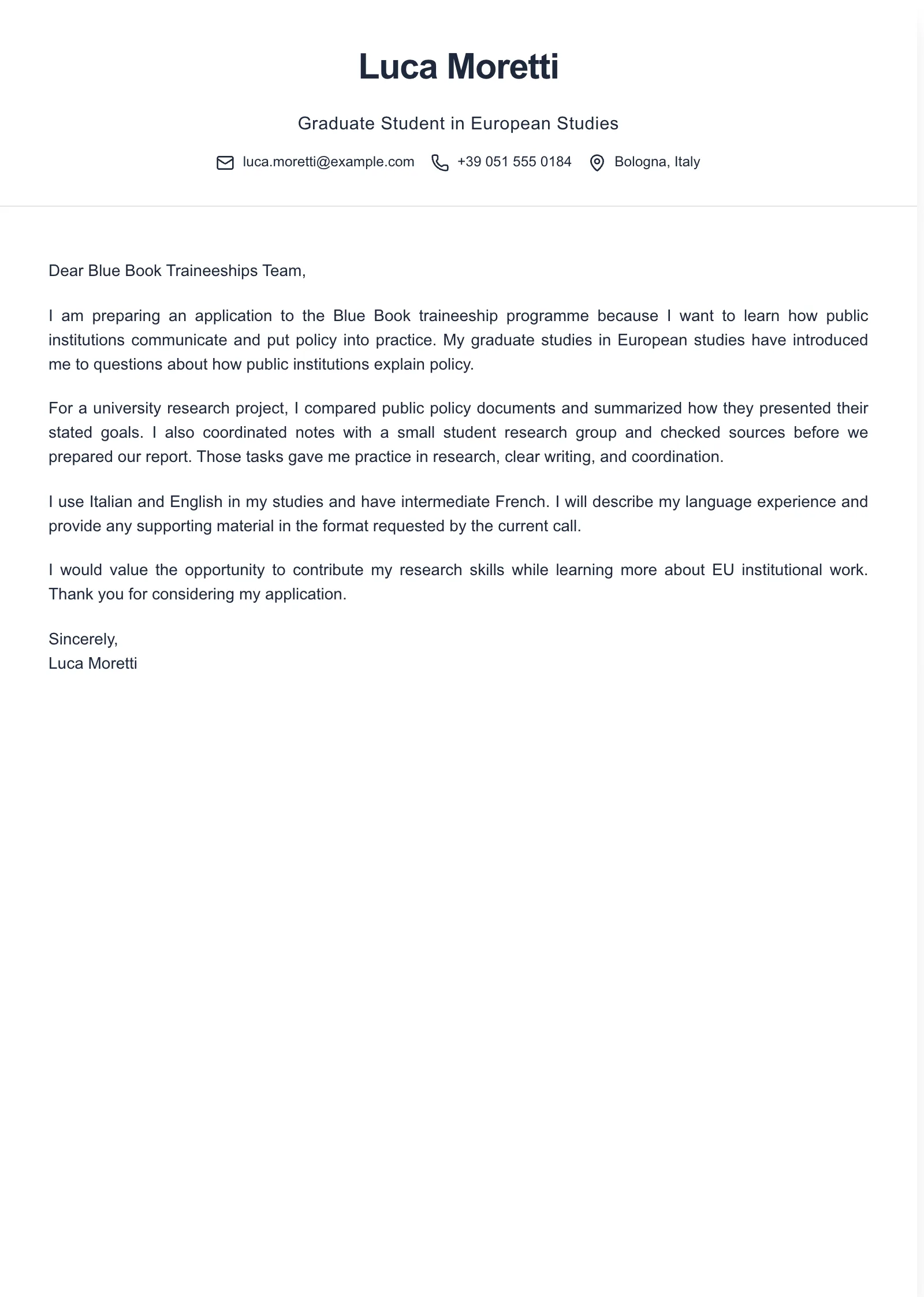
Example paragraphs
“I am applying to [traineeship or programme name] because its focus on [subject or task named in the call] connects with my experience in [course, project, or responsibility]. In [example], I [specific action], which gave me practice in [relevant skill].”
“For [project or responsibility], I [specific action] and produced [verifiable result or output]. This experience would help me contribute to [relevant task named in the call] while building my understanding of [related learning goal].”
“For [programme name], I use [language] for [factual task or context]. My current level is [accurate description or evidence requested by the call], and I have checked the instructions for [specific programme or track].”
These are adaptable paragraphs, not a complete letter. Replace each bracket with a true detail that matches the current call. If the application requests a different format, use it; keep required criteria responses separate when the instructions ask for them.
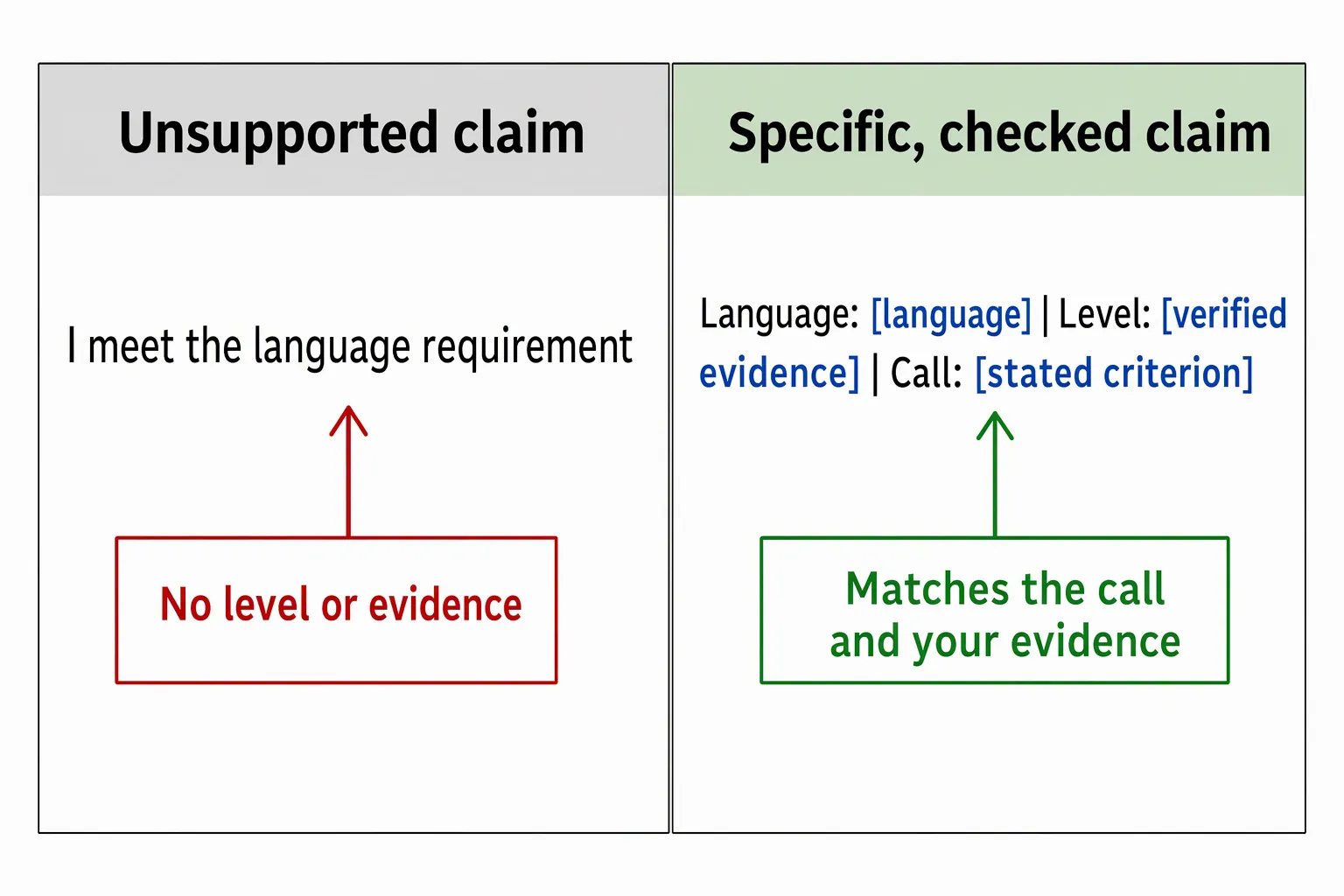
Common mistakes in a traineeship cover letter
Assuming all traineeships use the same rules
- What goes wrong
- Treating Blue Book instructions as universal can lead you to miss another programme's conditions, required documents, or application format.
- Better approach
- Check the current instructions for the programme and track you are applying to. Explain the specific motivation in your letter, and limit claims about requirements to that application.
Writing only about enthusiasm for Europe
- What goes wrong
- General statements do not connect your application to the call's work or show how your preparation is relevant.
- Better approach
- Choose a concrete subject or task from the call and connect it to a factual example from your experience or study.
Overstating eligibility or language ability
- What goes wrong
- Assuming your background meets a condition, or making an unsupported proficiency claim, can make the letter inconsistent with your documents.
- Better approach
- Check the current official criteria and describe only what you can verify. Provide any required evidence through the channel and format specified by the call.
Treating host interest as an outcome
- What goes wrong
- A conversation with a potential host does not establish that a programme has selected you or approved funding.
- Better approach
- Describe your interest without promising an outcome. For Erasmus+ placements, follow the applicable learning agreement and programme process; do not present host interest as a funding decision.
Frequently asked questions
- Is a Blue Book traineeship cover letter different from an internship cover letter?
- The basic writing task overlaps. This guide focuses on the specific task in the CSV: applying for a traineeship, especially checking programme instructions and connecting motivation and language evidence to the call. General internship advice can still help with structure. Do not assume that labels such as trainee, intern, cover letter, or motivation letter have one fixed meaning across applications; follow the specific instructions.
- What should I say about language skills?
- Describe languages and proficiency honestly, using the format or evidence requested in the current call. Blue Book and other traineeship requirements may differ by programme and track, so do not assume one language rule applies to every application.
- Does interest from a host guarantee a place or funding?
- No. For Erasmus+ traineeships, the learning agreement sets out the planned learning programme, which the institution and host coordinate. Host interest alone does not guarantee selection or funding. Check the applicable programme guidance.
- How do I check whether I am eligible for the Blue Book?
- Read the current official instructions for the specific application and track. Check each stated eligibility condition and supporting-document requirement against your circumstances. A cover letter cannot establish eligibility or replace required documents.

Put this career change approach into practice
Choose sample data or build your own cover letter, then personalize it before you download.