
Introduction
A cover letter for a temporary position should make it easy to assess whether your availability and experience fit the assignment. State when you can start, how long you can work, and any schedule limits that matter. Then give a relevant example of how you can contribute and get up to speed.
Temporary work can mean a fixed-term assignment, seasonal work, short-term coverage, or a role with a stated possibility of extension or permanent consideration. Check the actual posting terms. Do not treat a possible extension or temp-to-perm path as guaranteed.
What to address directly
Can you start and work the stated term?
- Hiring manager concern
- The posting may give a start date, schedule, or end date that affects whether you can take the assignment. A broad promise to be flexible does not tell the reader whether those terms work for you.
- What your letter should prove
- Give your earliest realistic start date and state any schedule or end-date limits that matter. If you can meet the posted term, say so plainly. If an important detail is unsettled, distinguish what you know from what you still need to confirm.
How will you get up to speed?
- Hiring manager concern
- For a short assignment, showing how you would approach the work can help the reader assess your readiness. Saying only that you learn quickly does not show what you have done.
- What your letter should prove
- Give one factual example of learning a relevant process, tool, or set of procedures and then using it. Explain what you learned and what you were able to do. You can also describe a practical onboarding habit, such as checking instructions and confirming priorities early.
Are your expectations about future work clear?
- Hiring manager concern
- Interest in permanent work can sound like a condition for accepting a temporary assignment, especially if the posting says nothing about a possible conversion.
- What your letter should prove
- If the posting mentions a possible permanent opening, say you would welcome consideration while affirming your interest in the temporary assignment itself. If it does not, focus on the offered work and do not imply that a future role is available.
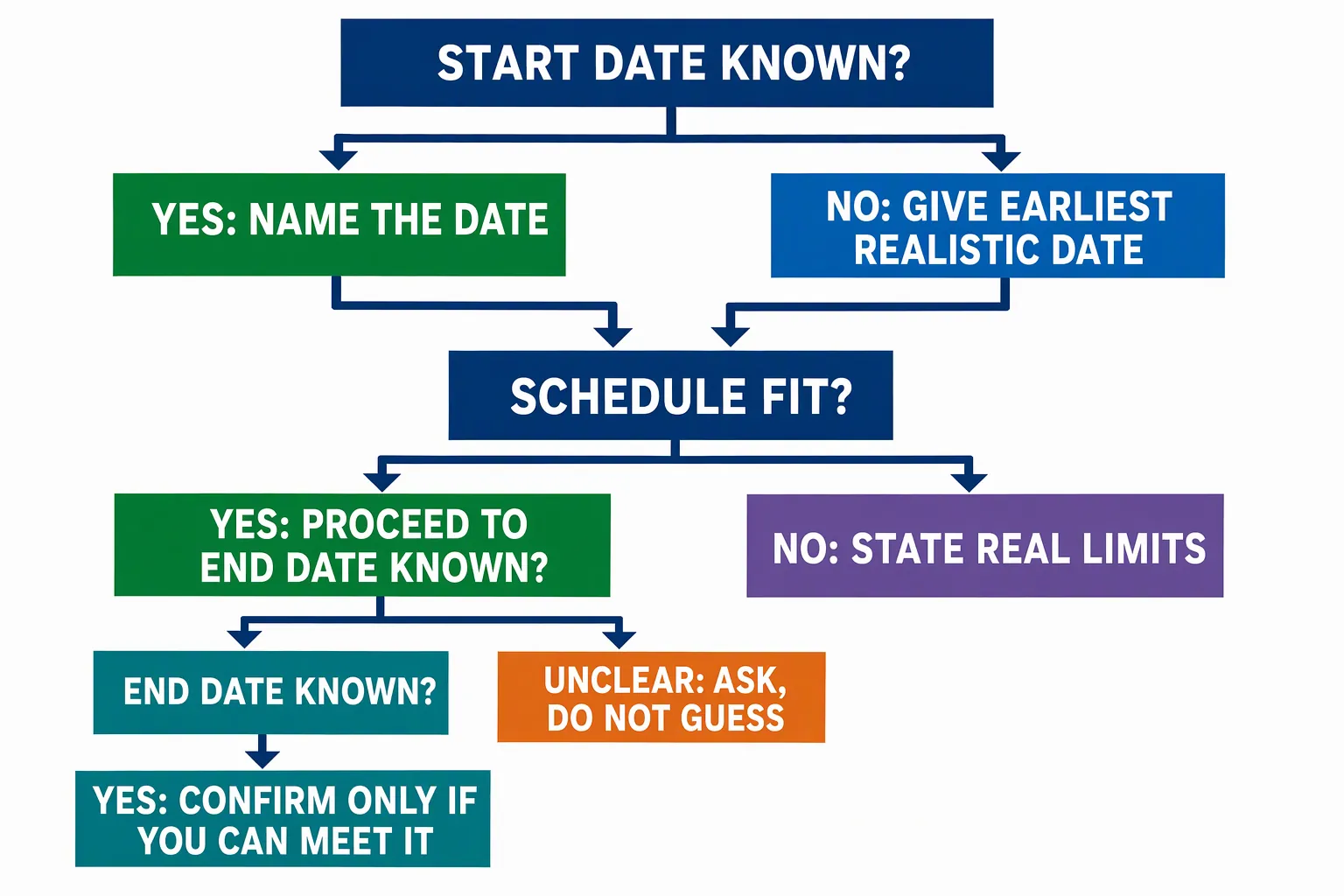
Structural approach: make the assignment fit easy to assess
Keep the letter focused on the specific opening. Use the posting's stated dates and schedule, and leave out career history that does not help explain your fit. The cover letter structure guide covers the general order; this page applies that structure to temporary work.
Connect the employer's stated need to your availability and one relevant piece of evidence. Present any extension or permanent role only as a possibility when the posting raises it. Do not frame temporary work as a placeholder or imply that the employer owes you a permanent position.
- 01
Identify the assignment terms
Check the posting for the start date, length, hours, location, and any stated possibility of extension or permanent consideration. Separate confirmed terms from possibilities. If a detail that affects your availability is unclear, do not guess; state what you know and ask about the open point when appropriate.
- 02
State your availability precisely
Give your earliest realistic start date and confirm the schedule or end date only if you can meet it. Mention a firm limit, such as a day you cannot work, when it matters to the posted schedule. Avoid broad claims like “available anytime” unless they are accurate.
- 03
Show one relevant example
Choose a task, process, or tool related to the posting that you have actually learned and used. Explain what you did, how you got up to speed, and a result the reader can understand. Evidence from paid work, study, volunteering, or another setting is more useful than an unsupported claim that you can do everything.
- 04
Close on the stated terms
Reaffirm your interest in the temporary assignment. If the employer explicitly mentions a route to permanent work, describe it as a possibility you would welcome, not an expectation. Otherwise, focus on your ability to meet the stated assignment terms.
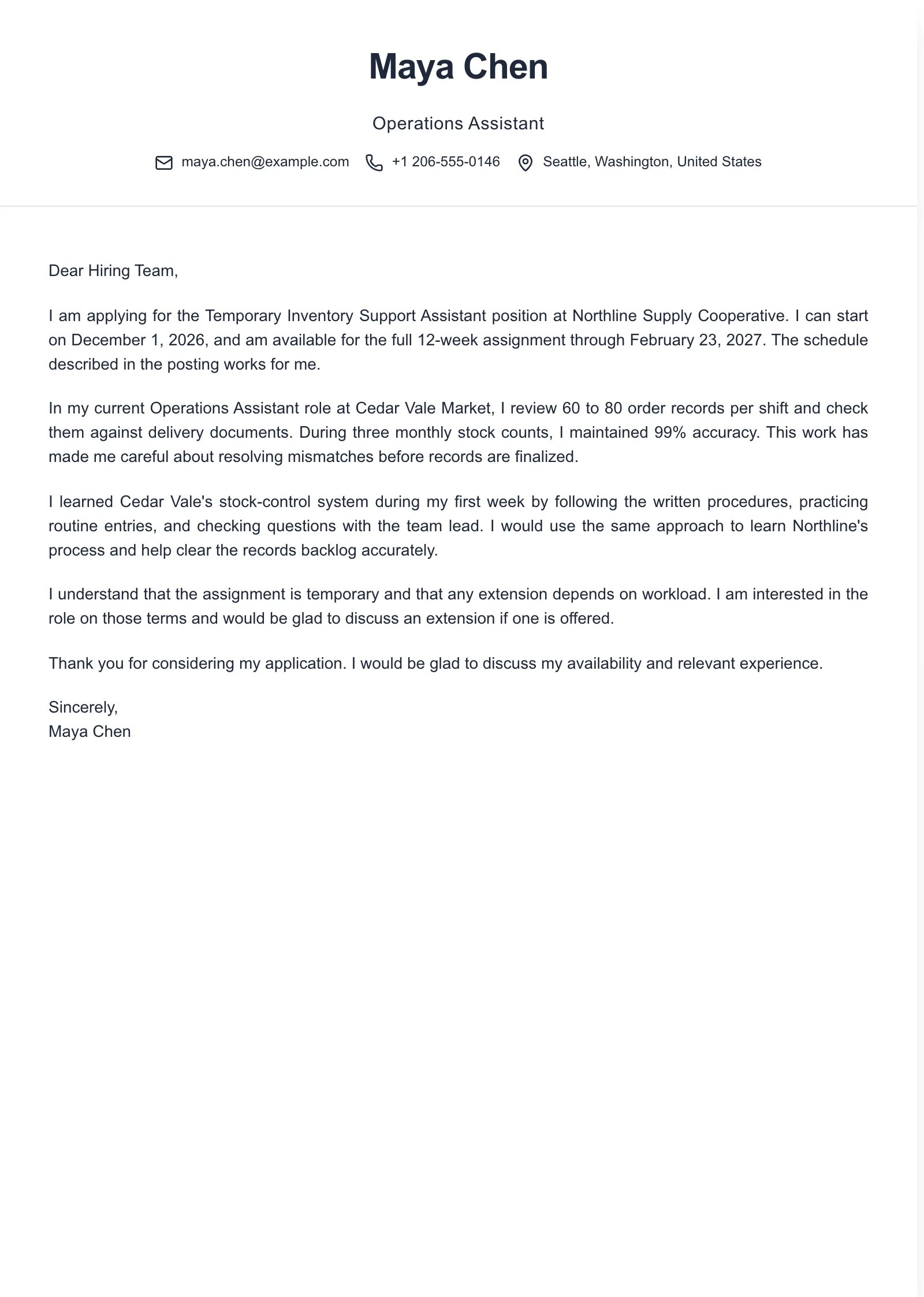
Temporary position cover letter example
A fictional fixed-term assignment example with a clear start date, relevant onboarding evidence, and no assumption that an extension is guaranteed.
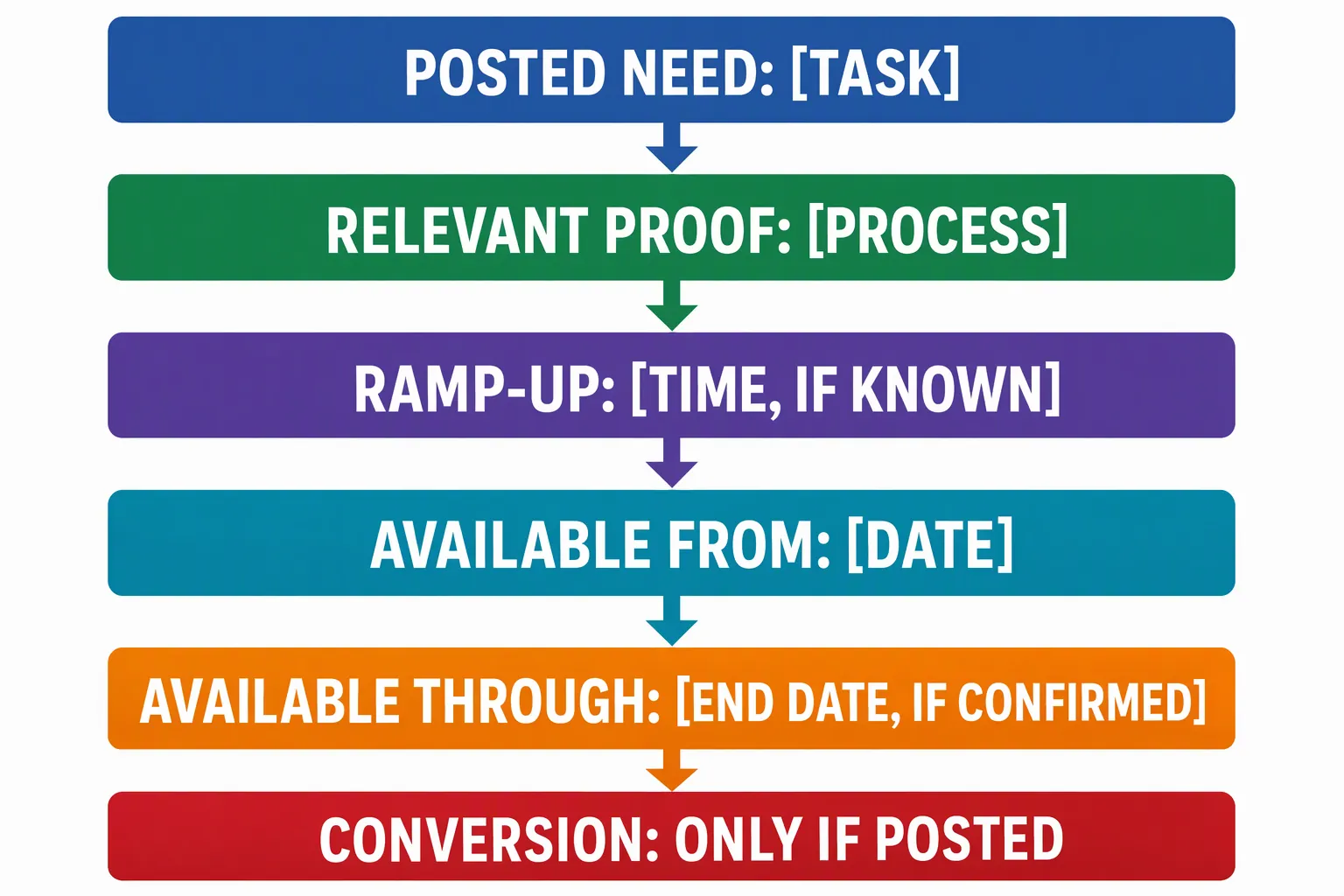
Example paragraphs
“I can start the [Job Title] assignment at [Company Name] on [start date] and am available through [assignment end date]. I can also work [specific schedule detail], which matches the hours in the posting.”
“In [previous setting], I learned [relevant process or system] within [time period] and used it to [specific, factual result]. I would bring the same careful approach to learning [relevant task] at [Company Name].”
“I am interested in the temporary [Job Title] role at [Company Name] on its stated terms. If the [posting] identifies a possible permanent opening later, I would welcome consideration while understanding that conversion is not promised.”
Use only the paragraph that answers a real question in the posting. Replace every bracket with a fact you can stand behind, and remove details that do not apply. If the posting says nothing about permanent work, leave out the third example.
Common mistakes in temporary-position cover letters
Being vague about availability
- What goes wrong
- Saying you can start soon or work any schedule leaves the reader guessing about your fit with the assignment terms.
- Better approach
- Give a real start date or earliest start window, plus any relevant schedule limits. Do not promise availability you cannot keep.
Treating temp-to-perm as guaranteed
- What goes wrong
- Writing as if a temporary assignment will automatically become permanent can suggest you are not committed to the job being offered.
- Better approach
- Discuss a future permanent role only when the posting raises it. Describe it as a possibility and show interest in completing the temporary assignment.
Claiming you can learn anything instantly
- What goes wrong
- A broad promise to adapt quickly has no evidence and may overstate what you can do in a new role.
- Better approach
- Use one accurate example of learning a relevant process or tool. Explain what you learned and what you were then able to do.
Sending a generic career summary
- What goes wrong
- A long account of your career can hide the details relevant to this assignment: availability, related experience, and readiness to begin.
- Better approach
- Keep only background that supports this assignment. Preserve your actual past job titles and describe your work accurately.
Frequently asked questions
- Should I put my exact start date in a temporary-position cover letter?
- If you know when you can start, give the date. If you do not, state your earliest realistic start date or a clear time frame. Do not promise an earlier start than you can manage.
- How much schedule flexibility should I mention?
- State only the flexibility you can keep. If the posting names particular shifts, days, or an assignment end date, address those details instead of saying you are completely flexible.
- Should I say I want the temporary position to become permanent?
- Only raise a possible permanent role if the posting mentions it or you are asked. You can say you would welcome consideration while making clear you understand there is no promise of conversion. Do not assume the possibility exists.
- What if the temporary assignment has a fixed end date?
- Show that you have read the stated term and can meet it, if true. Mention an extension only if the posting raises that possibility or you are asked about it.

Put this career change approach into practice
Choose sample data or build your own cover letter, then personalize it before you download.