
Introduction
A team lead cover letter can show how you help shared work move forward while completing your own responsibilities. Choose evidence connected to the posting, such as coordinating handoffs, setting priorities, supporting colleagues, or contributing directly to the work. Explain what you did rather than relying on a leadership label.
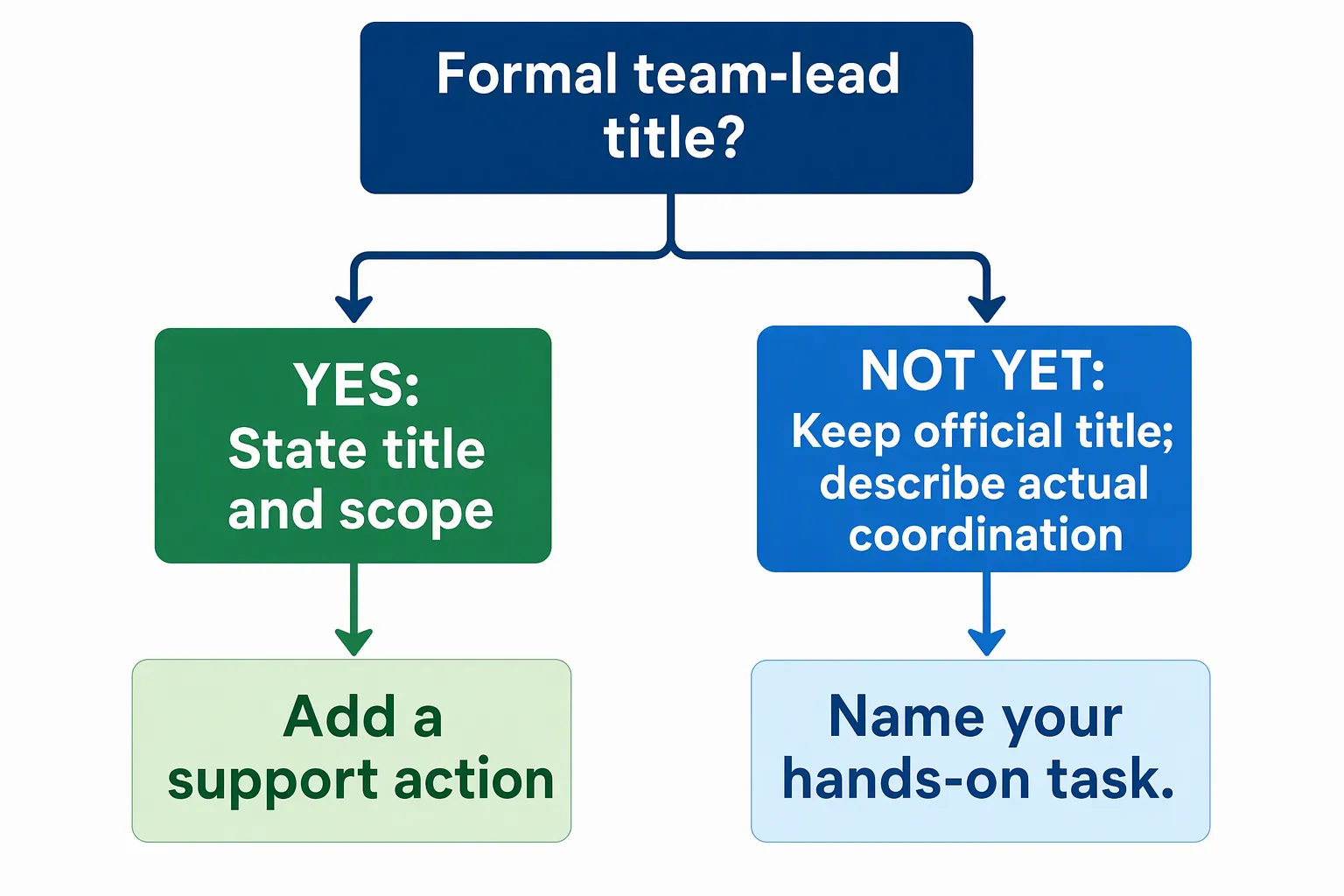
If you are applying for your first formal team-lead role, you can draw on a relevant responsibility from another position, a project, or volunteer work. Be precise about your role and the scope of your responsibility. Supporting peers or coordinating a task is relevant experience, but it is not the same as claiming direct supervision.
A useful approach is to tailor a clear letter structure around one or two relevant examples. The cover letter structure guide explains the purpose of each part; this page focuses on showing coordination, support, and hands-on contribution.
What to address directly
Showing leadership without overstating authority
- Hiring manager concern
- Coordinating peers does not necessarily mean you hired, reviewed, or supervised them. Describing informal support as direct management may give an inaccurate impression of your role.
- What your letter should prove
- Name the responsibility you actually held. You might have organized task handoffs, explained a process to a colleague, or coordinated a shared deadline. If you had formal authority, describe its scope; if not, avoid language that implies it.
Balancing support for others with your own delivery
- Hiring manager concern
- A description focused only on delegating or helping colleagues may not show what you contributed yourself. One focused only on individual output may leave your support for the team unclear.
- What your letter should prove
- When you have an example that includes both, connect one action that helped the group with a task you completed. Explain what you did for the team, what you personally delivered, and how the details relate to the role.
Making an informal example specific
- Hiring manager concern
- Applicants without a formal lead title may worry that their examples are too small. General claims such as “natural leader” do not explain what they were responsible for.
- What your letter should prove
- Choose a real situation and state the team need, your action, and what was completed or changed. Use an observable outcome you can explain. Do not add a made-up metric or enlarge your role to make the example sound more senior.
Structural approach
Build the letter around evidence that matches the team responsibilities in the posting. One well-explained situation can show several relevant actions; add a second brief detail only if it helps address another important responsibility.
Keep your past title separate from the work you took on. You can retain an accurate title such as [Current Title] and then explain a specific coordination responsibility. This is especially useful when you are applying for your first formal team-lead position.
- 01
Identify the team need
Choose a responsibility in the posting that involves working with others, such as coordinating handoffs, communicating priorities, or supporting colleagues. Look for a real example that relates to it rather than repeating a phrase without evidence.
- 02
Set the scope of your role
Briefly say where the example took place and what you were responsible for. If you coordinated peers without supervising them, make that distinction clear. Keep your official job title accurate.
- 03
Connect support with your own work
Describe one action that helped the group and one task you personally completed, if both are relevant to your example. Use “coached” only if you actually coached someone; otherwise, choose a more precise word such as explained, supported, or coordinated.
- 04
Explain the evidence
Say what was completed or what changed, and how you know. Use a result you can verify, whether it is a deliverable or a concrete process improvement. Leave out numbers you cannot support, and connect the example to [Company Name] without promising an outcome.
Fictional team lead cover letter example
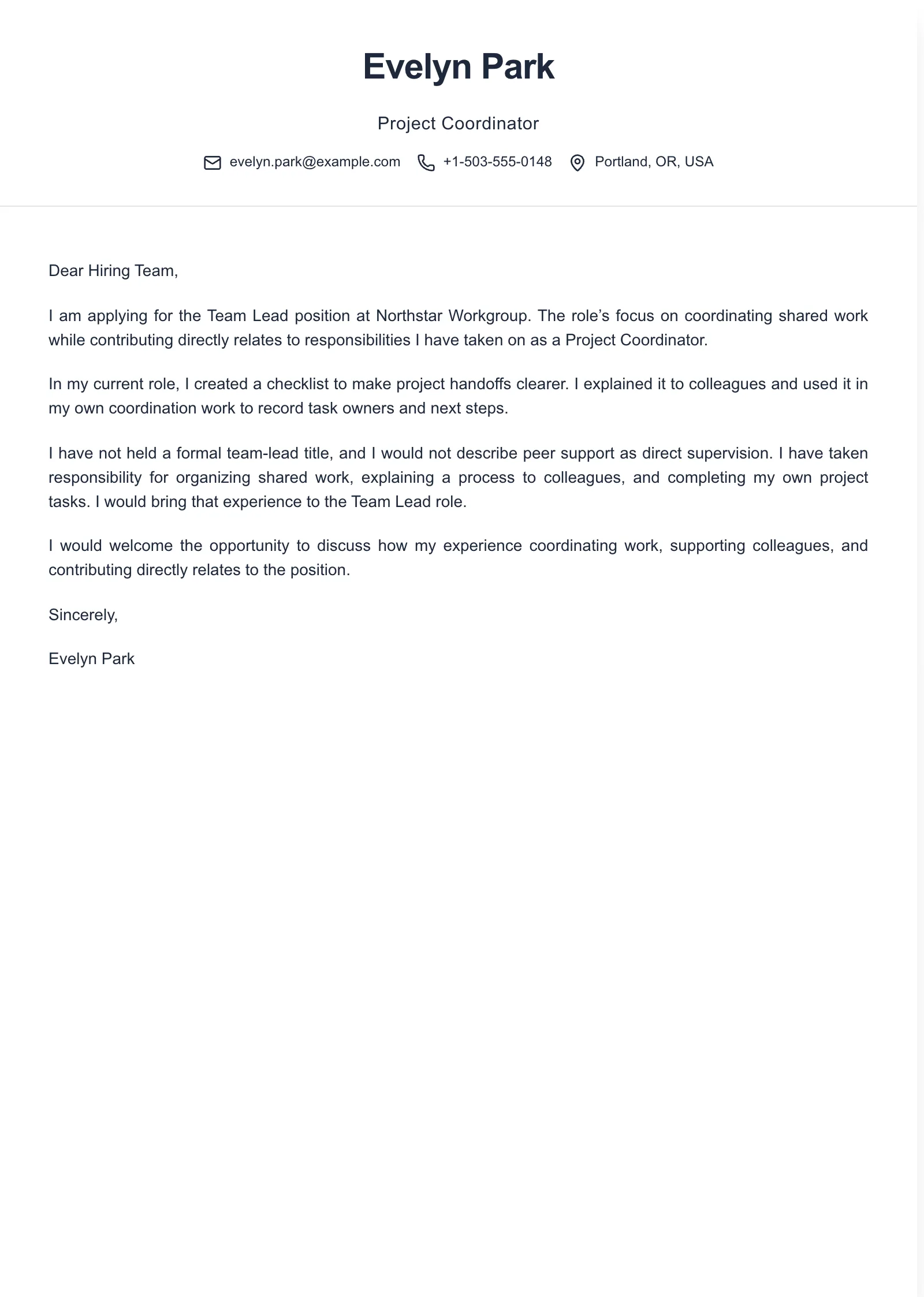
This fictional example uses a project coordinator’s specific handoff and peer-support experience without claiming a formal management title.
Example paragraphs
“I am applying for [Job Title] at [Company Name] because the posting emphasizes [specific team responsibility]. In [relevant project or role], I coordinated [shared task] while remaining responsible for [hands-on contribution].”
“When [specific team challenge] arose, I [coordination action] and supported [colleague or group] by [what you actually did]. I also completed [your task], contributing to [verifiable outcome or completed deliverable].”
“My title has been [accurate current or past title], and I have taken responsibility for [specific coordination example]. I supported [colleague or group] by [specific action] while completing [hands-on task], experience I would bring to [Job Title] at [Company Name].”
Treat these as paragraph patterns, not claims to copy. Replace every bracket with a detail you can stand behind, and remove any action you did not take. If you have not held a formal lead title, the third pattern lets you show relevant responsibility without relabeling a past job. Use your resume for the fuller history.
Common mistakes in a team lead cover letter
Implying direct reports you did not have
- What goes wrong
- Words such as “managed” or “supervised” may imply formal authority that was not part of your role.
- Better approach
- Use a verb that accurately describes your work, such as coordinated, supported, trained, or organized. Name the responsibility instead of changing your title.
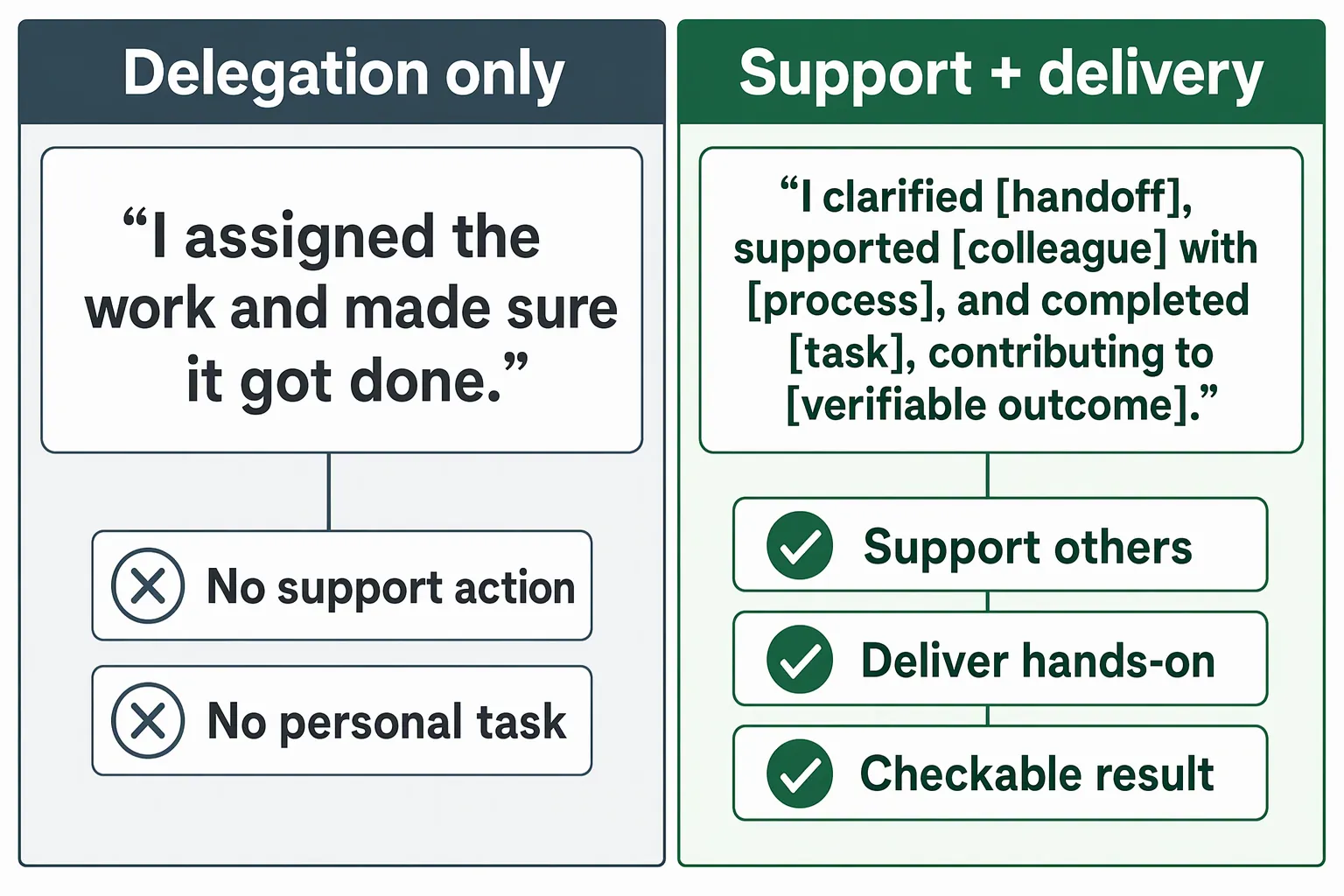
Describing leadership as delegation alone
- What goes wrong
- A list of assigned tasks does not show how you supported the team or what you contributed to the work yourself.
- Better approach
- Add a real support action and, when relevant, name a hands-on task you completed. Tie both details to the same team need if possible.
Using traits instead of an example
- What goes wrong
- Calling yourself organized or a strong communicator does not explain what you did in a team situation.
- Better approach
- Describe a concrete action, such as clarifying who owned a handoff or explaining a process to a colleague, and say what the group completed.
Adding unsupported results to sound senior
- What goes wrong
- An invented percentage, team size, or improvement can make an otherwise credible example harder to trust.
- Better approach
- Use results you can verify. A completed deliverable or a specific change in how work was organized can show your contribution without a numerical claim.
Frequently asked questions
- How do I write a team leader cover letter with no experience?
- If you mean no formal team-lead experience, use a real example of coordinating work or supporting others, such as a project or volunteer activity, if you have one. State your actual role and actions. If you have no relevant example yet, do not invent one; focus on genuine skills that relate to the position.
- Should I include hands-on work in a team lead cover letter?
- Include it when it is relevant to the role. Pair a specific contribution you made yourself with an example of how you coordinated or supported others. This makes your part in the shared work clear without suggesting that you did everyone’s tasks.
- Should I use numbers to prove my team leadership?
- Use a number only if you can verify it and explain what it measures. A completed deliverable or a specific change to a handoff can also be useful evidence when you do not have a meaningful metric.
- Can I call myself a team lead if that was not my job title?
- Keep your official job title accurate. You can describe a project you coordinated or a responsibility you took on, while making clear whether you had a formal team-lead role.

Put this career change approach into practice
Choose sample data or build your own cover letter, then personalize it before you download.