
Introduction
For an application described as a summer or seasonal job, make two things easy to assess: when you can work and how your experience relates to the posted duties. State your confirmed availability early, then connect one or two real examples from school, volunteering, activities, or other responsibilities to the work.
Summer jobs and internships can overlap, particularly when an opportunity is aimed at students. Do not infer the position’s purpose, pay, or requirements from its label alone. Follow the employer’s wording and instructions. This guide focuses on the usable application task of explaining your dates, relevant evidence, and, when it genuinely helps, local knowledge.
What to address directly
Your dates may not match the posted work period
- Hiring manager concern
- Saying only “I am free this summer” leaves the employer guessing about your start date, end date, and availability for required shifts.
- What your letter should prove
- Give the earliest date you can start and the last date you can work. Add confirmed days or shifts if they matter to the posting. If a shift requirement is unclear or your dates do not align, ask before describing yourself as available.
School experience may not look like job evidence
- Hiring manager concern
- A class project, club role, or volunteer task can feel less relevant than paid experience, especially when you have not had a job before.
- What your letter should prove
- Choose a specific example that connects to a posted duty. Describe what you did and what it demonstrates, such as following instructions, completing a shared task, or keeping a regular commitment. Label the experience accurately as school, volunteer, or personal responsibility.
Local familiarity can sound like an unsupported claim
- Hiring manager concern
- Saying “I know the area” does not show how that knowledge could help with this job. Guessing what local visitors or customers need is not useful evidence.
- What your letter should prove
- Include a truthful detail, such as knowing a route to the worksite or having firsthand knowledge of a relevant local event. Explain its connection to a stated duty or worksite need. Leave it out if you cannot verify the detail or explain why it matters.
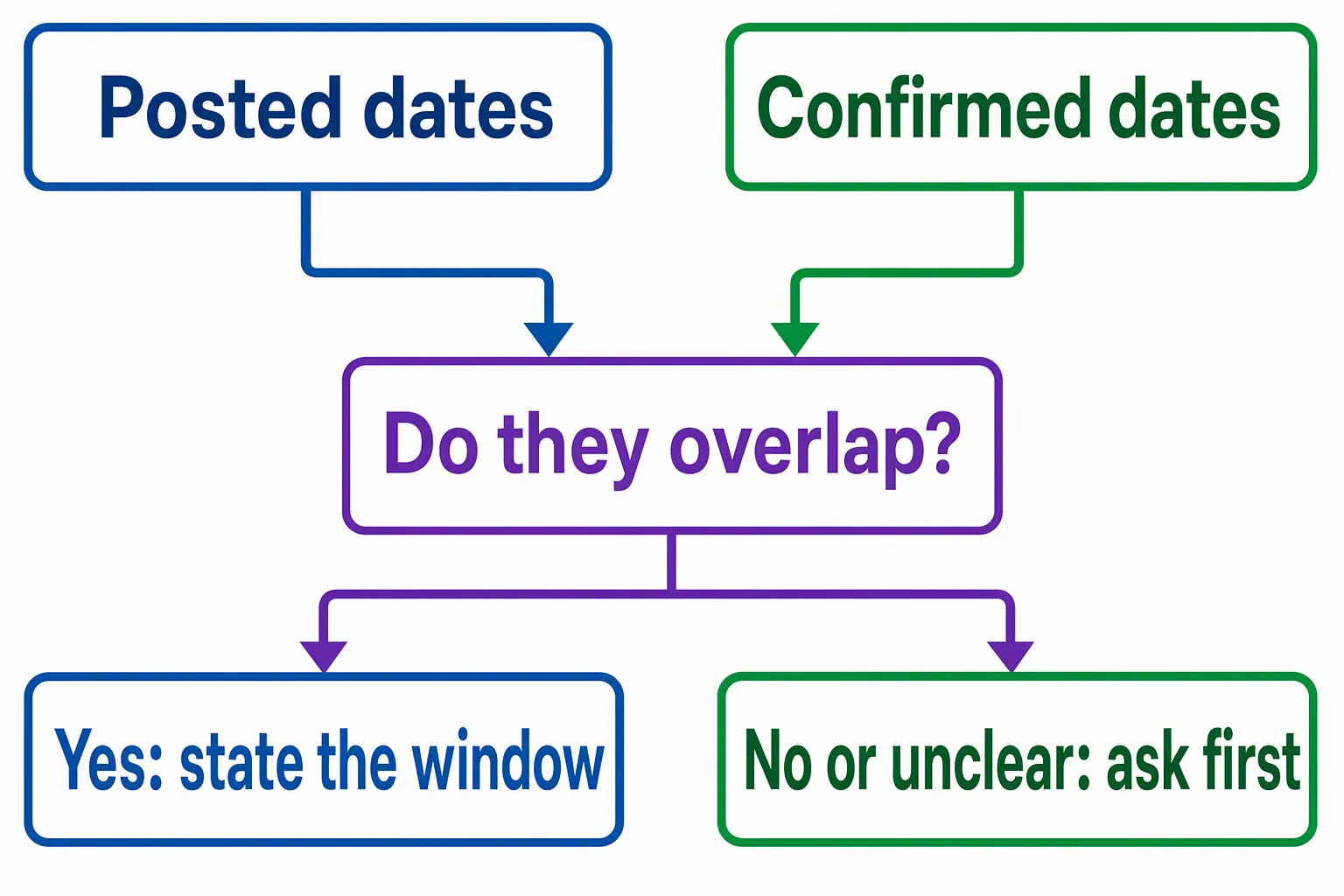
Structural approach: make dates and fit easy to assess
Keep the letter focused on this posting rather than summarizing your school or personal history. A useful cover letter structure can help organize the message; for this application, make your schedule visible and connect your evidence to the actual duties.
Before drafting, check the posting for the work period, shift expectations, main tasks, and requested documents. Use these steps to choose accurate details for a summer job application.
- 01
Confirm your work window
Write down the dates you can genuinely work and any known schedule limits. Compare them with the posting before applying. If the dates do not align or the shift pattern is unclear, ask for clarification rather than claiming full flexibility.
- 02
Choose one or two posted duties
Find concrete tasks in the posting, such as assisting visitors, preparing materials, or keeping shared spaces organized. Select evidence that relates to those tasks. You do not need to repeat every requirement or claim experience you do not have.
- 03
Turn school experience into evidence
Choose a specific class, club, volunteer activity, or other responsibility. Explain what you did and the skill it shows, such as coordinating a group task or meeting a commitment. Keep the type of experience clear so it is not mistaken for paid work.
- 04
Add local knowledge only when it helps
Mention a route, event, or seasonal detail only if you know it firsthand and can connect it to a posted duty or worksite need. Check that your dates, role title, and other claims are accurate. If age-related work eligibility could affect your application, verify current requirements with the appropriate official source before stating your availability.
Summer job cover letter example
Explore a fictional student application for a seasonal summer role. It shows how confirmed availability, school-based evidence, and relevant local knowledge can support an application without presenting school experience as paid work.
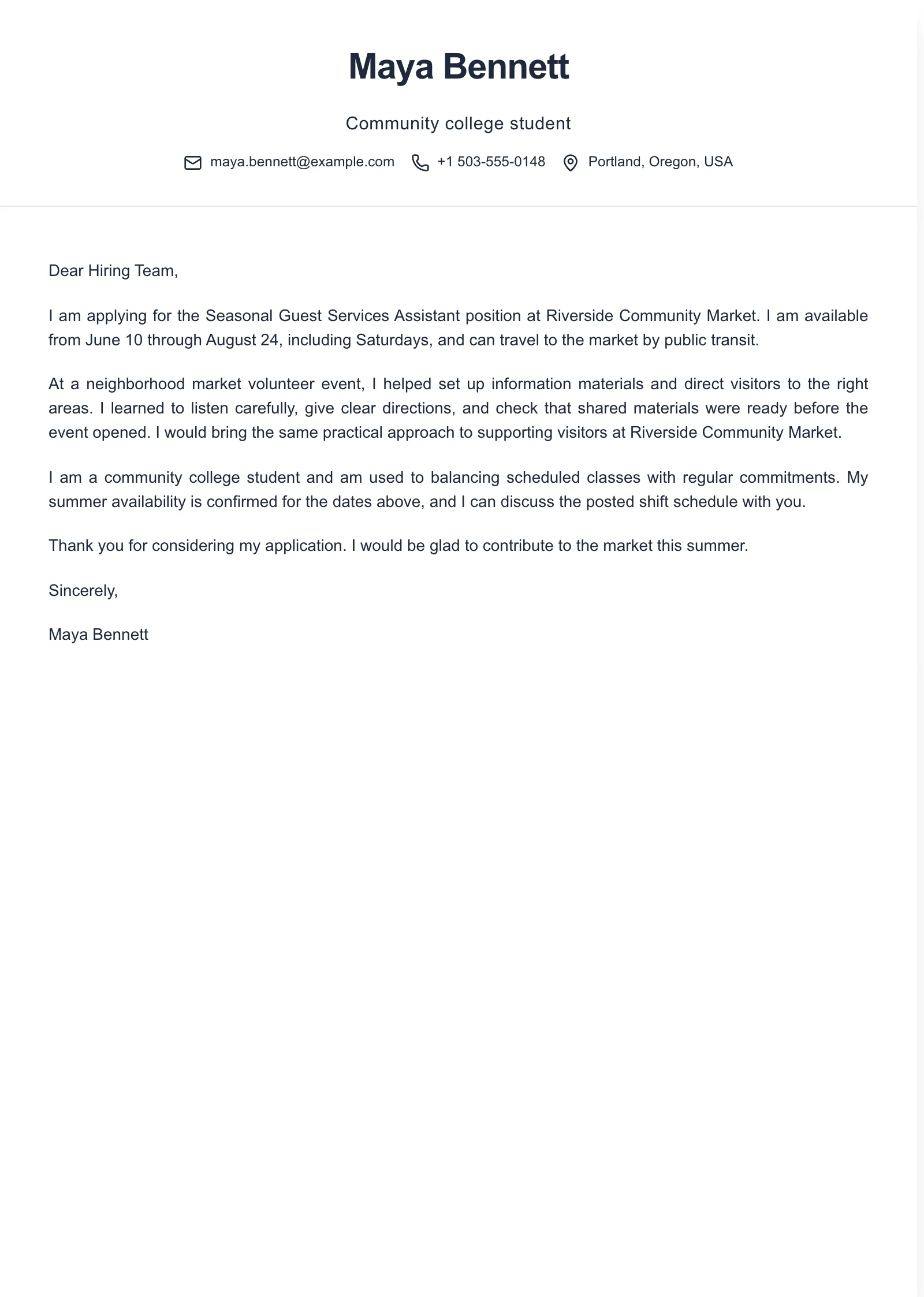
Example paragraphs
“I am applying for the [Job Title] role with [Company Name]. I can work from [start date] through [end date] and am available for [confirmed days or shifts]. These dates match [specific work-period detail from the posting].”
“For [school project or activity], I was responsible for [specific task] and completed it by [relevant deadline or outcome]. That experience would help me contribute to [specific duty in the posting] as a [Job Title] at [Company Name].”
“I know [truthful local route, event, or seasonal detail] and can see how it relates to [specific need in the posting]. I would bring that knowledge, along with [relevant skill or responsibility], to the [Job Title] position at [Company Name].”
Use these as separate paragraph patterns, not as a full letter. Replace each bracketed phrase with a fact you can verify, and remove any sentence that does not fit the posting. Do not describe school or volunteer experience as paid work, or imply that knowing the area makes you available for shifts you cannot work.
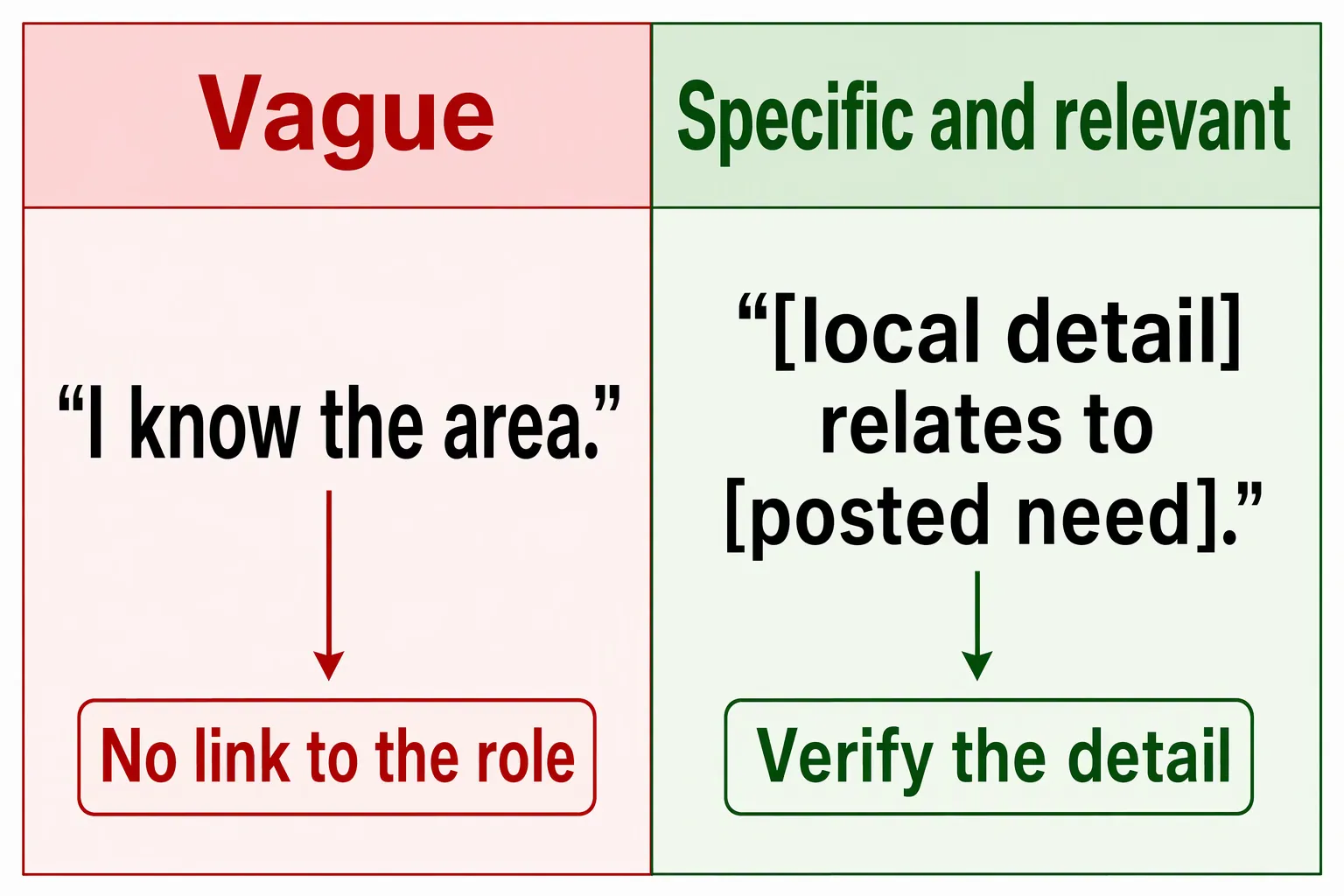
Common mistakes in a summer job cover letter
Using vague availability
- What goes wrong
- Writing “available all summer” can hide a late start, an early departure, or days you cannot work.
- Better approach
- Give confirmed start and end dates, plus relevant shift details. If your schedule may change, say what is confirmed and ask about the rest.
Listing skills without evidence
- What goes wrong
- Calling yourself reliable, organized, or good with people gives the employer no specific example to consider.
- Better approach
- Describe one action from school, volunteering, or another responsibility that shows the skill. Name the skill after explaining how you used it.
Treating local knowledge as an advantage by itself
- What goes wrong
- A claim about knowing the neighborhood does not explain how that fact relates to the job.
- Better approach
- Connect a true local detail to a stated task or worksite need. Avoid guessing about local demand or making broad claims about the community.
Promising more flexibility than you have
- What goes wrong
- Saying you can work any shift may create a mismatch if school, transportation, or other commitments limit your schedule.
- Better approach
- Be specific about the shifts you can accept. If a requirement is unclear, ask the employer instead of making an unsupported promise.
Frequently asked questions
- What should I include in a summer job cover letter?
- Name the role, give the dates you can work, and connect one relevant example from school, volunteering, or another responsibility to a duty in the posting. Include local knowledge only if it is true and useful for this role.
- How do I write a summer job cover letter with no work experience?
- Use a specific example from a class project, club, volunteer activity, or regular responsibility. Explain what you did and how it relates to the posted work, without presenting school experience as paid employment.
- Should I mention that I am a student?
- Mention it when it helps explain your schedule or provides relevant evidence. Give confirmed dates and any schedule limits that matter to the posting; do not assume the employer can work around your school calendar.
- How is a summer job cover letter different from an internship letter?
- The labels can overlap, so follow the employer’s description rather than assuming every summer job or internship has the same purpose. For this task, make your confirmed availability and fit with the posted duties easy to assess. Address stated learning goals or application requirements when the posting includes them.

Put this career change approach into practice
Choose sample data or build your own cover letter, then personalize it before you download.