
Introduction
A startup closure is a business outcome to explain, not a gap you need to disguise. In your cover letter, make clear what the venture did, what you were responsible for, what happened to the company, and why you want to contribute in a team role now. Use facts you can stand behind, not a redemption story.
This guide is for the specific task of explaining a founder's startup shutdown while applying to join a team. A general former-business-owner letter may describe a business that is still operating, was sold, or was handed off. Do not imply a shutdown if that is not what happened. For the overall letter sequence, see this guide to cover letter structure; the shutdown and your next step still need to be explained here.
What to address directly
Concern: The closure will overshadow what I did
- Hiring manager concern
- You may worry that the reader will focus only on the company's ending, or assume the closure proves that your work had no value.
- What your letter should prove
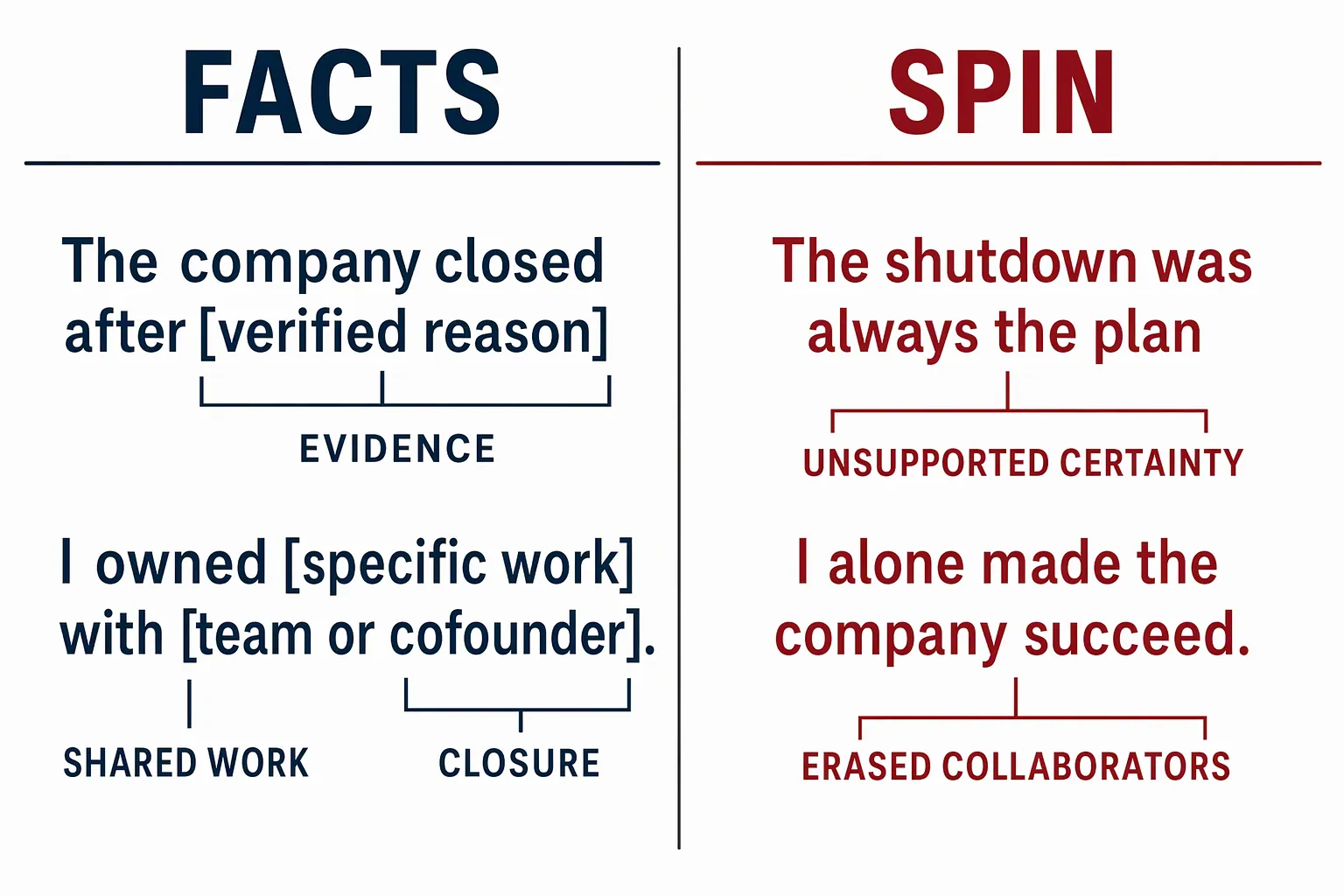
- Separate the company's outcome from your contribution without arguing that the venture succeeded. State what closed, give a short, relevant reason if you know and can share one, then name work you actually did. A clear account lets the reader understand the transition without asking them to accept a positive spin.
Concern: My account may sound evasive or blame others
- Hiring manager concern
- A vague explanation can leave the reader unsure whether the company closed, while blaming a cofounder, customers, investors, or the market can sound like avoiding responsibility.
- What your letter should prove
- Use a direct description of the closure and distinguish your decisions from factors you did not control. Do not speculate about another person's motives or claim you know more than you do. If the reason is complicated or confidential, give only the accurate context you are able to share.
Concern: A team role may sound like a fallback
- Hiring manager concern
- The reader may wonder whether you want this work or are applying only because the startup ended.
- What your letter should prove
- Name a specific part of the role or team that interests you and connect it to work you can contribute. Explain why doing this work in a shared setting appeals to you now. You do not need to promise that you will never found another company; keep the focus on the role you are applying for.
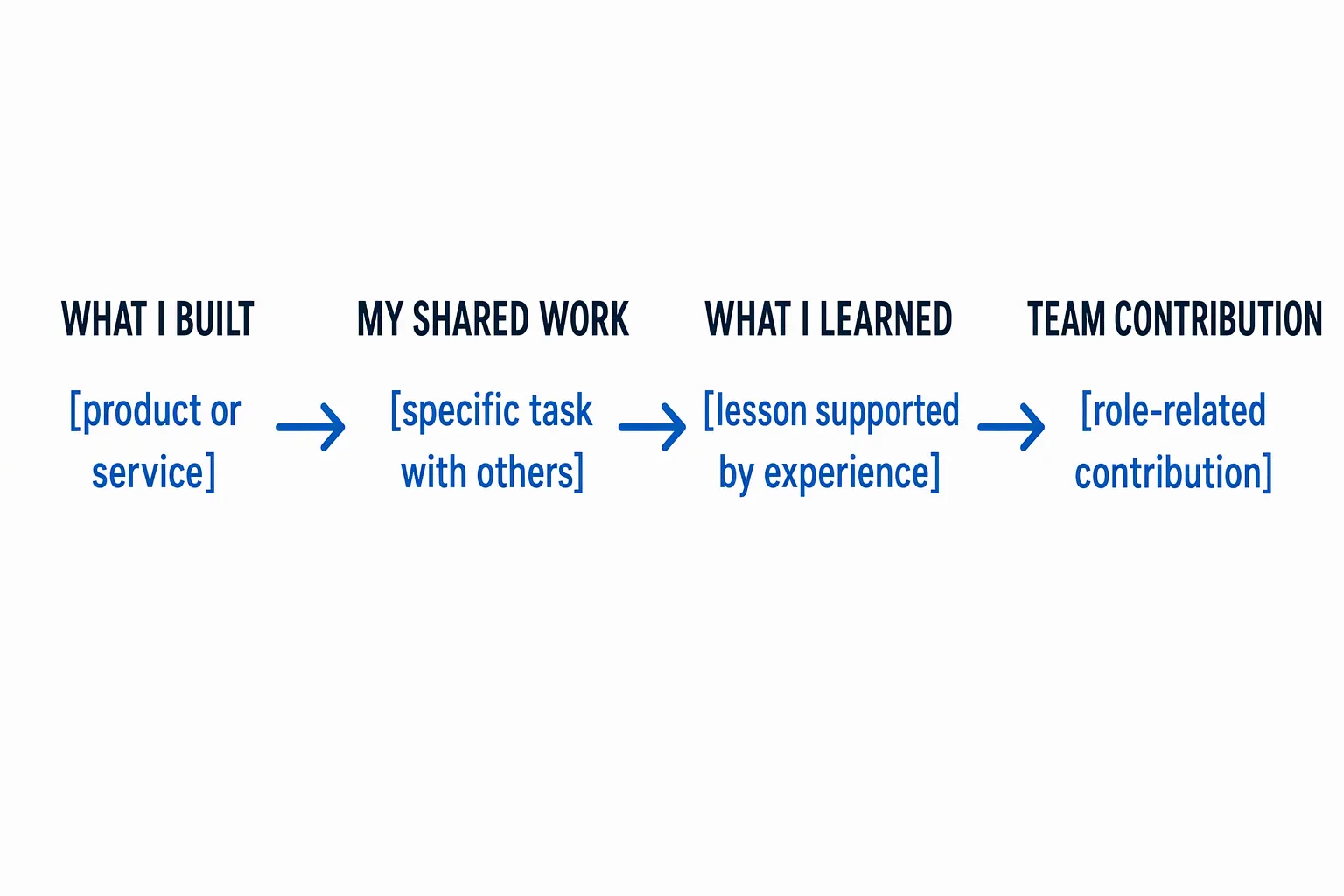
Structural approach for explaining the shutdown and your next step
Keep the explanation proportional to its purpose. The reader needs enough context to understand the venture, your part in it, the closure, and your reason for applying. They do not need a complete company history or a defense of every decision. Choose details that are relevant, accurate, and safe to share.
Make the transition from founder work to the role visible. To map transferable skills to the target role, name an actual task and show how it relates to work in the posting. Broad claims such as being adaptable do not show what you can contribute.
- 01
Say what the venture did
Describe the product, service, or process in one clear phrase. Mention its stage or scale only when you can support the detail, such as a pilot or a defined group of users. Do not make the venture sound larger or more established than it was.
- 02
Identify your own contribution
Choose one or two responsibilities relevant to the role. Separate your work and decisions from shared team outcomes, and credit collaborators where appropriate. If you include a result, use a specific detail you can verify rather than an impressive but unclear claim.
- 03
Explain the closure plainly
Say that the company closed or was wound down if that is what happened. Add a brief reason only when it is accurate, relevant, and yours to share. Avoid blame, unsupported explanations, and confidential figures. If you do not know the full reason, do not guess.
- 04
Connect the experience to joining a team
Describe one lesson from the venture and connect it to the work in the posting. Then give a concrete reason this role or team interests you and the contribution you want to make. Do not present employment as a rescue plan or claim certainty about a future career path.
See a startup-shutdown cover letter example
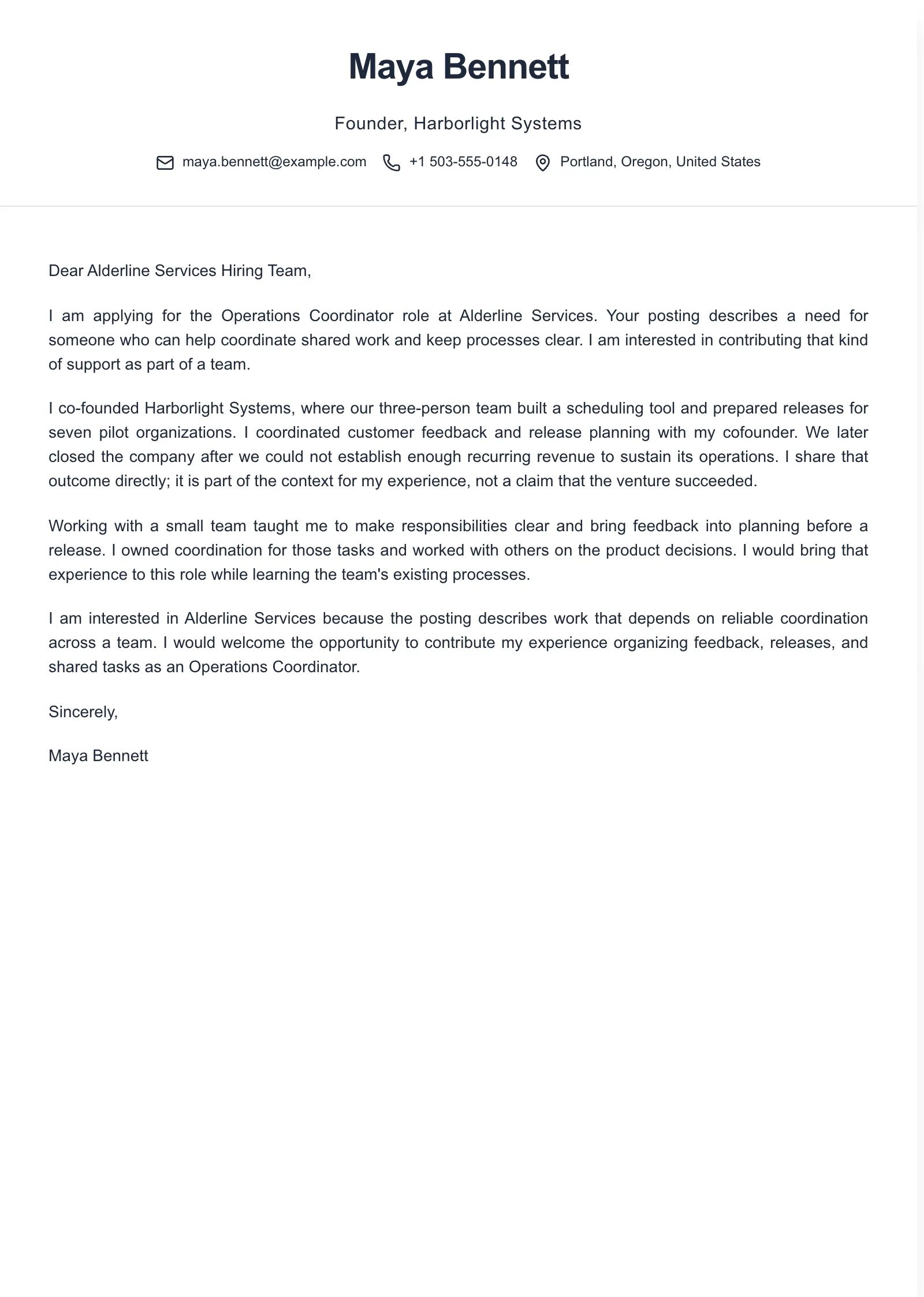
This fictional example shows a founder describing a closed venture with clear facts, recognizing shared work, and explaining interest in a team role.
Example paragraphs
“I worked on [product, service, or process] from [starting point] to [verifiable stage]. I was responsible for [specific work] and worked with [cofounder, team, or partners] on [shared responsibility]. That experience connects to the [Job Title] role at [Company Name] because [specific connection to the posted work].”
“We closed [Venture Name] in [month and year] after [brief, verified business reason]. Before closing, we had reached [specific, verifiable stage or result]. I learned [specific lesson about your own decisions or work], which now informs how I approach [relevant task].”
“I am interested in the [Job Title] role at [Company Name] because [specific reason related to the work or team]. Building [venture or product] taught me [relevant lesson], and I want to apply [skill or experience] in a shared setting where [specific responsibility or process] matters.”
These are separate paragraph patterns, not a complete letter. Replace every bracket with a true detail and remove anything you cannot verify. You can combine the closure with the lesson when space is tight, but keep a clear reason for wanting this role. Do not disclose private company information just to make the story more persuasive.
Common mistakes in a startup-shutdown cover letter
Turning the closure into a redemption story
- What goes wrong
- Calling the shutdown a triumph or saying it was always part of the plan can make the account sound evasive.
- Better approach
- Name the outcome directly. Describe a lesson as a lesson, not as proof that the venture succeeded.
Using vague language about what happened
- What goes wrong
- Phrases such as the company entered a new chapter do not tell the reader whether it closed, was sold, or still operates.
- Better approach
- State what happened using accurate, plain language. Add a brief reason only if it is relevant and safe to share.
Claiming sole credit or assigning blame
- What goes wrong
- Taking credit for every result or blaming other people for the closure weakens an account that should show judgment and collaboration.
- Better approach
- Describe your decisions and work, recognize shared contributions, and avoid unsupported claims about anyone else's motives.
Presenting employment as a fallback
- What goes wrong
- Focusing on the loss of the startup or saying you simply need a job does not explain why this role fits.
- Better approach
- Connect a specific skill or lesson to the posted work and name a genuine reason to contribute in this team. Avoid promises about a future you cannot know.
Frequently asked questions
- Should I call the startup a failure?
- You can state plainly that the company closed without labeling the venture or yourself a failure. Add a brief, verified reason if it helps explain the transition, then focus on your actual contribution and what you learned. Do not disguise the closure or claim it was secretly a success.
- Do I need to explain the startup's finances?
- Only share the financial detail needed to explain the closure and that you are authorized to disclose. A concise description of the relevant business condition may be enough. Do not invent metrics or reveal confidential information to make the story sound more convincing.
- How much space should the shutdown take in my letter?
- Give the closure enough space to make the transition understandable, then move to evidence relevant to the role. If the closure does not explain a key transition or relate to the employer's needs, a brief mention may be sufficient. There is no universal amount of space required.
- How do I show I can work on a team after being a founder?
- Give a specific example of work you did with other people, such as a shared decision or handoff, and describe your own part accurately. Then connect that experience to the contribution you want to make in this role. Avoid claiming sole credit for a team's result.

Put this career change approach into practice
Choose sample data or build your own cover letter, then personalize it before you download.