
Introduction
A seasonal job cover letter should make two things easy to find: the dates you can genuinely work and one reason your experience fits the posted duties. The role may be tied to a stated season, but schedules and end dates vary by employer. Use the posting rather than assuming what seasonal means.
Keep the message brief and specific. Name the role, provide calendar dates, and give one example of how you handled a relevant task or learned a process. Past seasonal work can be useful evidence, but experience from another setting can also help you explain how you would approach the duties.
What to address directly
Your dates may be difficult to assess
- Hiring manager concern
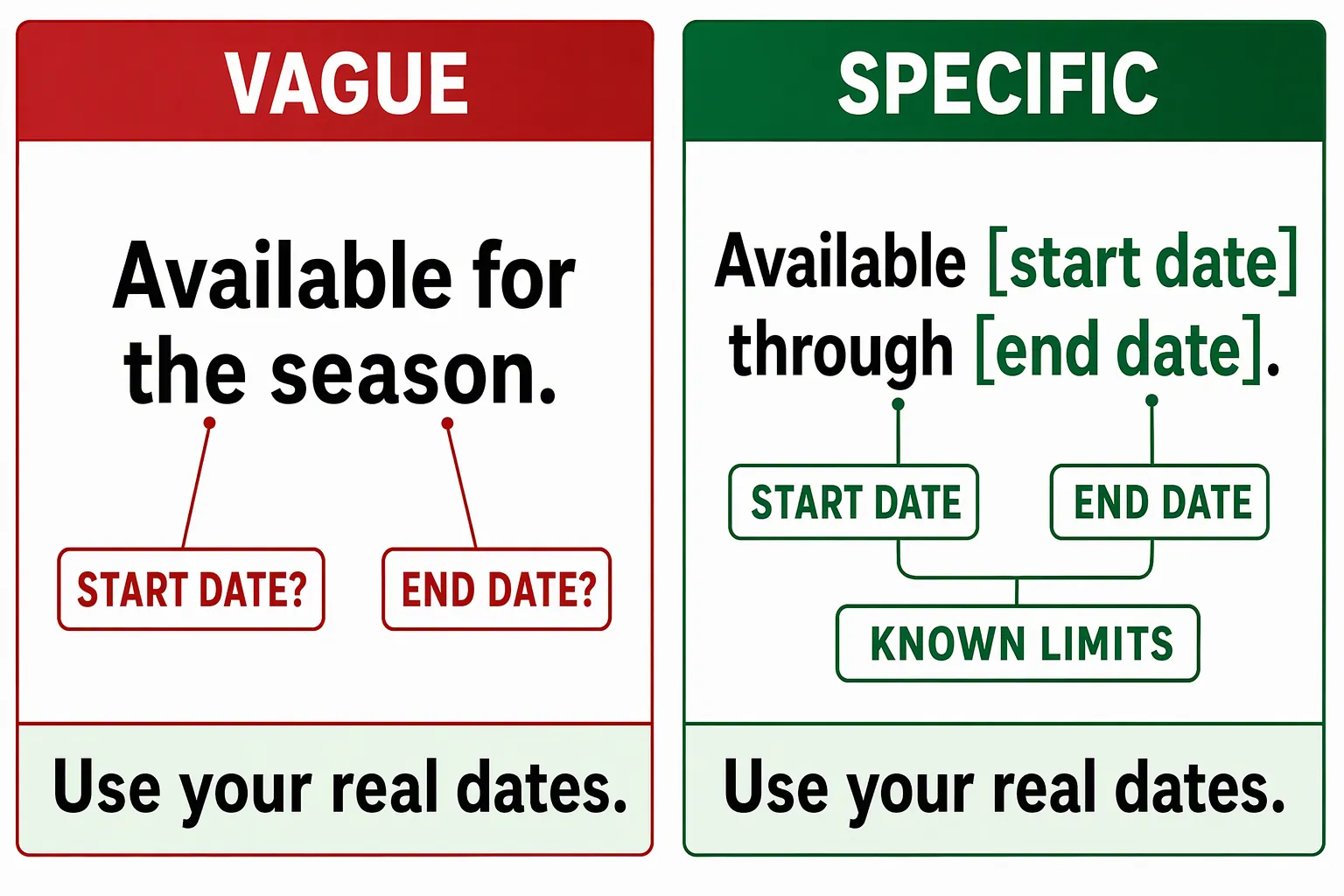
- Phrases such as available for the holidays or free this summer do not tell the reader when you can start or when your availability ends.
- What your letter should prove
- Give your earliest start date and latest end date, using the year when helpful. Mention a schedule limit only if it is relevant to the posted hours. If some dates are flexible, explain what can change without implying unlimited availability.
Past seasonal work can sound like a job list
- Hiring manager concern
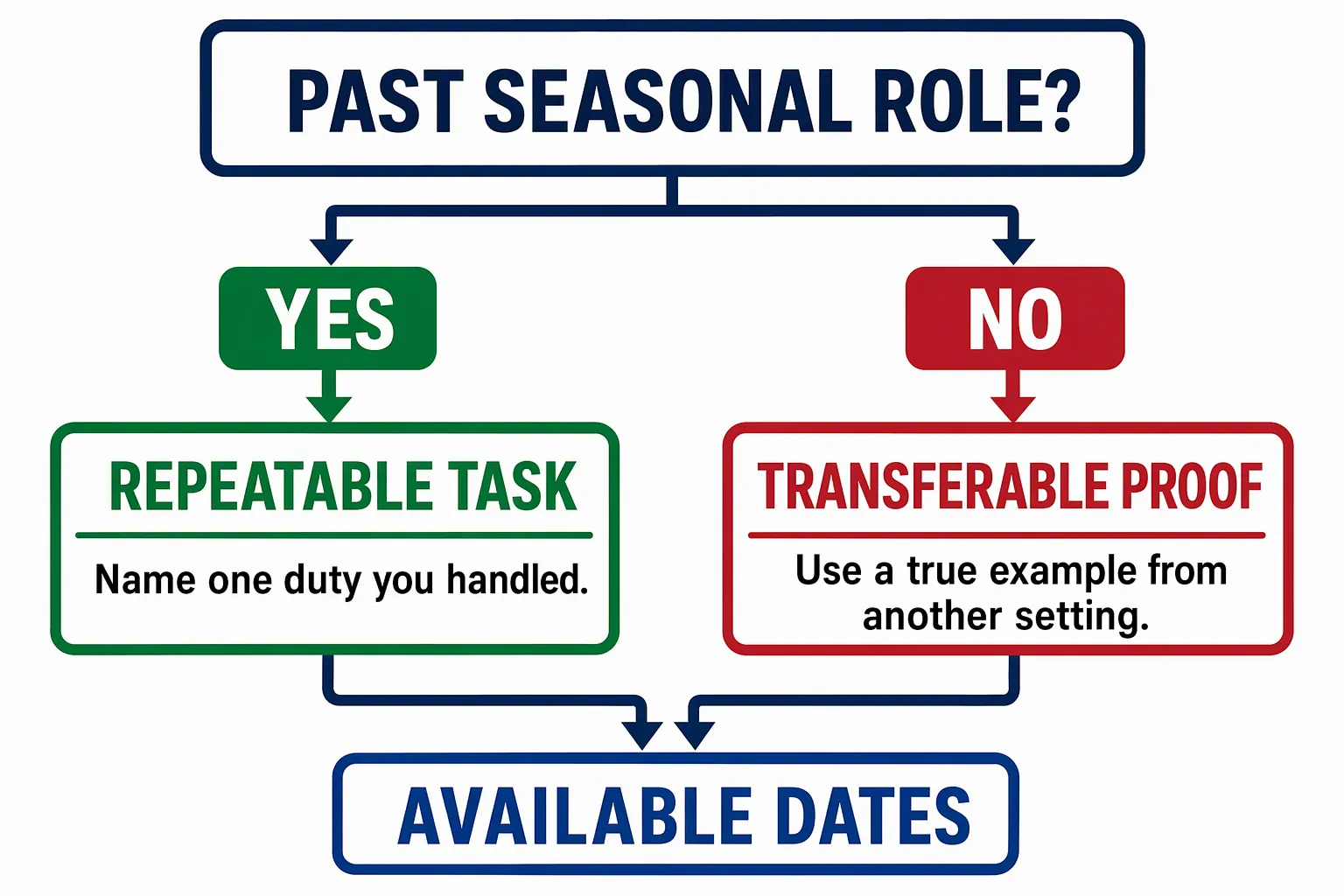
- Naming a previous temporary role does not show which experience is useful for this opening.
- What your letter should prove
- Choose one task, process, or challenge you can describe accurately. Connect it to a duty the posting names. Avoid broad claims about being fast or experienced unless you can support them with a specific example.
You may not have a seasonal example
- Hiring manager concern
- A first seasonal application can feel difficult when your experience comes from another kind of work, study, volunteering, or a project.
- What your letter should prove
- Use a concrete example that shows a relevant action, such as learning a process or coordinating around a deadline. Explain how it could transfer to a stated duty. Do not present unrelated experience as seasonal work.
Structural approach for a seasonal job cover letter
Use a familiar, concise cover letter structure, while making your dates and relevant evidence easy to spot. The general cover letter structure guide can help with organization; the seasonal-specific decisions are what you can commit to and which example best supports your fit.
Before drafting, check the posting for the role name, work period, schedule details, and any required questions or documents. Keep requested form answers or selection criteria separate when the employer asks for them. As a practical target, use a few concise paragraphs and follow any instructions given by the employer; there is no universal length requirement.
- 01
Match the opening to the posting
Name the [Job Title] and [Company Name], then give a specific reason the seasonal work interests you. Refer to a detail from the posting, such as a stated duty or work period. Do not claim to know the employer's needs beyond what the posting says.
- 02
Put calendar dates where they are easy to find
State your earliest available start date and latest available end date. Include the year if it helps avoid ambiguity. Mention relevant schedule limits honestly. If the application also asks for availability in a separate field, answer it and keep your letter consistent.
- 03
Give one example of relevant preparation
Choose a past seasonal duty or a comparable example from another setting. Describe the task and what you did, then connect it to work named in the posting. Focus on an action you can explain rather than a broad label such as hardworking.
- 04
Close with an accurate next step
Restate your interest and confirm that your dates are accurate. Offer to discuss your experience or schedule, then use a suitable sign-off. Do not promise shifts or dates you have not confirmed.
Seasonal job cover letter example
This fictional example connects a seasonal applicant's stated availability with relevant experience. Adapt the details to your own application and use only information that is true for you.
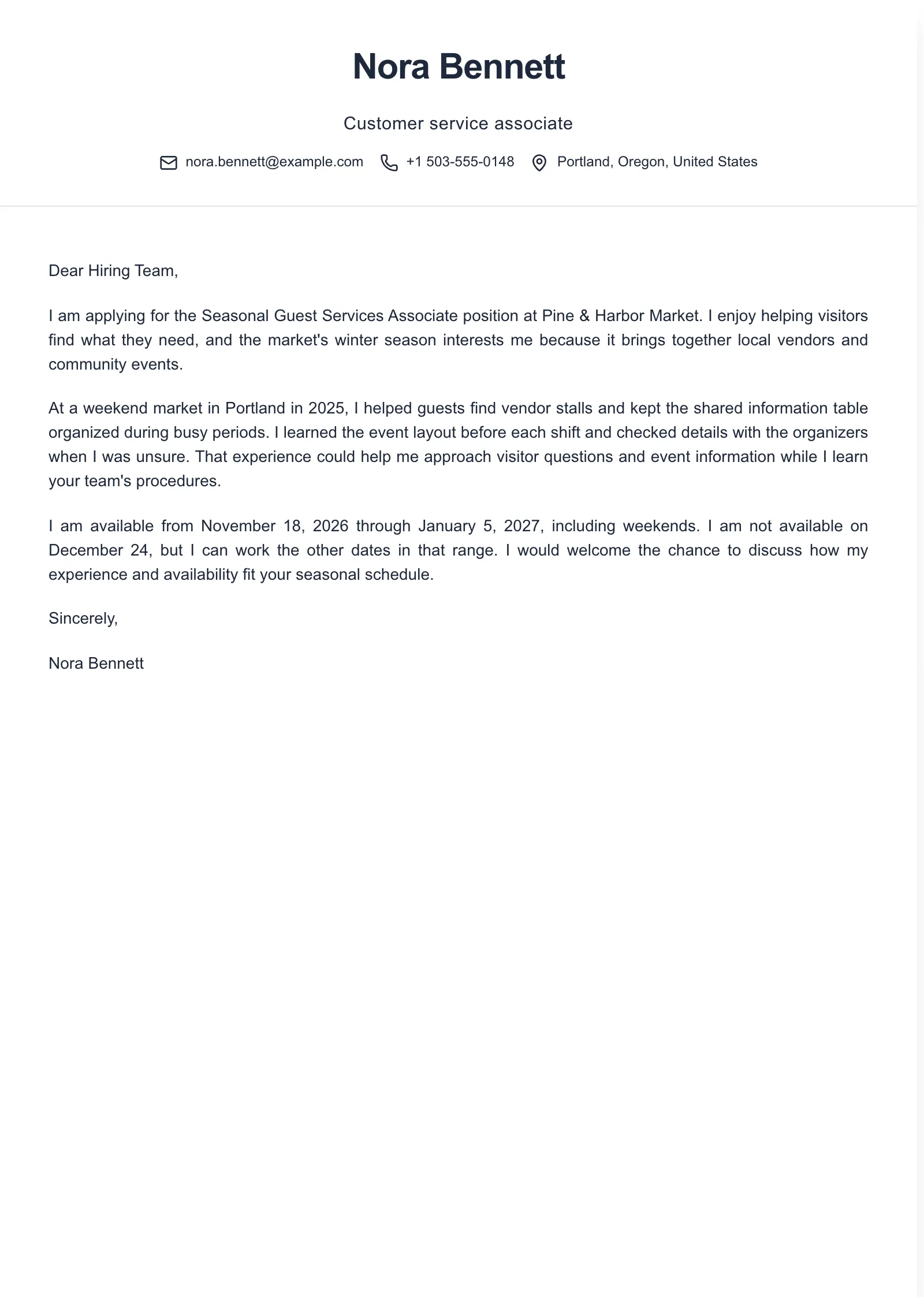
Example paragraphs
“I am applying for the [Job Title] position at [Company Name]. The posting's focus on [specific duty or season detail] interests me because [relevant, factual experience or reason].”
“In [previous role, course, or volunteer setting], I learned to [specific task or process] by [brief action you took]. That experience could help me approach [related duty named in the posting] while I learn your team's procedures.”
“I am available from [start date] through [end date], including [days or shifts you can genuinely work]. I am unavailable on [known dates or schedule limit, if relevant], but I can discuss [genuine area of flexibility] if the schedule allows.”
Use only details you can support. Replace each bracket with a true fact and remove any sentence that does not fit the posting. If your dates are not final, give the most accurate range you can and describe what remains flexible. Do not copy the fictional example's experience or availability.
Common mistakes in seasonal job cover letters
Using vague seasonal dates
- What goes wrong
- Phrases such as all summer may not make clear when you can start or how long you can work.
- Better approach
- Give your actual start and end dates. If you can work only part of the advertised period, disclose that instead of implying full-period availability.
Claiming flexibility you do not have
- What goes wrong
- Saying you can work any shift or every date may conflict with your real commitments.
- Better approach
- State the days, shifts, or dates you can genuinely work. Separate confirmed availability from flexibility that depends on your schedule.
Listing a previous job without useful detail
- What goes wrong
- A job title alone does not explain how your experience relates to the duties in this posting.
- Better approach
- Describe one task or process you handled, then connect it to a stated duty. If you are new to seasonal work, use an honest example from another setting.
Overstating experience or results
- What goes wrong
- Unsupported claims about being the fastest, serving the most people, or mastering every task do not show what you can actually do.
- Better approach
- Use a specific action you can explain and a result only when you know it is accurate. Show how you learn from experience rather than making inflated promises.
Frequently asked questions
- Which dates should I put in a seasonal job cover letter?
- Give your earliest available start date and the latest date you can work. Include the year if it could prevent confusion. If you have a relevant schedule limit, state it accurately. Follow any date format or availability questions in the posting.
- How can I write this letter without seasonal work experience?
- Use a specific example from another job, school, volunteering, or a project to show a relevant task you learned and handled. Explain how that experience could help with a duty named in the posting. Do not imply that you have seasonal experience if you do not.
- Should I mention a previous seasonal job?
- Yes, if it provides relevant evidence. Briefly describe a task you handled and connect it to a duty in this posting. If you returned for another season, state that accurately, but do not treat a return as proof of skills the employer has not asked for.
- Do I need to promise I can work the entire season?
- No. State the dates and schedule you can genuinely commit to. If your availability ends before the period in the posting, say so clearly and let the employer decide whether it fits the role.

Put this career change approach into practice
Choose sample data or build your own cover letter, then personalize it before you download.