
Introduction
A request for salary requirements can make a cover letter feel like a negotiation before you have discussed the role. Focus on the task: answer the employer's request, make your expectation understandable, and keep your qualifications central. A range can communicate more than an unexplained number when the instructions allow one, but no single format works for every posting.
Before writing, decide what you would genuinely consider and what the figure covers. Place the answer where it is easy to find, explain flexibility only if it is real, and return to your fit for the role. Do not describe a figure as a researched market rate unless you have actually checked relevant information.
What to address directly
A range that does not reflect a real decision
- Hiring manager concern
- A very broad range may leave your expectation unclear. A range with an endpoint you would not accept can also give the employer a misleading impression.
- What your letter should prove
- Consider the responsibilities in the posting, your relevant experience, reliable compensation information for the role and location, and the lowest amount you would seriously consider. Choose endpoints you can explain. If you do not yet have enough information to set a figure, do not present a guess as researched.
Flexibility that obscures your expectation
- Hiring manager concern
- Saying you are completely flexible can make your answer less informative. Saying you are firm when you would consider other terms may also misrepresent your position.
- What your letter should prove
- If your expectation depends on the responsibilities, schedule, benefits, or overall compensation package, name the factors you would genuinely weigh. A flexibility line should explain what could affect your expectation, not suggest that you would accept any amount.
An answer that is hard to find or interpret
- Hiring manager concern
- Burying the requested figure in a long closing paragraph can make the answer difficult to spot. An amount without a pay basis may also be unclear.
- What your letter should prove
- Use a short paragraph near the end of the letter, before the closing. State whether the amount is annual or hourly and whether it refers to base pay or another requested measure. If the application gives a specific field or different instructions, follow those rather than repeating the answer unnecessarily.
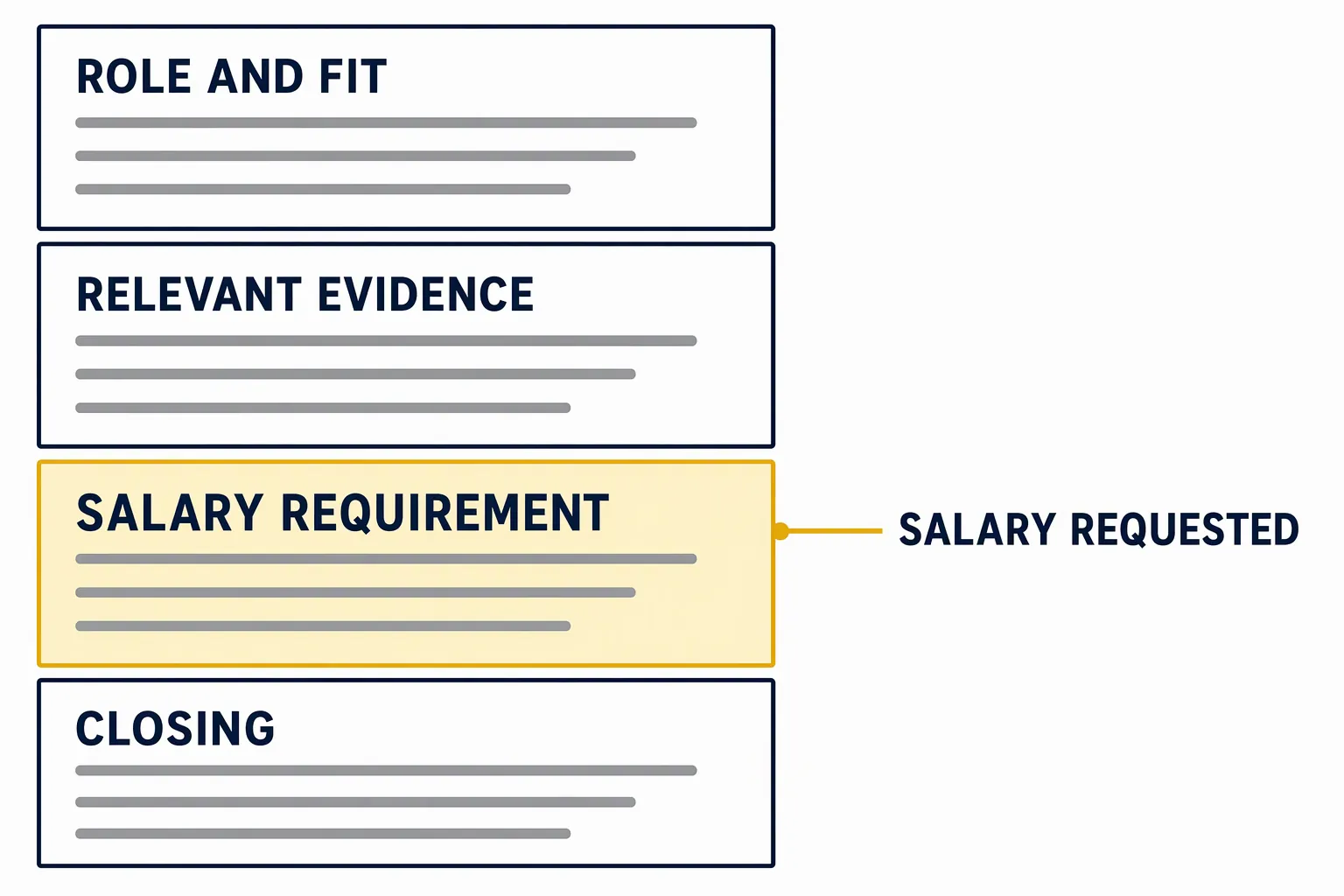
Structural approach: give the requested figure a clear place
Treat the salary line as one part of a tailored application, not a substitute for explaining your fit. Keep your role title and work history accurate, and make the amount's basis clear. The employer's instructions determine whether a range, a single figure, or another format is appropriate.
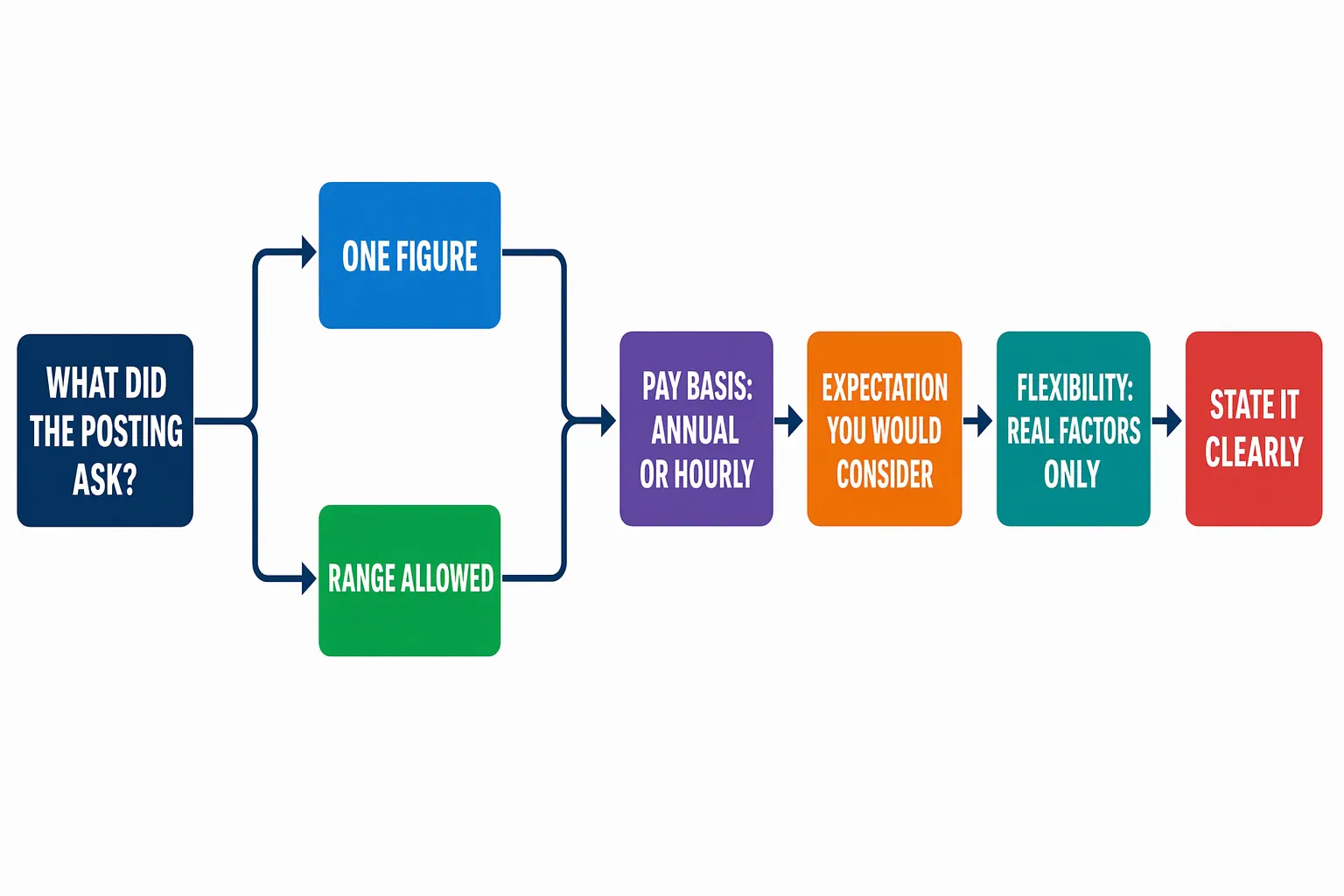
Use these steps to prepare an answer that fits the request:
- 01
Check what the employer asked for
Read the job posting and application instructions. Identify whether they request a range, one figure, salary history, or no compensation information. Answer the question actually asked; do not substitute a future expectation for a question about past pay.
- 02
Decide what you would consider
Weigh the role's responsibilities, your relevant experience, compensation information you can verify for the context, and your own minimum. Decide whether your figure refers to base pay or another measure, and whether it is annual or hourly. Do not claim research you have not done.
- 03
State the amount in the requested format
Give the range or single figure directly. Include the pay basis if it could be unclear. If the employer requires one number, provide one considered figure; do not assume a range will be accepted.
- 04
Add only genuine flexibility
If responsibilities or the overall package could affect your expectation, briefly name the factors you would weigh. Then return to a qualification relevant to the role or to your interest in discussing the position.
Salary requirements in a complete letter
A fictional letter shows where a requested range and a genuine flexibility line can fit in a concise, role-focused application.
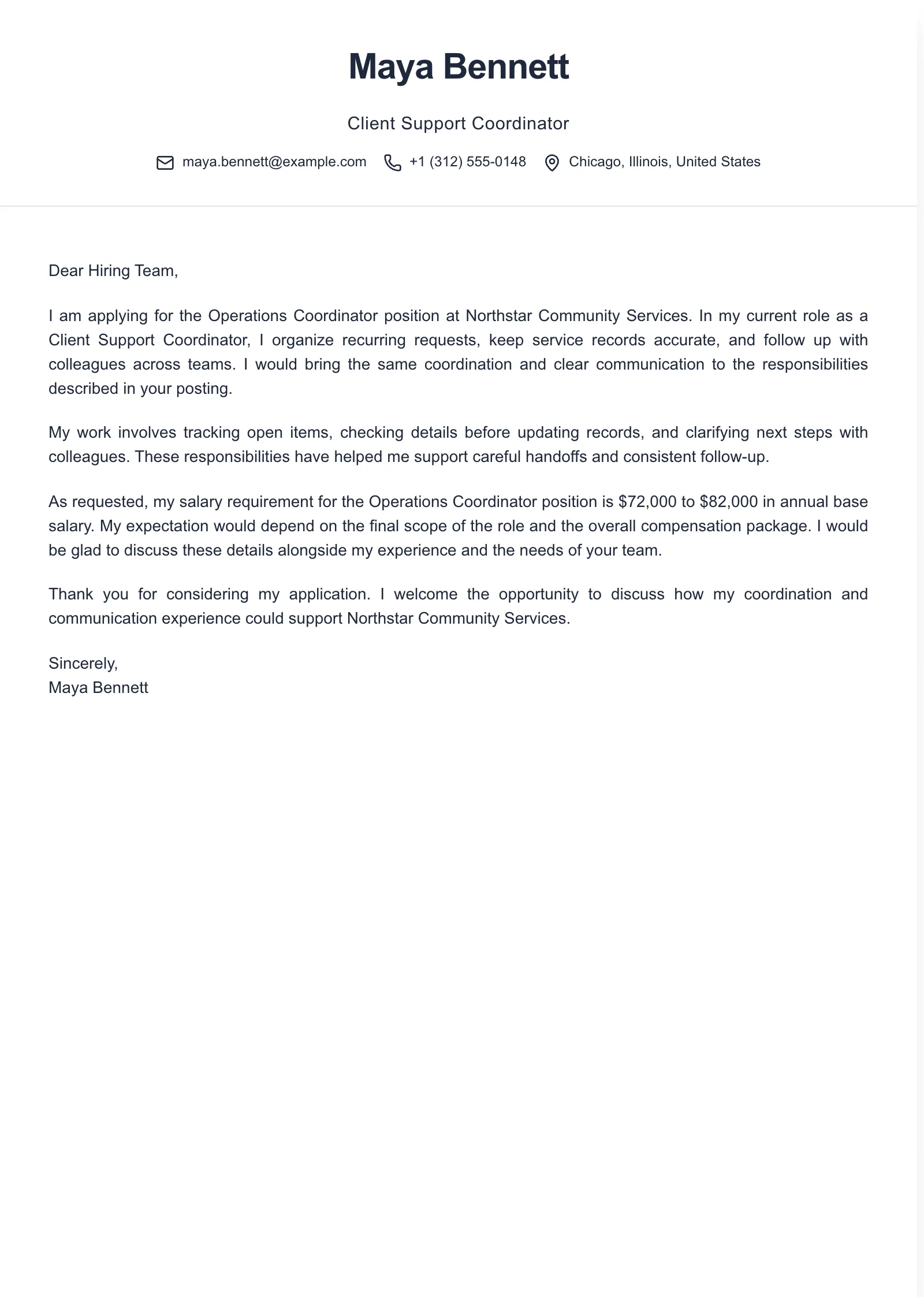
Example paragraphs
“For the [Job Title] role at [Company Name], my salary requirement is [target range] per [year/hour], based on the responsibilities described and my experience in [relevant area].”
“My expectation for the [Job Title] position at [Company Name] is [target range] per [year/hour]. The precise figure would depend on [specific responsibility, schedule, or benefit], and I would be glad to discuss those details.”
“As requested, my salary requirement for the [Job Title] role at [Company Name] is [single figure] per [year/hour]. I would welcome a discussion about the responsibilities and compensation terms.”
Replace each bracketed item with information you can stand behind. Match the pay basis in the posting and remove any flexibility language that does not reflect your real position. These are paragraph options, not full letters. Place one after your evidence of fit and before your closing. If the application already collects the requested information, follow its instructions about whether to repeat it in the letter.
Scenario-specific mistakes with salary requirements
Leaving out the pay basis
- What goes wrong
- An amount without a period or compensation type can be interpreted in different ways, especially when the posting uses a particular basis.
- Better approach
- State whether the amount is annual or hourly and whether it refers to base pay or another requested measure. Use the posting's terms where they fit.
Choosing a range you would not accept
- What goes wrong
- A range that includes an amount you would reject can give the employer an inaccurate picture of your expectation.
- Better approach
- Set the endpoints around a real decision. Do not lower the range just to appear flexible.
Using an empty flexibility line
- What goes wrong
- A phrase such as “negotiable” may not explain what could change your expectation and can make the range less useful.
- Better approach
- Name one or two genuine factors that matter to you, or leave out the flexibility line. Do not imply that you have no boundary if that is not true.
Answering a different compensation question
- What goes wrong
- A requested expectation is not the same as salary history. Including both can introduce information the employer did not ask for.
- Better approach
- Answer only the question in the posting or application. If it asks about past pay, do not treat a future target as a substitute. For a later-stage discussion of compensation expectations, see How to Answer Salary Expectations Before an Offer.
Frequently asked questions
- Should I include salary requirements if the job posting does not ask for them?
- Keep the letter focused on your fit unless the employer requests compensation information or the application instructions ask for it. If you choose to mention compensation, keep it brief and do not let it displace evidence of your qualifications.
- Should I give one number or a salary range?
- Follow the employer's requested format. If the instructions allow a range, choose endpoints that reflect what you would genuinely consider. Make clear whether the amount is annual or hourly and whether it refers to base pay or another stated measure.
- How do salary requirements differ from salary history?
- Salary requirements or expectations describe the compensation you seek for this role. Salary history refers to past pay. This guide covers a requested future expectation, not how to disclose past compensation.
- What if the employer asks for an exact salary figure?
- Give one considered figure and state its pay basis if it is not clear from the instructions. Do not add a range when the employer explicitly requests one number.

Put this career change approach into practice
Choose sample data or build your own cover letter, then personalize it before you download.