
Introduction
When you return to your home country after working abroad, an employer may want to understand what your experience adds and when you could be available. A focused cover letter can address both without making your move the whole story.
This page is about explaining overseas experience and return timing for a role in your home country. Connect your evidence to the role, explain your plans accurately, and avoid assuming that your location or international background proves local fit.
What to address directly
Will my overseas experience make sense to the reader?
- Hiring manager concern
- A local reader may not recognize an overseas employer, title, or process. A list of international roles may leave your contribution unclear.
- What your letter should prove
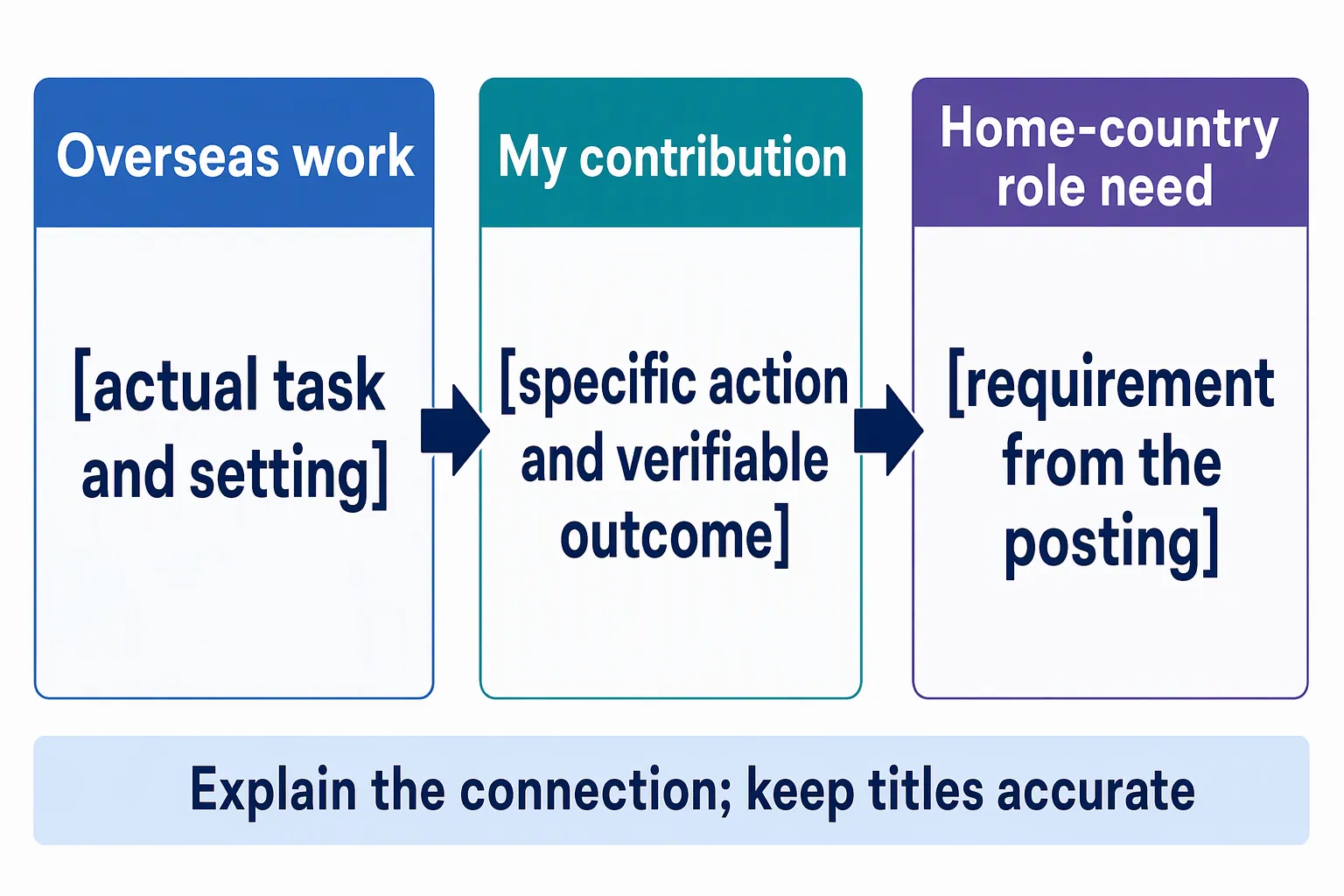
- Choose one relevant example. Explain the work in familiar language, name your contribution, and connect it to a need in the posting. Treat the country or setting as context, not proof of skill.
When can I arrive and start?
- Hiring manager concern
- The employer may not know whether you have returned, have a planned arrival, or are still deciding on dates.
- What your letter should prove
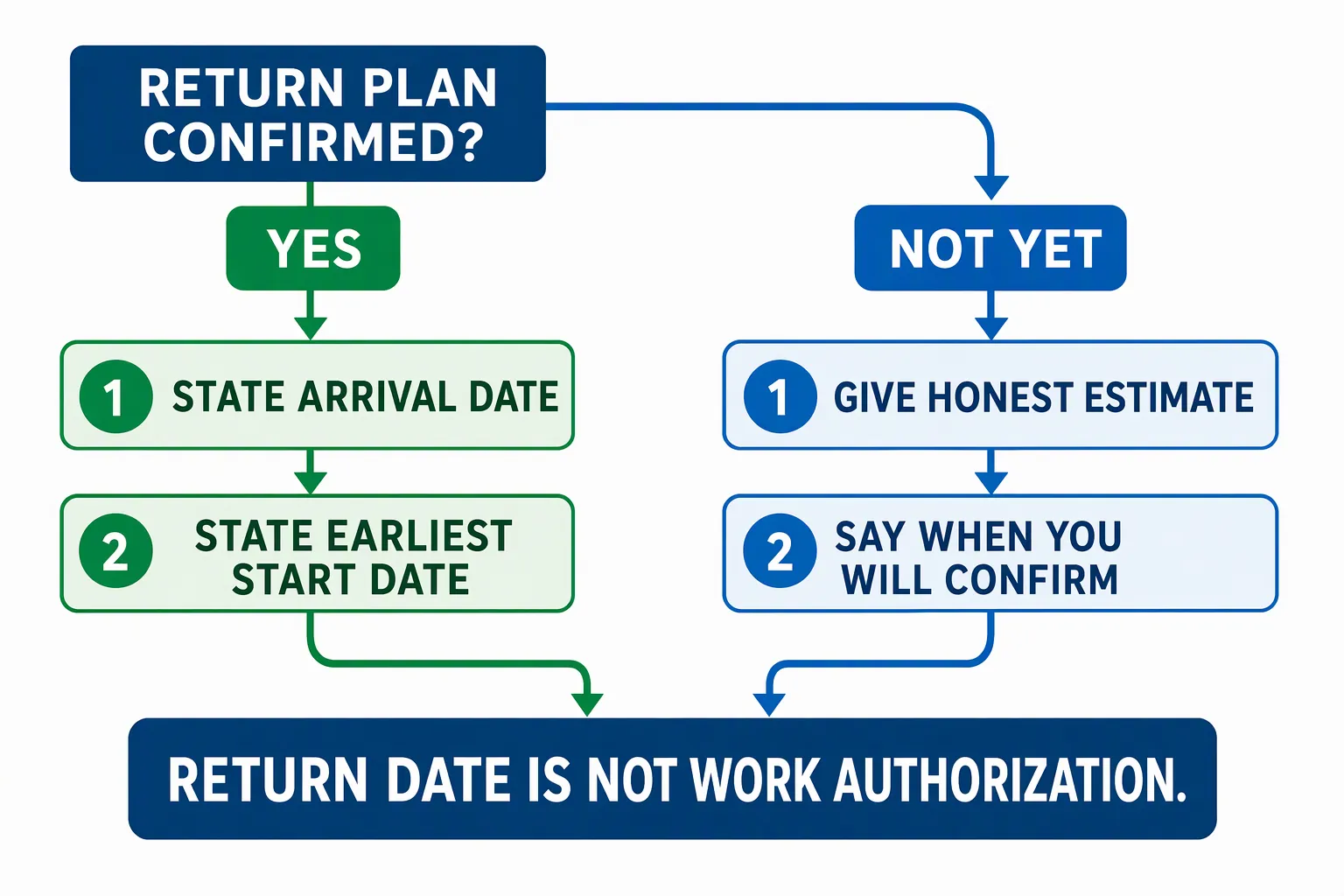
- Give a confirmed arrival date and earliest realistic start date if you know them. Otherwise, label your timeframe as an estimate and say when you expect to confirm it. Do not imply that a return date settles any work or professional requirements.
How much should I say about returning?
- Hiring manager concern
- A long account of why you left or returned can distract from your fit, while simply saying you want to be home may not explain why this role interests you.
- What your letter should prove
- Offer brief context only when it helps explain your plans or genuine interest. Then connect the role to your experience or goals. Personal, family, and travel details are optional.
Structural approach: connect experience, return, and role fit
Build the letter around the employer's needs, not a travel timeline. Open by naming the role and a specific reason it interests you. Then give one relevant example from your work abroad, explain what transfers to the role, and state your return and availability clearly. Close by connecting your interest to this employer.
Keep an overseas job title accurate. If a title or process is unfamiliar, explain what you actually did rather than replacing it with a local title. The guide to reframing past roles for a new industry offers another way to make experience understandable without changing the facts. For a broader paragraph sequence, see the cover letter structure guide.
- 01
Select one relevant example
Read the posting and choose a responsibility or skill it emphasizes. Find one example from abroad that demonstrates it. Include enough context for the reader to follow, but do not spend a paragraph explaining the foreign employer or country.
- 02
Explain the work accurately
Describe the task, your contribution, and a result or scope you can support. Explain unfamiliar terms in plain language. Keep your original title accurate; clarify the work instead of renaming the position.
- 03
Make your return timeline clear
State when you expect to arrive and when you could start if those dates are known. If plans are not final, identify what is confirmed and when you expect to know more. Check current official guidance if the posting asks about authorization, licensing, or other requirements.
- 04
Connect your plans to this employer
Use a detail from the posting or the employer's work to explain why the role fits your next step at home. Avoid broad claims that returning means you understand every local workplace. Show a specific connection between the role, your evidence, and your plans.
See a returning-home example
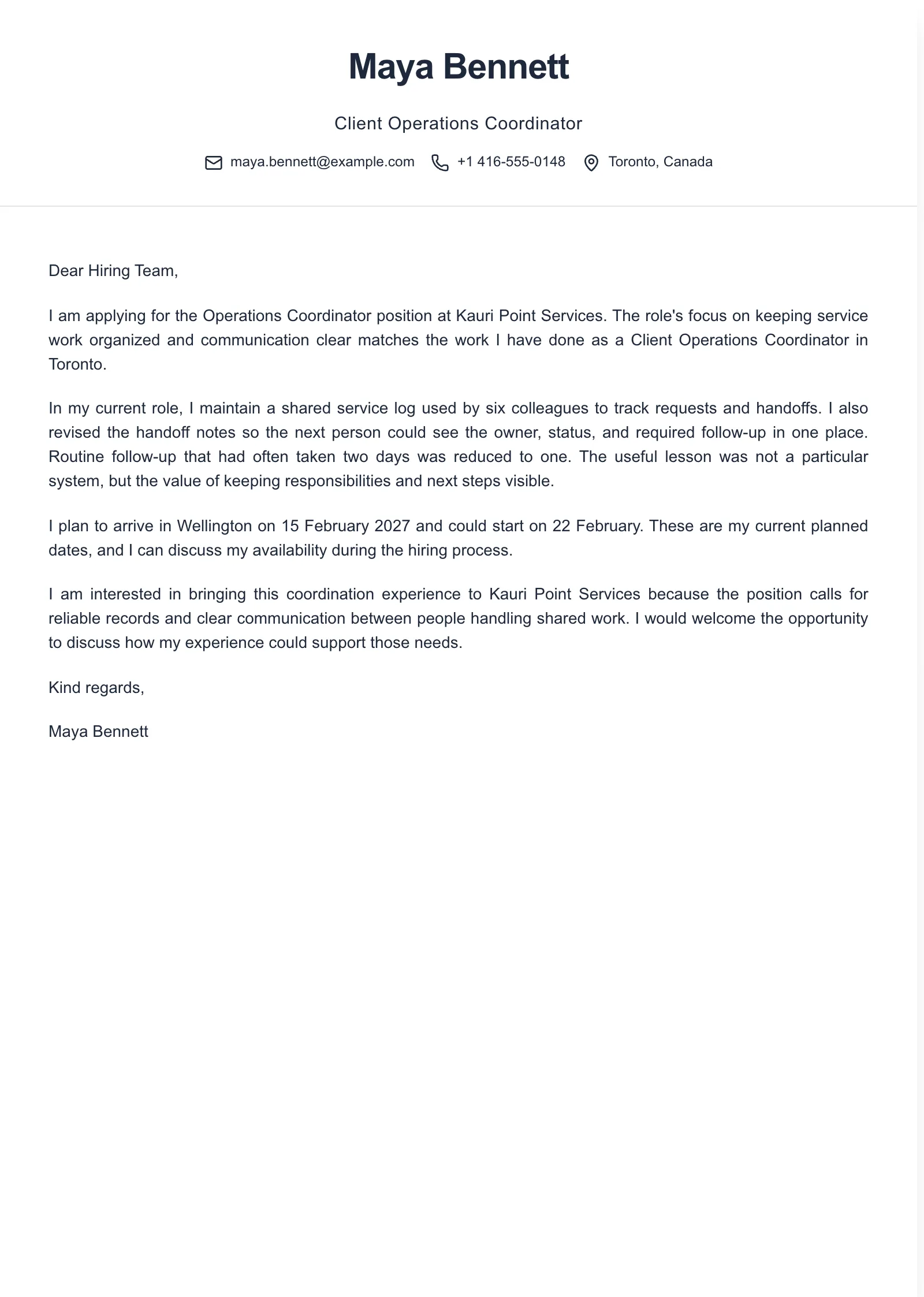
This fictional template example connects overseas experience to a role at home and gives a specific return timeline.
Example paragraphs
“At [Overseas Company], I [specific action] for [team, customers, or project], resulting in [verifiable outcome]. This experience relates to [need in the posting] because [brief factual connection].”
“I expect to arrive in [Home City] on [confirmed date] and could begin on [earliest realistic date]. [If a date is not confirmed, give an estimated timeframe and say when you expect to confirm it.]”
“I am applying for [Job Title] at [Company Name] because [specific part of the role or employer's work] connects to my experience in [relevant area]. As I return to [Home Country], I could contribute [specific, supported contribution] to [stated need].”
Use only facts you can support. Replace broad phrases such as “international perspective” with a task, result, or responsibility the reader can understand. Include return timing when it affects availability, and do not claim a start date, authorization, or local expertise you cannot confirm.
Scenario-specific mistakes to avoid
Making the move the whole story
- What goes wrong
- Several sentences about travel or why you missed home can leave little room to show how your experience fits the role.
- Better approach
- Keep return context brief. Use the space to connect relevant overseas evidence to the role and explain why this employer interests you.
Assuming international experience speaks for itself
- What goes wrong
- A reader may not know what an overseas title, employer, or process involved. Naming a country or role does not explain your contribution.
- Better approach
- Explain one unfamiliar detail in plain language, then identify your action and its relevance. Keep the title and facts accurate.
Leaving timing unclear or overstating certainty
- What goes wrong
- Without availability information, the employer may not know when you could start. An invented or overconfident date can also mislead.
- Better approach
- Share confirmed dates or clearly label an estimate and say when it may be confirmed. Do not suggest that returning itself establishes eligibility to work.
Overexplaining private reasons for returning
- What goes wrong
- A detailed personal account can shift attention away from your qualifications and disclose information the employer does not need.
- Better approach
- Share only context that helps explain your plans, availability, or interest in the role. Keep personal details optional and focused.
Frequently asked questions
- Should I explain why I am returning home?
- Only if a brief, truthful explanation helps the reader understand your plans or interest in the role. You do not need to justify a personal decision or share private details.
- What if I do not have a confirmed arrival date?
- State the most accurate timeframe you can and say when you expect to confirm it. Do not present a tentative plan as final or promise a start date you cannot meet.
- How can I make overseas experience relevant to a role at home?
- Choose a specific task or result, explain unfamiliar context briefly, and connect the evidence to a need in the posting. The international setting alone does not show relevance.
- Does returning to my home country prove that I can work there?
- No. A return date does not establish work authorization, licensing, or registration. If the posting asks about these matters, check the current requirements with the relevant official authority and answer accurately.

Put this career change approach into practice
Choose sample data or build your own cover letter, then personalize it before you download.