
Introduction
Applying to a former employer is not the same situation as applying for an internal position: you have left, and the reader may not know your work or remember the context. Reintroduce your connection instead of assuming familiarity.
Focus on three points: what you did there, what relevant experience or perspective you gained after leaving, and why this specific opening makes sense now. If your main task is explaining an involuntary departure, see the cover letter after termination guide. This page focuses on making a considered case for returning.
What to address directly
Give the reader enough context to place you
- Hiring manager concern
- A former colleague might recognize your name, but a hiring reader may be new to the organization or team. Saying only that you enjoyed working there does not explain where you worked or what you contributed.
- What your letter should prove
- Name your former role, team or work area, and approximate dates. Add one relevant contribution that a reader outside your former team can understand. Keep this introduction concise, and avoid relying on internal shorthand or a former manager's memory.
Make the time away relevant to this opening
- Hiring manager concern
- A statement that you want to come back does not tell the reader what has changed since your earlier employment or what you would bring to the current role.
- What your letter should prove
- Select one useful update from your time away, such as a new responsibility, relevant skill, verifiable result, or clearer career direction. Explain its connection to the advertised work. You do not need to list every role or account for every period away.
Show a current reason to return
- Hiring manager concern
- Your previous familiarity with the organization may be out of date, and familiarity alone does not explain why this particular vacancy interests you now.
- What your letter should prove
- Use a current detail from the job posting or other recent information you have checked. Connect that detail to your experience before and after leaving. Do not assume the team or its needs are unchanged, or that your past relationship guarantees a welcome or rehire.
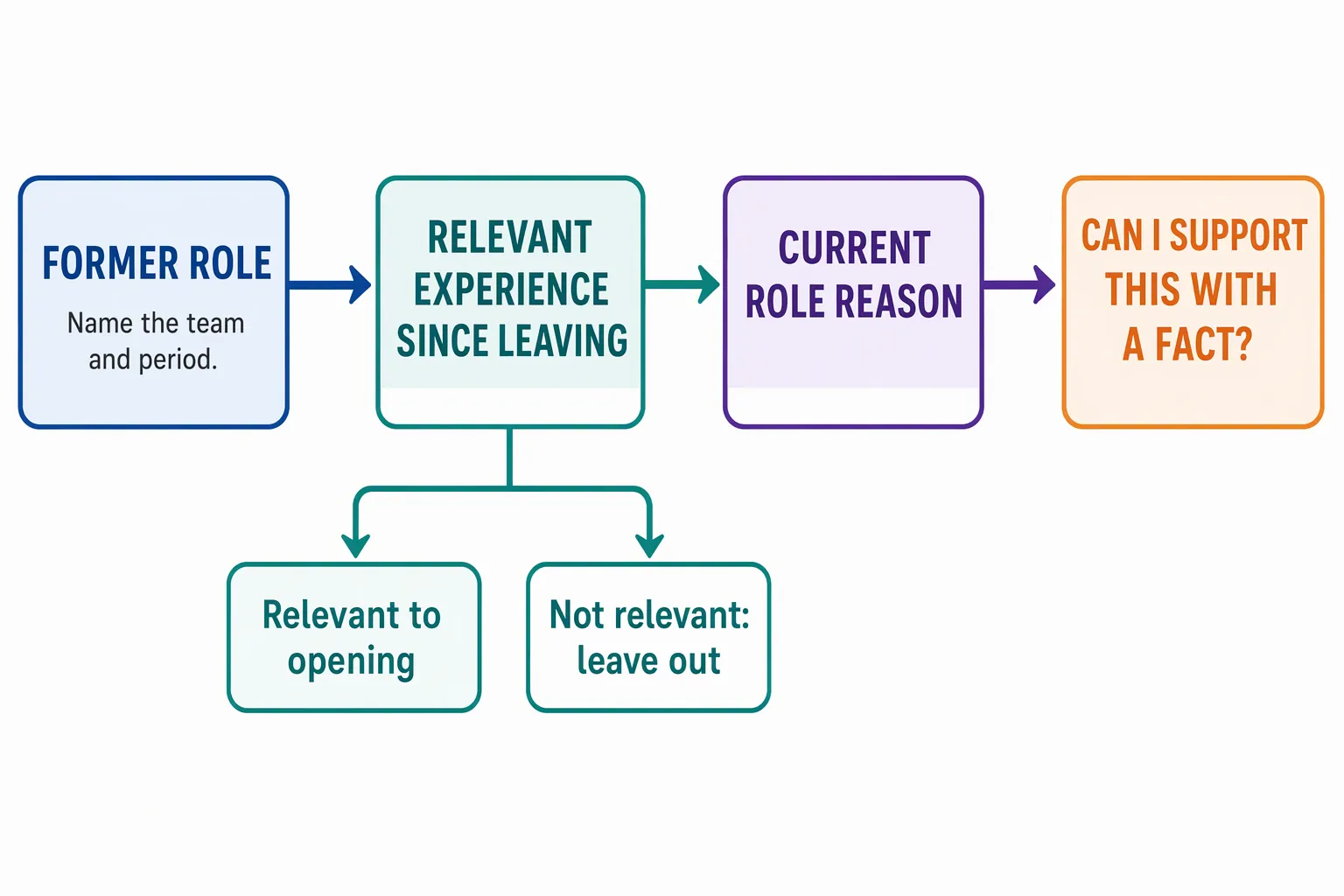
Structural approach: reconnect past work to a current reason
Keep the letter centered on the current opening. A practical sequence is to identify your former role, add relevant evidence from your time away, explain why the current role fits, and close with interest in discussing your application. For the purpose of each paragraph in a cover letter, see the cover letter structure guide.
Use these four choices to decide what belongs in your letter:
- 01
Re-establish your former connection
State your former role, team or work area, and approximate time there. Include one contribution relevant to the new opening. This gives a reader who did not work with you enough context to understand your past connection.
- 02
Choose one useful update
Select a skill, responsibility, result, or direction gained since leaving that helps explain your fit today. Add concrete, supportable detail, but do not turn this paragraph into a second resume or claim an outcome you cannot substantiate.
- 03
Explain why this opening fits now
Identify a current feature of the advertised role that interests you. Show how your earlier experience and what you have done since leaving connect to that work. Check current information rather than treating your previous knowledge as a description of the organization today.
- 04
Close on this application
Say that you would welcome a conversation about your fit for this opening. Address the current hiring team and role. Do not ask for special treatment because of your history or imply that former colleagues have endorsed you unless they have actually done so.
A returning-employee letter in context
See a fictional example that reconnects former team experience with relevant work since leaving and a specific reason for returning now.
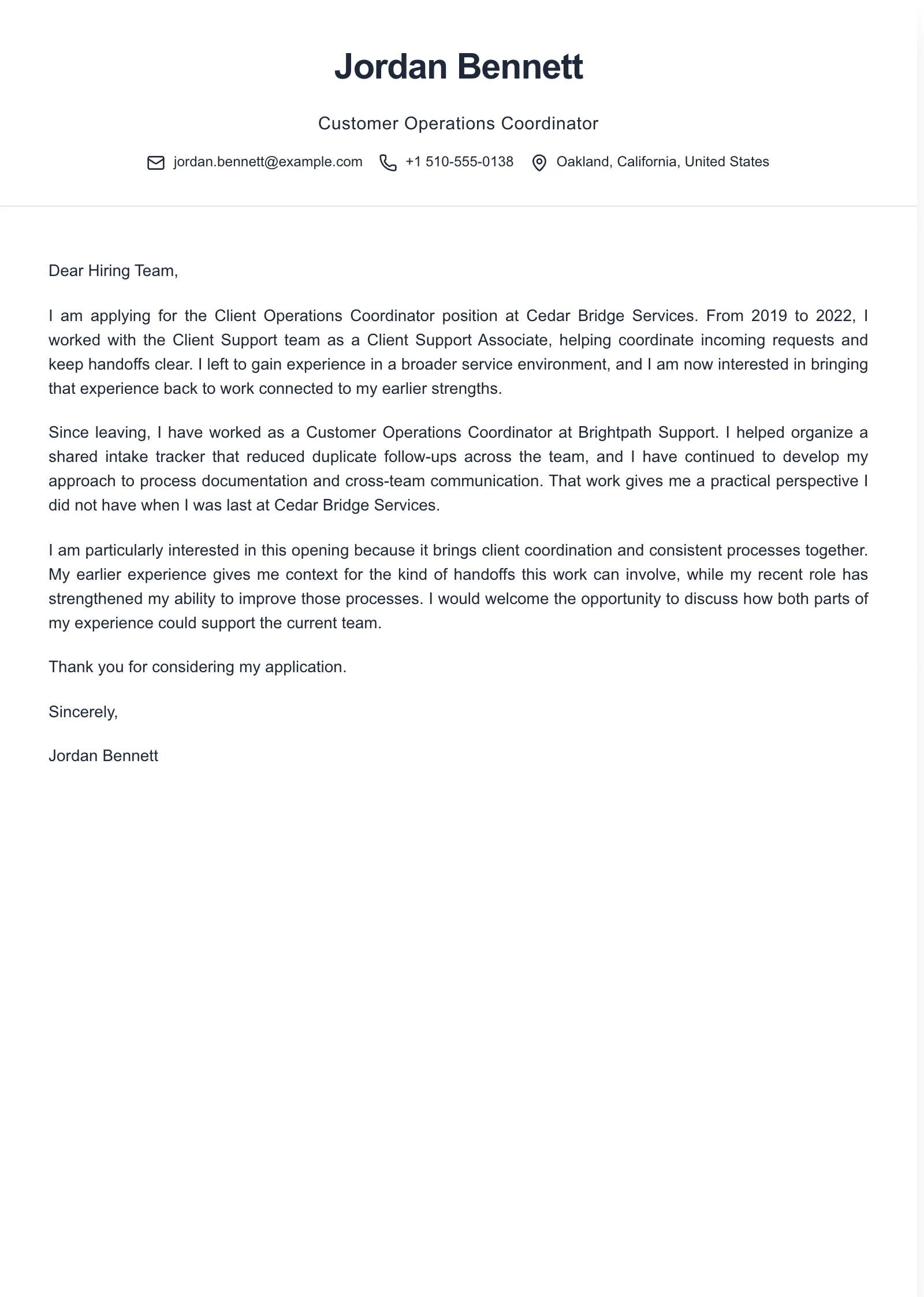
Example paragraphs
“From [Year] to [Year], I worked as [Former Role] with [Former Team or Work Area] at [Company Name], where I contributed to [specific, relevant responsibility or project]. This experience gives context for my application to the [Current Role] opening.”
“Since leaving, I have developed [relevant skill or responsibility] through [factual example], including [specific evidence you can support]. I would bring that experience alongside my earlier understanding of [relevant work area].”
“I am interested in returning for the [Current Role] opening because [specific feature of the current role] connects with the direction I have taken since leaving. My experience with [relevant earlier work] and [relevant recent experience] makes this opportunity a considered next step.”
Treat these paragraphs as separate choices, not as a script to copy. Replace each placeholder with accurate details, and remove anything that does not connect your former work, relevant experience since leaving, or current reason for applying.
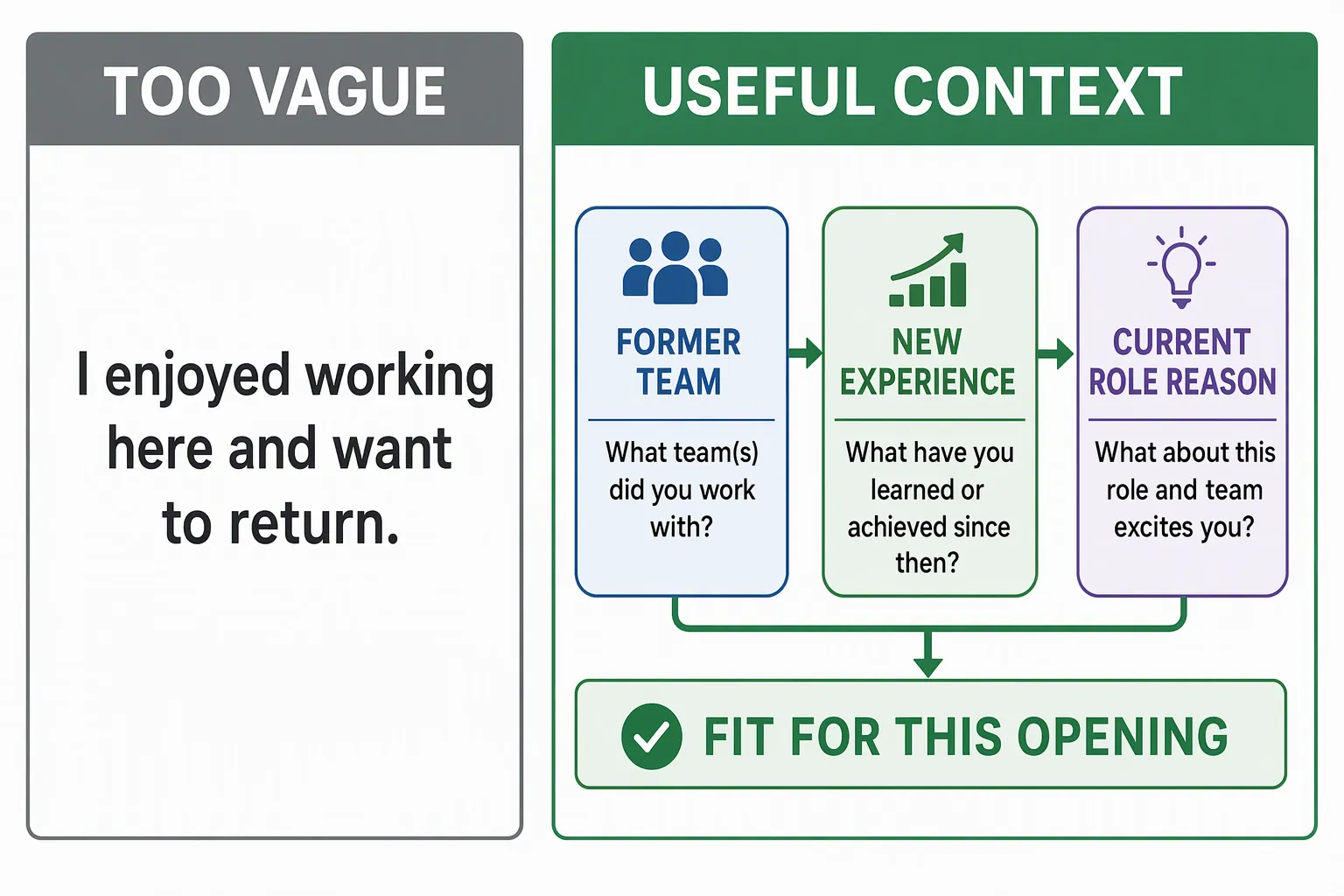
Common mistakes when writing to a former employer
Writing as if the reader remembers you
- What goes wrong
- A familiar greeting or a vague reference to a former team can leave a new hiring reader unsure who you are and when you worked there.
- Better approach
- Give your former role, team or work area, time period, and one relevant contribution. Include only enough detail to make your connection clear.
Explaining your departure at length
- What goes wrong
- A long defense of why you left can draw attention away from the vacancy or revisit disagreements that do not help the reader assess your current fit.
- Better approach
- If the reason matters, describe it briefly and accurately. Give more space to relevant experience gained since leaving and why this opening interests you now.
Treating old familiarity as current evidence
- What goes wrong
- Assuming the organization, team, or work is unchanged can make your application sound based on an outdated picture.
- Better approach
- Refer to current details you have checked in the posting or other recent information. Pair any useful past context with evidence of what you can contribute today.
Implying past relationships guarantee support
- What goes wrong
- Name-dropping former colleagues or implying they have agreed to help can distract from your case and misrepresent their involvement.
- Better approach
- Mention a former connection only when it is relevant and accurate. Let your experience and interest in the advertised role make the case, and describe any referral truthfully.
Frequently asked questions
- Should I explain why I left?
- Briefly explain your departure if the context helps the reader understand your return. Keep it accurate and neutral, and do not make the letter a defense of your past decision. If the reason is not useful to the current application, focus on your work since leaving and why this opening interests you.
- What if the hiring reader may not remember me?
- Give enough context to identify your former role, team, and time there. Add one relevant contribution so a reader who did not work with you can understand the connection without relying on someone else's memory.
- What should I say about the time since I left?
- Choose a responsibility, result, skill, or change in direction that relates to this opening. You do not need to account for every month or include unrelated details. Use only experience and outcomes you can describe accurately.
- Is a returning-employee letter different from an internal-position letter?
- The distinction is your current relationship with the organization: this guide is for someone who has left, while an internal-position letter is for someone who still works there. There is no separate letter format implied by that distinction. A returning applicant should re-establish the past connection and explain why the current opening fits.

Put this career change approach into practice
Choose sample data or build your own cover letter, then personalize it before you download.