
Introduction
Use a relocation cover letter when you are applying for a job in another city or country and your current location may raise a practical question. The reader may need to understand your timing, whether your move is definite, or whether you need support. State what is true instead of making the employer infer your plans from your address.
Remote work describes a work arrangement; relocation describes a change in where you live or work. They can overlap, but one does not imply the other. Say whether you have moved, have a plan, or are open to moving. Do not present a possible move as settled.
What to address directly
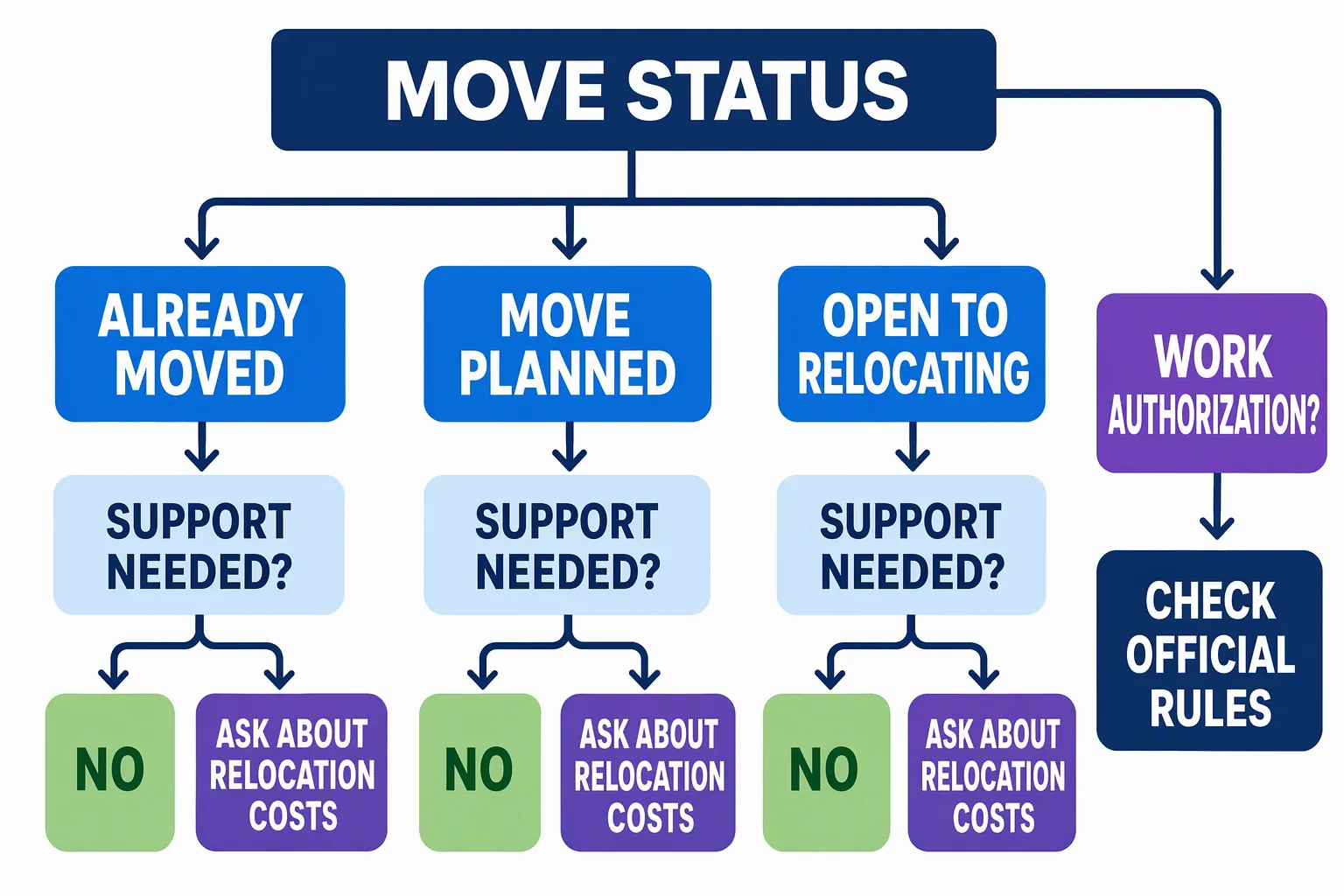
How certain is the move?
- Hiring manager concern
- The employer may not know whether your destination is a settled plan, a target, or somewhere you would consider if offered the job.
- What your letter should prove
- Describe the status accurately: you have moved, arranged a move, set a target date, or are open to relocating. Add availability details only when you can stand behind them. If timing depends on an offer or another condition, say so.
What support do you need?
- Hiring manager concern
- Relocation costs, immigration sponsorship, and permission to work are separate matters. A broad request can be unclear, and moving does not by itself establish work authorization.
- What your letter should prove
- If you need support, name it and ask whether it is considered for this role. For cross-border moves, check current work-authorization rules with the destination's official immigration authority. Financial relocation assistance and immigration sponsorship are separate questions; confirm each separately instead of assuming that an offer or planned move settles either.
Do you have a genuine local connection?
- Hiring manager concern
- You may feel pressure to prove you belong in the destination, even when a personal connection adds little to your application.
- What your letter should prove
- Mention a local tie only if it is true and useful, such as prior residence. Do not invent a connection or use private details to signal commitment. Your application can explain your move without a local tie.
Structural approach: connect your move to your availability and fit
Answer three practical questions: why this role, what your move plan is, and whether you need the employer to consider support. Keep relocation details brief so your evidence for the role remains central. For a general paragraph-by-paragraph framework, see the cover letter structure guide.
Use these steps to make the explanation clear and credible:
- 01
Name the role and your current location
Identify the [Job Title] at [Company Name] and state where you are based if the distance could cause confusion. Make clear that you are applying for a role in the destination.
- 02
Give the honest status and timing
Say whether you have moved, have a plan, or are open to relocating. Include a date only if it is dependable. If your timing depends on an offer, notice period, housing, or another condition, do not promise an earlier start.
- 03
Show role fit before adding a local tie
Choose one relevant example of your work, study, or other experience. Add a genuine local connection only if it helps explain your interest; it does not replace evidence of fit.
- 04
Ask precisely about needed support
If you need relocation assistance or immigration sponsorship, name the specific support and ask whether it is considered for the role. They are not interchangeable. Do not imply that moving grants permission to work.
Relocation cover letter example
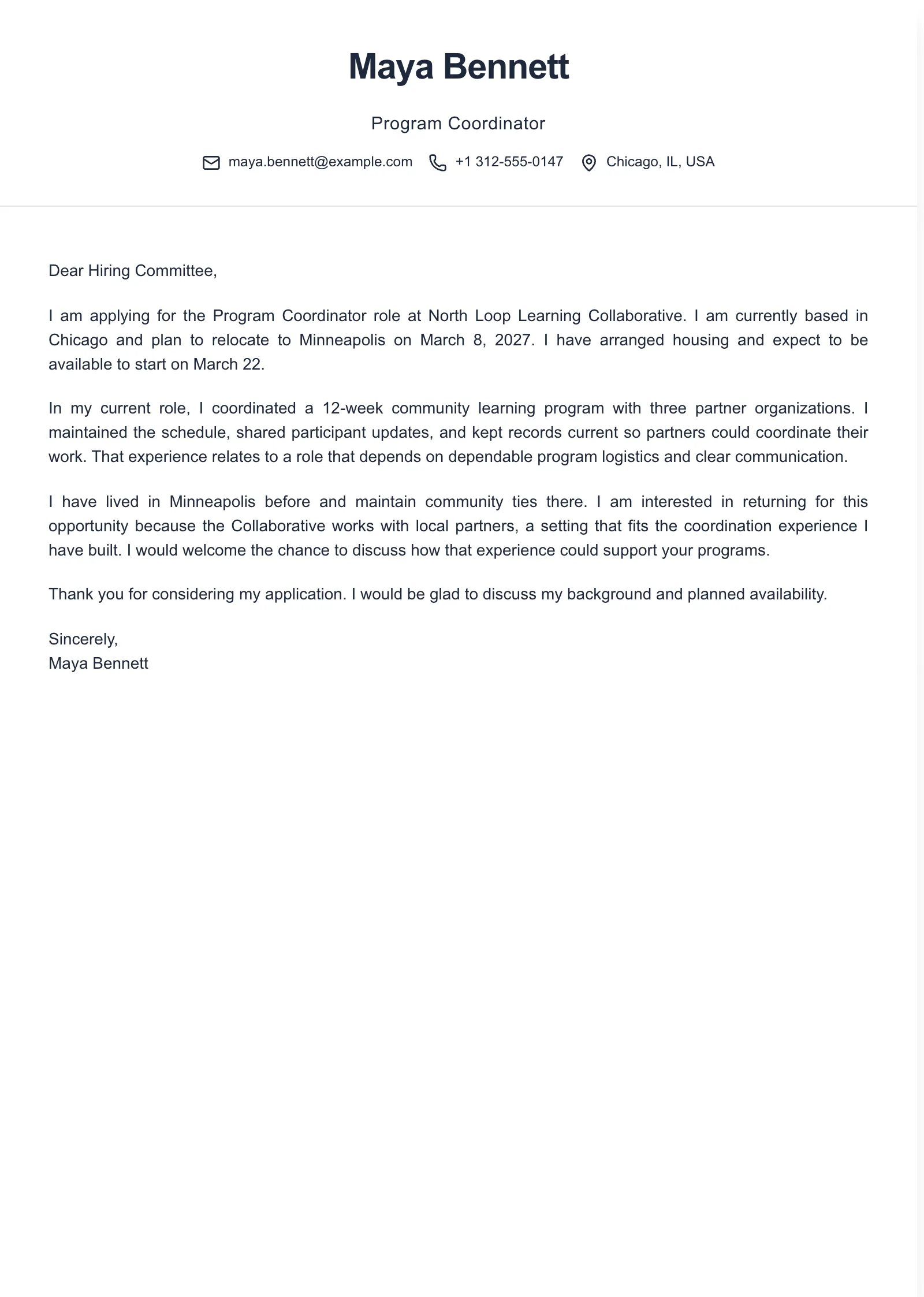
This fictional example explains a planned move, relevant local ties, and realistic availability without making relocation the whole application.
Example paragraphs
“I am applying for the [Job Title] role at [Company Name]. I am based in [Current City] and plan to relocate to [Destination City] by [Target Date]. I expect to be available in person from [Available Start Date]. My experience with [relevant task or project] relates to [specific role need].”
“I am interested in the [Job Title] opportunity at [Company Name] and am open to relocating from [Current City] to [Destination City]. My timing is flexible around [factual condition]. I have [brief, true local connection], and my experience with [relevant responsibility] supports [specific role need].”
“I am applying for the [Job Title] position at [Company Name] from [Current City] and would relocate to [Destination City] if selected. I would need to confirm whether [specific support] is considered for this role. My experience with [relevant responsibility] relates to [specific role need].”
Replace each bracket with a fact you can explain if asked. Choose the paragraph that matches your actual plans. Do not combine a firm date with uncertain availability or imply that a support request has been approved.
Relocation-specific mistakes
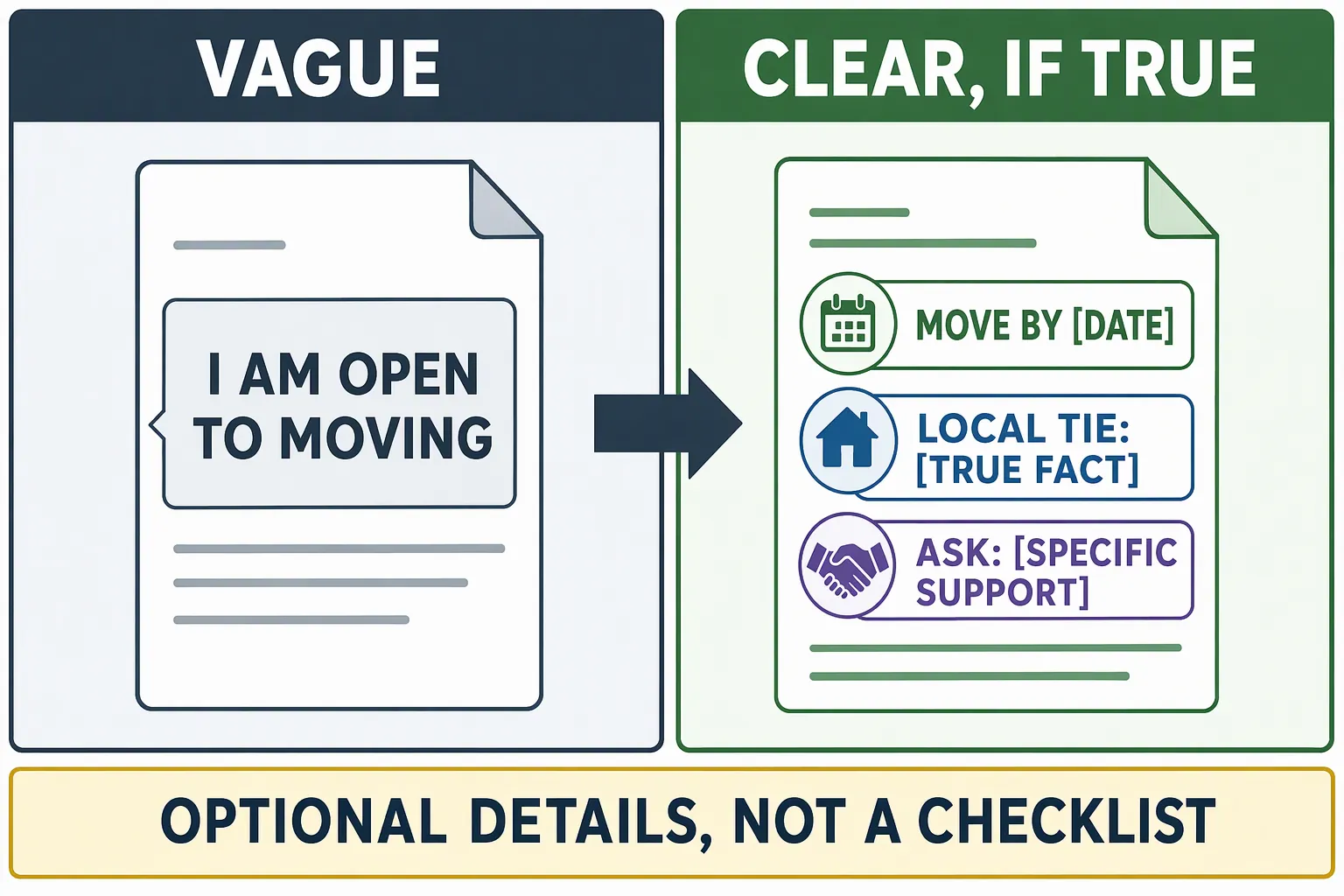
Making a tentative plan sound final
- What goes wrong
- A firm move date can mislead the employer if it still depends on an offer, housing, or another decision.
- Better approach
- Describe the status accurately and call a date a target when it is not confirmed.
Letting the move overshadow your fit
- What goes wrong
- A long explanation of why you are moving can crowd out evidence that you suit the role.
- Better approach
- Keep logistics brief, then connect a relevant example to a need in the posting.
Treating support and work authorization as the same
- What goes wrong
- A broad request can be unclear, and a planned move does not establish permission to work.
- Better approach
- Name the support you need and check current official guidance for authorization questions that apply to your circumstances.
Inventing local ties or overpromising availability
- What goes wrong
- An untrue connection or unsupported start-date promise can undermine trust and create practical problems.
- Better approach
- Use only genuine ties and dates you can meet. If either is uncertain, say so plainly or leave it out.
Frequently asked questions
- Should I include my relocation date in the letter?
- Include a date if you have a reliable target and it helps explain your availability. If it is not confirmed, call it a target or explain what it depends on rather than promising a move or start date.
- Should I ask for relocation assistance in my cover letter?
- Mention it briefly if you need it and the posting or employer information makes the question relevant. Name the support you mean and ask whether it is considered for the role. Do not assume assistance is available; you can also wait to discuss details with the employer.
- What if I am moving to another country?
- State your current location and move plan accurately. If permission to work depends on your immigration status, a permit, or sponsorship, check current official guidance for the destination. Do not imply that a planned move guarantees eligibility or sponsorship.
- Do I need local ties to apply for a job in another city?
- No. Mention a local connection only if it is true and relevant, such as having lived there before. A clear move plan and realistic availability can explain your situation without a local tie.

Put this career change approach into practice
Choose sample data or build your own cover letter, then personalize it before you download.