
Introduction
A cover letter for a promotion should connect evidence from your current work to the responsibilities of the role you want. Time at the organization alone does not show how you would handle broader work. If you have taken on additional duties, explain what you did, the outcome you can support, and where your responsibility ended.
This guide focuses on an internal move with materially broader responsibility, authority, or complexity. A move to a different role at the same level calls for more emphasis on fit with the work or team. Before drafting, check the internal posting and application instructions. If they request separate responses or documents, do not assume a cover letter replaces them.
What to address directly
Why this role, rather than just a new title?
- Hiring manager concern
- A request centered on tenure, status, or personal ambition does not explain why this particular next step fits the organization's work.
- What your letter should prove
- Name one or two responsibilities in the target role that you want to take on. Connect them to a current need or goal you can support with what you know, then show how your experience prepares you to contribute. Avoid claiming that you know the organization's needs unless you can point to a specific basis for that understanding.
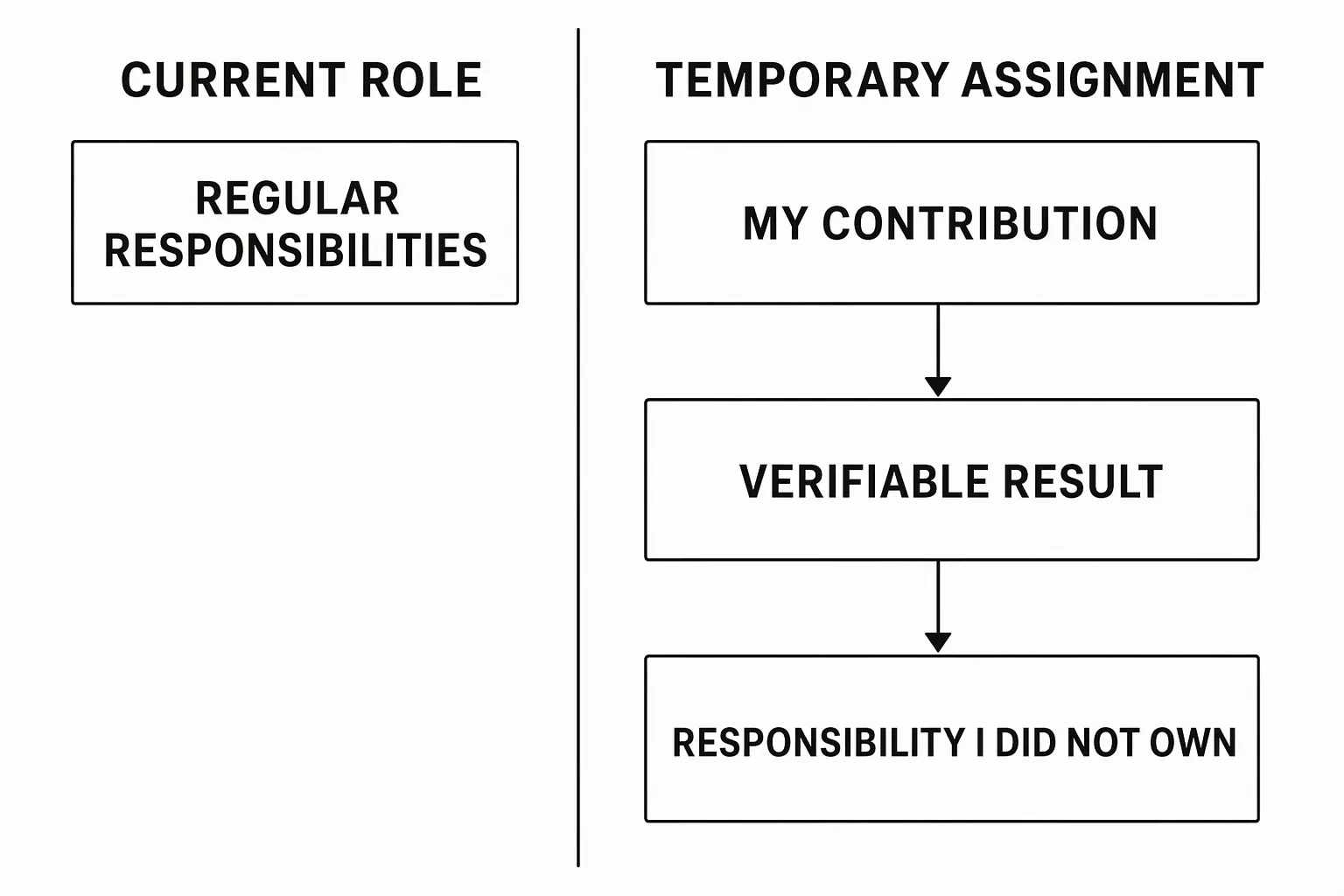
What have you actually done at the next level?
- Hiring manager concern
- Your regular duties, a temporary assignment, shared work, and decisions owned by someone else are not interchangeable evidence.
- What your letter should prove
- Choose a specific example and describe the situation, your actions, and an outcome you can verify. State whether you led a defined project, covered a task temporarily, or contributed as part of a group. Clarify which decisions you made and which you escalated. This lets the reader assess the relevance without suggesting you already held the target title.
Where would you still need to grow?
- Hiring manager concern
- The role may include responsibilities you have not yet held. Claiming complete readiness can obscure how you would approach that change.
- What your letter should prove
- If a relevant development area affects the role, identify it briefly and pair it with a credible plan, such as learning a process, requesting feedback, or working with an experienced colleague. Link the plan to related experience you already have. Do not turn the letter into a list of shortcomings or promise outcomes you cannot control.
Structural approach: build a promotion case in four steps
Focus on the difference between your current scope and the target role. Select evidence that helps a reader assess that difference, rather than repeating your entire performance history. The cover letter structure guide explains general paragraph order; use the guidance here to make each part specific to an internal promotion.
- 01
Name the role and your purpose
State the exact target title and that you are applying for the internal opening. Give a concise reason tied to the work, such as taking broader responsibility for a process you already support. Follow any instructions about where to submit the application or what to include.
- 02
Select evidence that signals greater scope
Choose one or two results relevant to the target role. Explain what you personally did, what the work affected, and an outcome you can substantiate. Use an accurate measure if you have one. If not, describe an observable change without inventing a number or overstating your contribution.
- 03
Describe higher-level work with boundaries
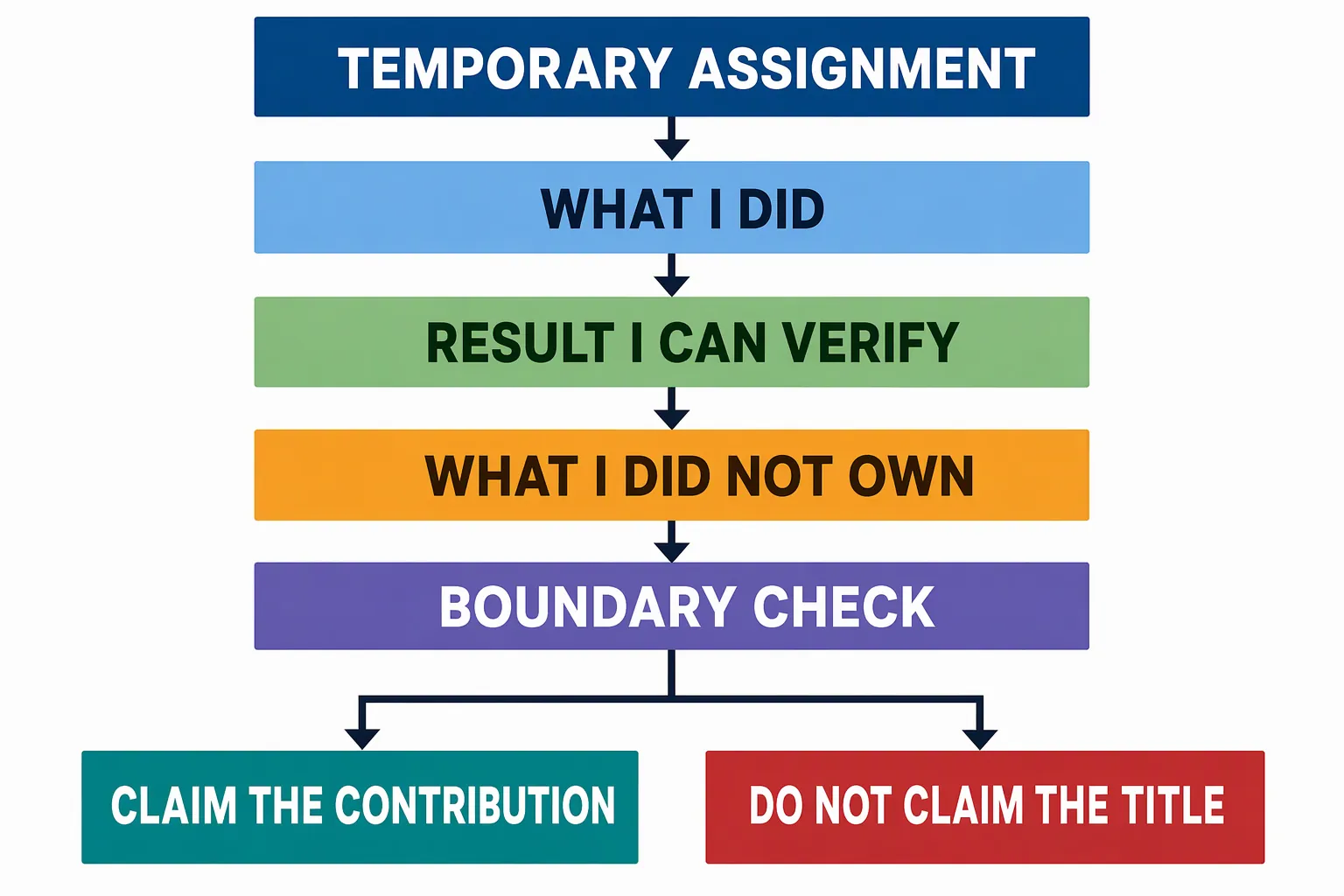
If you covered a duty, led a project, or coordinated work across teams, name the context and limits. Distinguish a temporary assignment from your official job. Explain which decisions you made, which you escalated, and how the experience relates to a responsibility in the target role.
- 04
Address development and close
Briefly name a relevant skill or responsibility you are still building if it affects your readiness. Give a practical next step and connect it to experience you can already offer. Close by restating the contribution you are prepared to make and your interest in discussing the role.
See a promotion letter in context
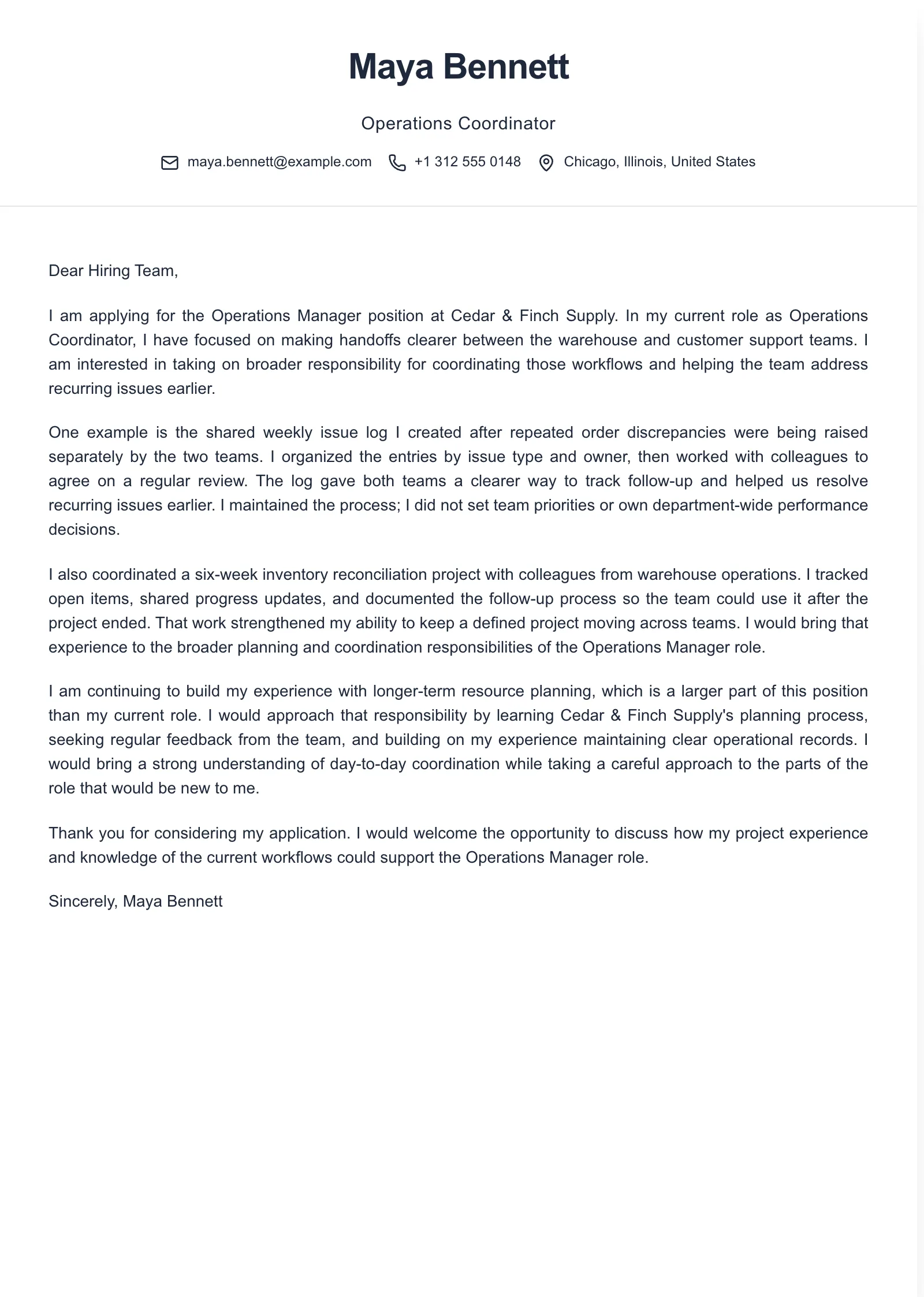
This fictional example connects current results to broader work, describes a temporary assignment without changing the employee's title, and names a development area.
Example paragraphs
“I am applying for the [Job Title] position at [Company Name]. In my current role, I have [specific responsibility or result], and I am interested in taking on [relevant broader responsibility] to support [specific need you can substantiate].”
“During [specific project or temporary assignment], I [action you personally took] in coordination with [relevant people or teams]. This led to [verifiable result]. My role was [accurate scope], and the experience relates to [responsibility in the Job Title role] at [Company Name].”
“I am continuing to develop [relevant skill or responsibility], which is part of the [Job Title] role at [Company Name]. I would build on [related experience] by [specific learning or feedback plan], while contributing my experience in [relevant strength].”
Use these paragraphs as adaptable pieces, not as a full letter. Replace each bracket with a detail you can support and remove any sentence that does not fit the posting. Keep your current title accurate. Your case can show relevant readiness while acknowledging that some parts of a broader role would be new to you.
Common mistakes in a promotion cover letter
Relying on tenure as the main argument
- What goes wrong
- Time at the organization does not, by itself, explain how your work prepares you for the target responsibilities.
- Better approach
- Lead with relevant outcomes and connect them to the role's work. Mention tenure only when it helps explain specific knowledge or context you can bring.
Inflating your current title or ownership
- What goes wrong
- Using the target title for yourself or implying that you owned someone else's decision makes your scope unclear.
- Better approach
- Keep your official title unchanged. Describe the specific assignment, your contribution, and the limits of your decision-making accurately.
Making the case about dissatisfaction
- What goes wrong
- Complaints about a manager, workload, or lack of recognition do not show how you would contribute in the new role.
- Better approach
- Keep the focus on the role's work and your preparation. If context is necessary, describe it briefly and factually, without making it the central reason for applying.
Claiming there is nothing left to learn
- What goes wrong
- A claim of complete readiness can sound untested when the role adds responsibilities you have not held.
- Better approach
- Show where your experience is relevant, name a development area if it matters, and give a practical way you would build that capability.
Frequently asked questions
- Should I explain why I want to leave my current role?
- You can explain why you are pursuing the next role, but you do not need to frame it as leaving a bad situation. Focus on the work you want to take on and how your experience relates to it. Avoid criticizing your current manager, team, or role.
- Should I say I already do the higher-level job?
- Describe only higher-level responsibilities you have actually handled, and be clear about their scope. A temporary assignment or specific project can show relevant experience without implying that you held the target title or owned responsibilities that were not yours.
- How should I address a qualification I am still developing?
- If the development area matters to the role, name it briefly and pair it with a practical next step, such as seeking feedback or learning a process. Do not claim full proficiency if you are still developing it.
- Is a promotion application different from a move to another role at my company?
- It can be. This page focuses on an internal move to materially broader responsibility, authority, or complexity. For a same-level move, focus more on why the different work or team fits your experience. Employers may use these labels differently, so follow the wording and criteria in the posting.

Put this career change approach into practice
Choose sample data or build your own cover letter, then personalize it before you download.