
Introduction
A part-time job cover letter can help an employer assess two practical points: when you can work and what relevant contribution you can make during those hours. State your actual availability early, then support your fit with a specific example. This approach can work whether you are studying, balancing family responsibilities, seeking a second income, or simply looking for part-time hours.
Do not treat part-time work as requiring less care in your application. Explain how your experience relates to the duties, and make schedule fit easy to assess. A useful cover letter opening can name the position and your confirmed time windows without a long personal introduction. This guide focuses on making those details clear and credible.
What to address directly
Your schedule may not match every shift
- Hiring manager concern
- A general claim that you are flexible does not tell the employer whether you can work the hours in the posting. A class, caregiving responsibility, or second job may also limit your availability.
- What your letter should prove
- Compare the posted hours with your recurring commitments before drafting. Give the days and time windows you can consistently work. Mention a fixed constraint only when it affects the role, and distinguish confirmed availability from occasional flexibility. If the hours do not fit, do not suggest otherwise.
You may have little paid experience
- Hiring manager concern
- Students, career changers, and people returning to work may have relevant experience but worry that it does not count because it came from outside a paid job.
- What your letter should prove
- Choose a truthful example from a class project, volunteer activity, community responsibility, or another setting. Explain what you did and which part relates to the posting. Name the setting clearly, so the reader can understand the experience without mistaking it for paid employment.
Your reason for wanting part-time hours may feel personal
- Hiring manager concern
- You may think you need to explain family arrangements, finances, or education in detail, or worry that a second-income goal will distract from your fit.
- What your letter should prove
- You can express interest without disclosing private circumstances. If a reason adds useful context, keep it brief and connect it to the work or schedule. The main points are the hours you can work and the relevant contribution you can make.
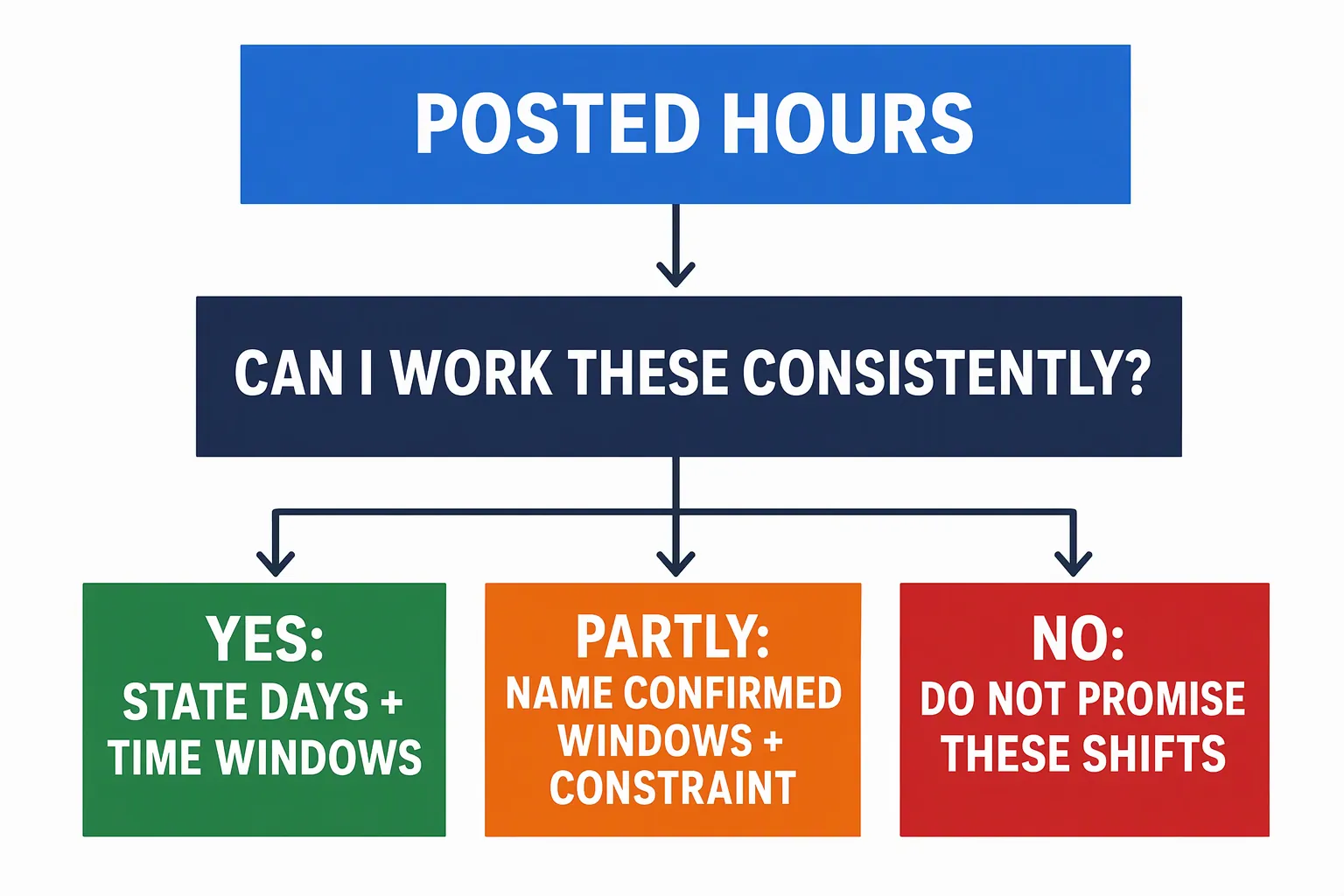
Structural approach: make schedule fit and dependability easy to see
Keep the letter focused: identify the role, state your confirmed availability, offer relevant evidence, and close by expressing interest. The cover letter structure guide explains the usual paragraph roles. For this scenario, make schedule fit visible rather than leaving the employer to infer it.
Use the posting to check your fit, not as a reason to claim you can work every shift. If you are a student, parent, or seeking a second income, mention that context only when it explains a real schedule or adds relevant context. You do not need to defend your choice of part-time work.
- 01
Check the schedule against your commitments
Read the hours in the posting and compare them with your recurring commitments. Write down the days and time windows you can keep consistently. If your availability changes by term or season, describe the current situation accurately and mention a known change only if it matters to the posting.
- 02
State the role and availability near the start
Name the [Job Title] at [Company Name] and give the relevant time windows in your opening paragraph. If the posting asks for broad availability, do not claim it unless it is true. When the hours are unclear, state what you know and leave uncertain times open for discussion.
- 03
Choose evidence that relates to the work
Select an example that shows a relevant behavior, such as following through on an agreed schedule, communicating with people, organizing information, or learning a routine. Explain what you actually did and how it relates to the posting. A specific example makes your claim easier to assess than simply calling yourself dependable.
- 04
Close with a realistic next step
Restate your interest and, if useful, the schedule that makes the role a fit. Keep the close courteous and focused. Check the letter against the application form so any availability you provide in both places is consistent.
Part-Time Job Cover Letter Example
Preview a fictional part-time application that connects confirmed availability with relevant experience. Adapt the structure and replace its details with facts that are true for you.
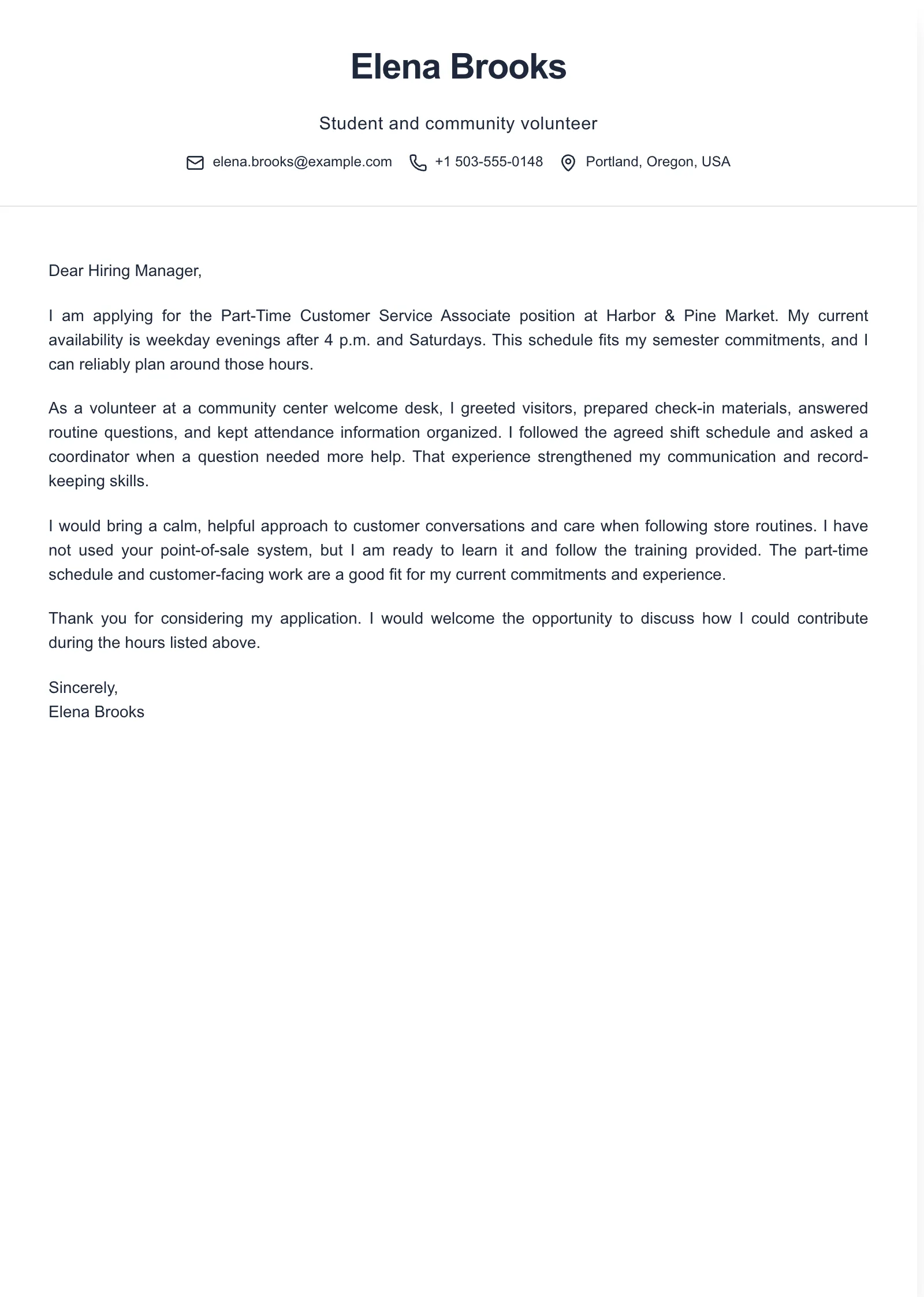
Example paragraphs
“I am applying for [Job Title] at [Company Name]. I am available [days] during [time window] and [additional confirmed time window], which fits the schedule described in your posting.”
“In [class, volunteer role, or other responsibility], I [specific action you took] and followed through on [specific commitment]. That experience helped me build [relevant skill] that I would bring to the [Job Title] role.”
“I am interested in this part-time position because [truthful reason connected to the work or schedule]. I would welcome the chance to contribute [relevant strength] during the hours I have confirmed.”
Use these as separate paragraph models, not as a full letter to copy. Replace every bracket with accurate details, and remove any sentence that does not fit your situation. If you are studying, parenting, or seeking a second income, mention that only when it clarifies your schedule or interest. Do not invent availability, experience, or flexibility to match a posting.
Common mistakes in a part-time job cover letter
Burying your availability
- What goes wrong
- The letter discusses your interest and background but leaves the employer to guess whether you can work the listed shifts.
- Better approach
- State confirmed days and time windows near the beginning. Include only the constraints needed to make that statement accurate.
Claiming you are always flexible
- What goes wrong
- A promise of full flexibility may conflict with study, caregiving, another job, or other fixed commitments.
- Better approach
- Describe the hours you can genuinely keep. Do not promise unconfirmed shifts to make your application sound more flexible.
Turning your reason into a personal explanation
- What goes wrong
- A long account of finances or family circumstances can obscure your schedule and what you would contribute.
- Better approach
- Share personal context only if it helps explain a relevant schedule or motivation. Keep private details private and return to the work.
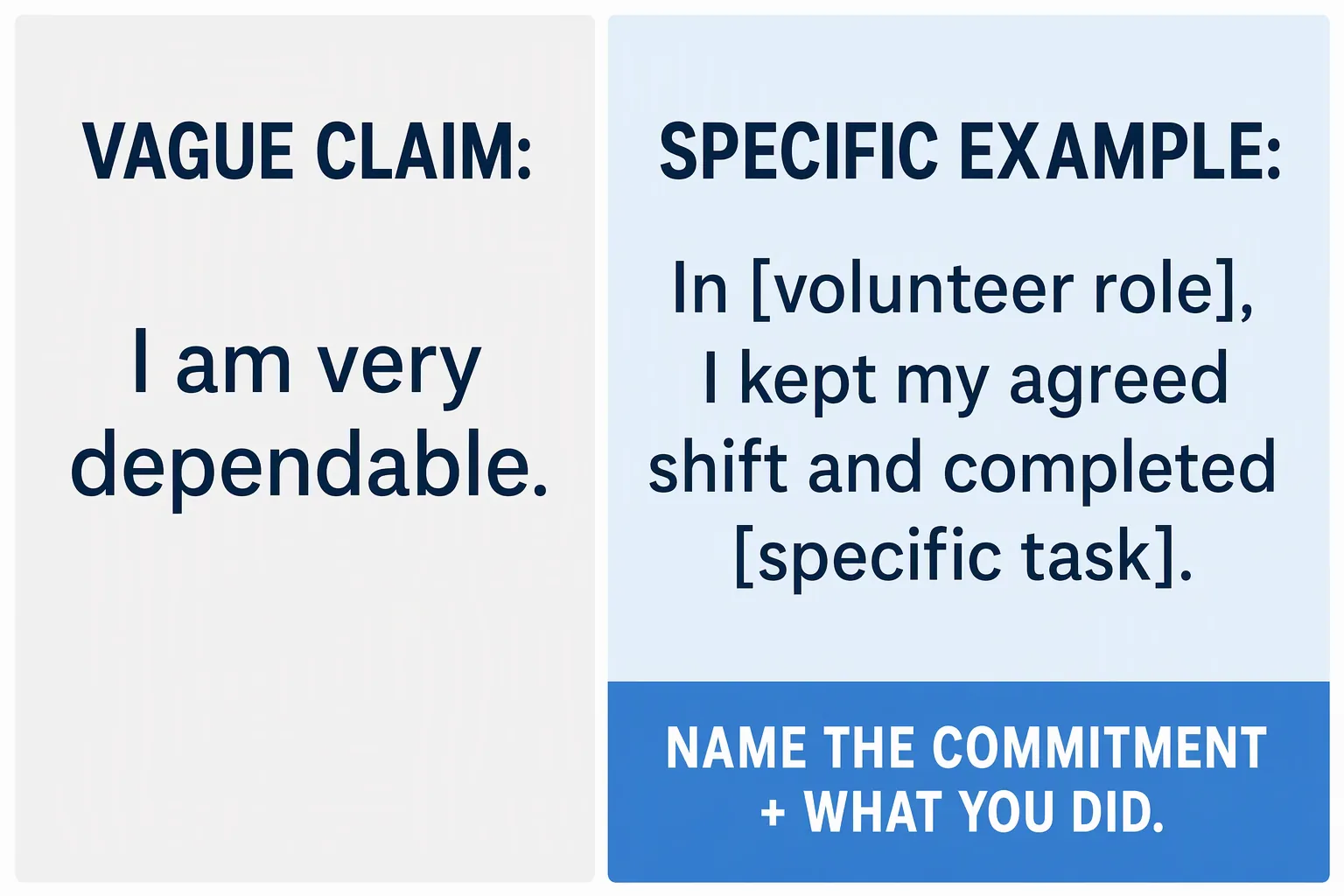
Calling yourself reliable without an example
- What goes wrong
- A broad claim gives the reader little information about what reliability looks like in your experience, especially if you have not held a paid job.
- Better approach
- Describe a real commitment you kept or responsibility you handled. Identify the setting accurately and connect your action to a duty in the posting.
Frequently asked questions
- How much availability should I include in a part-time job cover letter?
- State the days and time windows you can reliably work, then compare them with the schedule in the posting. Include a fixed constraint only when it affects that schedule. Do not promise shifts you have not confirmed you can work.
- How do I write a part-time job cover letter with no experience?
- Use a real example from school, volunteering, a community activity, or another responsibility. Describe what you did and how it relates to the role. Identify the setting accurately so unpaid or school experience is not mistaken for paid employment.
- Should I explain that I am a student or parent?
- Only include that context if it helps explain your schedule or a relevant strength. You do not need to share personal details. A clear statement of your actual availability is usually more useful than a long explanation of why you have it.
- Should I say I want the job to supplement my income?
- You can mention a second-income goal briefly if it helps explain your interest, but you do not have to disclose personal finances. Keep the focus on why the work suits you and how your schedule and relevant skills fit the posting.

Put this career change approach into practice
Choose sample data or build your own cover letter, then personalize it before you download.