
Introduction
An overqualified cover letter should explain why this particular role is a deliberate choice, not defend your résumé. An employer may have questions about scope, compensation, or whether you will welcome the work, but do not assume every reader shares them. Give your real reason, tie it to duties in the posting, and show how relevant experience supports the contribution you want to make.
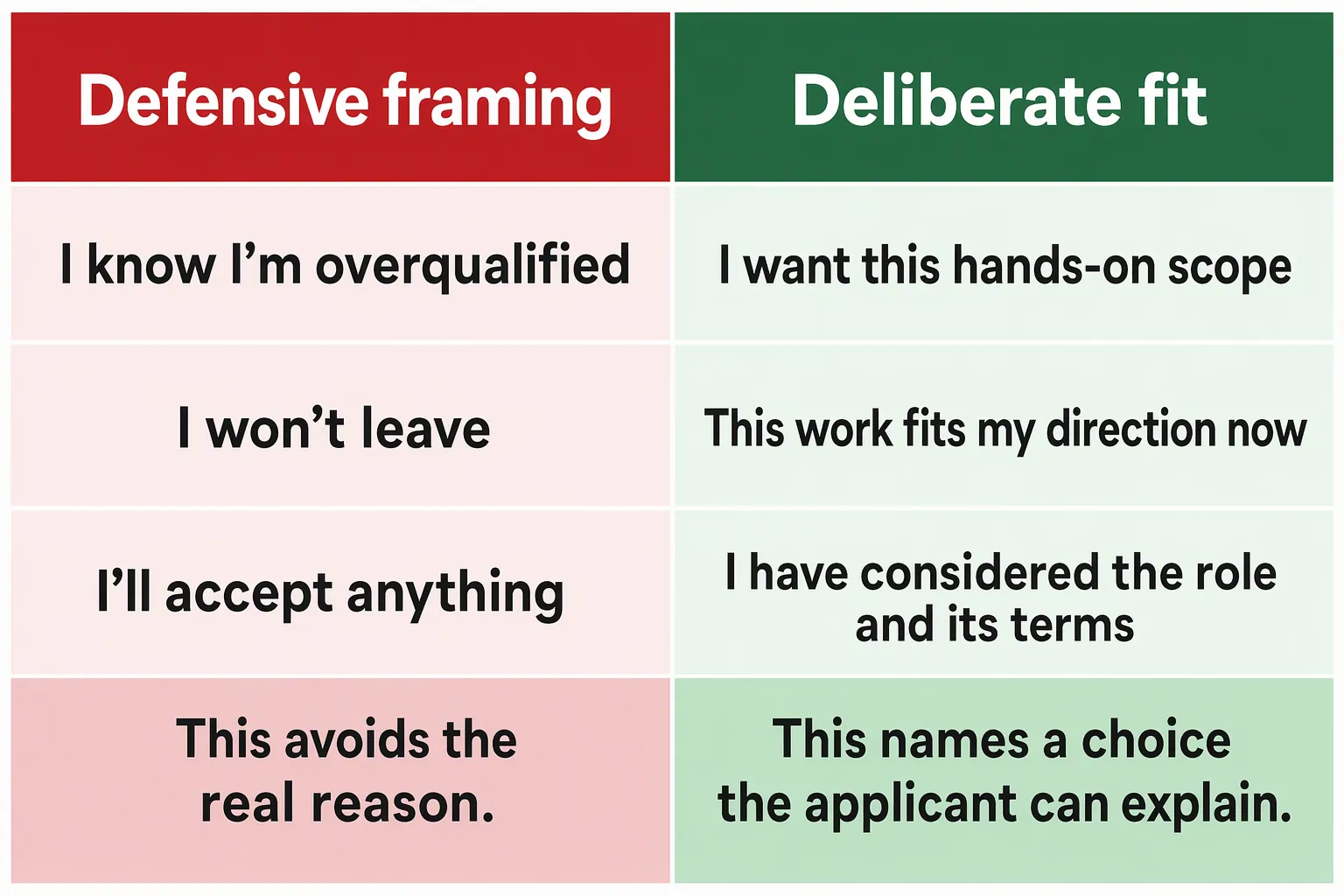
Do not apologize for your experience, promise that you will never leave, or suggest you are willing to take anything. Keep your titles accurate and choose the parts of your background that explain your fit. For a wider look at presenting senior experience, see this guide to adjusting a resume when you seem overqualified.
What to address directly
Why this level is a deliberate choice
- Hiring manager concern
- A reader may wonder why someone with broader experience wants this scope. A vague answer, such as wanting a change, does not explain why this role makes sense for you.
- What your letter should prove
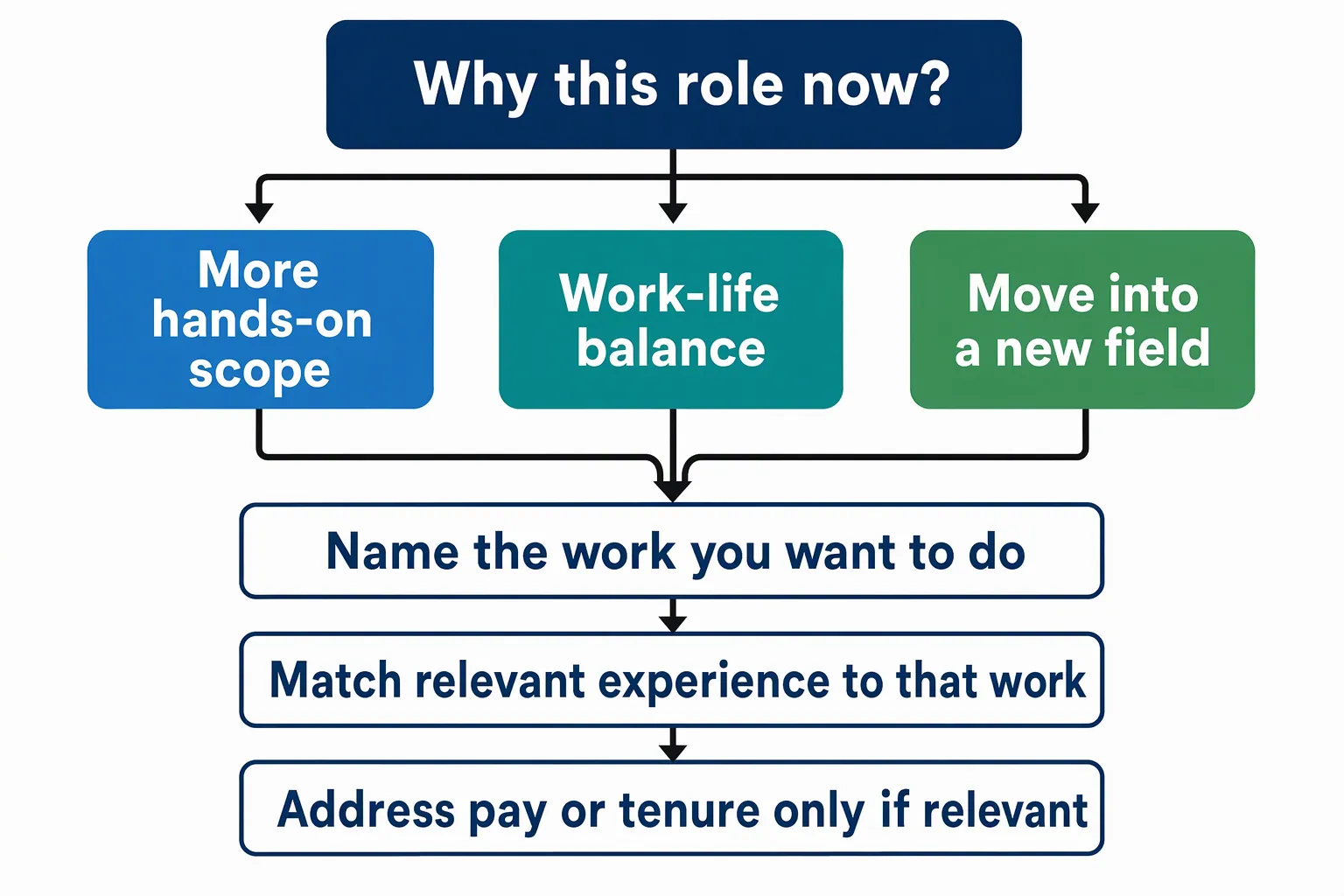
- Name your real motivation, whether it is hands-on ownership, a different work-life balance, or a move into a new field. Point to duties in the posting that match that motivation. You are explaining your choice, not asking permission to make it.
Whether the pay fits your expectations
- Hiring manager concern
- An employer may wonder whether the compensation fits your needs or whether you will leave for a different opportunity. Guessing what the employer can afford, or offering to accept any amount, does not resolve a real mismatch.
- What your letter should prove
- Do not claim pay is unimportant. If the posting gives a range and you have reviewed it, you can say it fits your expectations only when that is accurate. Otherwise, keep the letter focused on the role and discuss compensation when the employer asks or the process calls for it.
Whether you will welcome the scope
- Hiring manager concern
- A reader may question whether someone with broader responsibilities will be satisfied with a narrower remit. A sweeping promise about how long you will stay does not answer what attracts you to the work.
- What your letter should prove
- Describe the work you want to do and why it is a considered choice now. Show that you understand the role's actual scope. You can express interest in contributing over time, but do not guarantee future decisions you cannot control.
Structural approach: explain the choice, then show the fit
Keep the letter focused on why this particular level fits your current direction and what you can contribute within its scope. The cover letter structure guide covers the general flow; use these steps to address the overqualification concern without letting it take over the letter.
Do not try to make your experience look smaller than it is. Keep job titles and facts accurate, then give the most space to work that connects to this role.
- 01
State the choice plainly
Name the [Job Title] at [Company Name] and give your genuine reason for applying at this level. Tie that reason to a specific part of the role, such as the kind of responsibility you want to handle directly.
- 02
Select relevant proof
Choose a focused example that shows you can do work described in the posting, rather than listing every senior responsibility you have held. Keep factual titles unchanged. Explain how a relevant skill or result carries into this role.
- 03
Address a real concern without overpromising
Mention compensation only if it is useful and you can state your position honestly. If you address tenure, describe what makes the role a sound choice now. Do not promise a fixed length of service or say you will accept any conditions.
- 04
Close on the work ahead
Reaffirm the contribution you want to make in this role and invite a conversation. Keep the ending forward-looking. Avoid repeating that you are willing to work below your level or asking the employer to overlook your background.
Overqualified candidate cover letter example
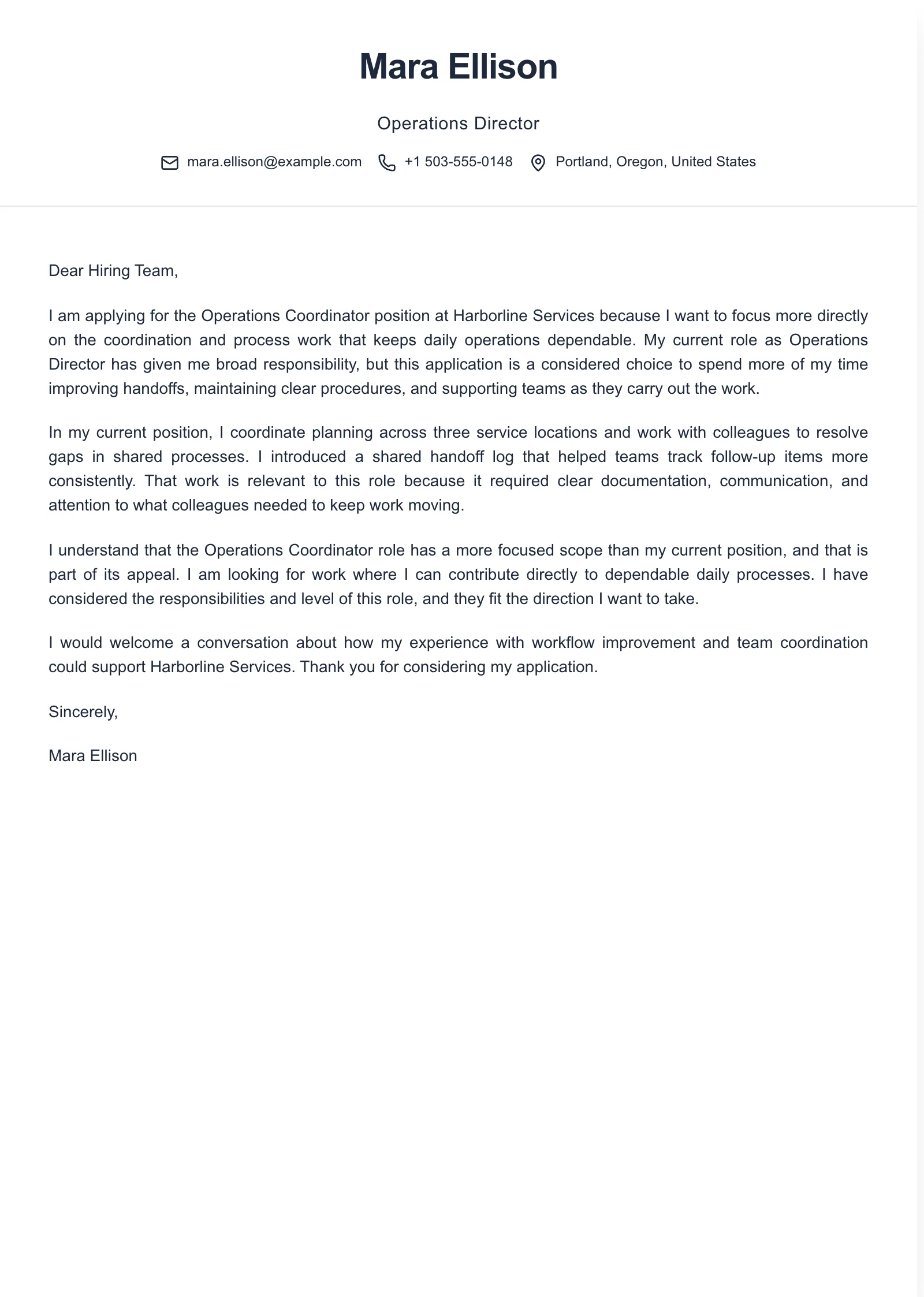
A fictional example showing a candidate who deliberately chooses a narrower role, explains the fit, and keeps senior experience accurate.
Example paragraphs
“I am applying for the [Job Title] role at [Company Name] because I want to focus more directly on [specific type of work]. In my current position, I have handled [relevant responsibility]; that experience has shown me that I do my best work when I can [specific task or contribution].”
“The [Job Title] role at [Company Name] appeals to me because its focus on [specific duties] fits the way I want to contribute at this stage. I have used [relevant skill] to achieve [factual result], and I am seeking a role where I can apply that strength while maintaining [specific, honest priority].”
“I am interested in the [Job Title] opening at [Company Name] as a deliberate move toward [new field or area of work]. My experience with [transferable responsibility] has given me a foundation in [relevant skill], and I can bring [specific evidence] while building knowledge of [field-specific area].”
Use the paragraph that matches your actual reason, not the one that sounds easiest to defend. Replace every bracket with a detail you can support, and connect your reason to the posting rather than to a general wish for change. If you have more than one reason, choose the one that best explains why this role makes sense now. Keep the rest of your letter focused on relevant contribution.
Common mistakes in an overqualified cover letter
Apologizing for experience
- What goes wrong
- Calling yourself too senior or saying you know you are overqualified makes the letter sound defensive and centers a possible concern rather than your choice.
- Better approach
- State why you want this scope and show how relevant experience helps you do the work. Treat your background as context, not a fault to excuse.
Changing or concealing your job title
- What goes wrong
- Removing a senior title or replacing it with a lower-level title can make your history inaccurate and create questions later.
- Better approach
- Keep titles factual. Trim unrelated detail, not the truth of your work history, and give space to responsibilities that connect to the role.
Offering to accept any pay or conditions
- What goes wrong
- Saying that salary does not matter or that you will accept anything can understate your needs without resolving a real compensation question.
- Better approach
- Use a posted range only if you have checked it and it genuinely works for you. Otherwise, do not make unsupported claims about pay in the letter.
Promising you will never leave
- What goes wrong
- A promise to stay for a set period cannot guarantee what will happen, and it can make a considered application sound defensive.
- Better approach
- Explain why the work and scope fit your current goals. Show that you understand the role and describe the contribution you want to make without predicting your entire future.
Frequently asked questions
- Should I say that I am overqualified?
- You can address the concern if it has come up, but you do not need to label yourself. Explain why this specific role and scope suit your current goals, then show how your experience applies. Avoid sounding apologetic or implying that you will accept any role.
- How do I explain applying for a lower-level role?
- Give your actual reason, such as wanting more hands-on work, a different balance, or a move into a new field. Connect that reason to duties in the posting. Do not describe the role as a temporary stop unless that is genuinely your plan.
- Should I mention salary in my cover letter?
- Focus on fit and contribution unless the employer asks about pay or you need to address a clear mismatch. If you refer to a posted range, say it works for you only if that is true. Do not claim that salary does not matter to you.
- Should I hide senior job titles to avoid seeming overqualified?
- No. Keep your factual job titles intact. You can give less space to senior-level duties that do not help explain your fit and emphasize relevant work instead. Changing a title can create confusion and undermine trust.

Put this career change approach into practice
Choose sample data or build your own cover letter, then personalize it before you download.