
Introduction
A strong cover letter for an older job seeker makes the match easy to see. Lead with recent, relevant experience and show how you use current tools or methods. Then explain why this particular role interests you. The aim is not to summarize a whole career or to persuade the reader that age does not matter. It is to provide clear evidence of your fit for the work.
Use the last 10 to 15 years as a practical starting point when selecting examples, not as a rule for deleting earlier experience. Include older work when it adds relevant evidence. You can focus on your qualifications without making age or career length the subject of the letter.
What to address directly
Recent evidence, not a career inventory
- Hiring manager concern
- A long list of positions can make it difficult to spot how your background fits the opening now. But leaving out useful evidence just because it is older can also weaken your case.
- What your letter should prove
- Choose two or three needs from the posting and connect each to a specific responsibility or result. Lead with a recent example when it is a strong match. Include earlier experience only when it adds distinct, relevant evidence. The last 10 to 15 years is a prioritization guide, not a cutoff. For more on focusing experience without treating dates as a cutoff, see How to Focus an Experienced Resume and Reduce Age Cues.
Current tools in context
- Hiring manager concern
- If your examples describe only past work, the reader may not see how your capabilities relate to the tools or processes in the posting.
- What your letter should prove
- Name a current tool or method and explain what you use it to do. A tool name on its own is less informative than a short example of applying it to a relevant task. Mention recent training or practice only when it is true and useful to this application.
A clear reason for pursuing this role
- Hiring manager concern
- If your previous titles or responsibilities seem broader than the opening, a reader may not understand why you want this particular work. Do not assume the employer has concerns about age, pay, or ambition.
- What your letter should prove
- Identify what attracts you to the responsibilities and scope described in the posting. Use accurate job titles and explain your motivation directly if your reason for applying might otherwise be unclear. Do not promise to accept any terms or guess what the employer can afford. For related guidance on apparent role-level mismatch, see How to Adjust a Resume When You Seem Overqualified.
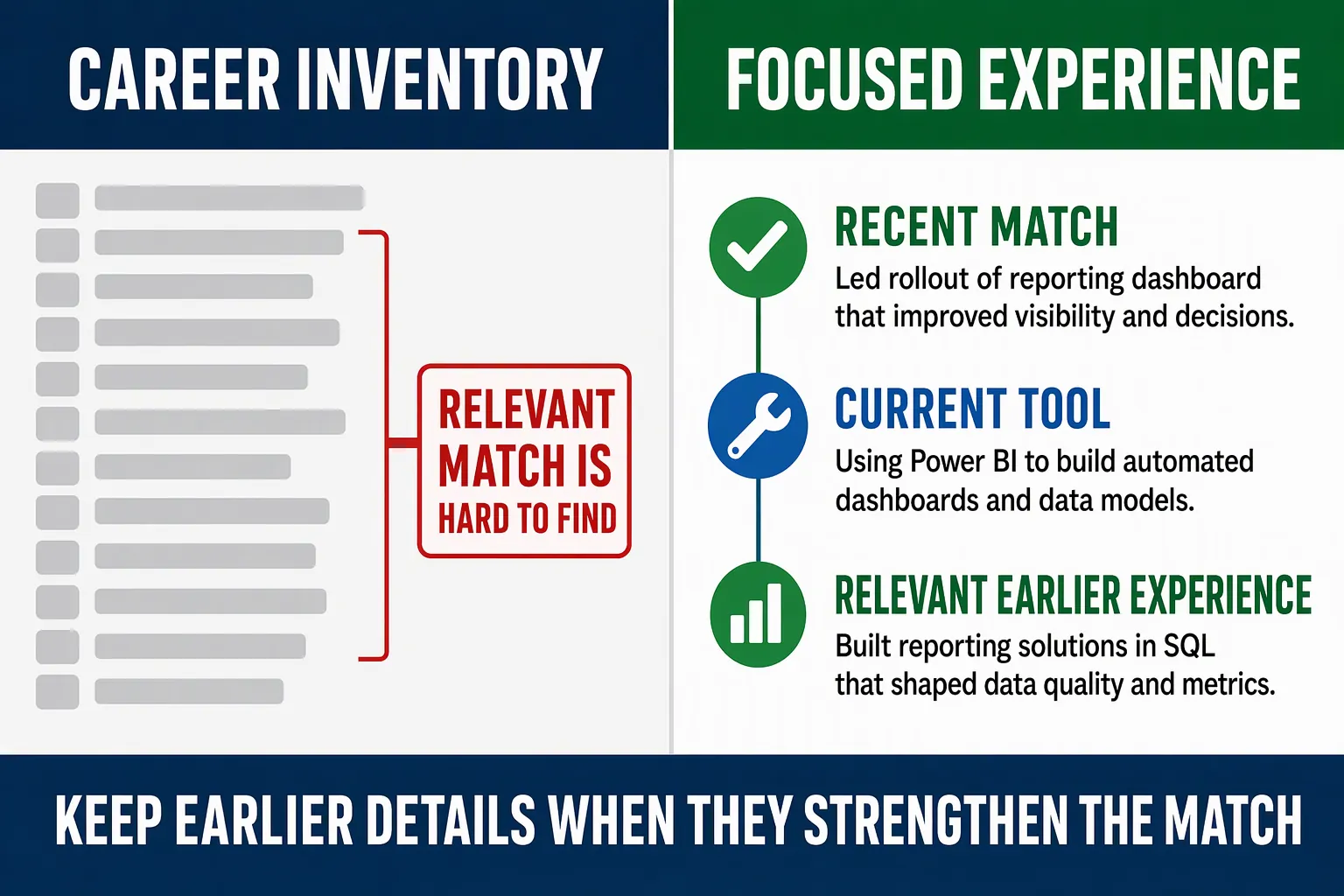
Structural approach: make current fit clear
Keep each paragraph tied to the opening. The reader should be able to connect your recent work, current capabilities, or motivation to responsibilities in the posting. A cover letter is not a timeline of your career; use the space for evidence that helps explain why this role is a fit.
- 01
Choose the opening’s priorities
Read the posting and select two or three responsibilities or skills that matter to the role. Do not try to repeat every requirement. Use the employer’s terms only when they accurately describe your experience.
- 02
Lead with relevant proof
Choose a specific example, preferably from the last 10 to 15 years when it fits. Explain what you did and what changed. If an earlier achievement is a stronger match, include it because it is relevant, not simply to recount your history.
- 03
Show current capability
Mention a current tool or process in context: name the task you used it for and, where possible, the truthful result. Keep dates and job titles accurate. Do not rename a senior title to make it seem closer to the opening.
- 04
Explain your interest now
Give a specific reason based on the work, team, mission, or scope in the posting. If your background might make your interest seem unclear, state what you want to contribute in this role. Close by expressing interest in discussing the match, not by promising to accept any conditions.
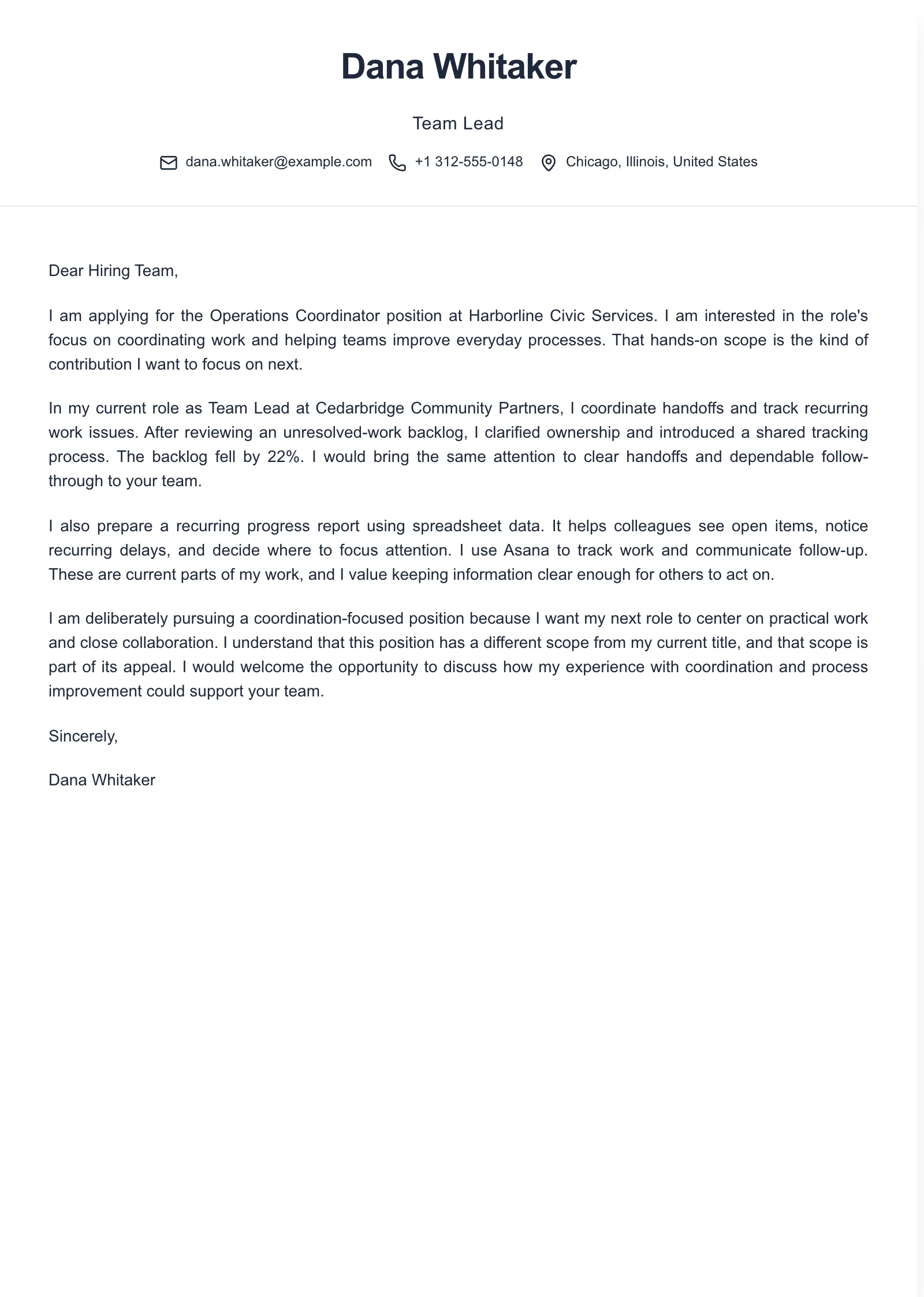
Older Worker Cover Letter Example
A fictional example of a candidate connecting recent, relevant experience and current tools to a role, without making age the focus.
Example paragraphs
“In my recent work on [relevant process], I used [current tool] to [specific action], helping [team or group] achieve [verifiable result]. I would bring that experience to the [Job Title] position at [Company Name], particularly to support [specific responsibility from the posting].”
“I use [current tool or method] to [specific task] and recently applied it to [factual project or responsibility], resulting in [measurable or observable outcome]. That experience connects directly to [specific need in the posting] at [Company Name].”
“I am interested in the [Job Title] role at [Company Name] because [specific feature of the work] matches the contribution I want to make next. The position’s focus on [actual responsibility] is relevant to my experience with [specific example].”
Use these as individual paragraph models, not as a complete letter. Replace each bracket with accurate details and keep only evidence that supports this application.
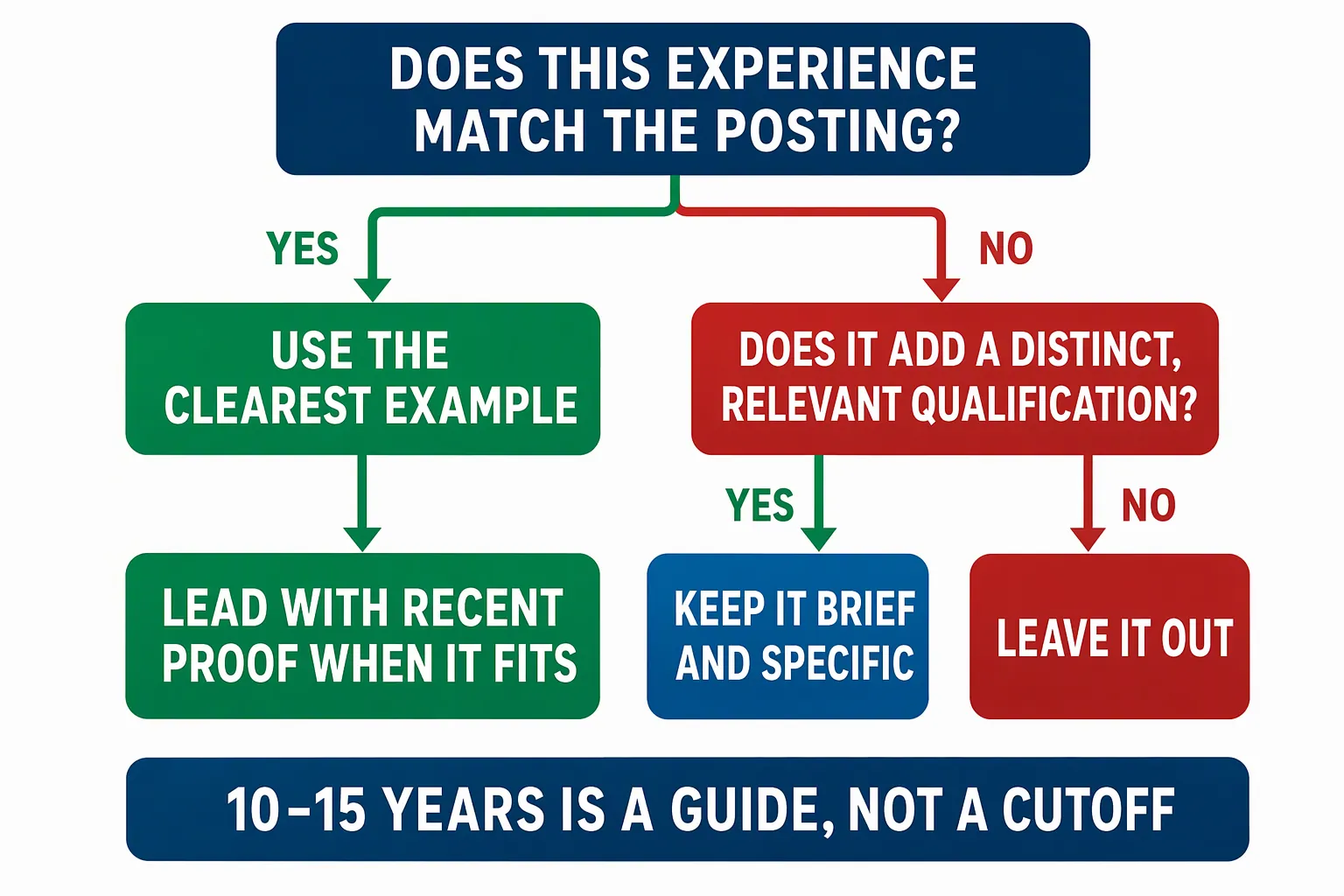
Common mistakes older job seekers make in cover letters
Turning the letter into a career history
- What goes wrong
- Listing many employers and responsibilities can bury the evidence most relevant to the opening and repeat details already available elsewhere in the application.
- Better approach
- Select a few relevant examples and lead with recent work when it is a good match. Add earlier experience only when it contributes a clear, distinct reason to consider you.
Treating a time range as a hard cutoff
- What goes wrong
- Removing every detail from before the last 10 to 15 years can hide experience that directly supports the role.
- Better approach
- Use the range to help prioritize, then include earlier qualifications or achievements when they are relevant. Present dates and titles accurately.
Apologizing for seniority or guessing at concerns
- What goes wrong
- Saying “I know I may be overqualified” or promising to accept any salary can introduce assumptions the reader may not have raised.
- Better approach
- Explain why the actual work and scope interest you. Discuss compensation where the application or conversation asks for it, rather than preemptively discounting your value.
Listing tools without showing how you use them
- What goes wrong
- A string of software names does not show how your current skills relate to the responsibilities in the posting.
- Better approach
- Pair a relevant tool with a task you performed and a truthful result. Do not claim recent use or training that you cannot support.
Frequently asked questions
- Do I need to state my age in a cover letter?
- A cover letter can focus on your relevant experience, current capabilities, and interest in the role. As a writing choice, do not add age just to explain your work history. Follow the application instructions; this guidance is not a statement about legal disclosure rules, which vary by jurisdiction.
- Should I leave experience from more than 15 years ago out?
- No. Use the last 10 to 15 years as a practical starting point for choosing what to foreground, not as a cutoff. Include earlier experience when it adds relevant evidence, supports a qualification, or shows an achievement that strengthens your case.
- How can I address a possible concern that I am overqualified?
- Do not assume the employer has that concern. If your background could make your reason for applying unclear, explain what interests you about the actual work and scope. Use accurate details and avoid apologizing for your experience or guessing what the employer thinks.
- Should I discuss salary to show I am affordable?
- Do not guess at the employer’s budget or discount your value in advance. If the posting or application asks about compensation, answer accurately in the requested place. Keep the cover letter focused on the role and your relevant contribution.

Put this career change approach into practice
Choose sample data or build your own cover letter, then personalize it before you download.