
Introduction
A nonprofit cover letter should connect your interest in the organization’s work with evidence that you can contribute to the specific job. Saying only that you care about a cause does not show what you understand about this organization or how you would approach its responsibilities. Pair a truthful reason for applying with relevant experience, skills, or informed interest.
Nonprofit organizations and roles differ, so avoid assuming that every employer has the same mission, programs, funding, or staffing needs. Use the posting and the organization’s own information to choose details. The cover letter structure guide explains the general parts of a letter; this page focuses on making the mission connection specific to a nonprofit role.
What to address directly
Mission fit can sound like praise without evidence
- Hiring manager concern
- Saying that you admire the organization or care about its cause does not show that your interest is informed or relevant to the role.
- What your letter should prove
- Point to a particular service, program, stated goal, or community the organization works with. Explain your connection honestly. It might come from volunteering, paid work, study, community involvement, or research. Do not claim personal involvement you did not have.
Interest in the cause does not demonstrate job readiness
- Hiring manager concern
- A letter focused only on values can leave the reader unsure how your experience relates to the responsibilities in the posting.
- What your letter should prove
- Choose evidence for the actual duties. Describe a relevant task, what you did, and the useful contribution or result you can support. Use examples from any setting that accurately demonstrates the skill; nonprofit employment is not the only possible source.
Shared outcomes need careful attribution
- Hiring manager concern
- Community and program outcomes may involve many people. Taking credit for a whole result can obscure your actual contribution.
- What your letter should prove
- Separate the wider goal or team result from your own actions. Include a number only if it is accurate, appropriate to share, and fairly connected to your work. Otherwise, describe your contribution without inventing a metric or disclosing private information.
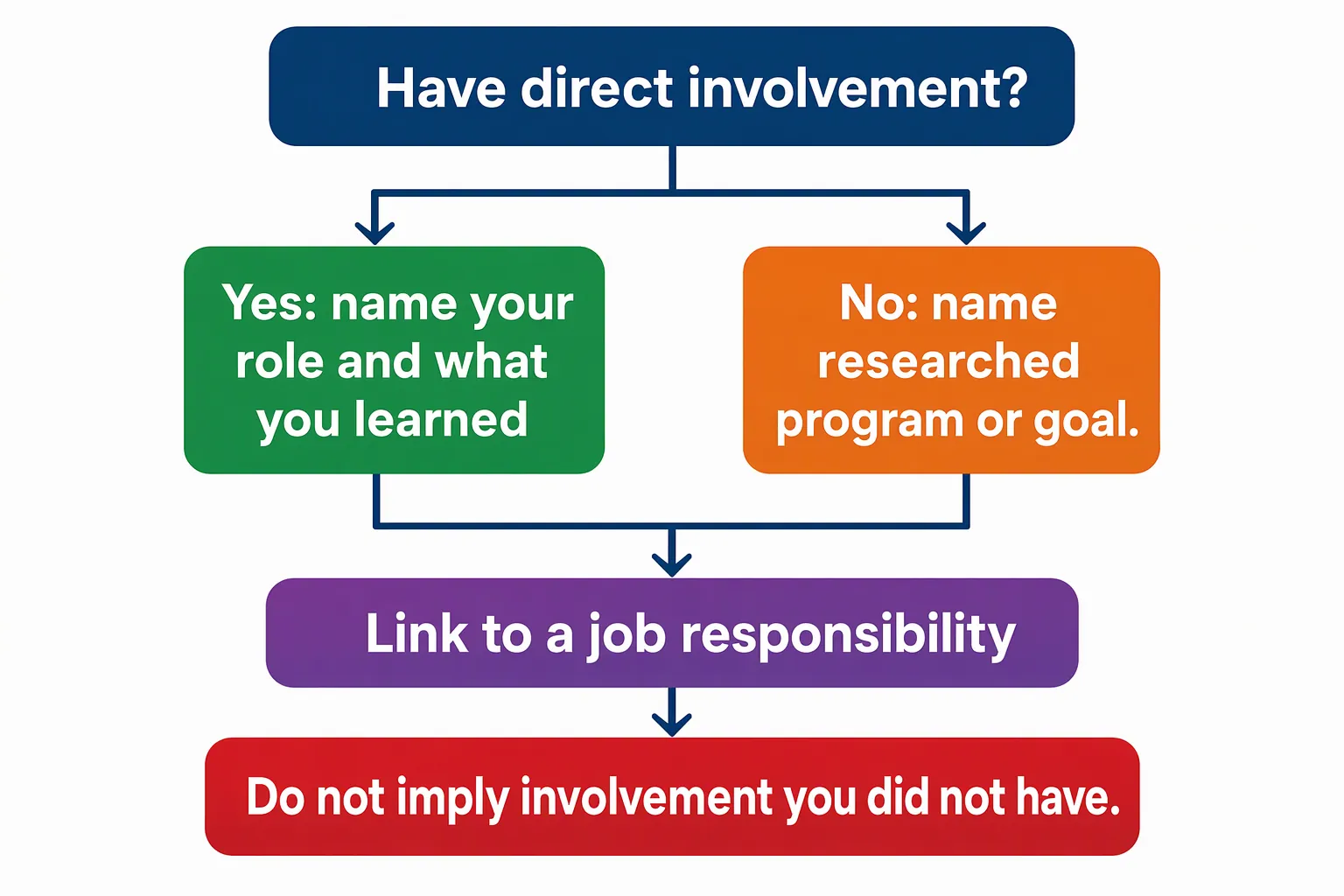
Structural approach for a nonprofit cover letter
Organize the letter around this role, not around a general declaration of support for a cause. Start with a specific reason for applying, connect it to relevant evidence, and explain how that evidence relates to the job. The cover letter opening guide can help you make the opening concrete rather than slogan-like.
A mission connection does not require volunteering for the organization or personally experiencing the issue it addresses. If the posting asks for a separate response to selection criteria or another document, follow those instructions too. A cover letter should not be treated as a substitute for material the employer specifically requests.
- 01
Identify the organization’s specific work
Read the posting and the organization’s own description of its services, programs, or goals. Select one detail that relates to the position. Replace broad phrases such as “helping people” with the particular work the organization describes, without making assumptions about its priorities.
- 02
Explain your connection truthfully
Say why that work interests you and where your understanding comes from. You might refer to relevant paid work, study, volunteering, community involvement, or research. State your actual role and what you learned. Personal experience is optional, and you do not need to disclose private details.
- 03
Choose evidence for the duties
Select one or two examples that match the posting. Explain the task, your actions, and a result or useful contribution you can verify. If the work was shared, identify your part. Use a number only when it is accurate and you can fairly connect it to your contribution.
- 04
Make the connection to this position
Show how your evidence could help with a named responsibility in the role. For a development position, relevant supporter communication or record keeping may fit if those duties appear in the posting and match your experience. For other roles, choose evidence for their actual duties. Close by expressing interest in discussing your fit, not by promising to solve the organization’s mission.
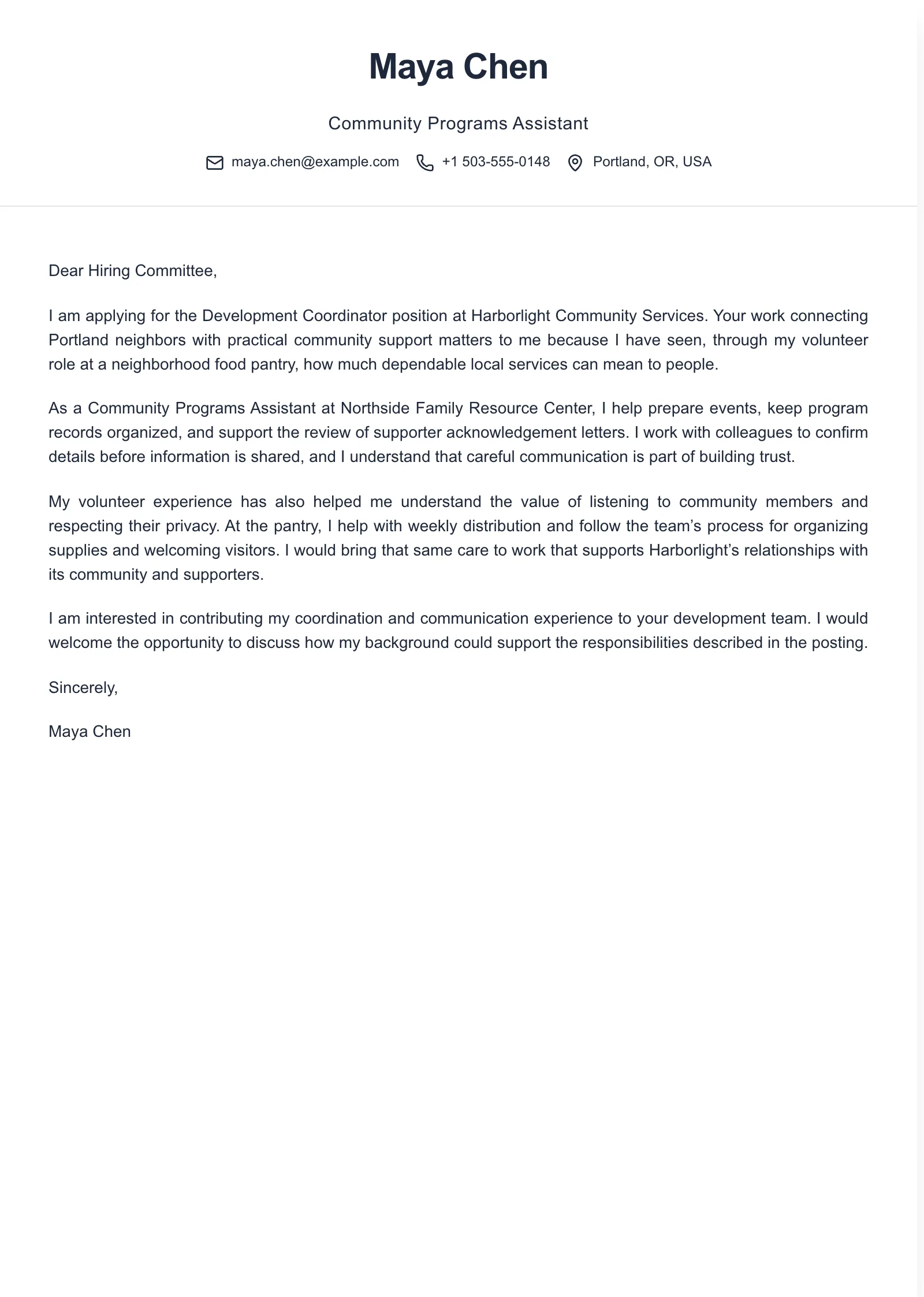
Nonprofit cover letter example
A fictional example of an applicant connecting a real community involvement to relevant coordination and communication experience.
Example paragraphs
“I am applying for [Job Title] at [Organization] because [specific program, service, or stated goal] connects with [truthful reason]. Through [experience, study, community involvement, or research], I have learned [relevant insight]. I would bring that perspective to [responsibility from the posting].”
“In [setting], I handled [task that matches the posting] by [action you took]. This supported [specific result or team contribution you can verify]. I could apply the same [relevant skill] to [responsibility in the Job Title role], while following [relevant process or guidance].”
“My experience in [field or setting] differs from [Organization]’s area of work, but [specific example] shows that I can [relevant skill]. I am interested in applying that skill to [responsibility from the posting] while learning the organization’s approach to [specific part of its work].”
Use these as paragraph patterns, not claims to copy. Replace every bracket with a fact you can explain. Keep the organization and role accurate, and distinguish your own work from a team or community outcome.
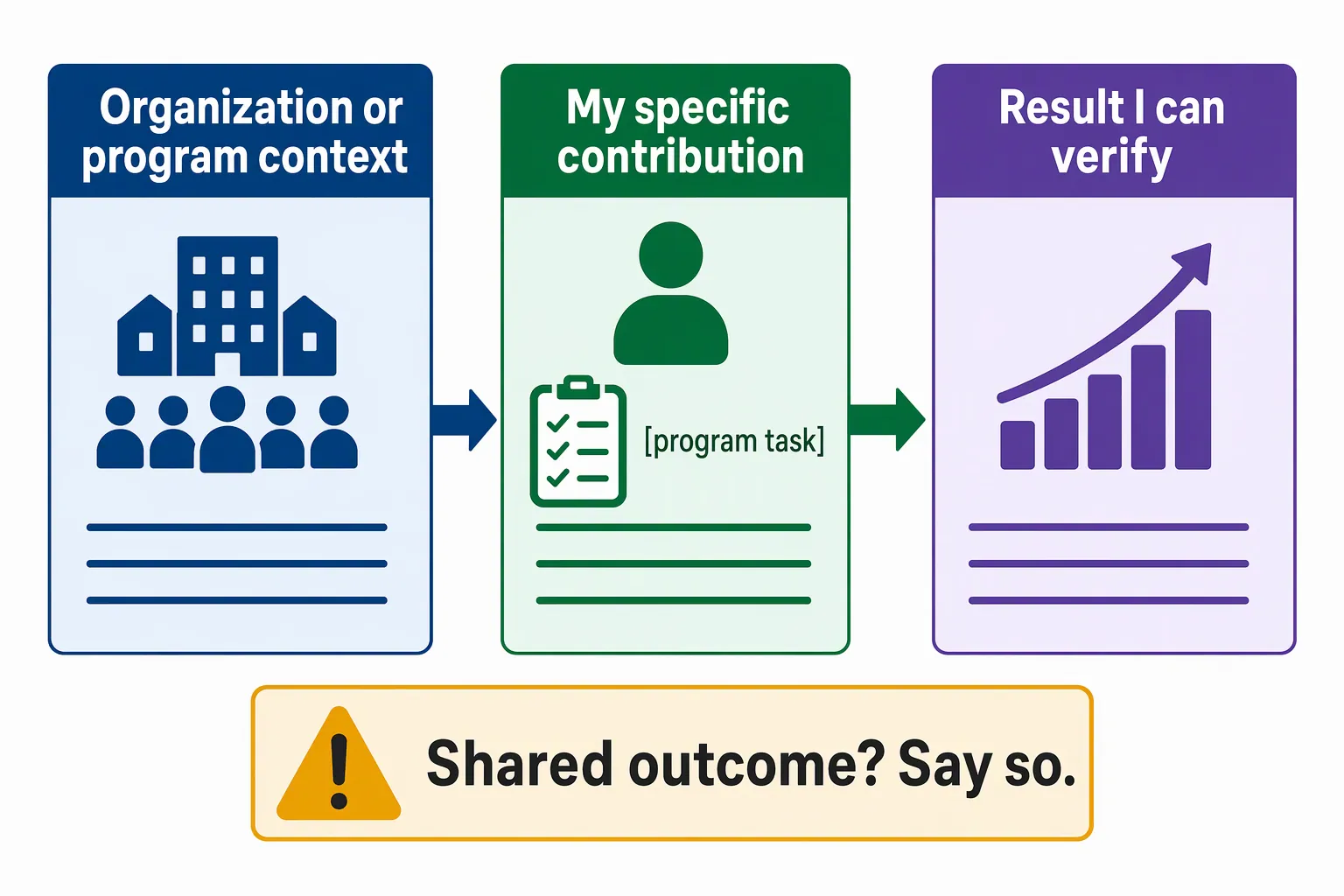
Common mistakes in a nonprofit cover letter
Using passion as the main qualification
- What goes wrong
- A letter can sound sincere but still leave out what you can contribute to the particular role.
- Better approach
- Keep a truthful reason for caring, then pair it with relevant actions and skills from your actual experience.
Assuming every nonprofit has the same needs
- What goes wrong
- References to donors, limited resources, or a particular kind of community service may not fit this organization or position.
- Better approach
- Use the posting and the organization’s own information to choose details. Describe the work this employer is asking you to do instead of relying on assumptions about nonprofits.
Claiming a shared result as your own
- What goes wrong
- Taking full credit for a team outcome or adding an unverified number can make an otherwise useful example less trustworthy.
- Better approach
- Separate what the team achieved from what you contributed. Give enough context to explain your part, and leave out figures you cannot confirm.
Treating disclosure or volunteering as required
- What goes wrong
- You may feel pressure to share private experiences or present unpaid work as proof of commitment, even when other evidence is more relevant.
- Better approach
- Share only personal details you choose to disclose. Use relevant evidence from paid work, study, or community activity when it better demonstrates your fit.
Frequently asked questions
- Do I need nonprofit experience to write a nonprofit cover letter?
- No. Explain a truthful connection to the organization’s work, then show relevant skills from paid work, study, community involvement, or another setting. Do not imply you have nonprofit experience if you do not.
- Should I mention volunteering?
- Mention it when it shows relevant involvement, knowledge, or skills. Describe what you actually did and what you learned. Volunteering is one possible source of evidence, not a requirement for every nonprofit role.
- How can I show mission fit without sounding generic?
- Name a specific part of the organization’s work and explain why it matters to you using a truthful reason or example. Then connect that interest to a responsibility in the job posting.
- Should I include fundraising or program results?
- Include results only when you can describe them accurately and explain your own contribution. If you do not have a reliable number, describe the work and its context without inventing a metric.

Put this career change approach into practice
Choose sample data or build your own cover letter, then personalize it before you download.