
Introduction
Applying to more than one opening at the same company raises a practical question: should one letter cover both, or should each application have its own? Decide based on the instructions and how closely the actual responsibilities align, not simply because the employer is the same.
Treat each application as a case for a particular role. A shared letter is useful only when the application process allows it and you can explain both the connection between the openings and your distinct fit for each. Otherwise, prepare separate letters or focus on the closer match.
What to address directly
Could applying to both make me look unfocused?
- Hiring manager concern
- A reader may find it harder to understand your direction if the roles have little in common and your application gives no reason for pursuing both.
- What your letter should prove
- Identify a real connection in the posted responsibilities, such as a shared skill or type of work. Explain why that overlap matters to you, then show what you could contribute to each role. If the connection depends on vague claims or experience you do not have, do not force the two applications into one story.
Will one letter show interest in each opening?
- Hiring manager concern
- A shared letter can explain why you want to work for the company without making clear why you are suited to either particular opening.
- What your letter should prove
- Name both posted titles and give each a specific connection to your background. The evidence can come from the same experience if it genuinely demonstrates different relevant skills, but make the link to each role explicit. Avoid saying only that you are open to any position.
What if the application instructions differ?
- Hiring manager concern
- The employer may request role-specific materials or provide separate application processes, so a combined document may not answer what a particular application asks.
- What your letter should prove
- Read the instructions for each opening before drafting. If they require a separate letter, provide one for each. If they do not explain whether one document can cover both, use separate tailored letters or ask the contact listed for application questions.
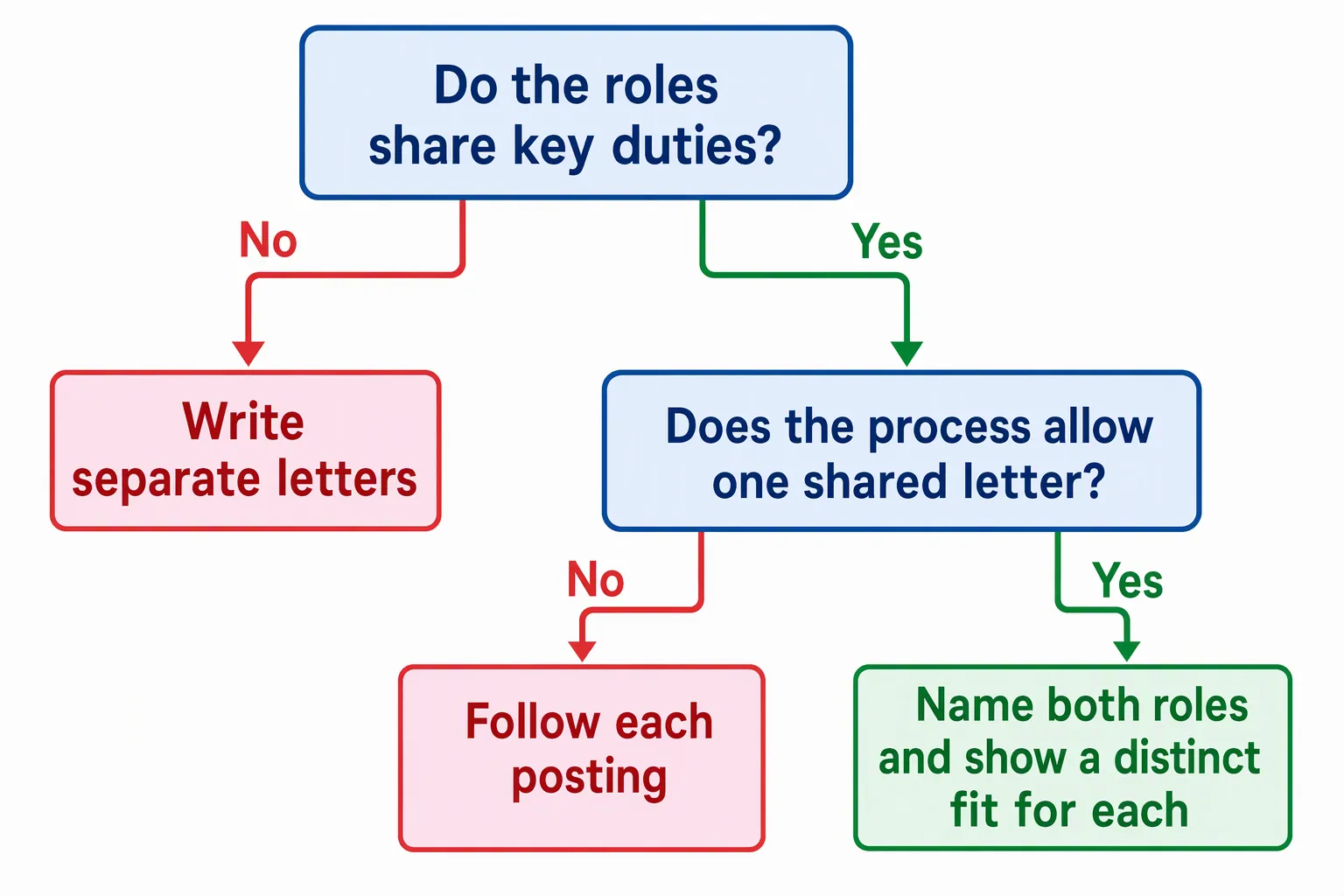
Structural approach: choose one shared letter or two focused letters
Use the usual opening, evidence, and close, but make the choice between one or two openings explicit. The standard cover letter structure is still useful; the additional task here is to keep the reader from having to guess which role each detail supports.
- 01
Compare the posted responsibilities
Read both postings and note the main responsibilities, requested skills, and any different requirements. Mark the genuine overlap and the duties unique to each role. Similar titles do not guarantee similar work, and different titles can still share relevant responsibilities.
- 02
Check each application process
Look for instructions about the number of applications, required documents, and whether one letter can address multiple openings. Do not assume that a document accepted for one role will also serve a separate application. If the instructions are unclear, ask the listed application contact when available.
- 03
Choose one letter or two
Use one shared letter when the process makes it suitable to address both roles and you can clearly explain your fit for each. Use separate letters when the instructions ask for them, the openings have substantially different responsibilities, or a combined explanation would be confusing. If neither role has a credible connection to your experience, reconsider applying to both.
- 04
Match evidence to each role
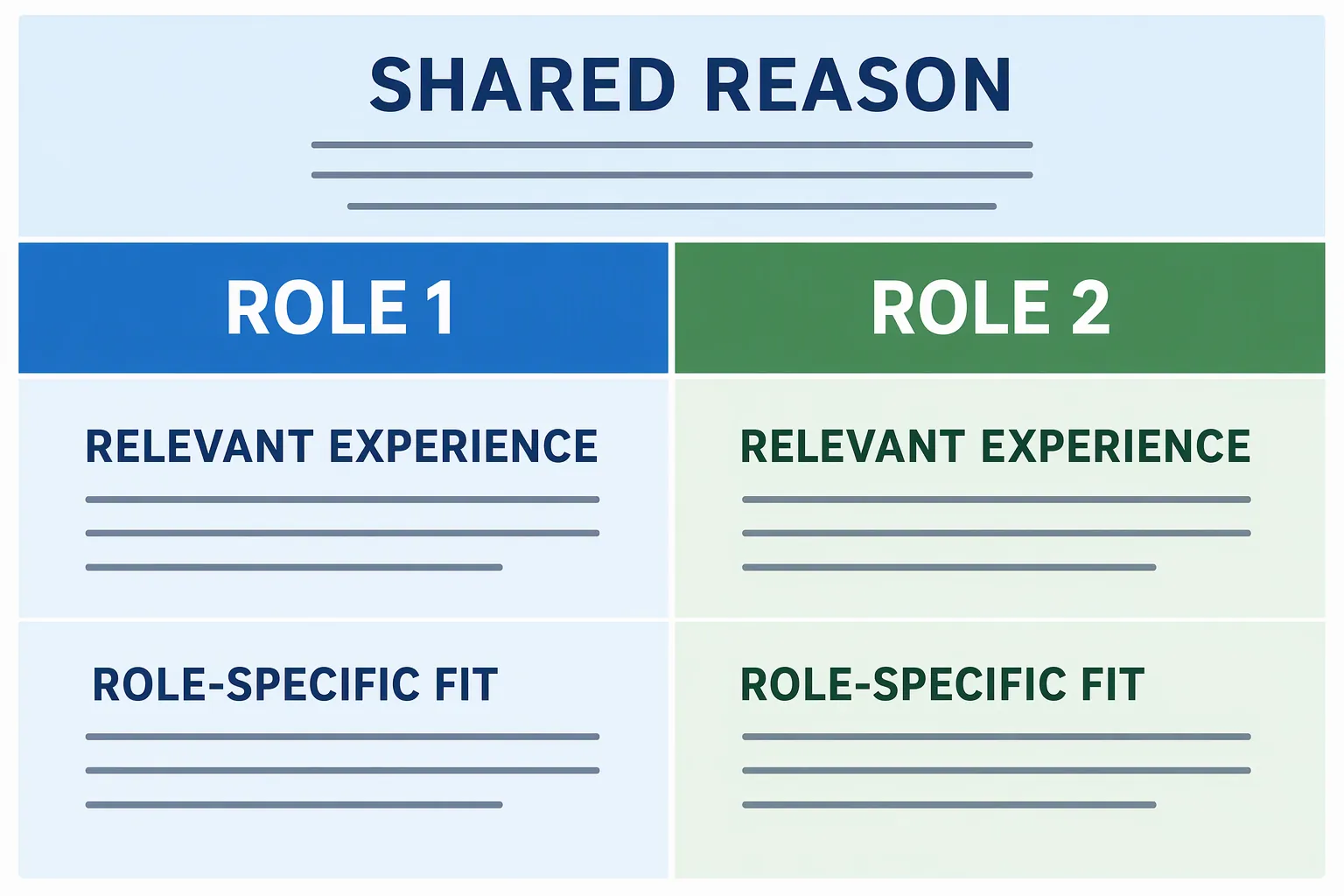
Name each role accurately and connect it to a specific, truthful example from your background. Explain the shared reason for your interest, then distinguish what your evidence supports for each opening. Before submitting, check the letter against both postings and remove claims that do not apply to one of them.
A shared letter for two related openings
This fictional example follows a posting that allows one letter for two related positions. It names both openings and connects the applicant's experience to each.
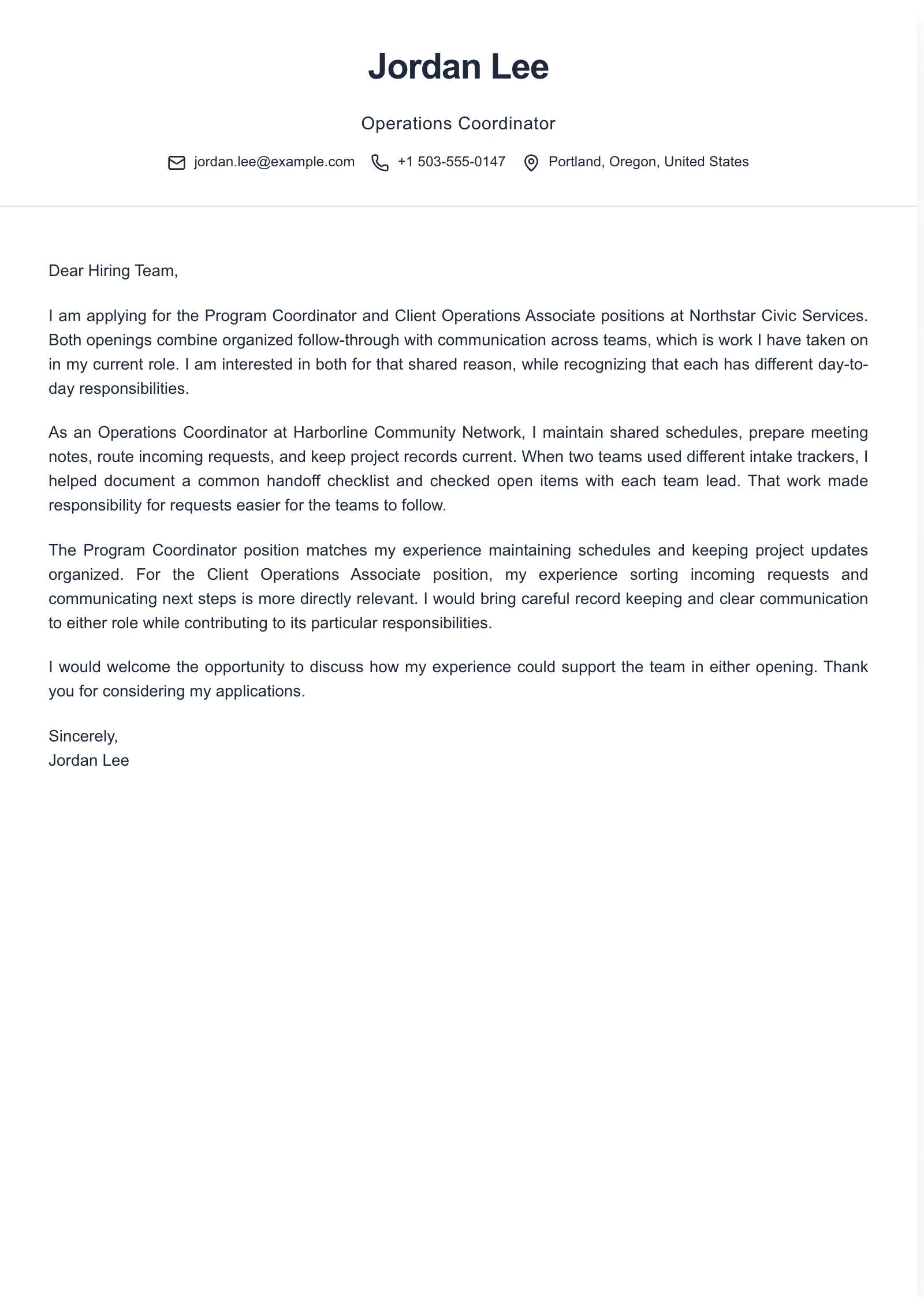
Example paragraphs
“I am applying for the [Posted Title 1] and [Posted Title 2] openings at [Company Name]. Both roles involve [shared responsibility stated in the postings], which connects with my experience [specific, verifiable example].”
“For [Posted Title 1], my experience [specific fact] relates to [responsibility from the posting]. For [Posted Title 2], [a different relevant fact] connects to [its posted responsibility]. I am interested in both because [truthful connection between the openings].”
“For the [Posted Title] opening at [Company Name], I am applying because [specific reason tied to this posting]. My experience [verifiable fact] is relevant to [responsibility stated in the posting].”
Replace each bracketed prompt with a fact you can explain in an interview. In a shared letter, keep both titles accurate and make the role-specific connections easy to distinguish. In separate letters, remove references to the other opening unless the employer asks you to explain multiple applications.
Scenario-specific mistakes when applying for multiple positions
Sending one generic letter to both openings
- What goes wrong
- A letter that only praises the company or lists broad strengths does not tell the reader why you fit either role.
- Better approach
- Name the opening or openings and connect your actual experience to responsibilities in each posting.
Forcing unrelated roles into one explanation
- What goes wrong
- If the openings involve substantially different work, a shared explanation can obscure why you are applying to each.
- Better approach
- Use separate, focused letters when you have a credible case for each role and the process allows separate applications. Otherwise, focus on the closer match.
Listing both titles without matching evidence
- What goes wrong
- Naming two openings alone does not show that you understand their different responsibilities or fit either one.
- Better approach
- Connect a specific, truthful example to each role. Do not imply that one example proves experience you do not have.
Ignoring role-specific instructions
- What goes wrong
- A shared letter may not meet a posting's request for a separate document or specific information about one opening.
- Better approach
- Check the instructions for each application. Keep each letter's title and content aligned with the role it supports, and provide separate materials when requested.
Frequently asked questions
- Should I send one cover letter or separate letters for two jobs at the same company?
- Use separate letters when each application asks for a letter about one specific role, when the roles differ substantially, or when the instructions are unclear. One shared letter can work when the application process allows you to address both openings in one document and you can explain your fit for each. Follow the employer's instructions.
- Can I apply to two different positions at the same company?
- Whether you can submit multiple applications depends on the employer's instructions and application process. Check those before applying. If multiple applications are allowed, make a truthful, role-specific case for each opening rather than sending the same generic letter.
- How do I name both jobs without sounding unfocused?
- Use the exact posted titles, state the genuine connection between the openings, and show a distinct reason your experience fits each one. If you cannot explain the fit for both without stretching your experience, focus on the closer match.
- Should I reuse the same letter for both applications?
- Do not send the same unchanged letter to separate applications by default. Tailor each letter to its posting unless the employer's process allows one shared document for both roles. In a shared letter, name both openings and distinguish your fit for each.

Put this career change approach into practice
Choose sample data or build your own cover letter, then personalize it before you download.