
Introduction
When you return to school or study while working, your experience can seem split between two timelines. A strong cover letter connects them: it shows what you learned through work, what you are learning now, and why both matter to this particular opening.
Advice for recent graduates may also fit, especially if you are finishing a degree. This page focuses on the specific task of bringing earlier work and current study together. You do not need to frame yourself by age or apologize for studying later. Explain your choice in your own words, then support your fit with relevant facts.
What to address directly
Your work and study may seem unrelated
- Hiring manager concern
- Listing a past job and a current program without explaining their connection can make your application feel unfocused.
- What your letter should prove
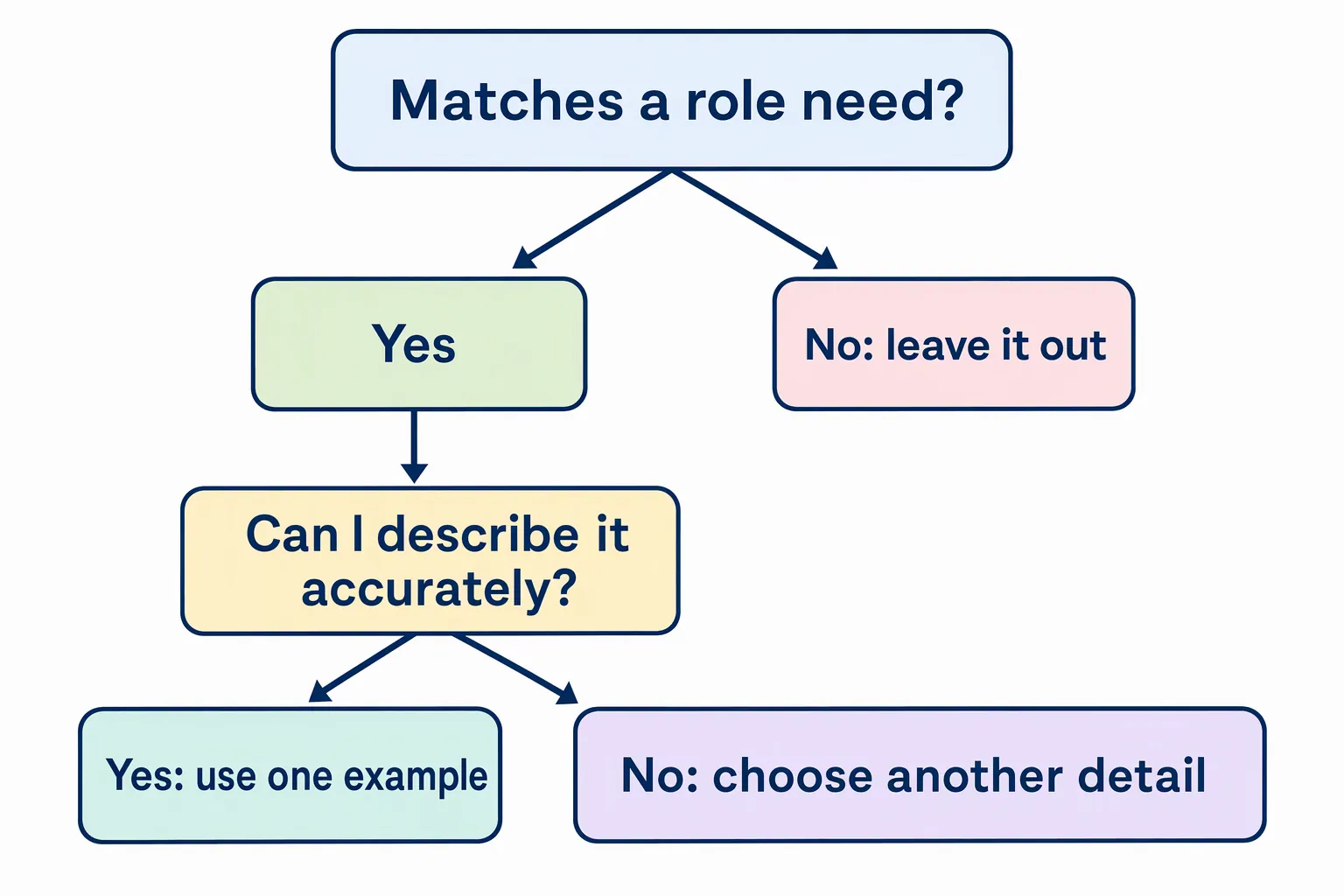
- Choose one need from the posting and connect it to something you did at work or learned in your studies. Explain the link plainly. The settings do not have to be identical; show the useful skill or knowledge they share.
You may feel you need to justify the timing
- Hiring manager concern
- Explaining every change or personal circumstance can draw attention away from what you offer for the opening.
- What your letter should prove
- Give a brief, honest reason for studying now only if it helps explain your direction. Name what you wanted to learn and how it relates to the role. Keep private details private, and do not present a personal choice as a credential.
You may have more experience than fits in one letter
- Hiring manager concern
- A long work history, current classes, and future goals can compete for space and obscure your strongest evidence.
- What your letter should prove
- Select details for this opening, not a complete account of your life. Keep job titles and responsibilities accurate. Include a detail when it helps explain a role requirement or makes your current study relevant.
Structural approach: connect work, study, and a role need
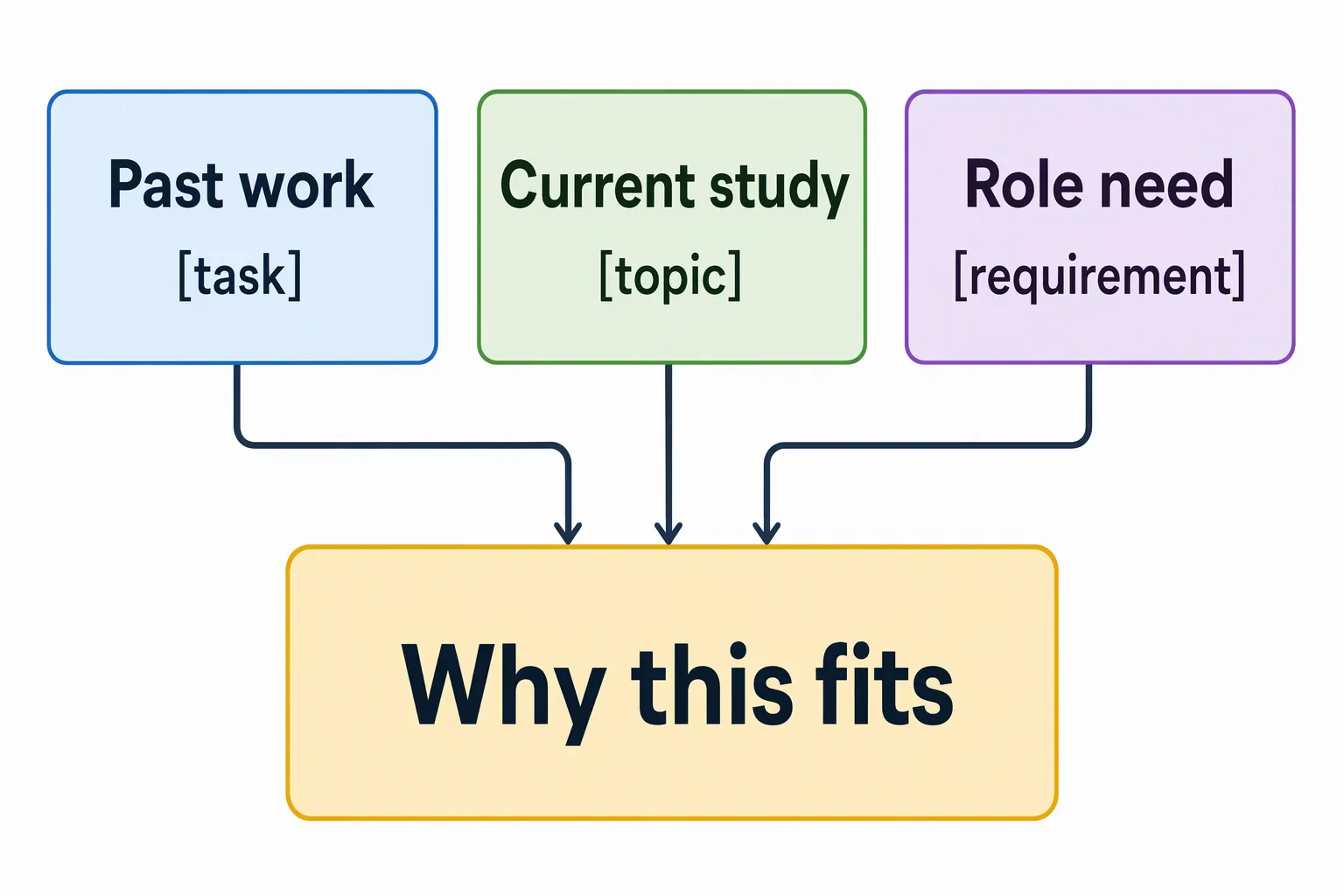
Build the letter around a clear relationship, not a timeline of every job and course. Open with the [Job Title] at [Company Name] and a specific reason it interests you. Then connect one relevant work example and one detail from your current study to a need in the posting. To choose evidence, map your transferable skills to the target role. The link offers another way to sort skills; the steps here explain how to make the connection in this letter.
Use each detail for a purpose. Your work example shows what you have done; your study detail shows what you are learning; your explanation shows why combining them matters to this opening.
- 01
Name the opening and your current direction
Identify the [Job Title] and [Company Name], then say what draws you to this opportunity. State your current study accurately, such as a program in progress or a course you are taking. Do not imply that you have completed a qualification if you have not.
- 02
Choose one relevant work example
Look for a task or responsibility from earlier work that relates to a need in the posting. Describe what you did and the skill it shows. Keep your original job title and describe your responsibility accurately.
- 03
Connect the example to current study
Add one specific detail from your education, such as a subject, assignment, or method you are learning. Explain how it complements your work example or relates to a stated role need. Do not treat enrollment as proof of expertise you have not gained.
- 04
Explain why this field now
Give your own concise reason for bringing work and study together at this point. Tie it to the role rather than offering a general life story. Close by expressing interest in discussing how your background and current learning fit the opening.
See a mature student cover letter example
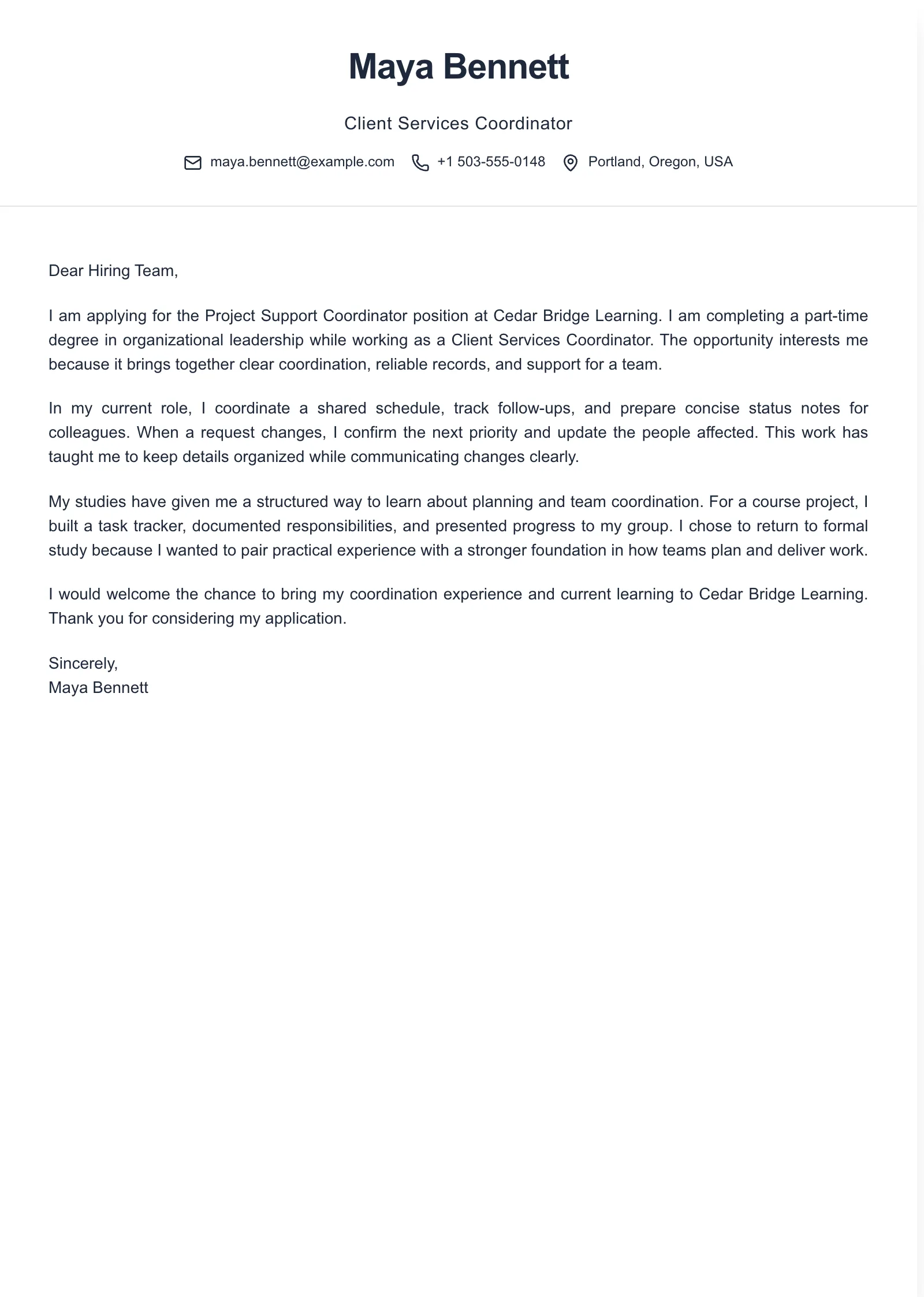
This fictional example connects previous work and a degree in progress to a specific opening, without making age the focus.
Example paragraphs
“In my work as [Previous Job Title], I [specific task or responsibility], which strengthened my ability to [relevant skill]. I would bring that experience to the [Job Title] role at [Company Name], where the posting highlights [specific requirement].”
“While completing [Program or Course Name], I have been learning [specific subject or method]. In [specific assignment or project], I used that learning to [factual action or result], giving me a foundation for [relevant responsibility] at [Company Name].”
“I chose to study [Field or Subject] because [brief, truthful reason]. My experience with [specific work task] and current learning in [specific topic] have clarified why I want to contribute as a [Job Title] at [Company Name].”
Use these as paragraph models, not claims to copy. Replace each bracket with a detail you can support, and make the link between work, study, and the opening clear. Separate coursework from paid work, and do not suggest that a course is complete when it is still in progress.
Common mistakes in a mature student cover letter
Making age the explanation
- What goes wrong
- Calling attention to being older than other students or apologizing for returning to school can shift the letter away from your qualifications and the role.
- Better approach
- Describe your current study and, if useful, why you chose it. Let relevant experience and evidence show what you bring; age is not a substitute for either.
Writing a full life story
- What goes wrong
- Explaining every job change, study decision, or personal circumstance can crowd out the details that connect you to the opening.
- Better approach
- Include only the context a reader needs to understand your direction. Keep personal information brief and optional, and use the letter to show evidence related to the posting.
Overstating what study proves
- What goes wrong
- A current class may build useful knowledge, but it does not automatically mean you have mastered a subject or performed a task at work.
- Better approach
- Name what you are studying and give a precise example of what you have done so far. Separate coursework from paid work, and describe your experience honestly.
Hiding or rewriting past roles
- What goes wrong
- Changing an original job title or suggesting that earlier work was more senior can create confusion and undermine trust.
- Better approach
- Keep titles and responsibilities factual. Select the relevant parts of your background and explain how they connect to the role instead of altering their history.
Frequently asked questions
- Should I mention my age in a mature student cover letter?
- You do not need to mention your age just to explain your fit. Focus on relevant work, current study, and your reason for pursuing the role. Follow the application instructions, and avoid personal details that do not help explain your application.
- How do I explain returning to school while working?
- Give a short, personal reason for choosing to study now, then show how that learning relates to the work you want to do. Name your program or subject accurately, and do not imply that study alone replaces relevant practical experience.
- Should I include older work experience?
- Include earlier experience when it supports a need in the posting or helps explain your direction. Choose a concrete example rather than listing your full history in the letter, and keep dates and job titles accurate.
- How does this overlap with a recent-graduate cover letter?
- The scenarios can overlap, especially if you are finishing a degree now. This guide focuses on the specific task of connecting earlier work with current study in a role-specific letter. Use the advice that fits your situation rather than treating the categories as strict.

Put this career change approach into practice
Choose sample data or build your own cover letter, then personalize it before you download.