
Introduction
A management trainee cover letter should make a case for this specific training opportunity, not simply announce a wish to become a manager. Use one truthful example of taking responsibility in work, education, or a community setting, then connect it to a feature the posting actually describes. You can show initiative without claiming a formal management title or inventing results.
Programs differ. Refer to rotations, mentoring, projects, or promotion only when the employer's description supports the detail. If the posting says little about program structure, explain your interest using its stated responsibilities and learning goals instead. This page focuses on program fit and evidence for a management trainee application. It can also help a recent graduate, but that is not a separate kind of letter.
What to address directly
Leadership without a manager title
- Hiring manager concern
- You may have guided a task or coordinated a group without formal authority. Calling that experience management can overstate your role and distract from what you actually contributed.
- What your letter should prove
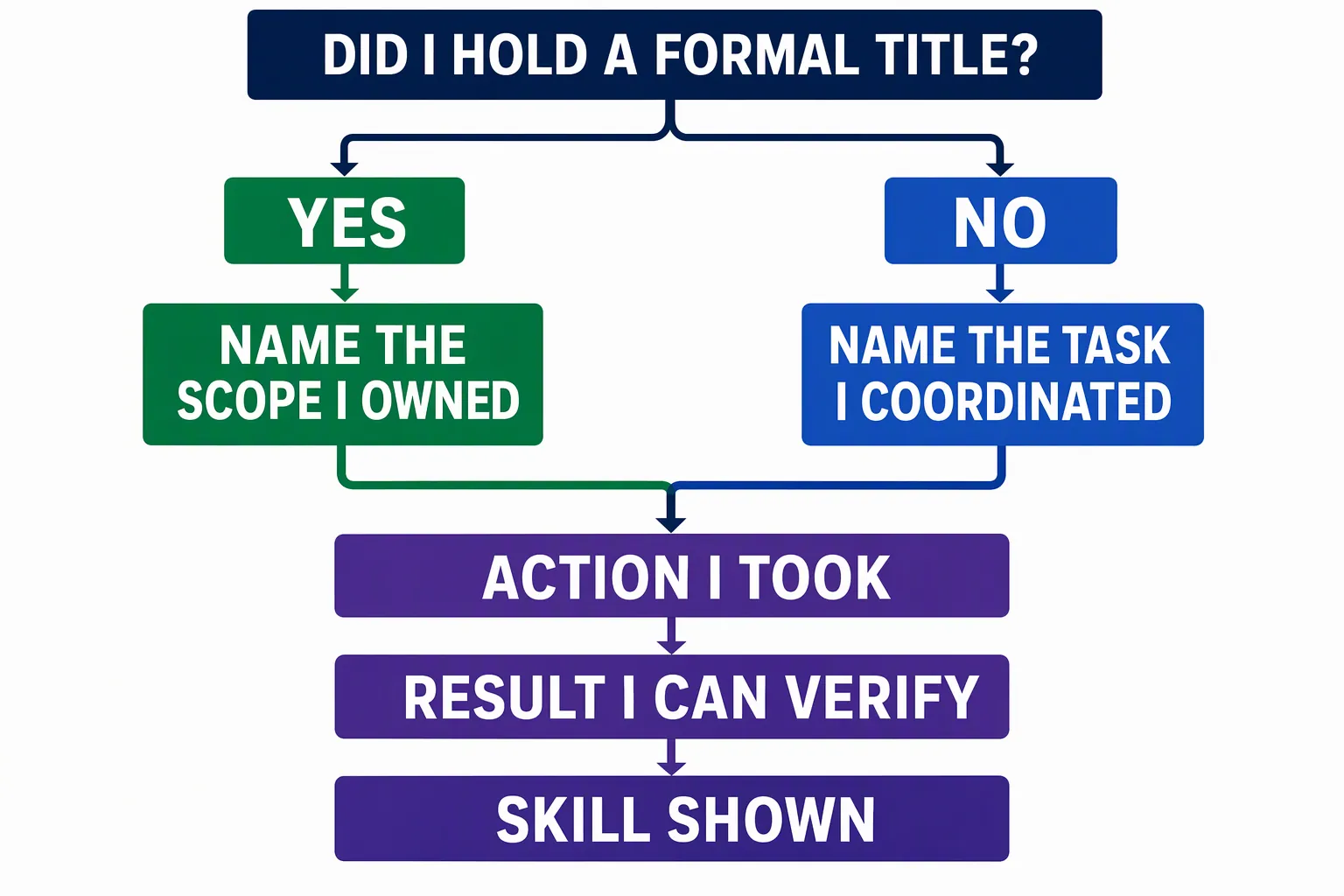
- Name the responsibility you held and the setting. Explain what you organized, decided, or followed through on, then give a result you can support. Leadership evidence can be useful without a management title; precision makes the example more credible.
Making a case for this program
- Hiring manager concern
- A general claim that you want to learn every part of a business does not show that you understand this particular opportunity. It may also suggest a program feature the employer never offered.
- What your letter should prove
- Choose one detail from the posting, such as a named rotation, project, or training activity. Connect it to an experience, skill, or learning goal that is genuinely relevant to you. If the posting does not describe rotations, do not use them as your reason for applying.
Limited experience or unclear eligibility
- Hiring manager concern
- The trainee title alone does not establish that a program has no experience requirements or that you qualify. Guessing can lead to unsupported claims about eligibility.
- What your letter should prove
- Check the qualifications in the specific posting. If you meet them, draw on a real example from work, education, or community activity and explain your contribution. If a requirement is unclear, do not present an assumption as confirmation that you are eligible.
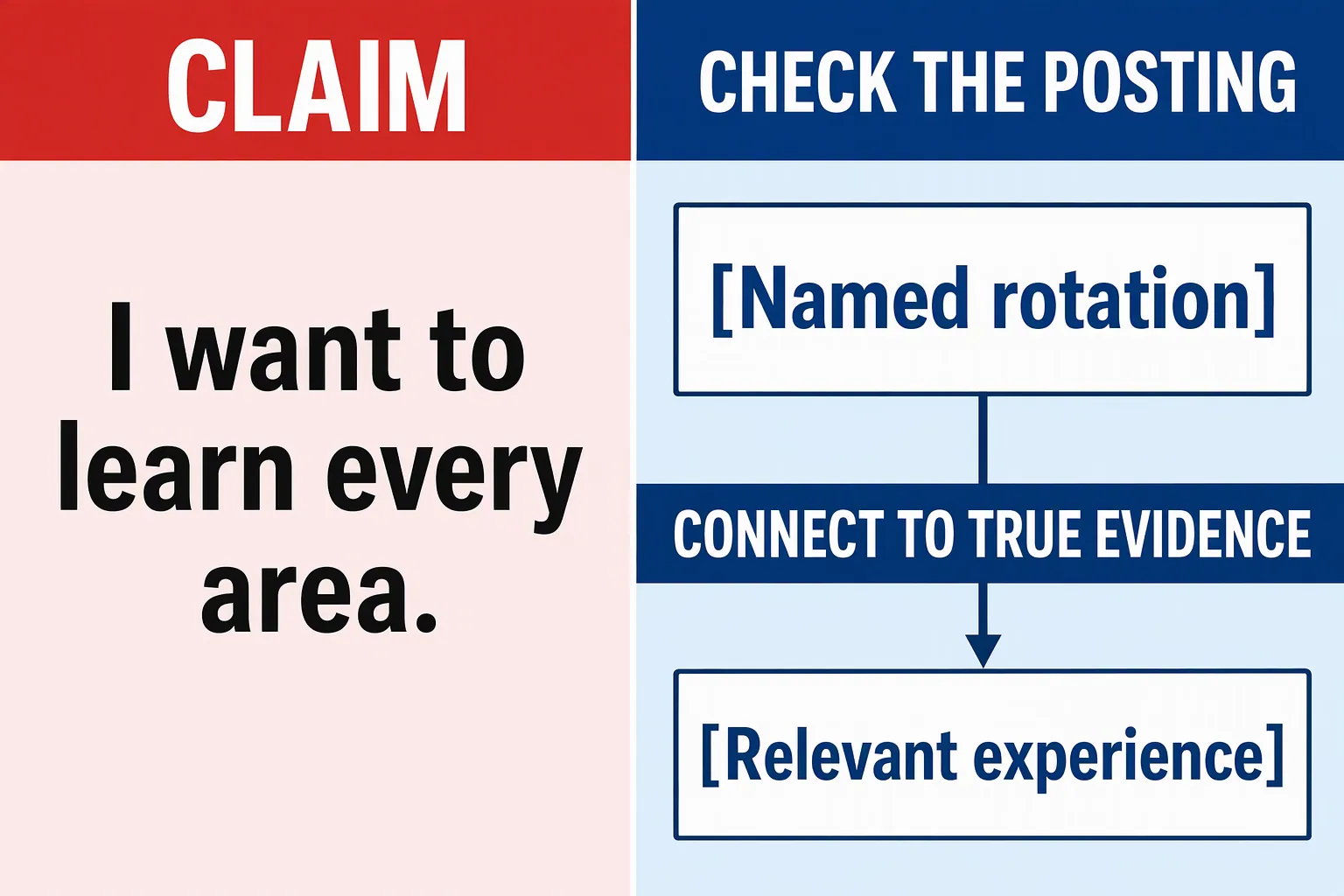
Structural approach: connect evidence to the program
Build the letter around one clear link: what the posting says the program offers, what responsibility you have handled, and what you can contribute while learning. Keep the example factual and your reason for applying specific to the employer. For general paragraph order, see cover letter structure; the program-specific reasoning belongs here.
Use these four moves to make the connection clear. Each move should add relevant information rather than repeat your resume or claim experience you do not have.
- 01
Find a program detail
Read the posting and choose a stated feature that genuinely interests you, such as a named rotation, learning activity, or area of responsibility. If the posting does not describe a feature, do not imply it is part of the program.
- 02
Choose one responsibility
Pick a real example where you took ownership, coordinated a task, or helped a group meet a goal. State the setting and your part in it. A formal management role is not necessary to describe an accurate contribution.
- 03
Explain the connection
Relate the example to a skill or learning goal in the posting. For instance, connect coordinating a shared task to a listed team responsibility. Explain what you learned without suggesting that one experience makes you fully prepared to manage.
- 04
Close on your contribution
Restate why this specific program fits and the relevant strength you would bring. Keep qualifications, availability, and any work authorization statements accurate. Do not promise a future management outcome or an assignment the employer has not offered.
Management Trainee Cover Letter Example
This fictional example connects a candidate's coordination experience to a program detail in the posting without claiming a past manager title.
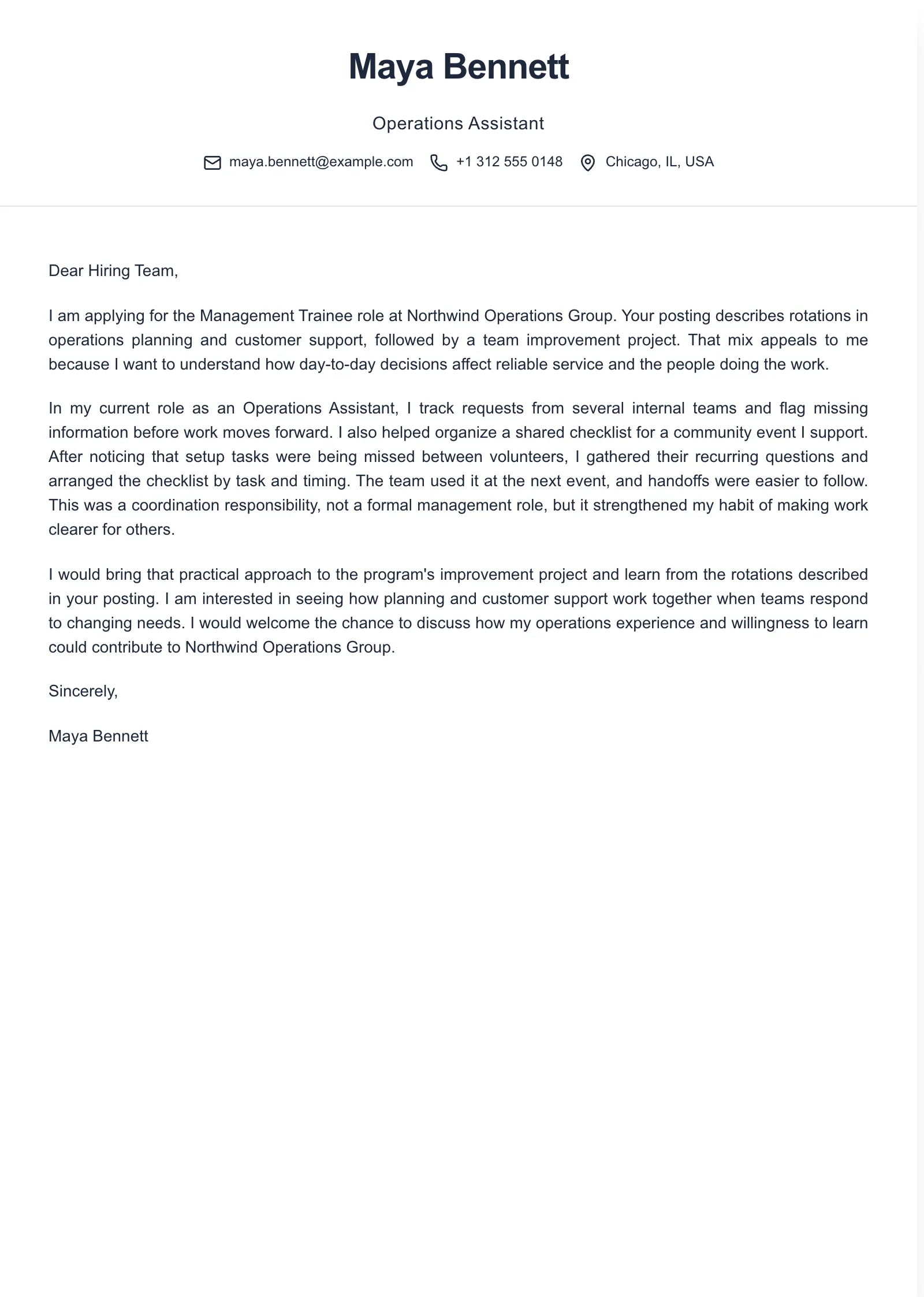
Example paragraphs
“I am applying for [Job Title] at [Company Name] because the posting describes [specific rotation, learning feature, or responsibility]. In [factual setting], I [specific action], which taught me [relevant lesson]. I would bring [relevant skill] while learning more about [area named in the posting].”
“In [school, work, or community setting], I was responsible for [specific task]. I [action you took] with [people or resources involved], leading to [verifiable outcome]. That experience relates to [Job Title] at [Company Name] because [specific connection]. My actual title was [accurate title].”
“During [course, project, volunteer activity, or other real setting], I [specific contribution] when [factual challenge]. The result was [outcome you can support]. I would bring that approach to [Job Title] at [Company Name] and build on it through [program feature confirmed in the posting].”
Treat each paragraph as a framework, not a claim to copy. Replace every bracket with a true detail and remove anything you cannot support. If you have not held a formal leadership title, describe your action and its scope instead of labeling yourself a manager. Use numbers only when you can verify them. Make sure the program feature in your example appears in the actual posting.
Common mistakes in management trainee cover letters
Naming ambition but not the program
- What goes wrong
- Saying you want to become a manager does not explain why this training opportunity suits you.
- Better approach
- Name a relevant detail from the posting and connect it to a real skill, responsibility, or learning goal.
Assuming rotations or promotion are guaranteed
- What goes wrong
- Assuming a placement, rotation, or promotion that the posting does not promise can misrepresent the opportunity.
- Better approach
- Refer only to program features the employer states. Describe your interest without predicting an assignment or outcome.
Inflating a title or level of authority
- What goes wrong
- Calling yourself a manager because you coordinated one task makes your experience less precise.
- Better approach
- Keep your actual title unchanged. Explain the task you owned, the decisions you made, and the people you worked with.
Apologizing for limited experience
- What goes wrong
- A long apology can bury relevant evidence, while a generic claim such as being a natural leader gives the reader little to assess.
- Better approach
- Check the stated eligibility, then give one specific example from a truthful setting. Focus on your contribution and a supportable outcome, not on what you have not done.
Frequently asked questions
- Do I need a management title to apply for a management trainee program?
- Not necessarily. Check the program's stated eligibility, then give a truthful example of taking responsibility, coordinating work, or helping a group meet a goal. Describe what you did, not a title you did not hold.
- Can I write a management trainee cover letter with no work experience?
- If you meet the program's stated eligibility requirements, you can use a relevant example from education, volunteering, or another real setting. Be specific about your contribution, and do not present a class exercise as paid work.
- Should I mention rotations in my cover letter?
- Mention rotations when the posting describes them. Name a relevant area and connect it to something you have done or want to learn. Do not assume a program includes rotations or promise that you will be assigned to a particular team.
- How is this different from a recent graduate cover letter?
- The two can overlap: a recent graduate may apply to a management trainee program. Focus this letter on the specific program and evidence of readiness to learn responsibility, rather than treating graduation status as a different letter type.

Put this career change approach into practice
Choose sample data or build your own cover letter, then personalize it before you download.