
Introduction
Applying for a lower-level position can be a deliberate choice, not a retreat you need to defend. Your cover letter should make two points clear: why this role’s actual scope suits you now, and why you are ready to do its everyday work.
A title alone may not show what the job involves: authority and responsibilities vary between organizations. Refer to the duties and scope described in this posting rather than assuming what a lower-level label means. This page focuses on choosing a role at a lower level; for the separate concern that your experience may seem too senior, see guidance on overqualified resumes.
What to address directly
Why choose this role’s scope?
- Hiring manager concern
- If the letter only says you are interested, the reason for applying at this level may remain unclear. You do not need to justify your entire career path, but a specific reason can connect your choice to this position.
- What your letter should prove
- Give a direct, true reason tied to the work. You might want to focus on a particular task, move away from managing people, or choose a scope that fits your current priorities. Use only the reason that reflects your situation.
Do you understand the daily work?
- Hiring manager concern
- A different title does not, by itself, tell you whether the job involves simpler work, less responsibility, or a particular pay level. Assuming what the position involves can make your explanation miss its actual scope.
- What your letter should prove
- Refer to duties and expectations the employer actually describes. Show that you have considered recurring tasks and how you would contribute. Do not claim to understand conditions the posting does not provide.
Are you interested in this work, not just the title change?
- Hiring manager concern
- Your explanation may feel incomplete if it focuses on leaving a more senior title without showing what attracts you to the work in this position.
- What your letter should prove
- Explain what appeals to you about the duties and give evidence that you have done related tasks. Avoid promises about future tenure. A credible reason and specific fit are more useful than saying you will never want another kind of role.
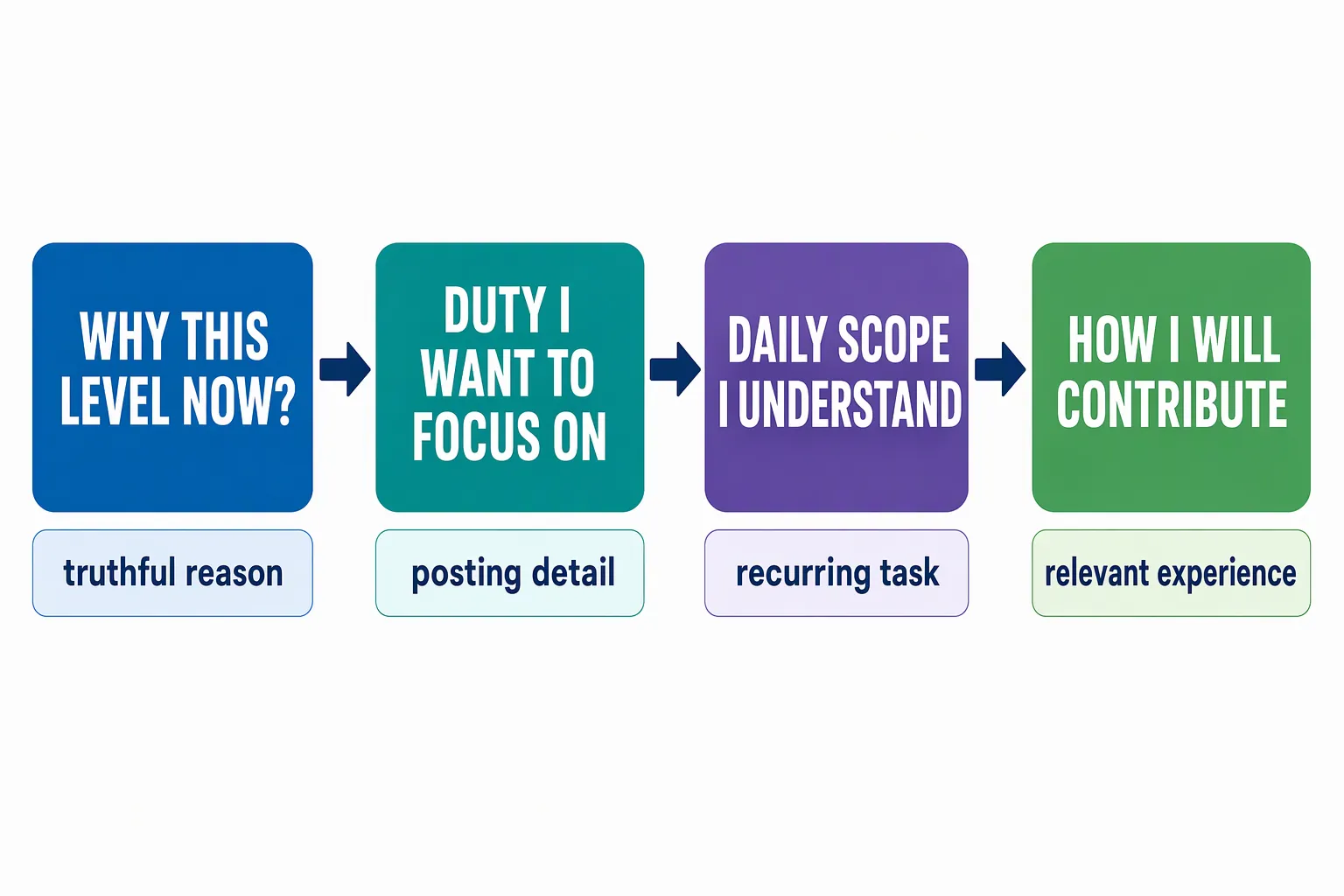
Structural approach: explain the choice and match it to the work
Keep the letter focused on this application. State the role, explain why its scope is right for you now, connect relevant experience to its duties, and close by confirming your interest in contributing at that level. The lower title alone is not the reason; describe the work you are choosing.
The cover letter structure guide explains the general purpose of each paragraph. For this application, adapt that structure around the level difference: name it briefly if needed, then show why the responsibilities are a considered fit.
- 01
Name your reason plainly
Write one honest sentence about why this role’s scope appeals to you now. Be specific enough to distinguish a considered choice from general willingness to accept any position. Do not invent a personal explanation to make the move sound simpler.
- 02
Connect your reason to the posting
Choose one or two duties the employer identifies and explain why you want to focus on them. If your reason is to do more hands-on work, point to a named task in the posting rather than assuming what hands-on means there.
- 03
Show relevant evidence
Use an accurate example of doing related work, even if you handled it alongside broader responsibilities. Describe your part and a detail or result you can support. Keep your former title accurate; connect your experience through your responsibilities, not a changed job label.
- 04
Make your commitment credible
Acknowledge the role’s actual scope and say what you are prepared to contribute within it. Do not imply that routine duties are beneath you or describe the position as a brief stop on the way to a higher title.
A lower-level position cover letter example
This is a fictional example of someone moving from a management title to a narrower coordination role. Notice how the reason centers on the work, not an apology for the title difference.
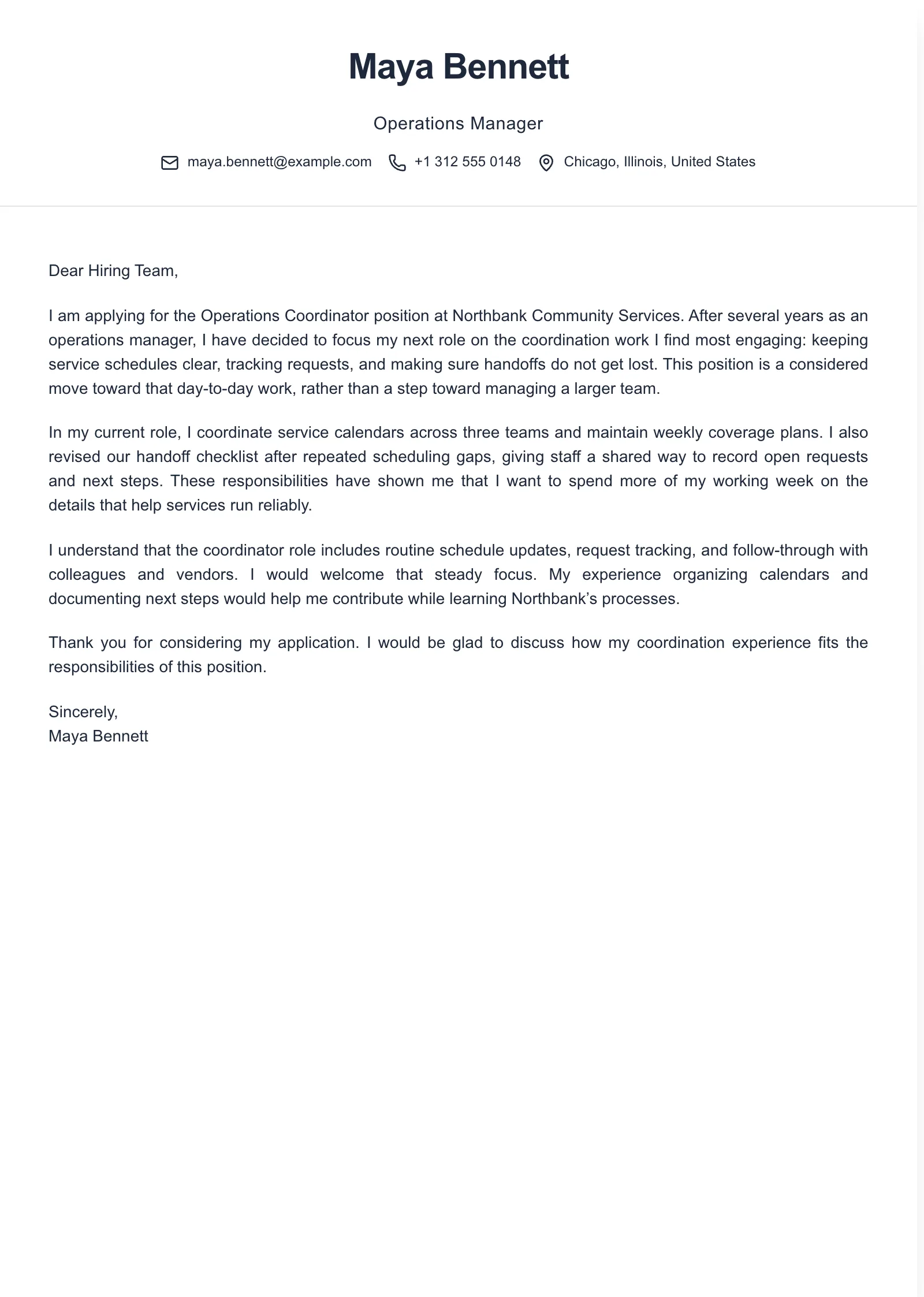
Example paragraphs
“I am applying for [Job Title] at [Company Name] because [specific duty] is the work I want to focus on next. In my current role as [accurate Current Title], I have handled [verified task or result], and I am deliberately seeking a position centered on [target responsibility].”
“The [specific responsibility] described for [Job Title] at [Company Name] matches work I have done through [accurate example]. My contribution was [factual action or result], which gives me a useful starting point for this role’s day-to-day responsibilities.”
“I am interested in [Job Title] at [Company Name] for its focus on [recurring duty]. I understand the position includes [specific routine responsibility], and my experience with [relevant evidence] would help me contribute to that work.”
Use these as adaptable paragraphs, not a complete letter. Replace every bracket with a fact you can support, and keep the reason consistent with the duties in the posting. Avoid calling the role easier or simpler unless the employer’s description supports that wording.
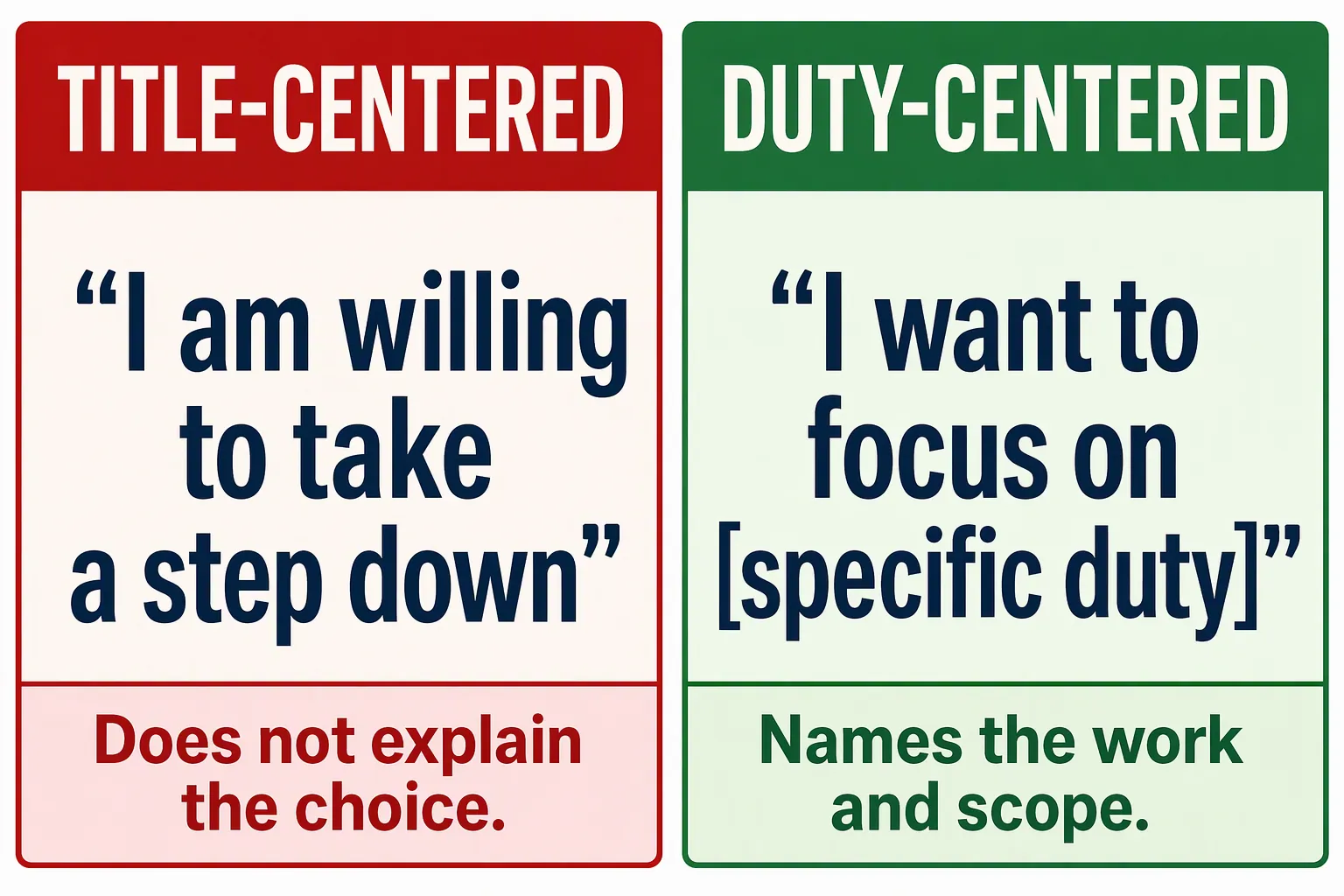
Common mistakes when explaining a lower-level move
Apologizing for the title difference
- What goes wrong
- Calling the move a failure or repeatedly saying you are willing to accept less makes the explanation sound defensive. It does not tell the reader why you want the work.
- Better approach
- State your reason once and connect it to the role’s duties. Use neutral language about the scope you are choosing.
Making the role sound like a fallback
- What goes wrong
- Saying you will take any position, or emphasizing that you hope to move up quickly, can make your interest in this job seem unclear.
- Better approach
- Explain what you want to contribute in this role and why its responsibilities fit now. Do not make promises about promotion or tenure.
Assuming lower level means easier work
- What goes wrong
- Describing the job as easy, less demanding, or less responsible without evidence can make your explanation disconnected from its actual scope.
- Better approach
- Use the posting’s language to identify the work and expectations. Address the responsibilities as they are presented, not as you imagine them.
Changing your past title or overstating your fit
- What goes wrong
- A changed title or inflated claim may make your experience inconsistent and distract from the real connection to the role.
- Better approach
- Keep your employment history accurate. Explain the relevant tasks you handled and the evidence that connects them to this position.
Frequently asked questions
- Should I say that the role is a step down?
- You can explain plainly that you are choosing a role with a narrower or different scope, if that is accurate. Focus on why its actual duties suit your goals instead of presenting the move as a sacrifice or apologizing for it.
- How can I show that I will not leave as soon as a more senior role appears?
- Explain why the work itself fits what you want to do now. Refer to relevant tasks you have chosen or enjoyed, and show that you understand the role’s regular responsibilities. Do not promise how long you will stay.
- Do I need to explain a personal reason for choosing a lower-level role?
- Only include personal details that help explain your decision and that you are comfortable sharing. You can keep the explanation focused on work scope, priorities, or the duties you want to take on.
- Should I change my previous job title to make the move look more natural?
- No. Use your accurate title and describe the work that connects to the role. You can emphasize relevant responsibilities without changing your work history.

Put this career change approach into practice
Choose sample data or build your own cover letter, then personalize it before you download.