
Introduction
A leadership position cover letter should make your relevant scope clear. Explain what you decided or influenced, who or what the work affected, and what changed. A lead, senior, or director role may call for different kinds of evidence, so choose examples that match the responsibilities in the posting rather than relying on the title alone.
If you have not held a formal leadership title, you can still describe relevant responsibility without suggesting that you managed people when you did not. Whether a posting calls the document a cover letter or an application letter, follow its requested format. This guide focuses on making your leadership evidence specific and truthful, including for candidates considering school leadership roles.
What to address directly
Show a decision, not just participation
- Hiring manager concern
- Statements such as “I am a natural leader” or “I am a strategic thinker” do not explain what you were responsible for. Without a concrete example, the reader cannot tell what you contributed.
- What your letter should prove
- Name a real choice you made or influenced, the constraint you considered, and the reason for your approach. If someone else owned the decision, describe your contribution accurately rather than implying sole authority.
Make the scope understandable
- Hiring manager concern
- A title alone may not show whether your work involved a project, a team, several functions, or broader organizational responsibility. Headcount is only one possible measure of scope.
- What your letter should prove
- Describe the relevant people, work, decisions, resources, or relationships involved. Clarify whether you managed, coordinated, advised, or contributed. Add figures only when you can verify them and they help explain the work.
Connect outcomes to your own contribution
- Hiring manager concern
- A large claim without context can sound inflated, while taking sole credit for a shared outcome can misrepresent the work.
- What your letter should prove
- Explain what you personally changed and how you know what followed. For a shared result, identify the collaboration and your contribution. If you do not have a reliable metric, use a specific observable change rather than making one up.
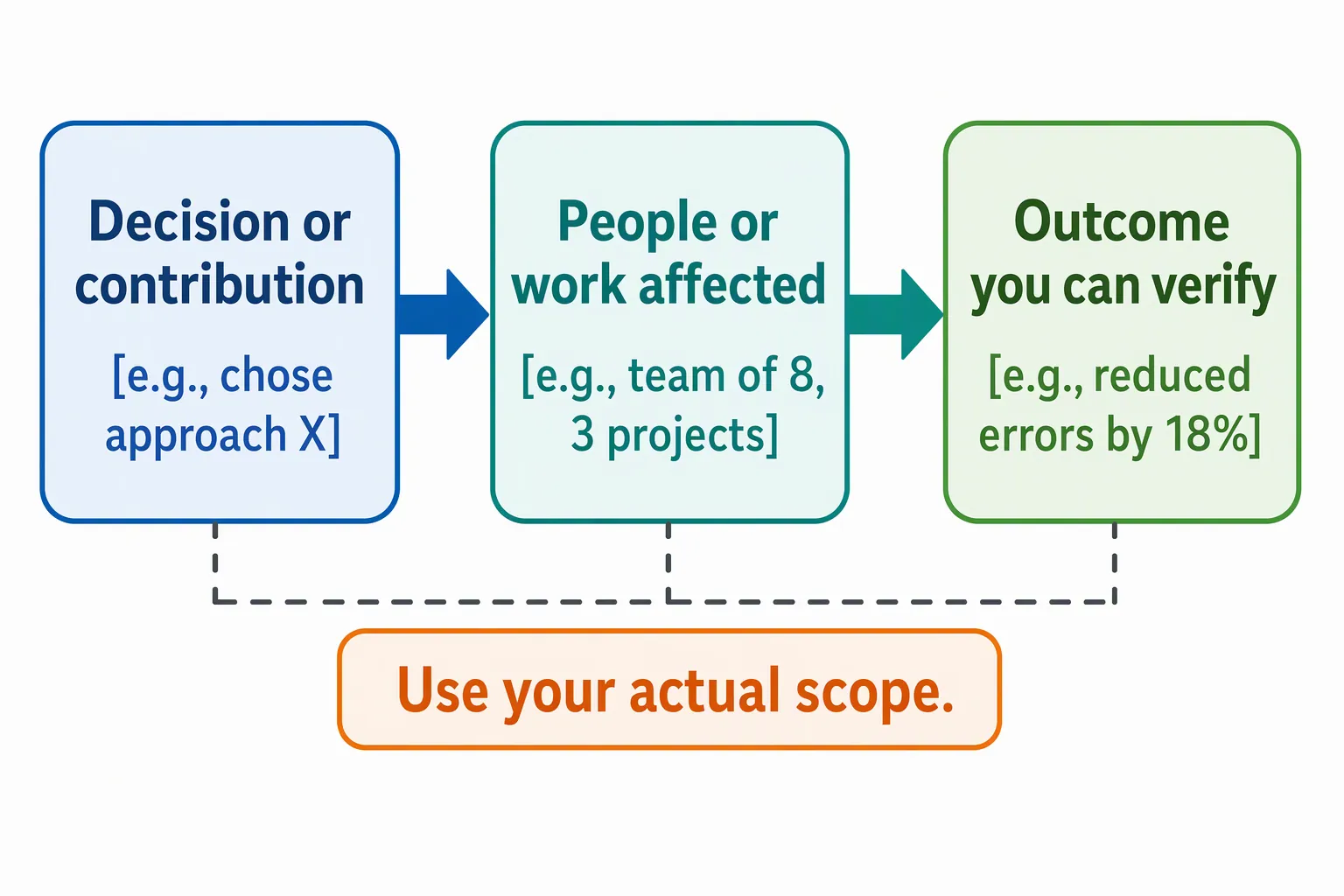
Structural approach for a leadership position cover letter
Keep the letter focused on leadership needs stated in the posting. A useful cover letter structure can organize the message, but select evidence for this role's actual responsibilities. A team lead might need to show coordination and sound decisions; a director might need to show broader priorities or influence. Describe only responsibilities you actually held.
Build the body around one or two examples that let the reader follow your role, action, and result. Scope can include decisions, dependencies, resources, or accountability, not only the number of people involved. Close by connecting your evidence to a stated need in the role. Do not claim to know the employer's internal problems or promise results you cannot know in advance.
- 01
Identify the role's leadership demands
Read the posting for decisions, team responsibilities, goals, and working relationships. Note required qualifications and any separate application instructions. Choose only the responsibilities that connect to evidence you can explain.
- 02
Select evidence that matches the scope
Choose an example where your responsibility is clear. Note the context, the decision or action you took, who or what it affected, and the outcome. Use broader scope for a senior role only when it reflects your actual experience.
- 03
Describe the result carefully
Use a reliable figure only when you can verify it and give enough context to explain it. Otherwise, name an observable outcome, such as a clarified process or resolved handoff. Distinguish your contribution from work shared with colleagues.
- 04
Connect your evidence to this opening
Refer to a specific responsibility or priority in the posting and explain how your experience relates. Keep the letter consistent with your resume and application answers. If the employer requests separate criteria responses, follow those instructions rather than assuming the letter replaces them.
Leadership position cover letter example
Preview a fictional example connecting a candidate's decision, team scope, and outcome to a director-level opportunity.
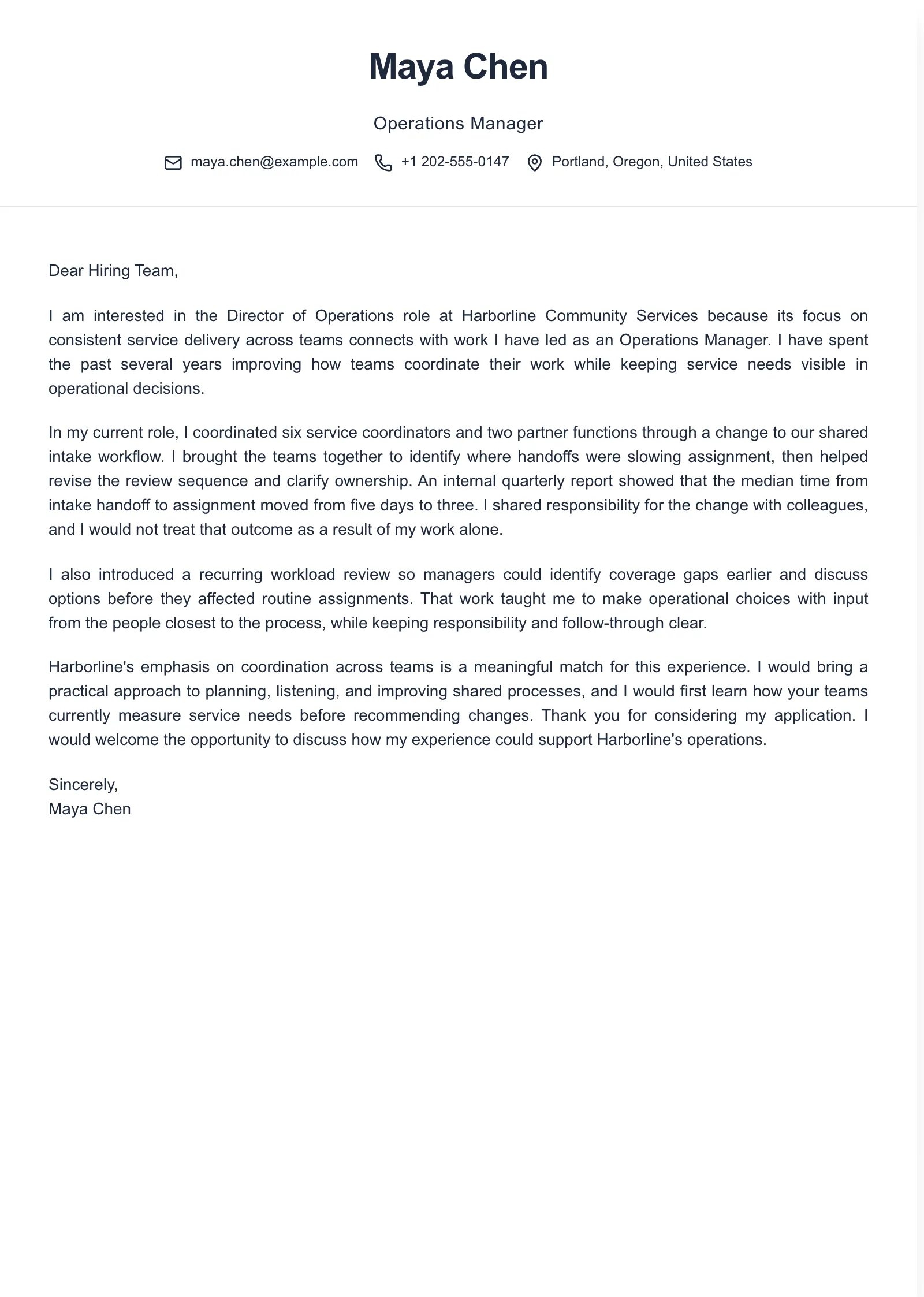
Example paragraphs
“I am applying for [Job Title] at [Company Name] because [specific responsibility or stated priority] matches my experience with [relevant, factual experience]. In [previous role or project], I [specific action you took], which helped [verifiable result or observable change].”
“While working as [accurate previous title], I coordinated [team size, functions, or other factual scope] during [specific situation]. I chose to [decision or action] because [relevant constraint], and [verifiable result or observable outcome] followed. My contribution was [precise description of your part].”
“The focus on [specific duty in the posting] at [Company Name] connects with my work on [relevant example]. I would bring experience in [factual skill or responsibility] and would first learn [important context to verify] before recommending a course of action in the [Job Title] role.”
Use these as paragraph patterns, not claims to copy. Replace every bracket with details you can explain. If an outcome was shared, describe the team's work and your own contribution separately. If you have not led employees, use a project, study, volunteer, or coordination example only when it genuinely demonstrates relevant responsibility. Do not imply formal authority that you did not have. A specific account of your actual contribution is more useful than an impressive claim you cannot support.
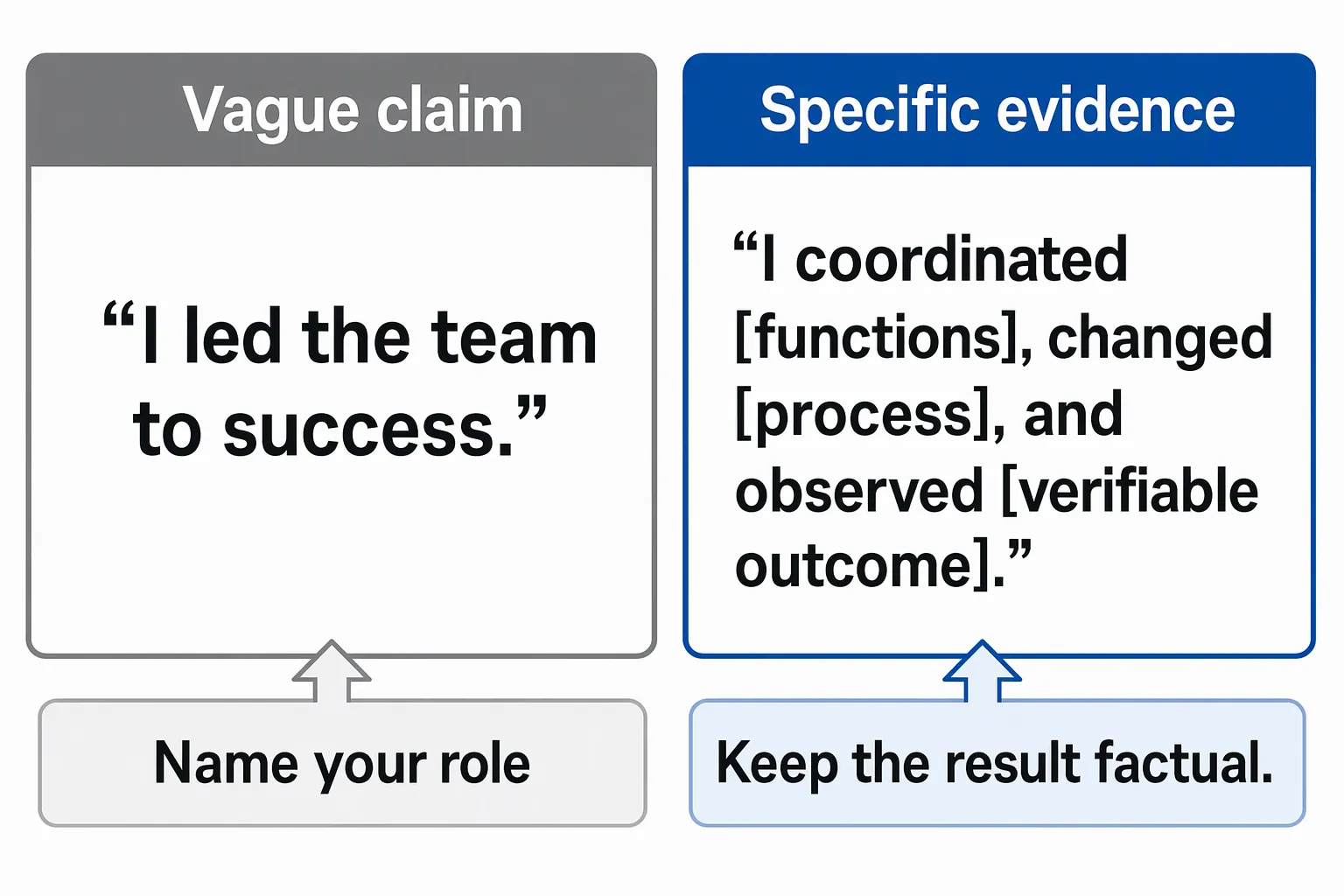
Scenario-specific mistakes in a leadership position cover letter
Using leadership adjectives as evidence
- What goes wrong
- Calling yourself visionary, decisive, or inspiring does not show how you make decisions or take responsibility.
- Better approach
- Replace the label with a relevant decision or action, your reason for it, and what followed.
Implying people-management authority you did not have
- What goes wrong
- Words such as “managed” or “supervised” can imply formal authority that your role did not include.
- Better approach
- Use accurate terms such as “coordinated,” “advised,” “facilitated,” or “contributed” when they better describe your responsibility.
Claiming a shared result as your own
- What goes wrong
- Taking sole credit for collaborative work can obscure your actual contribution and make the example difficult to assess.
- Better approach
- Name the collaboration and specify what you personally decided, delivered, or improved.
Changing an original title to sound senior
- What goes wrong
- An altered title can conflict with your employment history and distract from the evidence of your actual scope.
- Better approach
- Keep the title factual. Explain relevant leadership responsibilities in the letter without implying a promotion or authority you did not have.
Frequently asked questions
- What should a cover letter for a leadership position emphasize?
- Show a relevant decision you made or contributed to, what it affected, and the outcome you can support. Include team size, budget, or cross-functional scope only when those details are accurate and relevant to the role.
- Can I apply for a leadership position without a previous leadership title?
- You can describe relevant leadership work without claiming a title you did not hold. Give a specific example of setting direction, coordinating people, resolving a problem, or taking responsibility for an outcome. If you have no relevant evidence, do not present routine participation as management experience.
- How do I write an application letter for a leadership position in a school with no experience?
- First check the posting for required qualifications and any separate selection criteria; a letter cannot replace them. If you lack a formal leadership title, use only real, relevant examples of responsibility from work, study, volunteering, or other settings, and explain your part accurately. Do not invent school duties, credentials, or results.
- Should I change an older job title to sound more senior?
- No. Keep your original title accurate. Explain the leadership scope you actually handled in the letter and keep your resume and other application materials consistent with that title.

Put this career change approach into practice
Choose sample data or build your own cover letter, then personalize it before you download.