
Introduction
A lateral move is a change to a different team, area of work, or employer while the level remains similar. Your cover letter should make clear why that change fits. Describe the work you want to do, connect it to experience you can use, and name the new scope you hope to take on. You do not need to present the move as a promotion.
This guide covers moves within an organization and moves to another employer. An internal lateral transfer is one version of the situation; an internal-position application can also involve a move to a different level. Keep your explanation specific to the opening. For what each paragraph of a cover letter can do, see the cover letter structure guide.
What to address directly
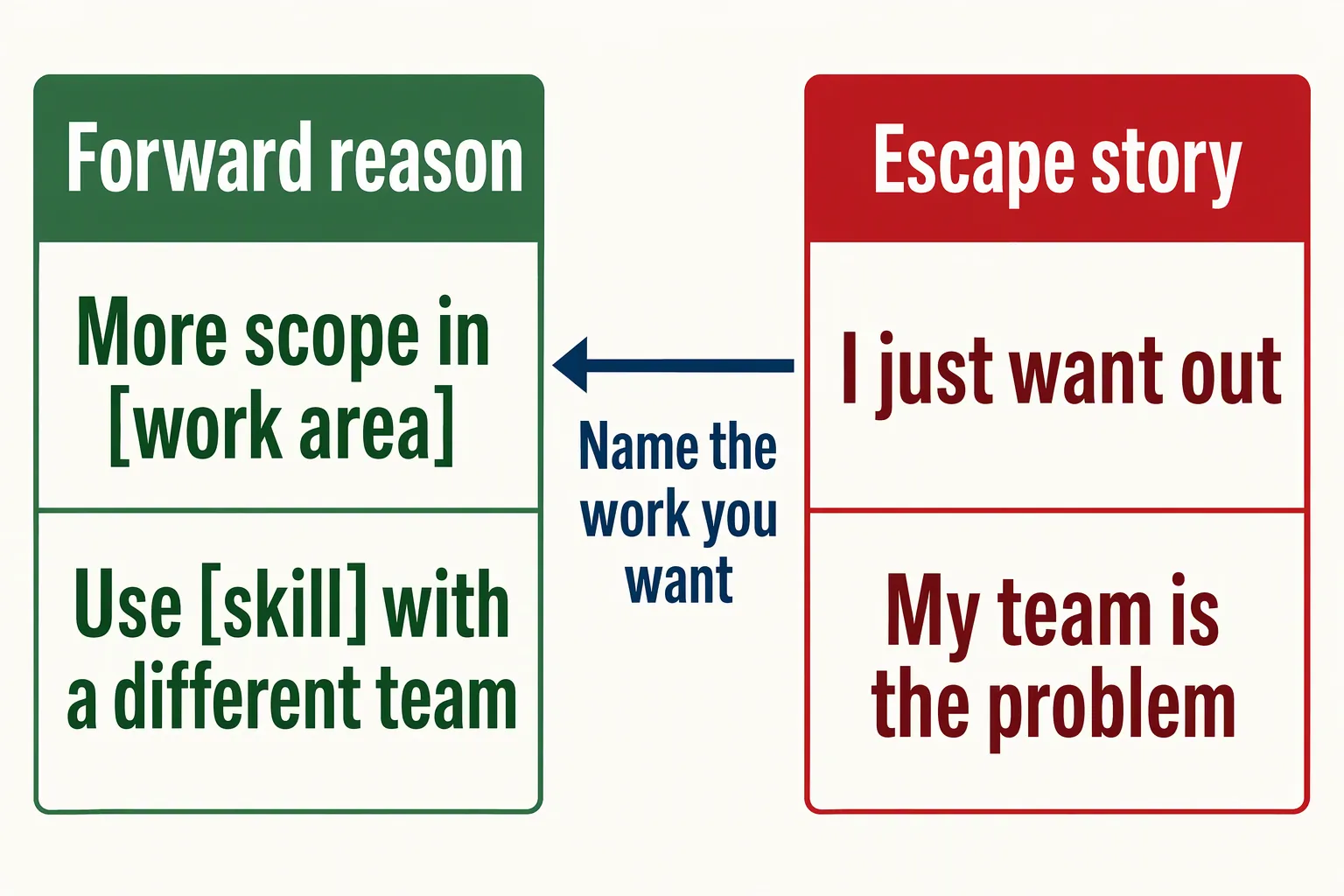
The reason for moving can sound negative
- Hiring manager concern
- If the letter focuses on frustration with a manager, team, or employer, the reader may not understand what attracts you to the new work.
- What your letter should prove
- Give a brief, honest reason that points toward the role. Name a responsibility, team focus, or kind of work you want to take on, then connect it to the opening. You do not need to recount every reason you are leaving.
The move can be mistaken for a promotion or a step down
- Hiring manager concern
- A change in title or function can make the level of the move unclear, especially when the new role is in a different area or at another employer.
- What your letter should prove
- Describe the change plainly: the level is similar, while the team, focus, or scope is different. Keep your current and past titles accurate. Explain why the new responsibilities interest you rather than trying to relabel your work history.
Your experience may not look related at first
- Hiring manager concern
- A different team may use unfamiliar terms, so a list of tasks from your current role may not make the connection obvious.
- What your letter should prove
- Choose one or two real examples that show a relevant way of working, such as coordinating handoffs or improving a process. Explain how that experience relates to a task in the target role. Do not claim that you have done work you have not done. For a step-by-step way to connect past work with a target role, see how to map transferable skills.
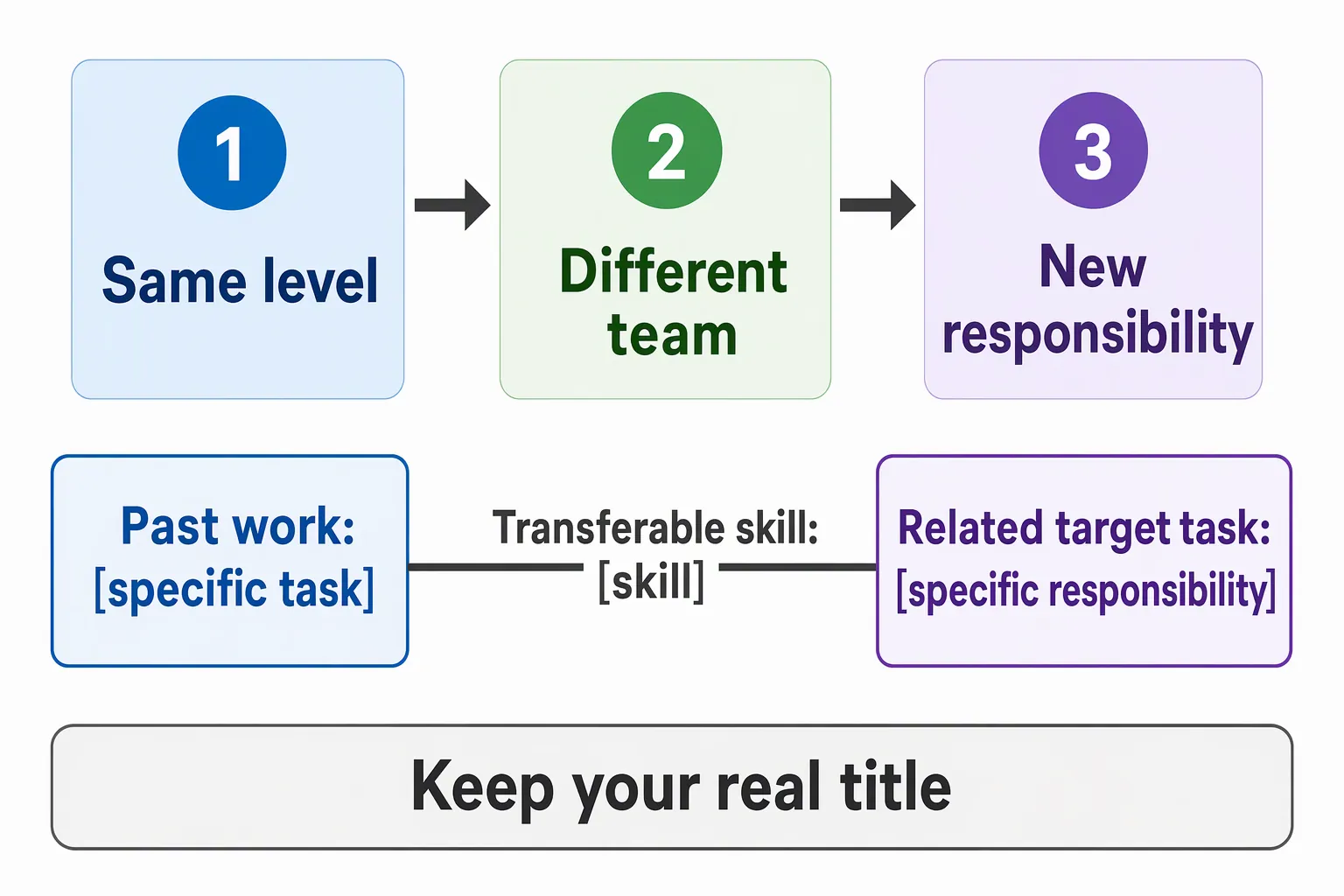
Structural approach: explain the level, the change, and the fit
A focused lateral-move letter answers three questions: what is staying similar, what is changing, and why does the change matter to you? The level may be comparable, while the target role offers a different team, work area, or set of responsibilities. Name the actual difference instead of relying on the word "lateral."
Keep the letter centered on the target role. A short explanation of why you are moving gives context; relevant examples show what you can contribute; a forward-looking close names the scope you want to take on. Do not turn the letter into a defense of your history or a request to be promoted.
- 01
State the move plainly
Name the [Job Title] and [Company Name] and say what interests you. If it prevents confusion, explain that you are seeking a move at a similar level into different work. Keep your current title accurate.
- 02
Describe the work you want to do
Choose one or two responsibilities from the posting or, for an internal transfer, the role information available to you. Say what appeals to you about that scope. If you mention wanting a fresh challenge, explain what that means in this role.
- 03
Connect a real example to the new work
Choose a task, decision, or result from your current role that relates to a target responsibility. Give enough context to show what you did and why it matters. Do not suggest that the teams, duties, or titles are identical when they are not.
- 04
End with the contribution you want to make
Explain how your experience could help with a specific part of the role and name a new responsibility you want to take on. Keep the ending practical. For an internal move, follow the employer's stated process and requested format.
A lateral move example
This fictional example shows an employee moving to a different team at a similar level, with a clear reason and relevant experience.
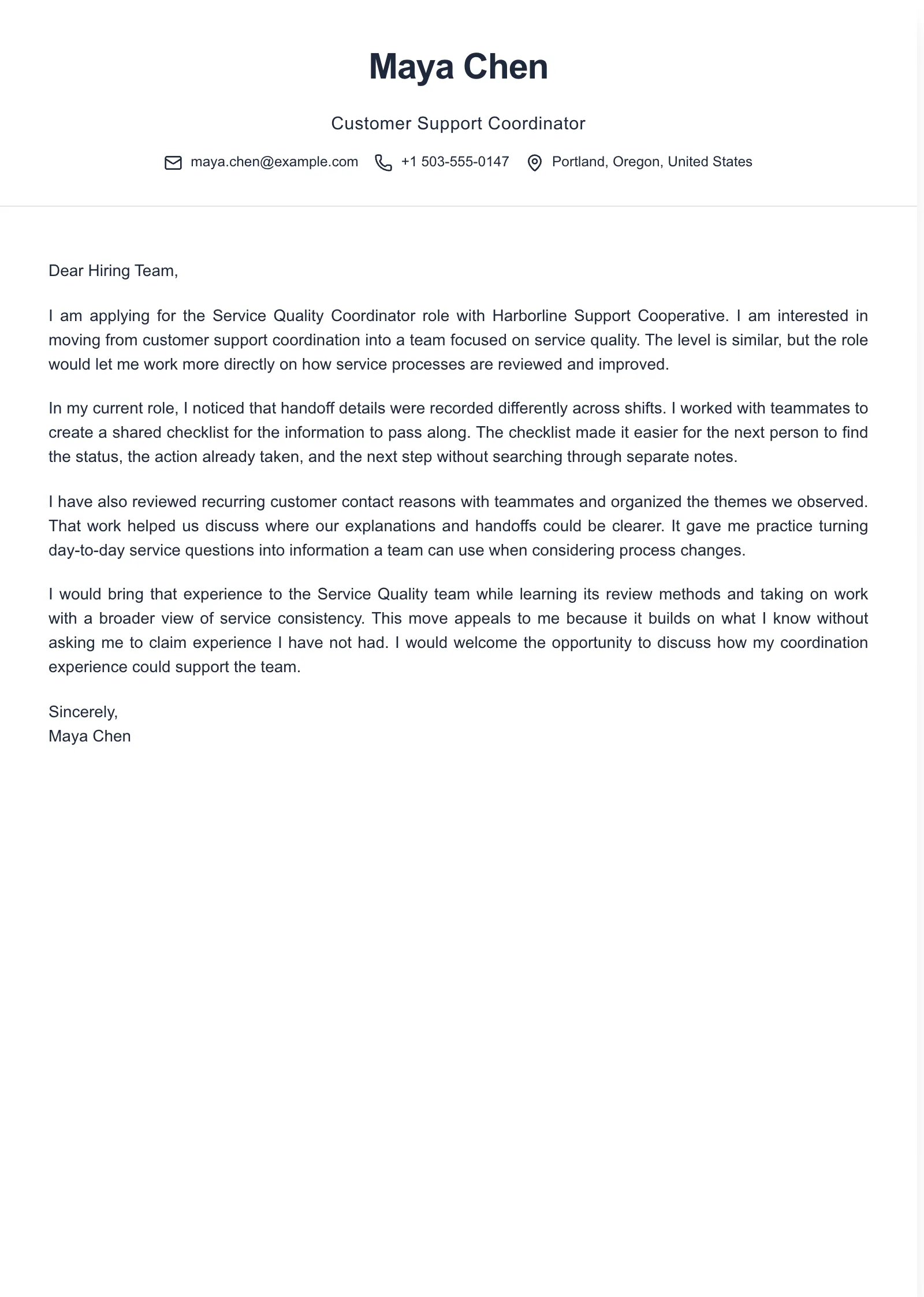
Example paragraphs
“I am applying for [Job Title] at [Company Name] because [specific part of the work or team focus] interests me. I am looking for a move at a similar level that would let me use [relevant skill] in [new area of work].”
“In my current role as [current job title], I [specific action] to address [factual situation or need]. That experience relates to [responsibility in the target role] because [clear connection between the two tasks].”
“I would bring my experience in [specific skill or process] to [Company Name] while developing my work in [new responsibility]. The [Job Title] role interests me because [factual detail about the role or team].”
Replace every bracket with a specific, accurate detail. These are separate paragraph patterns, not a complete letter. Keep titles and the level of the move truthful, and make the connection between past work and the target role clear without treating the roles as identical.
Common mistakes in a lateral move letter
Making the current team the main subject
- What goes wrong
- A long account of conflict or dissatisfaction can make the letter sound like an exit statement rather than an application for a particular role.
- Better approach
- Keep the reason for moving brief and turn to the work you want to do next. Leave out criticism that does not help explain your fit.
Presenting the move as a promotion
- What goes wrong
- Calling a similar-level move a promotion can give an inaccurate impression of the change and distract from the new scope.
- Better approach
- Describe the target responsibilities and level accurately. You can be interested in learning or different work without implying a higher title or rank.
Listing skills without showing how they transfer
- What goes wrong
- Broad claims such as "strong communicator" do not show how your experience relates to the new team's work.
- Better approach
- Use a short, factual example and explain which target task it relates to. Choose evidence that fits the opening rather than repeating your full work history.
Over-explaining the change
- What goes wrong
- A detailed timeline of every reason for moving can crowd out the case for your contribution and make the letter feel defensive.
- Better approach
- Use a concise reason, one or two relevant examples, and a clear statement of the scope you want. Save additional history for a conversation if it is requested.
Frequently asked questions
- How do I explain wanting a lateral move?
- Name the work, team, or responsibility you want to take on, then connect it to experience you already have. Explain what attracts you to the change without presenting it as a promotion.
- Should I call it a lateral move in the letter?
- You can use the phrase if it helps clarify that the level is similar while the work or team is changing. Then explain the specific scope that interests you instead of relying on the label.
- How is an internal lateral transfer different from an internal job application?
- A lateral transfer is an internal application for a role at a similar level with different work or a different team. Internal applications can involve other kinds of moves too, so follow the employer's instructions and explain your fit for the specific opening.
- Should I explain why I am leaving my current team or employer?
- Briefly give an honest, forward-looking reason, such as interest in a different area of work. Avoid criticizing a manager or team, and give more space to the role you want and the experience you can bring.

Put this career change approach into practice
Choose sample data or build your own cover letter, then personalize it before you download.