
Introduction
Short job tenures can prompt questions about why a role ended, but a cover letter is not a defence of your whole work history. Give concise, accurate context for the tenure or pattern that needs it, then show what connects your experience to the work you want next. The aim is clarity, not a promise about how an employer will interpret your history.
Keep resume dates and titles accurate. Explain only what may otherwise be unclear; do not recount every departure. This page is about brief periods in jobs, including fixed-term work or a role ending in a reorganization, rather than time between jobs. For general paragraph order, see this guide to cover letter structure; the steps here focus on explaining short tenures. If the application asks a specific question about your work history, answer it accurately.
What to address directly
Add context only when it helps explain the tenure
- Hiring manager concern
- A brief role may need explanation if its dates or circumstances are not clear from the resume.
- What your letter should prove
- Name the true reason in plain language when it helps clarify the timeline. For example, state that a fixed-term assignment ended as scheduled, or that a position was affected by a reorganization, if that is what happened. Do not guess what a reader will assume or imply that a temporary role was permanent.
Several short roles can sound like a list of excuses
- Hiring manager concern
- Explaining each departure separately can distract from the work you did and the role you want.
- What your letter should prove
- State a genuine pattern once, such as completing successive fixed-term assignments, if that accurately describes your history. Then connect the roles through a shared responsibility, kind of work, or skill supported by evidence. If the reasons differ, do not force them into one explanation.
A reason does not show your fit on its own
- Hiring manager concern
- Explaining why a role ended does not tell the employer what you contributed or why this opening interests you.
- What your letter should prove
- Pair brief context with one relevant example of work you completed, then name a specific responsibility in the posting that interests you. You can explain why you want work with greater continuity, if true, but do not promise a length of service you cannot guarantee.
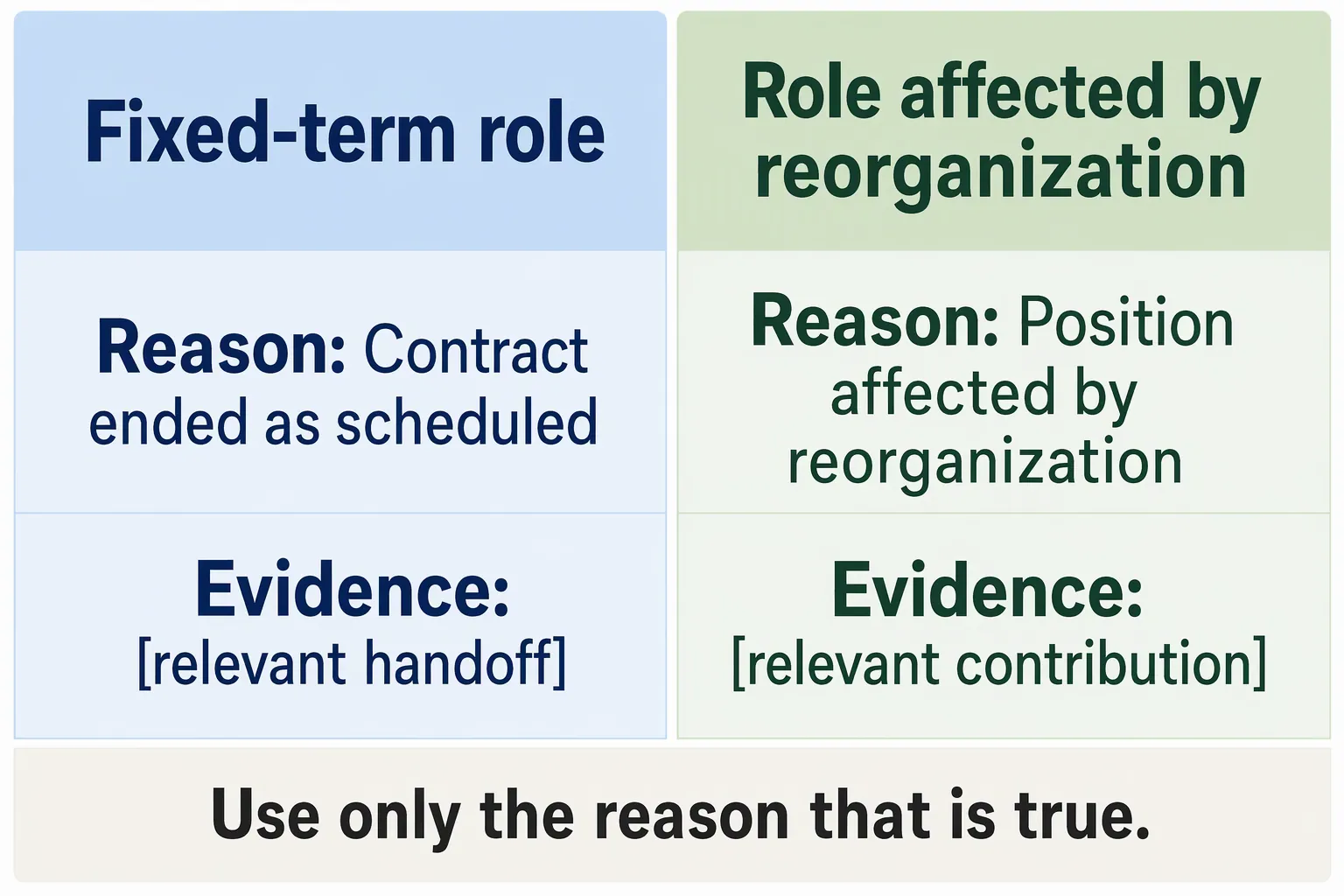
Structural approach: explain, connect, and look ahead
Build the explanation around three points: what accurately explains the short tenure, what relevant work you did, and why this next role follows logically. Give each point a clear place so the reason for leaving does not take over the letter.
The reason for a move and the thread across your experience are separate facts. A contract may have ended as planned, while your work across several roles may share a focus. State both accurately, then use the employer's actual responsibilities to explain why this is a considered next step.
- 01
Choose the tenure that needs context
Focus on the recent short role or repeated pattern most relevant to this application. If a brief role is already clear from its contract label or dates, more explanation may not help. You do not need to account for every move simply because it appears on your resume.
- 02
Give the factual reason concisely
Aim for one plain sentence when that is enough: the fixed-term assignment ended, the position was affected by a reorganization, or you moved for another reason that is true for you. This is guidance, not a universal format requirement. Do not share confidential details, speculate about an employer's motives, or imply a layoff was performance-related if you do not know that.
- 03
Link the history to real evidence
Choose one responsibility or result that connects your short roles to this opening. Describe what you personally did and what changed, using a verifiable example such as a handoff, process, or completed deliverable. If the jobs had different purposes, focus on the relevant experience instead of inventing a career-long theme.
- 04
Explain why this role is a deliberate next step
Refer to a specific duty, team need, or working arrangement in the posting that matches your evidence. If you want work with greater continuity, say why these responsibilities appeal to you. Avoid claiming that an employer can guarantee stability or promising that you will never leave.
A fictional example of a concise career explanation
This fictional example shows a candidate giving brief context for two short tenures, then focusing on relevant evidence and the responsibilities they want next.
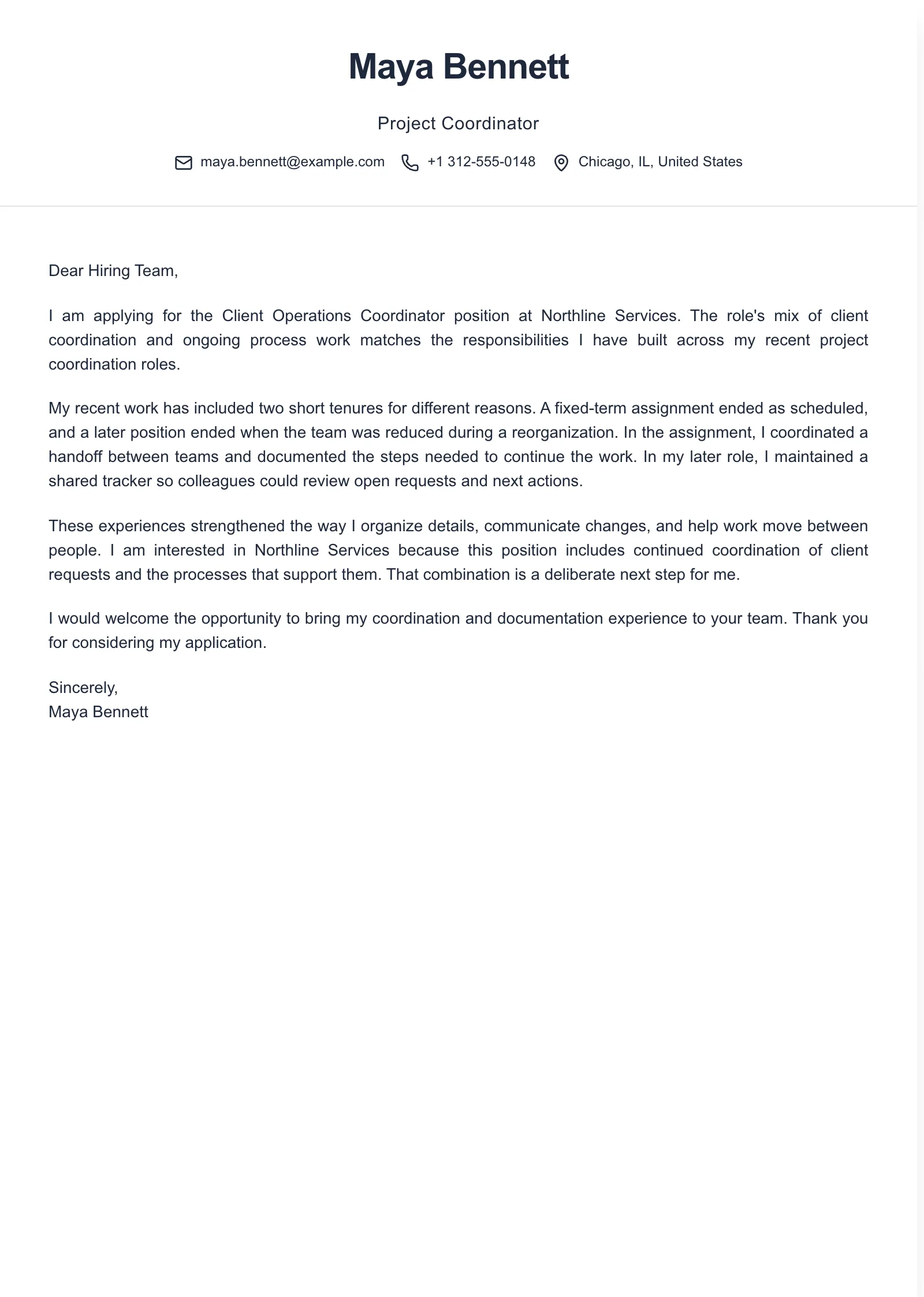
Example paragraphs
“My recent assignment with [Company Name] was fixed-term and ended as scheduled. During that time, I [specific responsibility or completed deliverable]. I am interested in the [Job Title] opening because it would let me apply that experience to [specific responsibility in the posting].”
“My role at [Company Name] ended as part of [brief, accurate description of the reorganization]. Before it ended, I [specific contribution relevant to this opening]. The [Job Title] role at [Company Name] interests me because [specific reason grounded in the posting].”
“My recent roles were short because [accurate explanation of the pattern, such as successive fixed-term assignments]. Across them, I [specific skill or responsibility supported by an example]. I would bring that experience to the [Job Title] role at [Company Name], particularly its focus on [specific duty or need].”
These are paragraph models, not complete letters. Adapt only the wording that fits your facts. Keep the reason for leaving distinct from evidence of your contribution, and do not use the contract or reorganization examples unless they are true. Replace each bracket with a detail you can support from your work history and the actual posting.
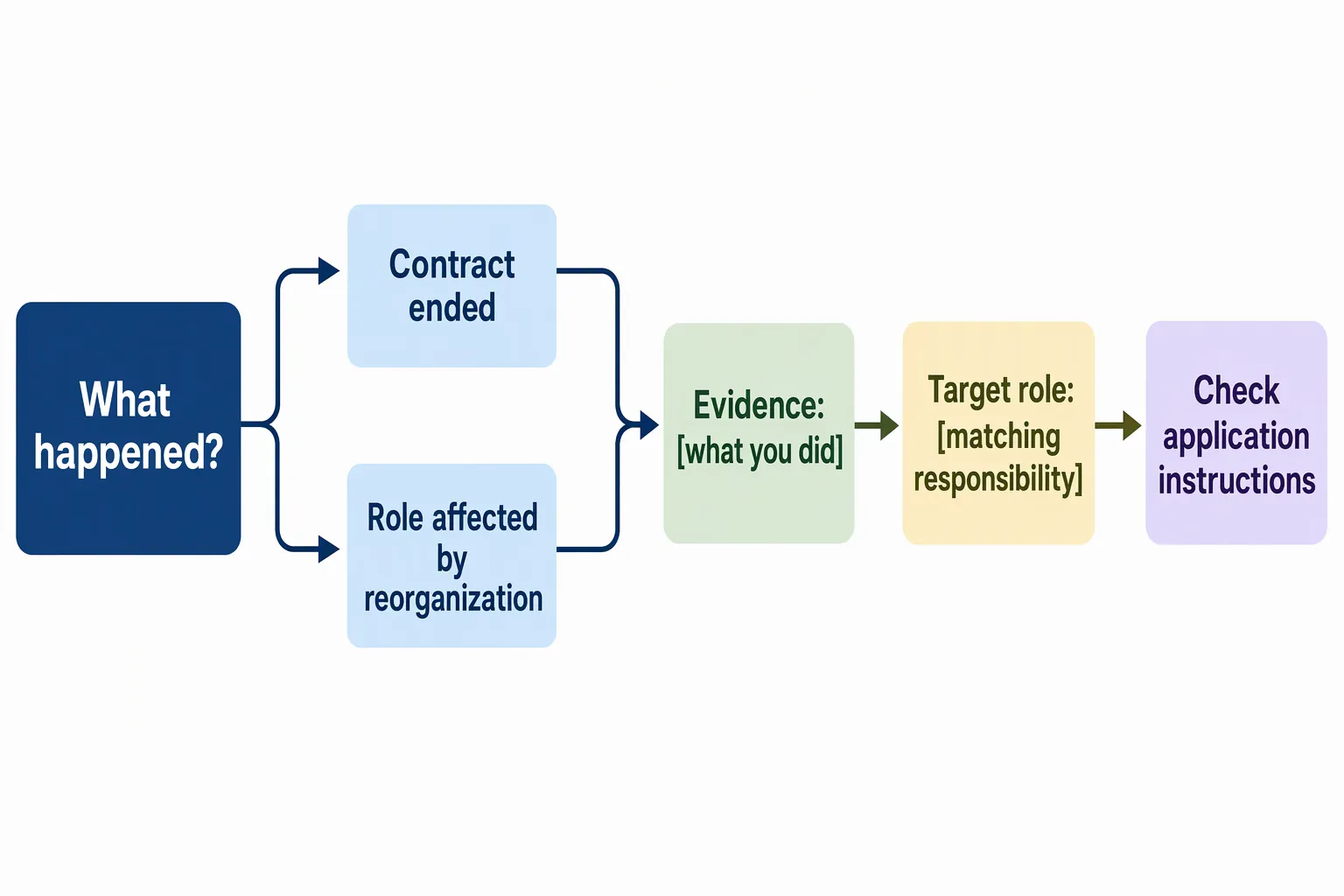
Scenario-specific mistakes to avoid
Turning the letter into a defence
- What goes wrong
- Long explanations of each departure can make the reader focus on the moves rather than your fit.
- Better approach
- State the relevant reason briefly, then focus on your contribution and the responsibilities you want to take on.
Making every departure sound the same
- What goes wrong
- Calling unrelated jobs temporary or contract work can misrepresent your history.
- Better approach
- Describe each situation accurately. If reasons vary, explain only what is relevant and connect your experience through evidence that is genuinely shared.
Changing titles or disguising dates
- What goes wrong
- An altered title, omitted short role, or unclear timeline can conflict with your resume or application.
- Better approach
- Keep titles and dates factual. Clarify the work arrangement in a sentence if needed, without changing the record to make it look more stable.
Promising that you will stay
- What goes wrong
- A promise to remain for a set period does not show why this specific work fits, and you may not be able to guarantee it.
- Better approach
- Explain which responsibilities, team needs, or longer-term work interest you. Show a considered reason for applying rather than making a pledge.
Frequently asked questions
- Should I explain every short job in my cover letter?
- Usually, no. Address the recent tenure or pattern that needs context, then connect it to relevant evidence and your interest in this role. Keep dates and titles accurate on your resume; the letter does not need to repeat your work history.
- How do I explain several short roles in a row?
- State a truthful reason for the pattern, such as successive fixed-term assignments, if that describes your history. Then identify work or skills that genuinely carried across those roles and explain why this opening makes sense as a next step. Do not describe unrelated roles as contracts to simplify the account.
- Should I mention a layoff in a cover letter?
- You can briefly mention that a role ended in a layoff or reorganization if that is accurate and helps clarify a short tenure. Keep the explanation neutral, avoid confidential details, and use the rest of the letter to show relevant work and why you want this position.
- Does my explanation have to be one sentence?
- No. One sentence is a useful aim for keeping the explanation concise, not a universal employer or application rule. Add context only when it is needed for accuracy or clarity, and follow any specific application instructions.

Put this career change approach into practice
Choose sample data or build your own cover letter, then personalize it before you download.