
Introduction
Applying for a job in another country means making two things clear: why your experience fits the role and what you can truthfully say about the move. Keep the letter focused on the employer’s stated needs. Include cross-border details only when they clarify your location, availability, or next steps. A cover letter cannot establish work authorization or guarantee that an employer can sponsor it.
What to address directly
Relocation and start timing
- Hiring manager concern
- An employer may not know whether you plan to move, when you might be available, or whether you expect to work remotely first.
- What your letter should prove
- State your current location and your actual relocation plan in a direct sentence. Give a timing estimate only when it is realistic, and distinguish willingness to relocate from confirmed travel or a confirmed start date. If a required step remains unresolved, do not imply that the timing is settled.
Local conventions and employer instructions
- Hiring manager concern
- Requested documents and application customs can vary by employer, role, and country. A generic country template may prompt you to add irrelevant personal details or overlook a specific instruction.
- What your letter should prove
- Follow the posting and employer instructions first, then check relevant local guidance. For example, official German job-search guidance says employers often appreciate individual applications, but this does not establish a rule for every employer. Do not assume you need a photo or personal details such as age or marital status.
Authorization and practical availability
- Hiring manager concern
- Rules for working in another country depend on the individual and current circumstances. A letter, a move plan, or an employer’s interest does not confirm that you are authorized to work.
- What your letter should prove
- Share only confirmed facts about your status and availability. If you need to check an authorization route, verify it with the relevant official authority. Do not present a visa, an expected employer process, or flexibility about working hours as proof that you can start.
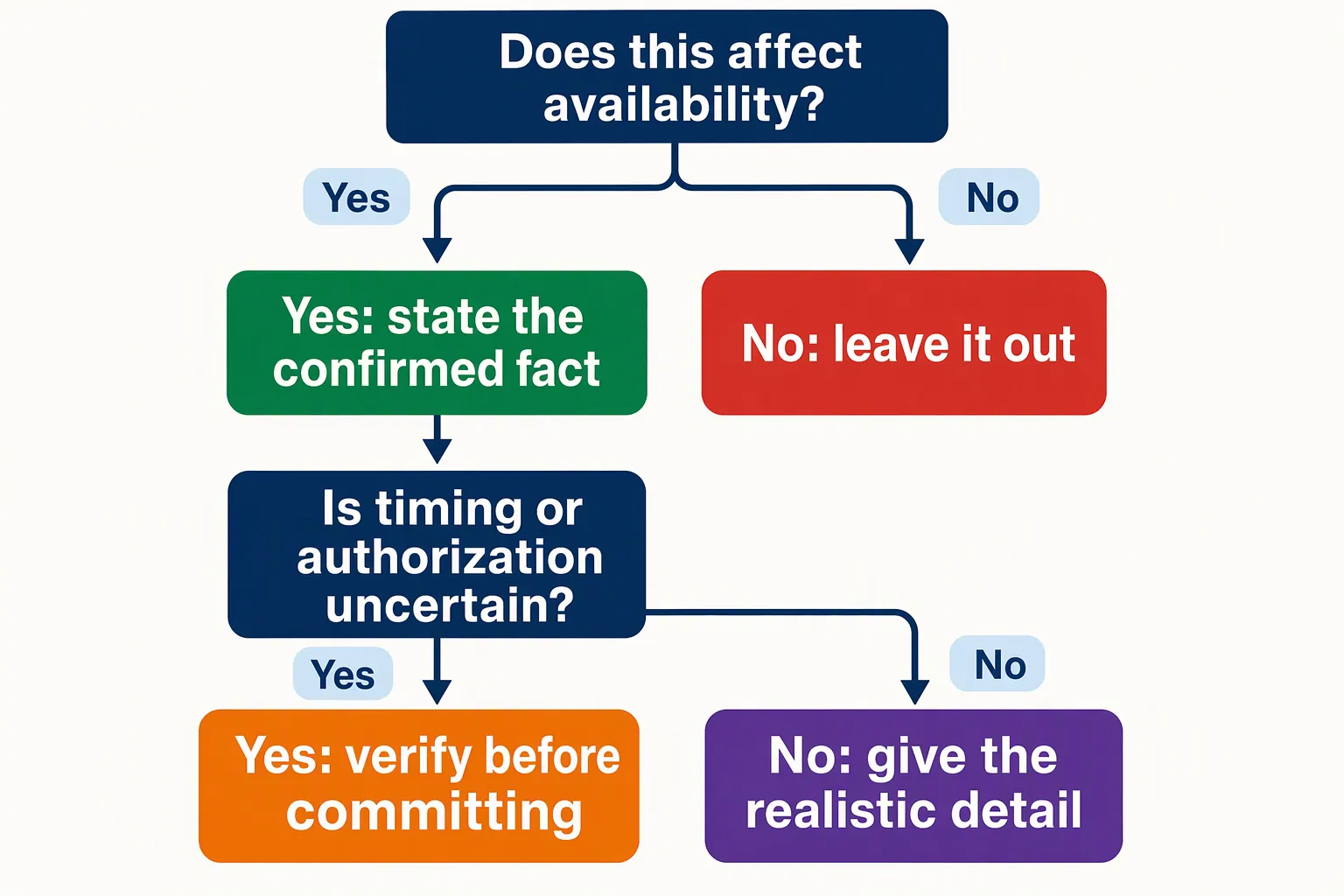
Structural approach: connect role fit to a workable move
Use the same basic logic as an application for a local role, with one additional question: which details make applying from abroad practical for this employer? The cover letter structure guide explains the general paragraph order; the steps below focus on cross-border decisions. Tailor the letter to this opening rather than writing a general statement about wanting to live abroad.
First check whether the employer requests a cover letter, a motivation statement, or another document. Europass offers an official online cover-letter editor, but employers do not universally require Europass. Use the format and language the employer requests, and make sure your letter is consistent with the information in your other application documents.
- 01
Confirm what the employer wants
Read the posting and application instructions for the requested document, language, recipient, and any separate questions. Follow the employer’s directions rather than assumptions about the country. If a different document or application field is requested, do not substitute a cover letter for it.
- 02
Match one relevant strength to the role
Choose a stated need and support your fit with a specific, truthful example from work, study, or another relevant setting. Explain what you did and why it matters to this employer. If a term may be unfamiliar across contexts, explain it plainly without changing its meaning.
- 03
Explain the move only as far as needed
State your location if it helps explain the logistics, then describe your genuine relocation plan or confirmed availability. Include a date only if you can support it. If authorization is uncertain, do not imply approval; check the applicable requirements through official sources.
- 04
Check cross-border details
Review the requested language, spelling, contact details, and consistency of dates. If time zones affect an interview or availability discussion, name the relevant time zone and give practical availability you can honor. Remove personal details that the employer did not request and that do not help assess your fit.
Job Abroad Cover Letter Example
A fictional example that connects relevant experience with an honest relocation plan and careful statements about availability.
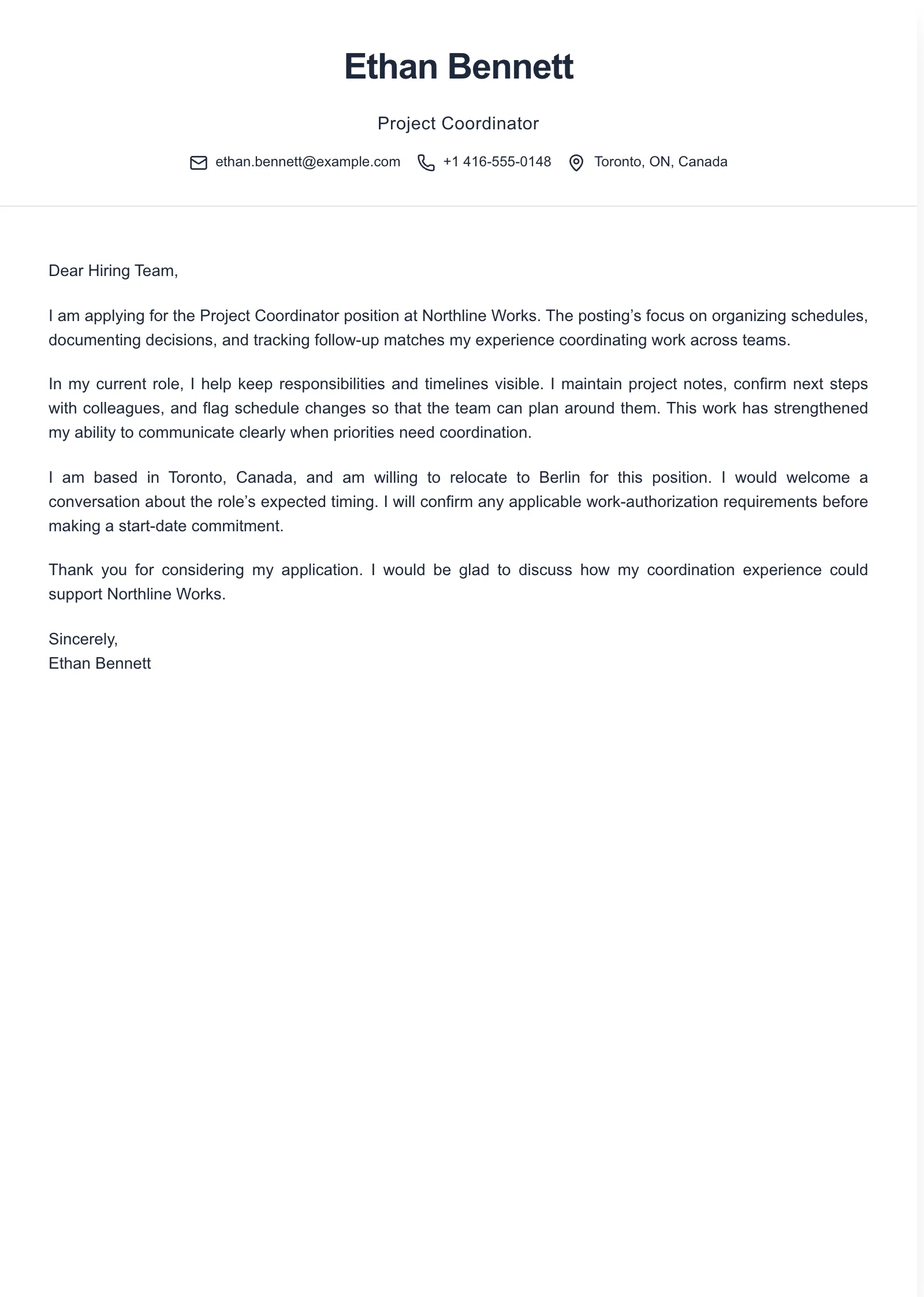
Example paragraphs
“I am applying for the [Job Title] position at [Company Name] because [specific responsibility or goal in the posting] connects with my experience in [relevant area]. In [work, study, or project context], I [factual action] to support [relevant result].”
“In [relevant role, study, or project], I was responsible for [specific task] and worked with [relevant people, tools, or process]. This helped me develop [job-related skill], which I could apply to [specific need at Company Name].”
“I am currently based in [city and country] and am willing to relocate to [destination] for this role. My realistic availability is [confirmed timing or next step]. I will confirm any applicable work-authorization requirements before making a start-date commitment.”
Use only facts you can explain in an interview. Replace every bracketed detail with your own evidence, and keep the relocation statement consistent with your actual plans and confirmed availability.
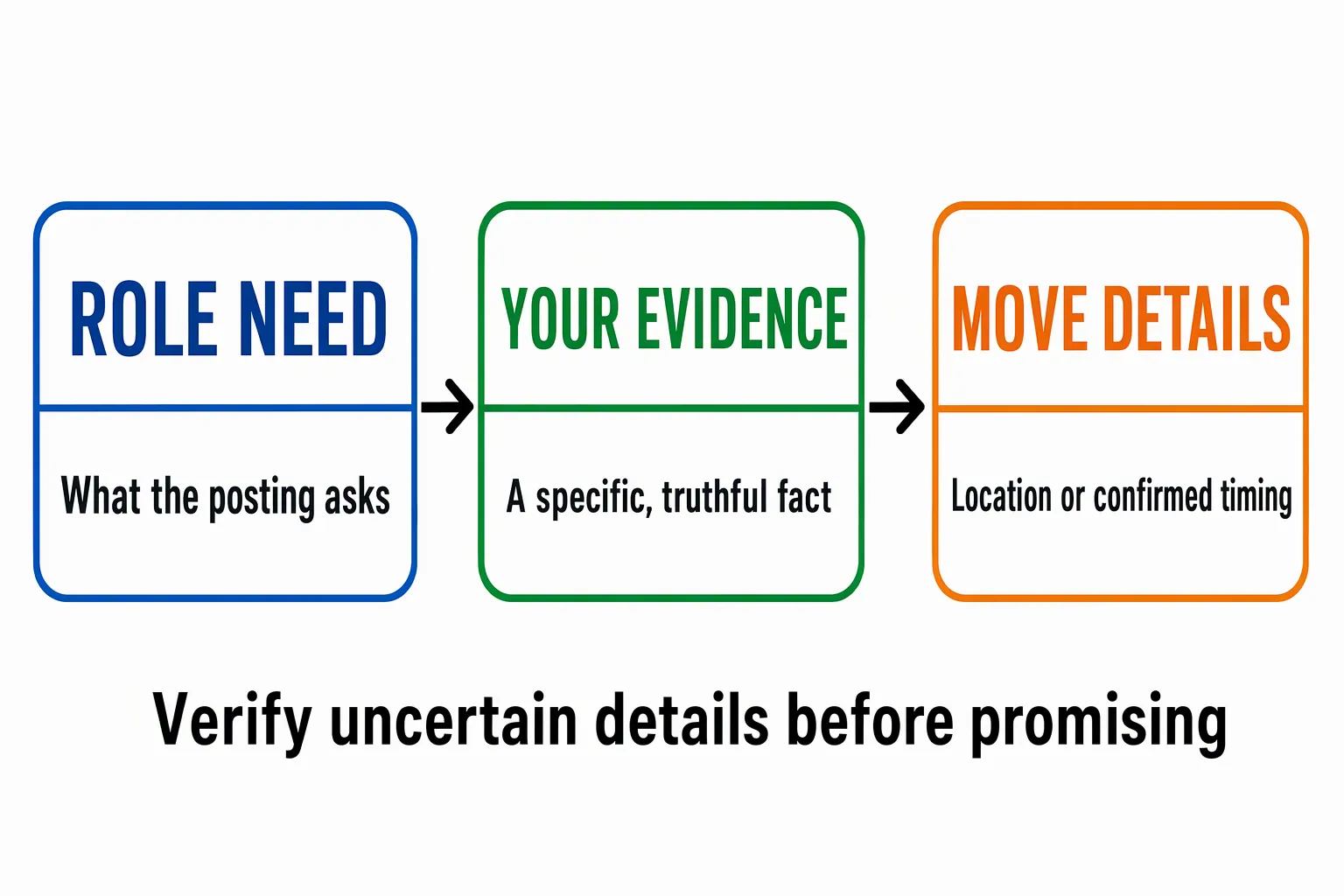
Scenario-specific mistakes
Treating a country convention as a universal rule
- What goes wrong
- A copied template may prescribe a photo, personal details, or a document format that this employer did not request.
- Better approach
- Check the posting and employer instructions, then consult relevant local guidance. Follow an explicit requirement, but do not add personal details based on an assumption about the country.
Promising a move or start date you cannot confirm
- What goes wrong
- A definite date can mislead the employer if travel, notice, or another necessary step remains unresolved.
- Better approach
- Separate willingness to relocate from confirmed availability. Give a date only when it is realistic, and describe unresolved timing honestly.
Suggesting that employer interest equals authorization
- What goes wrong
- A recruiter’s interest or a possible employer process does not establish that you can work in the destination country.
- Better approach
- Do not claim eligibility or promise sponsorship. Confirm your circumstances through current official guidance and state only what you know.
Focusing on the move instead of the role
- What goes wrong
- A letter about wanting to live abroad does not show why the employer should consider you for this opening.
- Better approach
- Lead with a need from the posting and relevant evidence. Keep relocation and time-zone details brief, and include them only when they clarify practical availability.
Frequently asked questions
- Should I mention work authorization in a cover letter for a job abroad?
- Mention it briefly if the posting asks or if your confirmed status affects your availability. Do not infer eligibility from a visa, a relocation plan, or employer interest. If you are unsure, check current guidance from the relevant official authority and state only what you have confirmed.
- Should I include my current location and relocation plans?
- Include your current location if it helps explain the logistics. State whether you are willing to relocate and give a timing estimate only if it is realistic. You generally do not need to include a full home address unless the employer requests it.
- Do I need a different cover letter format for every country?
- There is no single format that applies to every employer in a country. Follow the posting and employer instructions first, then consult relevant local guidance. Do not assume you need a photo, age, marital status, or nationality.
- Should I mention time-zone differences?
- Mention a time-zone difference when it affects an interview, communication, or a practical availability discussion. Name the relevant time zone and give specific availability only if you can honor it. Leave the detail out when it does not help the employer assess your application.

Put this career change approach into practice
Choose sample data or build your own cover letter, then personalize it before you download.