
Introduction
A walk-in application is an in-person handoff of your application materials. A short cover letter can help identify the role and connect your CV to it when an employer accepts applications in person, including at a shop, restaurant, or other workplace.
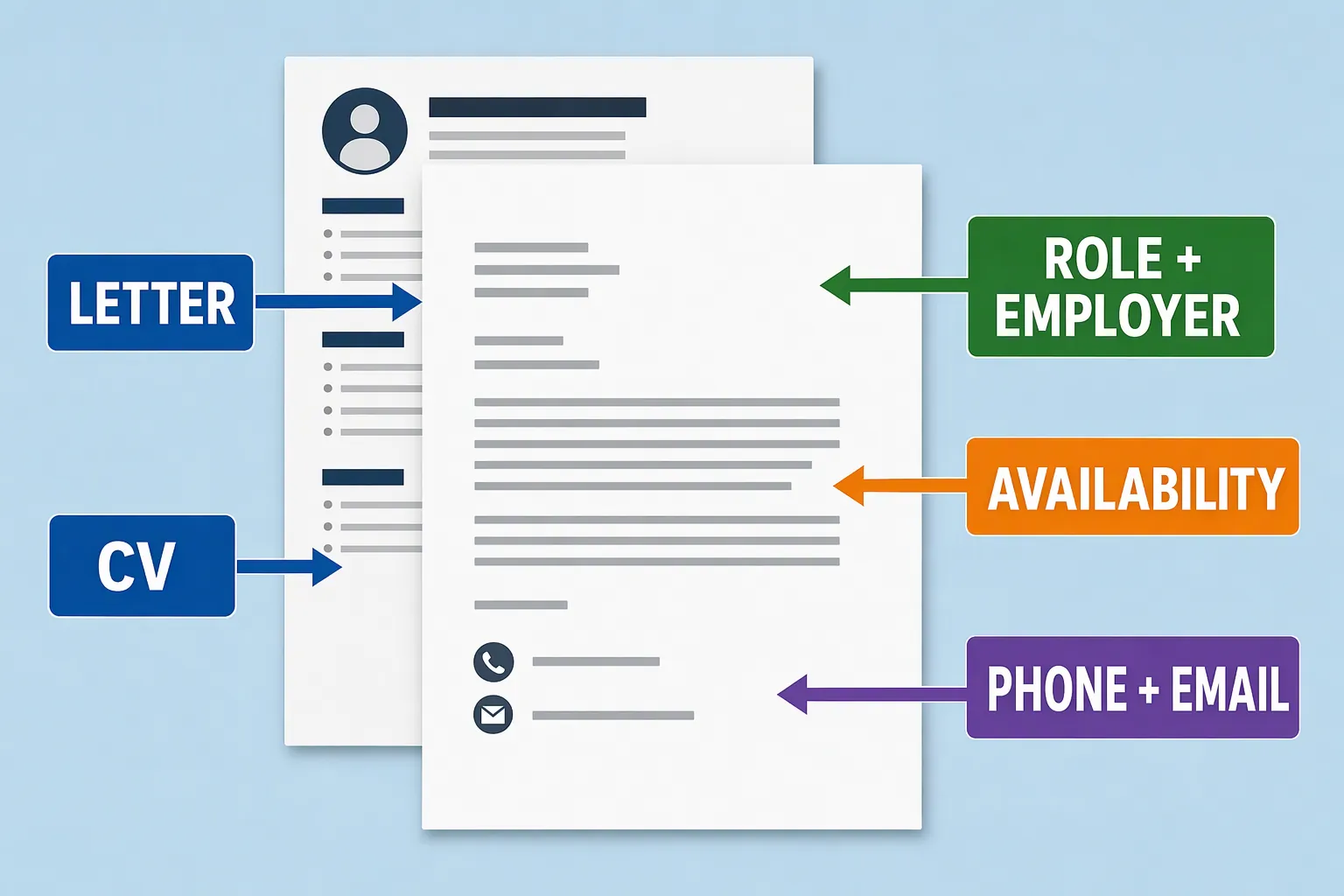
Prepare the letter and CV for a specific [Job Title]. Include one honest point about your fit, useful availability details if relevant, and contact information that matches your CV. First check the employer’s instructions: visiting in person does not replace a required online application.
What to address directly
The employer may require a different application route
- Hiring manager concern
- A workplace visit does not mean paper applications are accepted. The vacancy may direct applicants to an online form or another process.
- What your letter should prove
- Check the posting or employer’s instructions before you go. If they specify a route, use it. If the instructions are unclear, ask briefly whether you may leave a paper application. Do not assume the person at the counter can make an exception.
The letter and CV may be separated
- Hiring manager concern
- If your documents do not identify the role and your contact details clearly, it may be harder to connect them to the application later.
- What your letter should prove
- Name the [Job Title] and [Company Name] in the letter. Put your phone number and email where they are easy to find, and check that the details match your CV. Keep the letter with the CV when you hand them over.
Availability can create an expectation
- Hiring manager concern
- A broad promise about hours or a start date may not reflect what you can actually manage.
- What your letter should prove
- Include availability only when it is useful, and state it accurately. Give the days or times you can work and any important limits. If you do not know your start date, do not guess; say you can discuss it instead.
Structural approach: prepare a simple paper handoff
For this kind of brief handoff, a compact letter that fits on one page is usually practical, but follow any format instructions from the employer. Make the role easy to spot, give one relevant reason for your interest, and add a short example of a skill or experience you can support. A more detailed overview of letter sections is available in this cover letter structure guide.
Prepare the letter and CV together. If the employer provides an application form or asks for specific documents, complete or provide them as instructed; the letter is not a substitute. Bring paper copies only when an in-person handoff is accepted. Keep the documents clean and together, and plan a brief introduction so the person receiving them knows what role you mean.
- 01
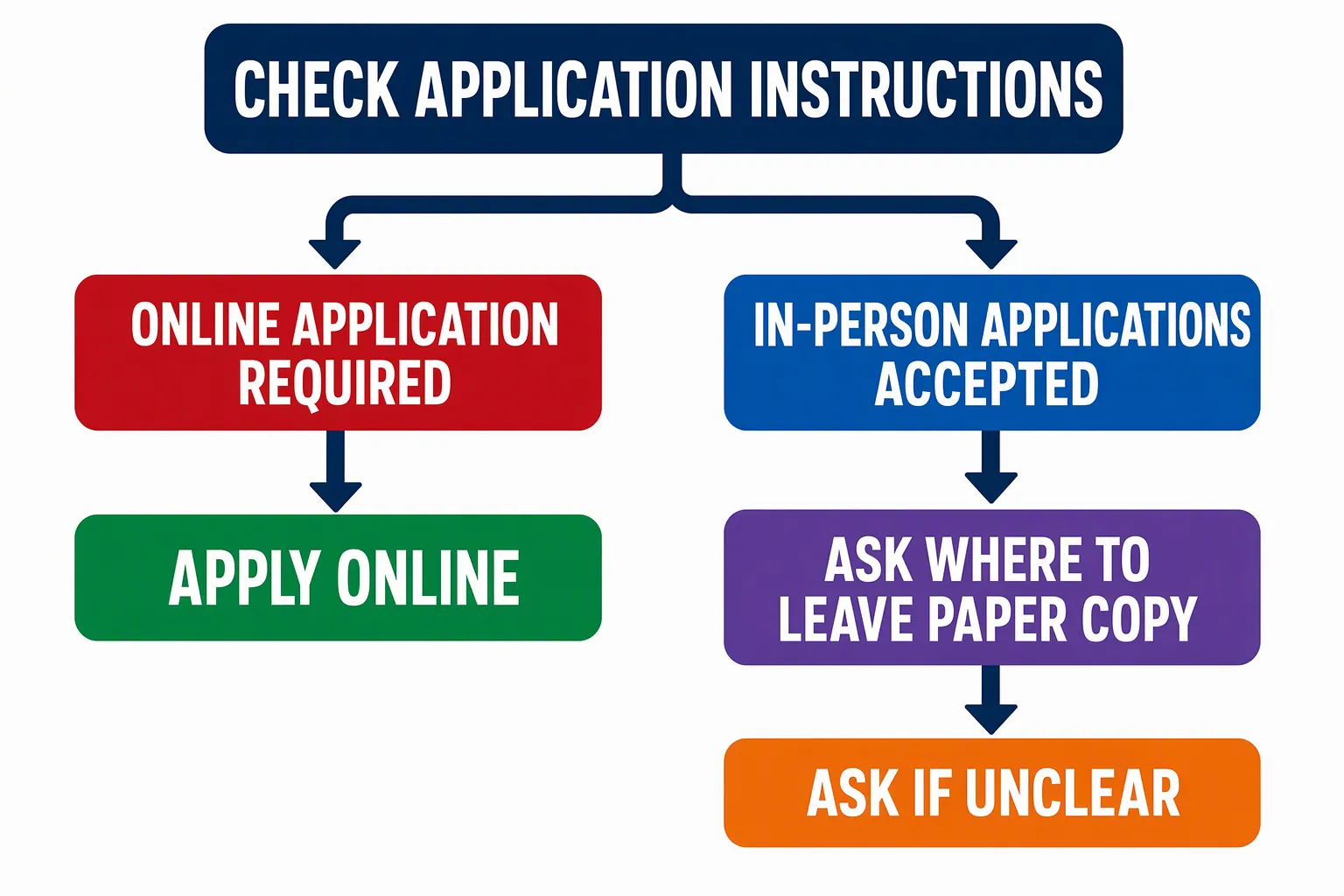
Confirm the application channel
Read the vacancy or employer’s instructions. If an online application is required, apply through that route. If in-person applications are accepted, prepare a paper handoff. When it is unclear, ask whether the employer accepts one.
- 02
Identify the role and your fit
Name the [Job Title] and [Company Name]. Add one relevant, truthful connection between your experience or skills and the work. A specific first sentence can help the reader understand your purpose; see this guide to opening a cover letter.
- 03
Make your details easy to find
Put your name, phone number, and email on the letter and CV. Add availability only if it is relevant, and make sure it is accurate. Keep the letter with the CV so the purpose of the handoff remains clear.
- 04
Hand it over courteously
Give your name and the role you are applying for, then ask where the application should go. If the employer directs you to an online form, another contact, or a different time to return, follow that direction. Thank the person and do not demand an immediate interview.
A concise in-person application letter
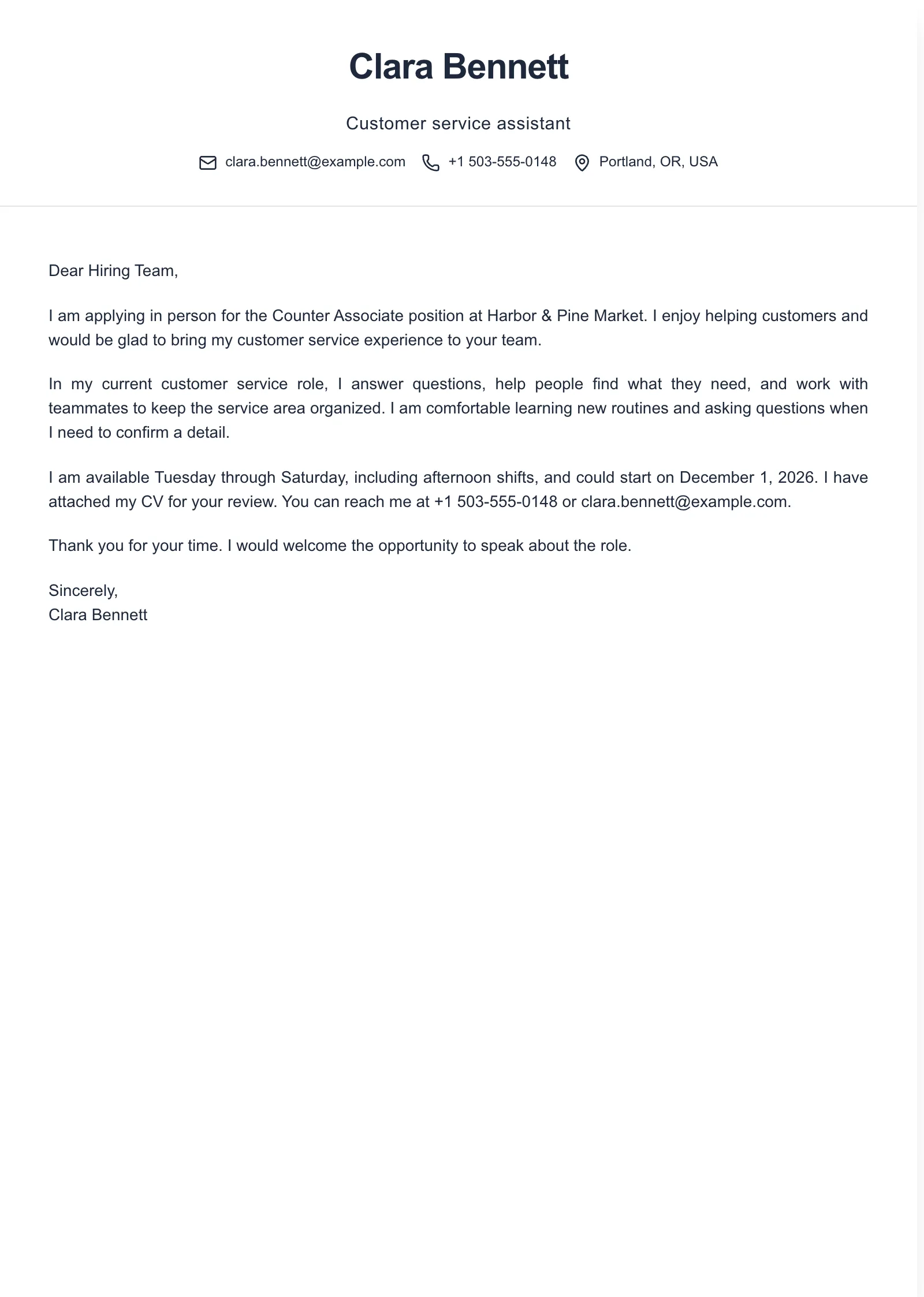
This fictional example shows a short letter prepared to accompany a CV. Use it to see the format, then replace its details with your own.
Example paragraphs
“I am applying in person for the [Job Title] position at [Company Name]. I am interested because [specific, truthful reason connected to the workplace or posted duties].”
“In [relevant setting or experience], I developed [specific skill] by [brief factual example]. I could use that skill to support [task or need stated in the posting].”
“I am available [days and times] and could start [accurate date or timeframe]. You can reach me at [phone number] or [email address].”
Use one example at a time, and replace every bracket with a detail you can support. Remove any sentence that does not identify the role, show a relevant fit, or make it easy to contact you. These are adaptable paragraphs, not a full letter. Your spoken introduction can be shorter: give your name and the role, then ask where the application should go.
Common mistakes in walk-in applications
Showing up without checking instructions
- What goes wrong
- You may bring paper documents when the employer asks applicants to use an online form or another process.
- Better approach
- Check the vacancy or employer’s instructions first. Use the stated channel, and ask a brief question only if the instructions are unclear.
Using a letter that could go anywhere
- What goes wrong
- A letter without a role or employer name gives little context if it is passed to someone else.
- Better approach
- Name the [Job Title] and [Company Name]. Add one specific, truthful reason your experience or skills relate to the work.
Making availability sound broader than it is
- What goes wrong
- A promise such as “anytime” may not match your real schedule and can cause confusion.
- Better approach
- List the days and times you can reliably work, or state the limits that matter. Leave out availability details that are not relevant.
Expecting an on-the-spot interview
- What goes wrong
- The person receiving your application may not be available to discuss hiring or may not handle recruitment.
- Better approach
- Ask politely whether the application can be left and whether there is a preferred next step. Accept a direction to another application channel without arguing.
Frequently asked questions
- Should I bring a cover letter if the employer only asked for a CV?
- Follow the instructions. If they ask for a CV only, provide that rather than adding an unrequested letter. If the instructions are unclear, ask whether a short letter would be useful before leaving one.
- What should I say when I hand in my application?
- Briefly give your name and the [Job Title] you are applying for, then ask whether this is the right place to leave your CV and letter. If the person directs you to another process, follow that instruction.
- Should I put my availability in the letter?
- Include it if it helps the employer assess your application. State the days or times you can genuinely work, including any relevant limits. Do not promise a schedule you cannot keep.
- Should I return to speak with a manager?
- Do not assume a manager is available to speak. Ask politely whether someone is available or whether there is a preferred next step. Respect the answer, including a direction to apply online or return at another time.

Put this career change approach into practice
Choose sample data or build your own cover letter, then personalize it before you download.