
Introduction
A first-job cover letter can draw on school, clubs, teams, volunteering, or other responsibilities. You do not need to present these as paid work. Choose one real example that connects to the opening, describe what you did, and explain why that experience could be useful.
This guide focuses on high school students applying for a first job, including students under 18. The practical decisions are how to describe school-based evidence, state availability you can check and honor, and handle age-related questions without assuming that the same rules apply everywhere.
What to address directly
You have not held a paid job
- Hiring manager concern
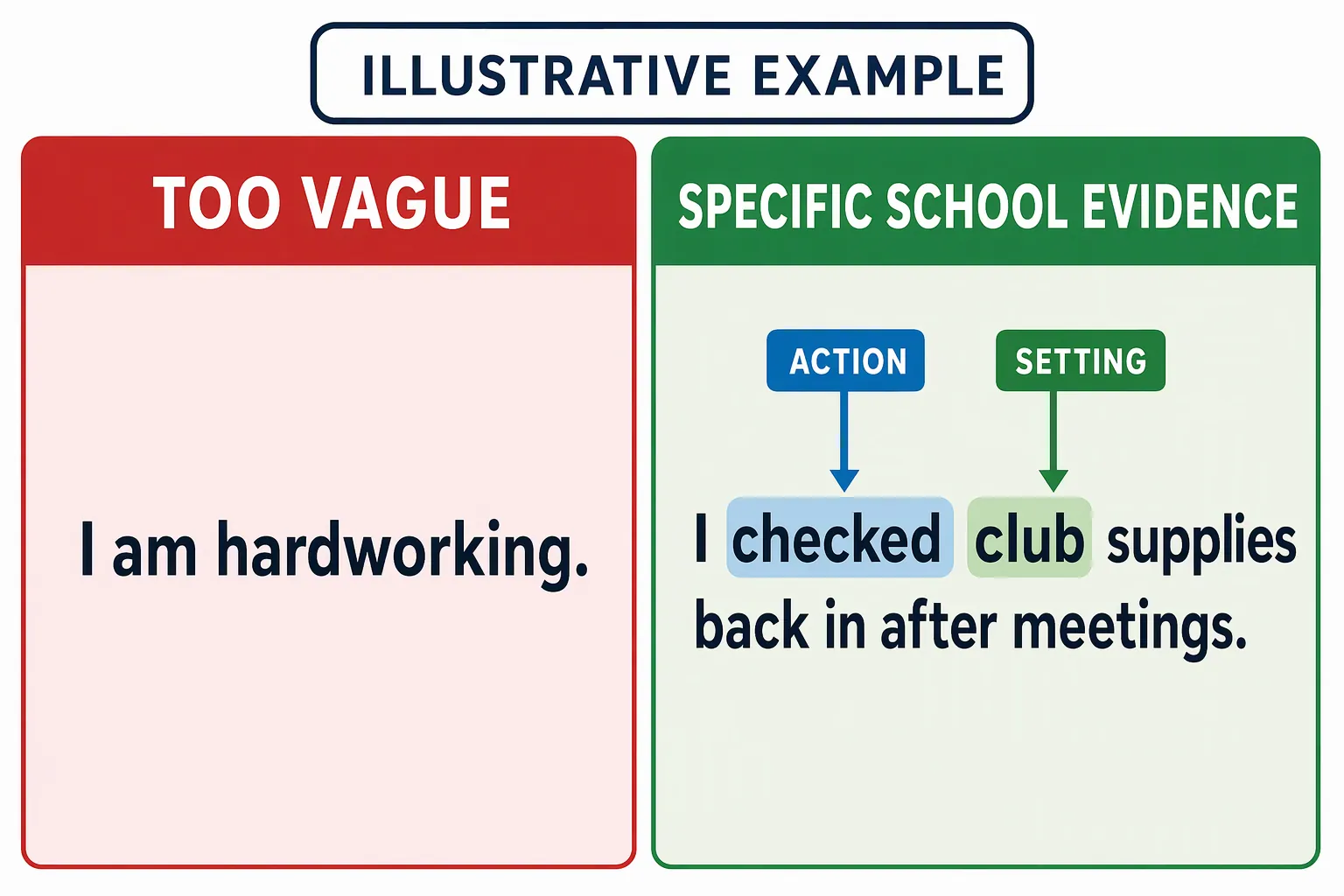
- It can be hard to know what to say when an application asks for experience. Broad claims such as “I am hardworking” do not show what you have done, and describing a school activity as a job could mislead the reader.
- What your letter should prove
- Choose a specific responsibility you actually had, such as preparing materials for a club meeting or helping with a school event. State the setting and your own action, then connect it to a useful habit, such as following instructions or keeping track of a task. Do not claim a group’s work as your individual result. You can also express interest in learning without claiming experience you do not have.
Your availability depends on school and local rules
- Hiring manager concern
- Classes, exams, transport, and other commitments can affect when you are available. Age-related work rules also vary, so a promise to work any shift or a guessed hour limit may not be accurate.
- What your letter should prove
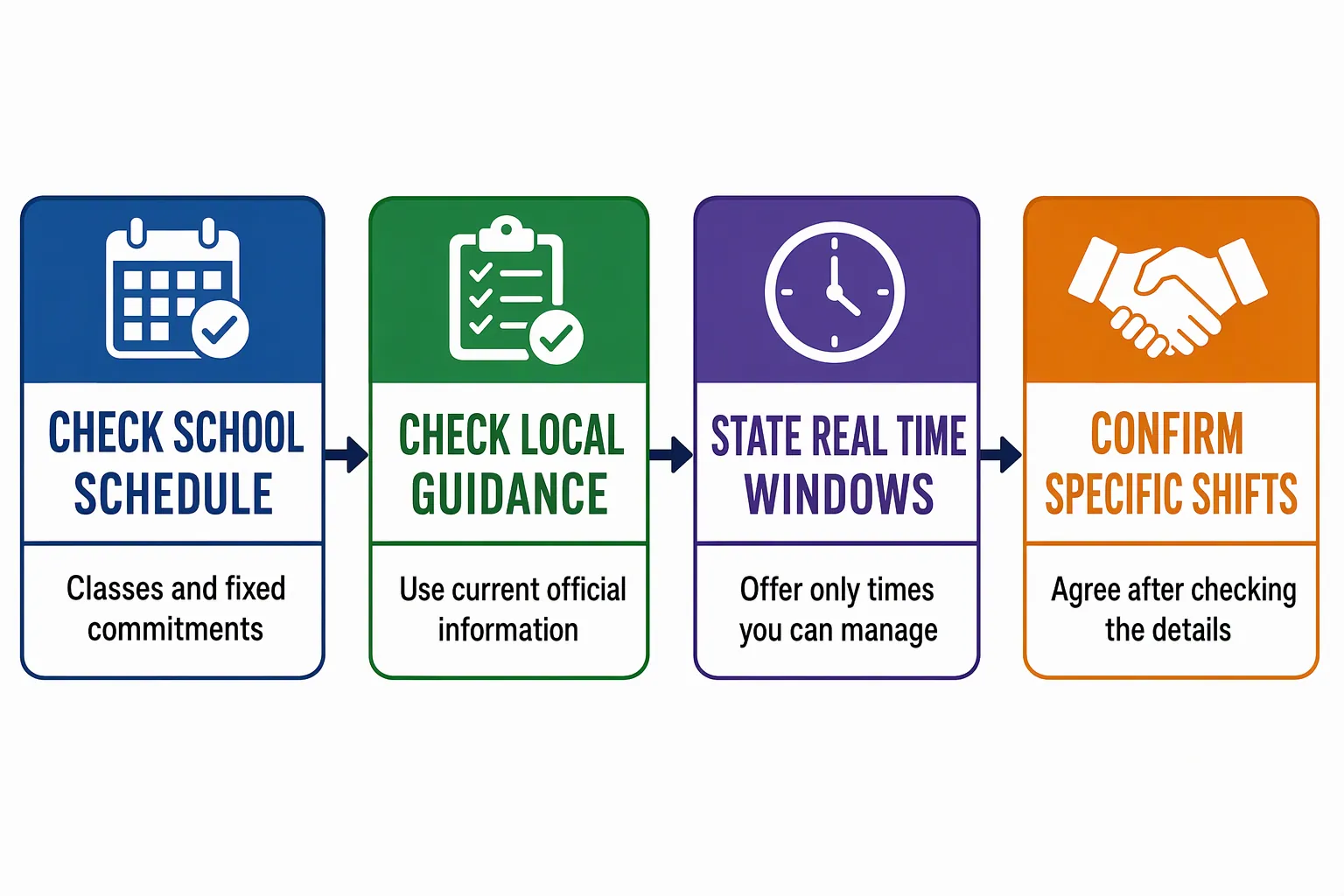
- Check your current timetable and commitments before you write. Give the days or time windows you can realistically offer, and confirm specific shifts with the employer before agreeing to them. Check current official guidance for your location and situation rather than assuming a particular schedule is permitted. For example, UK guidance distinguishes school-age child employment from rules for young workers over compulsory school age; other places have their own requirements. See UK child-employment guidance and guidance on young workers if relevant.
You are unsure about references or adult involvement
- Hiring manager concern
- A teacher, coach, or adviser might be able to describe your reliability, but you should not assume they have agreed to be contacted or to share their details.
- What your letter should prove
- Ask the person before naming them as a reference or sharing their contact information. Follow the application instructions about whether and how to provide references. Keep the letter in your own voice; involve a parent or guardian if the employer or an applicable local requirement specifically asks for it.
Structural approach: connect the opening to your evidence and availability
Before drafting, note what the posting asks for, one school or community example that supports it, and the times you can realistically offer. This keeps each part of the letter focused on this application. For a general explanation of each paragraph’s purpose, see cover letter structure.
Use the steps below as a check, not a fixed formula. Follow the employer’s instructions if they request a different document, a separate response, or a particular application method.
- 01
Identify the opening
Use the role and organization name from the posting. Give a brief, truthful reason for applying, such as wanting to learn the work or contribute to the team. If the recipient’s name is not available, use a neutral greeting rather than guessing.
- 02
Show one relevant action
Choose an activity that demonstrates a behavior the posting asks for. Explain your part: what you organized, completed, practiced, or communicated. Name the school, club, or volunteer setting so the reader can tell what kind of experience it was.
- 03
State availability you have checked
Look at your timetable and fixed commitments before giving days or time windows. Avoid saying “anytime” if your schedule is limited. Check applicable official guidance and confirm exact shifts with the employer before you agree to them.
- 04
Close and handle references appropriately
Thank the reader and say you would welcome a conversation. Provide a reference only as the application directs and with the person’s permission. Check that your email address and phone number are suitable for employer contact.
High school student first-job example
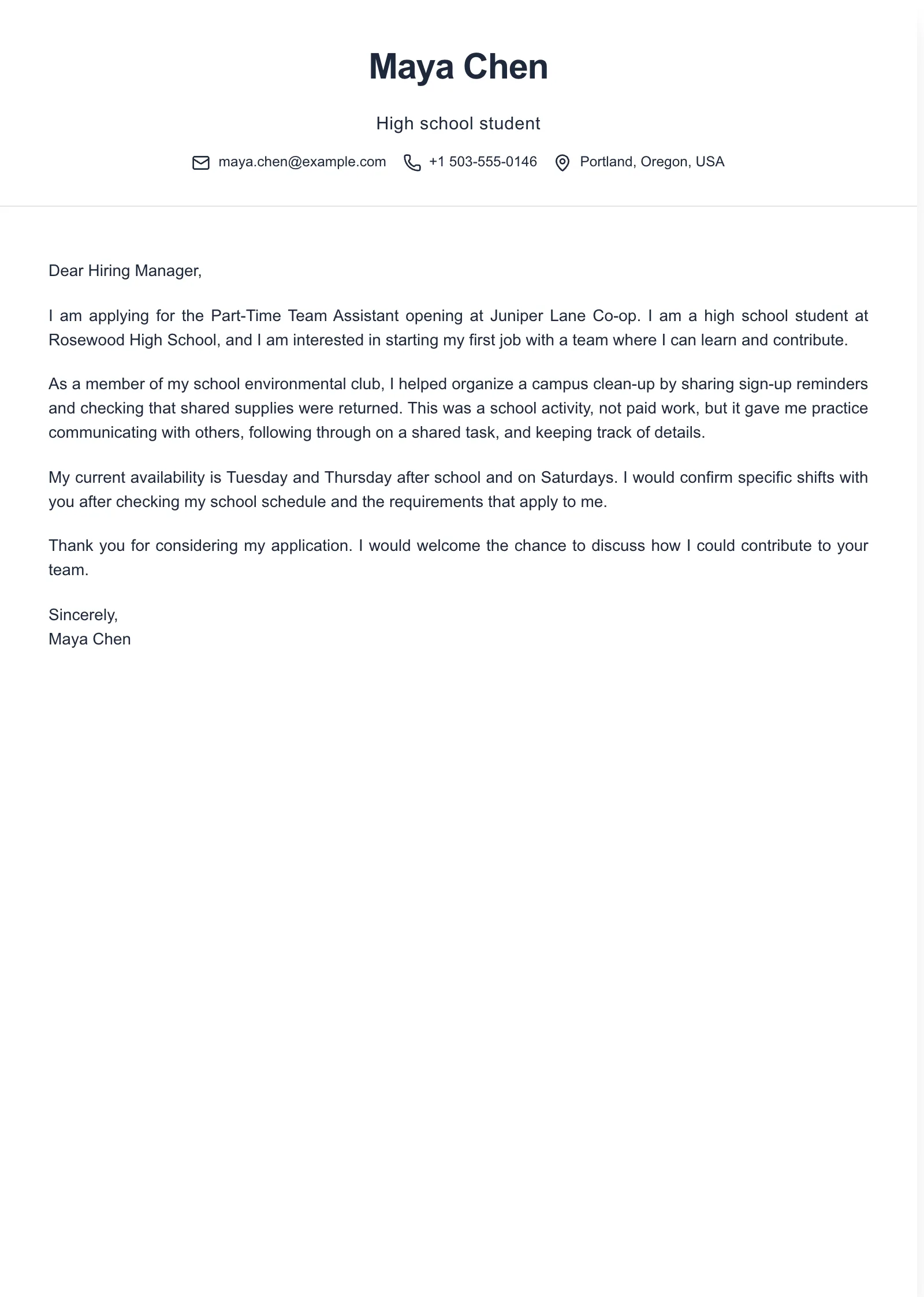
A fictional student connects a school activity and checked availability to a first-job application without presenting school experience as paid work.
Example paragraphs
“At [School Name], I help with [specific club, class, or event responsibility]. This has given me practice in [relevant action or habit], which I can bring to the [Job Title] opening at [Company Name].”
“My current school timetable leaves me available [specific days and time windows]. I would confirm exact shifts with [Company Name] before agreeing to a schedule for the [Job Title] role.”
“If a reference is useful, I can ask [teacher, coach, or adviser] whether they are willing to speak about [specific behavior]. I will share their contact details only with their permission and as requested for my application to [Company Name].”
Replace each bracket with details you can support. Keep the setting clear, and describe your own actions rather than claiming a group’s results. Check your availability again if your school timetable or other commitments change. Ask a potential reference before naming them or sharing their contact information.
Scenario-specific mistakes in a high school student cover letter
Calling a school activity a job
- What goes wrong
- The reader may not know whether you mean paid work, a club, volunteering, or a class assignment.
- Better approach
- Name the setting accurately, then describe what you personally contributed.
Promising availability you have not checked
- What goes wrong
- “Anytime” may not fit your classes, commitments, or applicable local rules.
- Better approach
- State the time windows you can offer and confirm exact shifts with the employer. Check current official guidance rather than guessing at permitted hours.
Listing a reference without asking
- What goes wrong
- A teacher, coach, or adviser may not expect their contact details to be shared or an employer to call.
- Better approach
- Ask first. Provide their details only with permission and as the application requests.
Changing or concealing personal facts
- What goes wrong
- Changing your age or school status can create confusion without resolving an eligibility or schedule question.
- Better approach
- Describe yourself accurately and answer application questions truthfully. Check current local guidance or ask the employer about requirements you do not understand.
Frequently asked questions
- What can I write if I have never had a job?
- Use one real example from school, a club, a team, volunteering, or another responsibility. Say what you personally did and what it demonstrates. Identify the setting accurately so it is not mistaken for paid employment.
- Should I mention that I am under 18?
- You can describe yourself as a high school student. Mention your age when an application asks for it or it is relevant to a stated requirement. Rules for young workers vary by location, age, and type of work, so check current official guidance where you live rather than guessing about eligibility or hours.
- Should a parent or guardian contact the employer for me?
- You can write and submit your application in your own voice. A parent or guardian can help you review it or take part if the employer or a local rule specifically asks for their involvement. Do not assume every employer requires a parent to make contact.
- Can I list a teacher or coach as a reference?
- Ask the person first and choose someone who can describe how you follow through or work with others. Share their contact details only with their permission and when the application asks for a reference. Otherwise, you can leave reference details out of the letter.

Put this career change approach into practice
Choose sample data or build your own cover letter, then personalize it before you download.