
Introduction
A Handshake cover letter depends on the instructions for the particular job and the route that application uses. A posting may request a letter, present a text response, or continue on an employer's external site. Do not assume every Handshake application offers the same fields or document options.
For a concise campus-focused version, choose one real example from study, campus activity, volunteering, or work and connect it to a stated need in the posting. This page focuses on Handshake as an application channel. An internship guide focuses on the internship context; the topics can overlap, but this page does not assume every Handshake application is for an internship.
What to address directly
The posting may not request a cover letter
- Hiring manager concern
- Drafting for a standard cover letter field can distract from the actual instructions. The route and required documents can differ by posting, and an application may continue on an employer's site.
- What your letter should prove
- Read the instructions for the specific job before drafting. If there is no request or suitable field for a letter, do not paste one into another response box. Follow the stated application requirements.
A text response and an attached letter serve different purposes
- Hiring manager concern
- A text field may ask a specific question, while an uploaded document may be intended for a fuller letter. Treating them as interchangeable can leave a prompt unanswered or make a short response difficult to use.
- What your letter should prove
- If the application presents a text prompt, answer it directly. If the posting requests a letter as an attachment, prepare a readable letter that follows the instructions. Handshake says document requirements depend on the posting and that uploaded documents may be converted to PDF, so review the result when available. See Handshake's application guidance.
Student-focused wording needs accurate evidence
- Hiring manager concern
- A campus-focused letter can sound vague if it relies on enthusiasm without showing relevant experience. It can also misrepresent a recent graduate's situation if it implies they are still enrolled.
- What your letter should prove
- Name a real project, campus responsibility, volunteer task, or job. State what you did and connect it to a requirement in the posting. Describe your current or recent student status accurately, and do not invent duties or results.
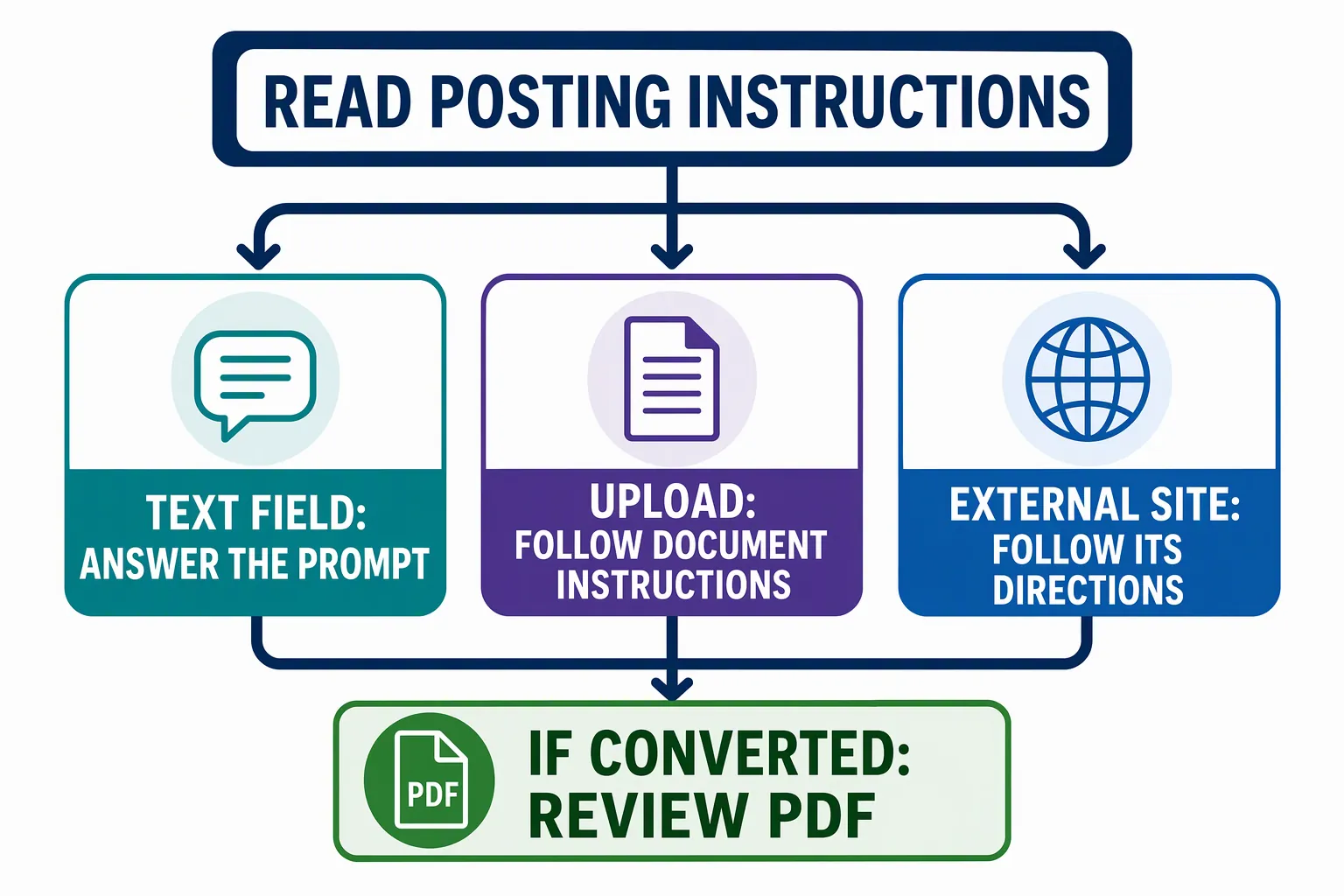
Structural approach for a Handshake application letter
First identify what the employer asks you to submit. A text prompt, a requested attachment, and an external application call for different responses. The cover letter structure guide explains the parts of a full letter; for a Handshake application, decide whether the posting asks for that format before drafting one.
For a concise campus-focused response, name the role, give one relevant example, and explain its connection to the posted need. Do not squeeze a full letter into a field that asks a narrow question. For an attachment, use a greeting and sign-off when they suit the requested document and instructions.
- 01
Check the route and instructions
Read the job posting and its application instructions. Note whether it requests a letter, another document, a text response, or an application on an external site. Answer any separate questions directly.
- 02
Match the format to the request
For a text prompt, answer what it asks. For a requested attachment, prepare a complete, readable letter. Do not assume a saved document or upload option is available for every posting.
- 03
Choose one relevant example
Select a campus, class, volunteer, or work example that demonstrates something the posting asks for. Describe your action and a factual result or deliverable. If you have no measured result, say what you completed instead of adding a number.
- 04
Review what you submit
Check the role and employer name, contact details, and accuracy of each claim. If an uploaded document is converted to PDF, review the converted version when available for missing text, awkward breaks, or unreadable formatting. Follow any external site's instructions too.
Fictional Handshake application example
This fictional example connects a student's campus activity to a role requirement. Compare the content of an attached letter with the shorter response a specific application prompt may call for.
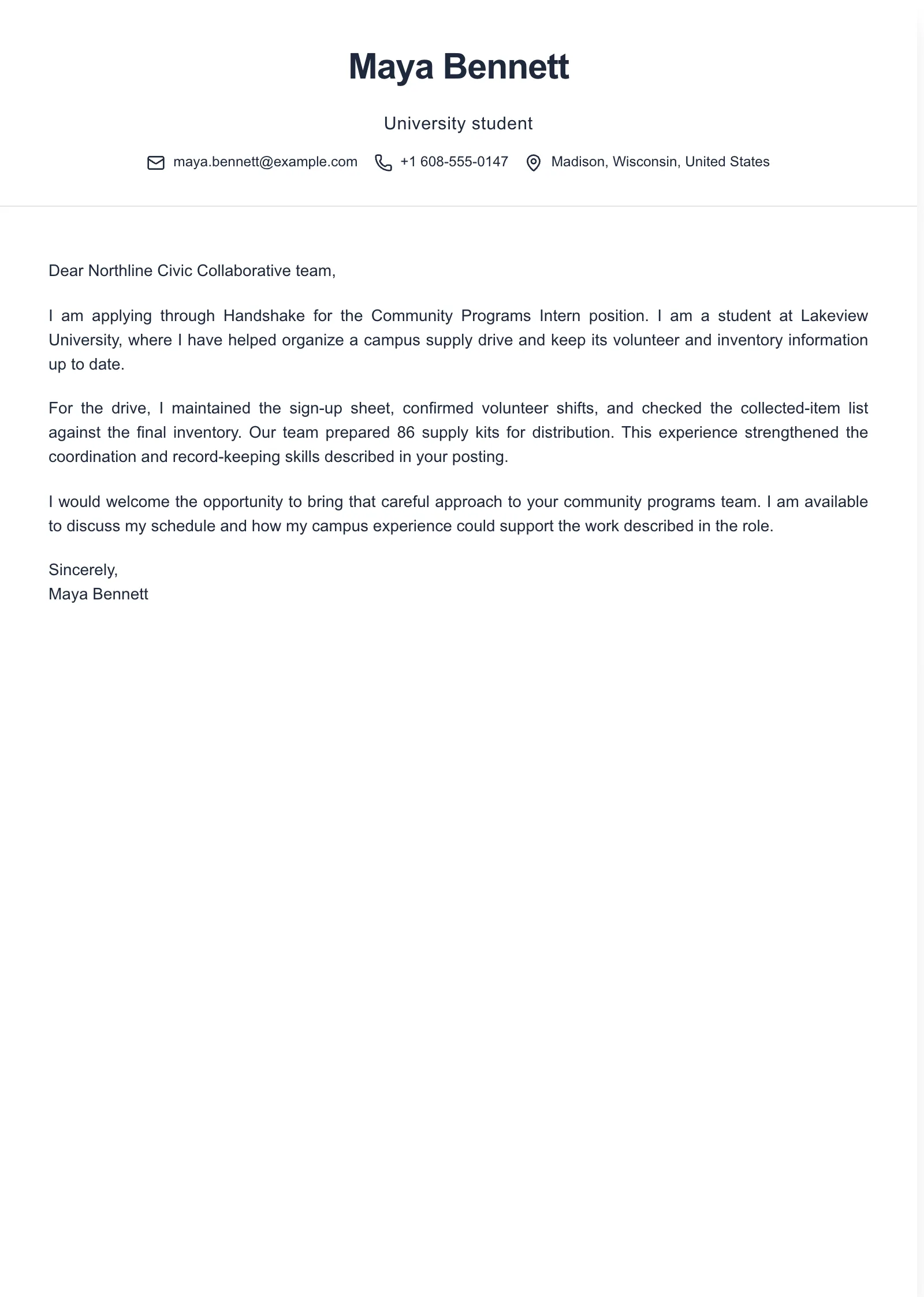
Example paragraphs
“I am applying for the [Job Title] position at [Company Name]. In [campus, course, volunteer, or work setting], I [specific relevant action], gaining experience with [requirement named in the posting].”
“For [specific project or responsibility], I [your action] and completed [verifiable result or deliverable]. This relates to [Job Title] because the posting asks for [specific duty or skill], which I practiced by [factual detail].”
“I would bring my experience with [relevant task] to [Company Name], particularly for [specific activity stated in the posting]. I am available [accurate dates or schedule, if requested] and would welcome a conversation about how my experience fits the role.”
Adapt these paragraphs rather than pasting them unchanged. Replace each bracket with an accurate detail relevant to the posting. In a short text field, answer the prompt and keep only the useful sentence or sentences; omit a greeting or sign-off if it does not fit. For an attachment, arrange relevant ideas into a coherent letter and follow the employer's format instructions. A campus example helps only when you explain what you personally did and how it relates to the role.
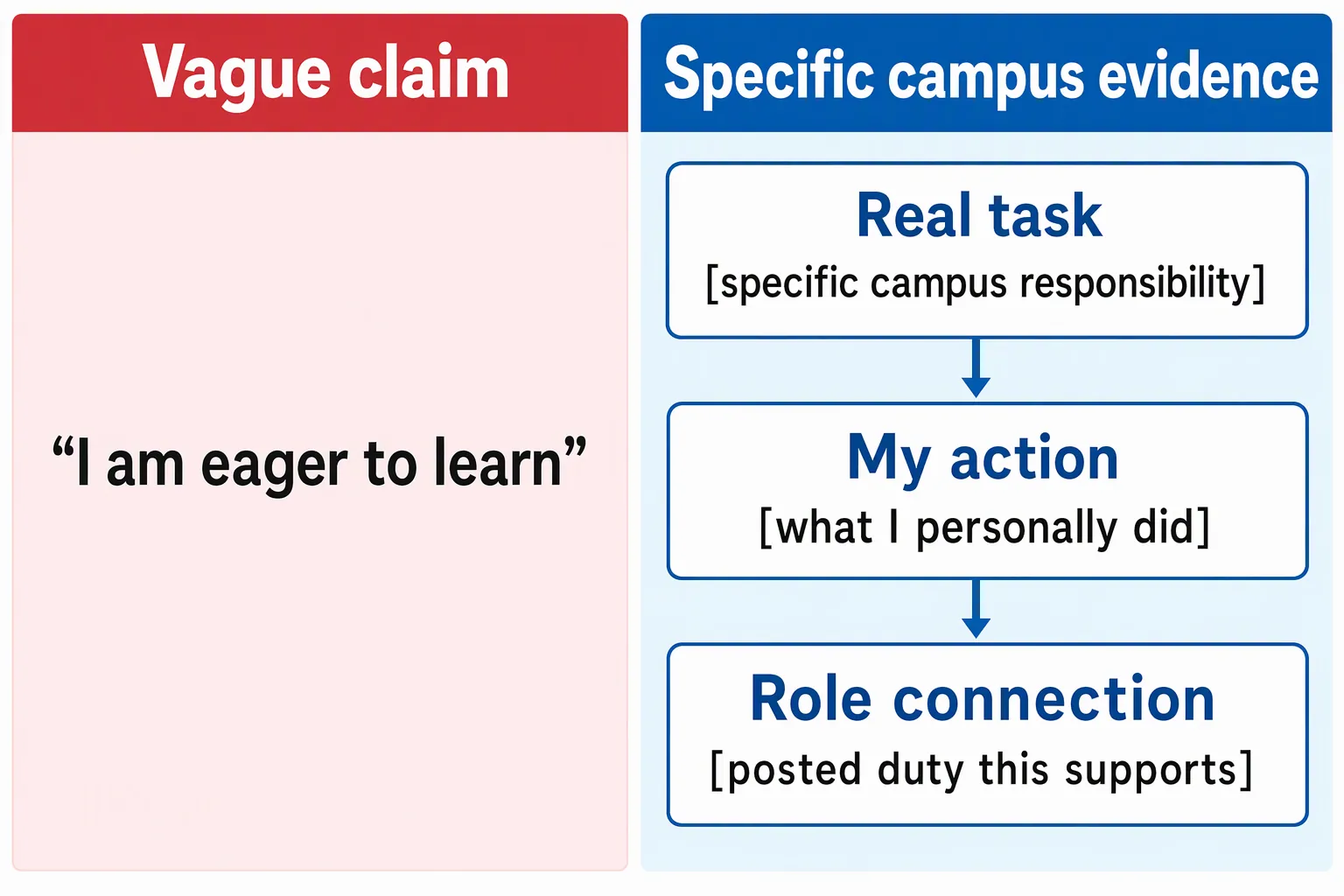
Common mistakes in Handshake cover letters
Assuming every posting uses the same fields
- What goes wrong
- A standard cover letter field cannot be assumed. A posting may request different documents or send applicants to another application.
- Better approach
- Check that posting's instructions first. Use the requested format and answer separate questions directly.
Pasting a full letter into a narrow prompt
- What goes wrong
- A greeting and general introduction can distract from a field that asks one specific question.
- Better approach
- Answer the displayed prompt in its own terms. Include only relevant points rather than forcing a full letter into the response.
Using enthusiasm instead of evidence
- What goes wrong
- Saying you are hardworking or excited does not show how your experience connects to the role.
- Better approach
- Name a real task, your contribution, and what you completed. Connect that evidence to a stated need without adding unsupported claims.
Skipping the upload review
- What goes wrong
- An uploaded document may display differently if the application converts it to PDF.
- Better approach
- Review the converted version when available. Check that text, contact details, paragraph breaks, and signature remain readable.
Frequently asked questions
- Does every Handshake application have a cover letter field?
- No. Application routes and required documents depend on the job posting. Some applications may continue on an employer's external site, so check the instructions for the specific role.
- How long should a Handshake cover letter be?
- Follow the displayed prompt and the employer's instructions. For a short text response, include only the points that answer the prompt. For an attached letter, focus on a relevant example and a brief close. There is no single length that fits every route.
- Should I paste my whole letter into a text field?
- Only if the field and its instructions suit a full letter. If it asks a specific question, answer that question instead of pasting a greeting and several paragraphs. If the application requests an attachment, prepare the requested document and review it after upload when a converted version is available.
- Can recent graduates use a campus-focused version?
- Yes. Describe your situation accurately. A recent graduate can draw on relevant campus, project, volunteer, or work experience without implying they are still enrolled.

Put this career change approach into practice
Choose sample data or build your own cover letter, then personalize it before you download.