
Introduction
Freelance work can provide relevant evidence for a full-time application, but a reader may not know what you owned, how you worked with others, or why you want an ongoing role. Your cover letter should make those points clear without presenting client projects as staff jobs.
Show both sides of the move: what your project experience demonstrates and why you want to contribute to one team. Focus on the work and employer, not on complaints about freelancing. This guide is about that specific transition, whether or not you are also changing occupations.
For a general paragraph order, see cover letter structure. Use the advice here to make freelance scope, confidentiality, and your reason for joining a team clear.
What to address directly
Project work can sound vague
- Hiring manager concern
- A list of client names or project titles may not show what you personally did. A reader may also find it difficult to distinguish your contribution from the client’s or other contributors’ work.
- What your letter should prove
- State the project’s purpose, your own responsibilities, who you worked with, and what you delivered. Use a verifiable outcome or deliverable, and distinguish your contribution from the client’s wider results.
Client confidentiality may limit detail
- Hiring manager concern
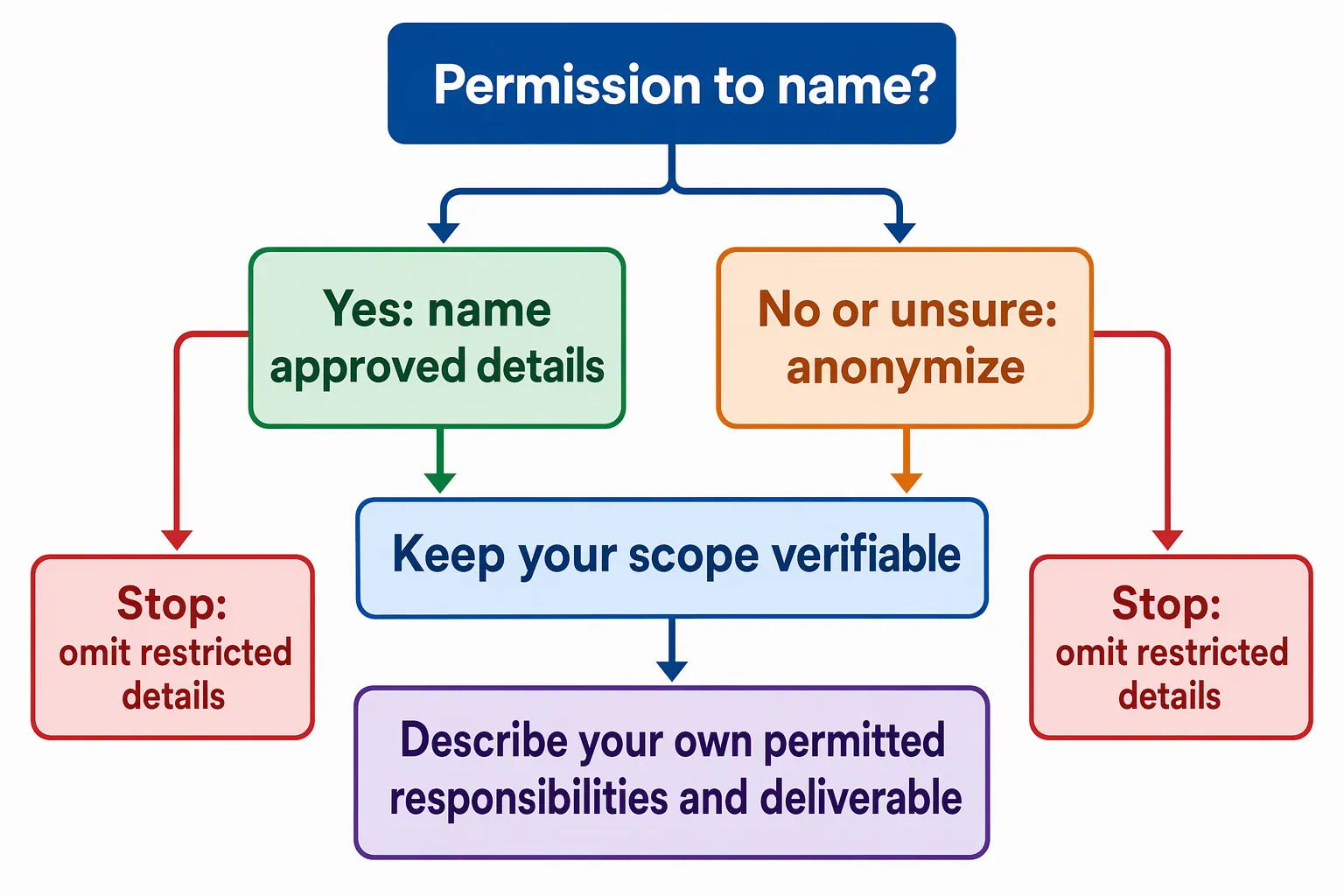
- You may not be able to identify a client, share internal material, or discuss certain project details. Omitting a name does not automatically make every other detail safe to disclose.
- What your letter should prove
- Check your agreement and request permission when needed. If you cannot name the client, use a broad, permitted description of the client type and project. Keep the focus on your own role and only disclose details you can accurately and appropriately share.
Your reason for joining may sound like a fallback
- Hiring manager concern
- Focusing only on wanting stability or being tired of finding clients may leave the reader unsure why you chose this role. It can also make the job sound like a substitute for your next contract.
- What your letter should prove
- Name a specific aspect of the work or team that interests you. Explain how you can contribute to shared priorities and ongoing work, while showing that you are ready to coordinate with colleagues and follow team processes.
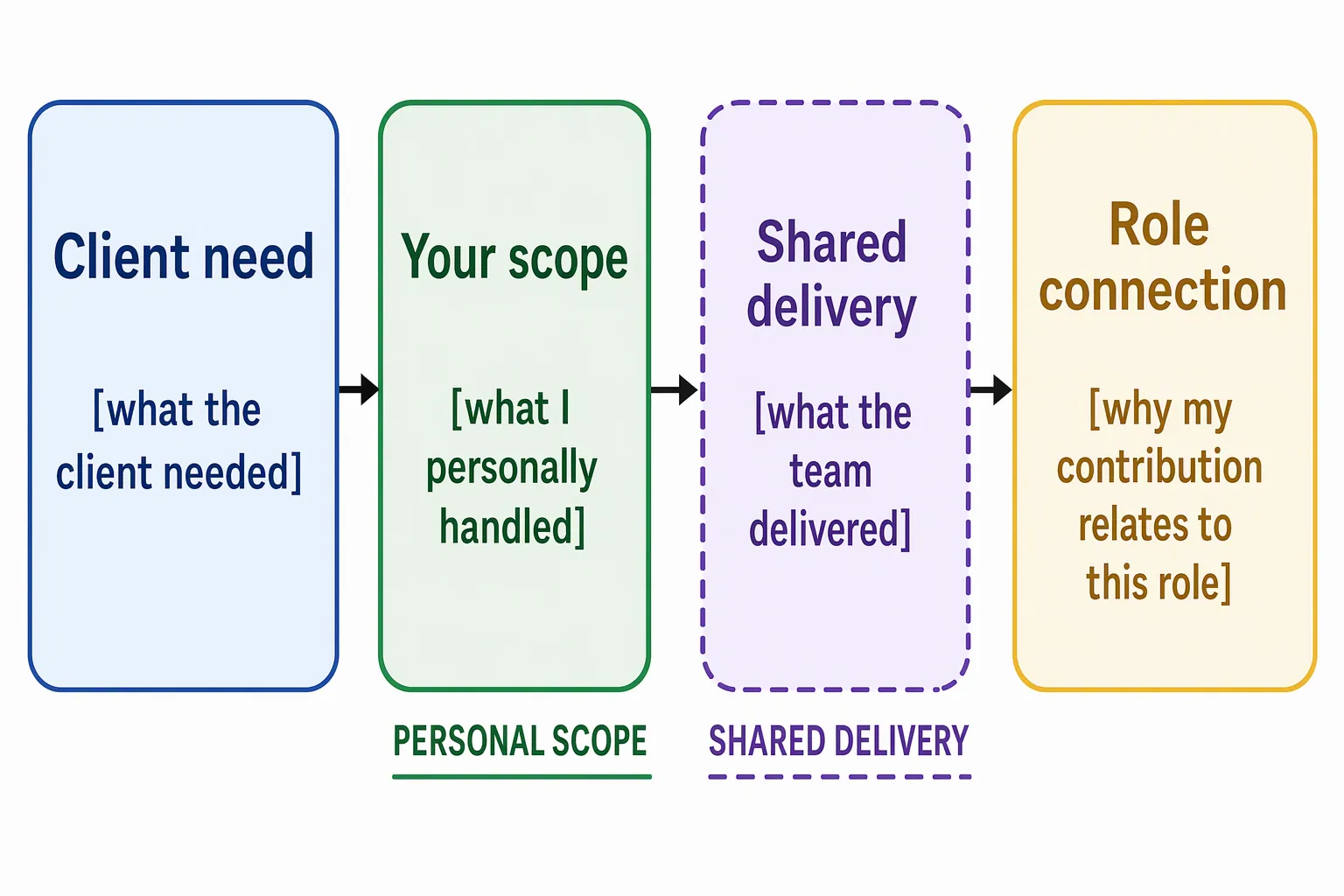
Structural approach: make the transition easy to follow
Build the letter around three connected points: relevant client work, evidence that carries over to the advertised role, and a specific reason for wanting to join an ongoing team. Choose one or two useful projects rather than trying to summarize every assignment. A typical letter can be concise, but length is guidance, not a universal requirement. Follow the employer’s instructions if they specify a format or limit.
For each project, separate the client’s context from your personal contribution. Identify your responsibilities, collaborators, and deliverables, then connect relevant evidence to the role. Describe the working arrangement accurately. Freelance work need not be relabeled as employment to show useful experience.
- 01
Choose a relevant project
Pick a project that connects to a need in the posting, not simply the project with the most recognizable client. Briefly explain what the client needed and the scope you handled. If several clients asked for similar work, you can describe the pattern without implying they were one employer.
- 02
Make your contribution clear
State what you were responsible for, who you worked with, and what you delivered. Separate your actions from decisions made by the client or other contributors. Use a real deliverable or result you can explain; do not invent numbers to make project work sound larger.
- 03
Decide what you can disclose
Review your agreement and seek permission where needed before naming a client or sharing project details. If the name is restricted, use a broad description such as [client type] and [project type] only if those details are safe to share. Leave out confidential figures and identifying combinations.
- 04
Explain why you want this team
Tie your interest to something concrete about the role, such as contributing to shared work over time. Show how habits developed through freelance projects can help, and make clear that you are ready to work within team priorities and processes.
A freelancer’s move into a full-time team
This fictional example shows how freelance project work can provide relevant evidence while explaining interest in an ongoing team role.
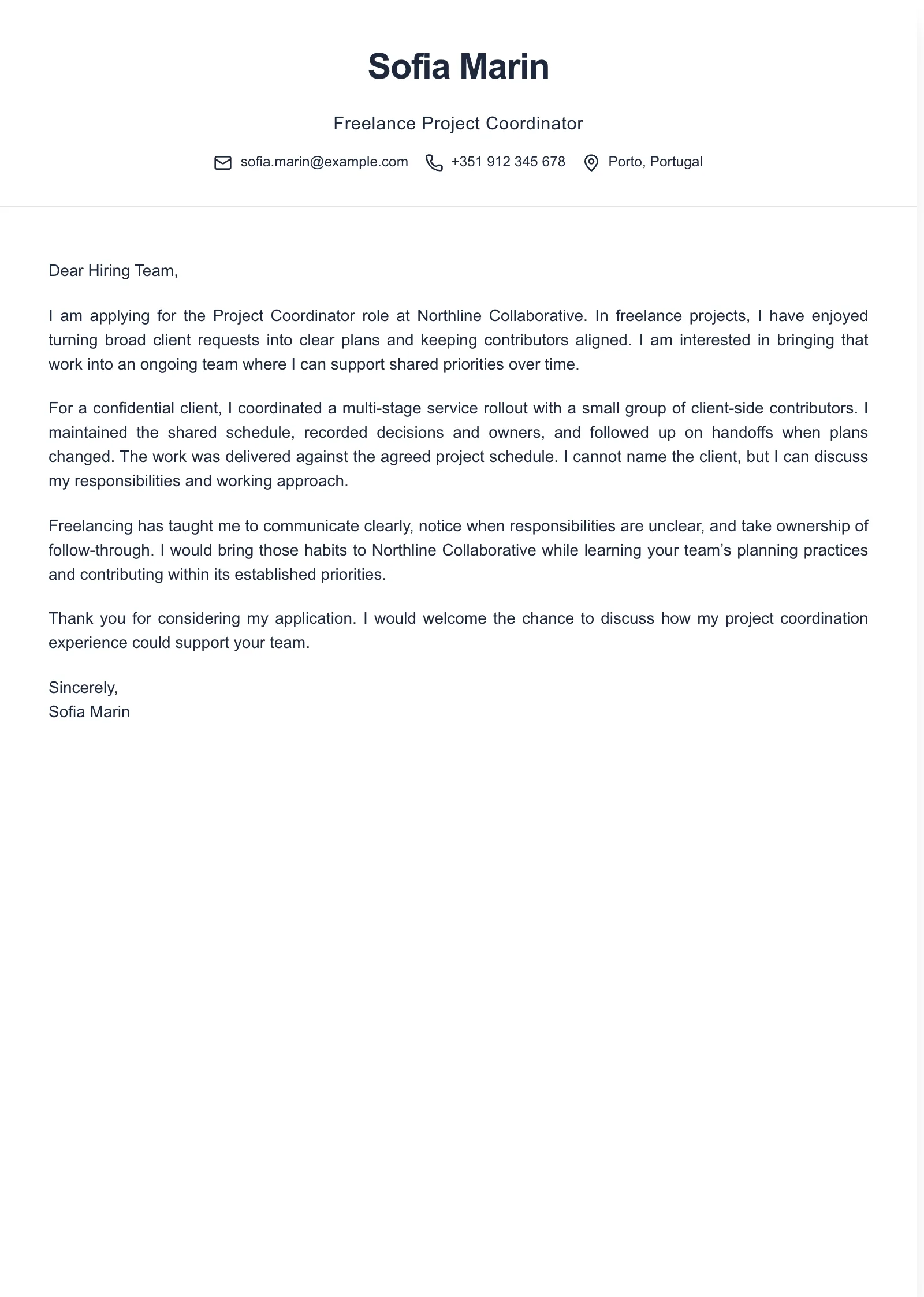
Example paragraphs
“I am applying for the [Job Title] role at [Company Name] because [specific reason this team or work interests you]. In freelance projects, I have [relevant responsibility], and I am interested in bringing that experience to ongoing work with a shared team.”
“For [client type or permitted client name], I was responsible for [your scope] using [relevant tools or method]. I worked with [other contributors] to deliver [verifiable deliverable or outcome]. That experience relates to [specific need in the Job Title posting] at [Company Name].”
“Freelance work has helped me develop [relevant working habit]. I am ready to apply it within [Company Name]’s ongoing priorities and coordinate with colleagues on [shared responsibility or outcome] in the [Job Title] role.”
Use these as separate paragraph models, not as a complete letter. Replace each bracket with a fact you can explain. If a client cannot be named, keep the description broad enough to protect them and specific enough to make your own responsibility understandable.
Freelance-to-full-time cover letter mistakes
Calling clients employers
- What goes wrong
- Listing a client as an employer can imply a staff relationship that did not exist.
- Better approach
- Label the work accurately as freelance, contract, or project work. Make the client relationship and your personal scope clear.
Sharing restricted client details
- What goes wrong
- A name, project description, or combination of details may identify a client even if you omit internal documents.
- Better approach
- Check what your agreement and client permission allow. If you are unsure, omit the detail rather than guessing. Keep any anonymized account accurate.
Making the role sound like another contract
- What goes wrong
- Focusing only on flexibility, variety, or the next assignment does not explain why you want to join this team.
- Better approach
- Connect your reason to the employer’s work and explain how you would contribute to ongoing shared priorities.
Inflating results or hiding the work arrangement
- What goes wrong
- Unsupported figures and unclear descriptions make it harder to tell what you actually delivered.
- Better approach
- Use a specific deliverable or substantiated result, identify your part, and describe the freelance arrangement honestly.
Frequently asked questions
- How do I explain moving from freelancing to a full-time job?
- Connect a specific reason for wanting an ongoing team role to evidence from your client work. You might value shared planning, continuing responsibility, or closer collaboration. Keep the explanation positive and focused on what you want to contribute, rather than criticizing freelance work.
- Does freelance work count as experience if I have never held a full-time job?
- You can present relevant freelance projects as work experience, even if you have not held a full-time job. Describe what you did, your responsibilities, and the tools or methods you used. Label the arrangement accurately and do not imply that a client employed you as staff.
- How should I mention freelance clients covered by an NDA?
- Check your agreement and get permission before naming a client or sharing nonpublic details. If you cannot identify the client, describe the client type, project scope, and your responsibilities only to the extent those details are permitted and accurate. If you are unsure what you can disclose, leave the detail out.
- Should I say that I am tired of freelancing?
- Avoid making frustration the main reason for applying. Explain what attracts you to this particular team and how your project-based experience can help you contribute to its ongoing work.

Put this career change approach into practice
Choose sample data or build your own cover letter, then personalize it before you download.