
Introduction
Writing a cover letter in a language you learned later can make a straightforward task feel harder. You may know what you want to say but worry that a direct translation, a grammar error, or an overly formal phrase will distract from your evidence. Complex English is not necessary to explain your fit. Use clear sentences, accurate details, and a direct connection between your experience and the role.
Start with the employer's instructions because expectations vary by organization, location, and application channel. Then choose simple wording that preserves your meaning. The cover letter structure guide explains what each part does; this page focuses on writing and checking those parts in English.
What to address directly
A direct translation can change how your meaning comes across
- Hiring manager concern
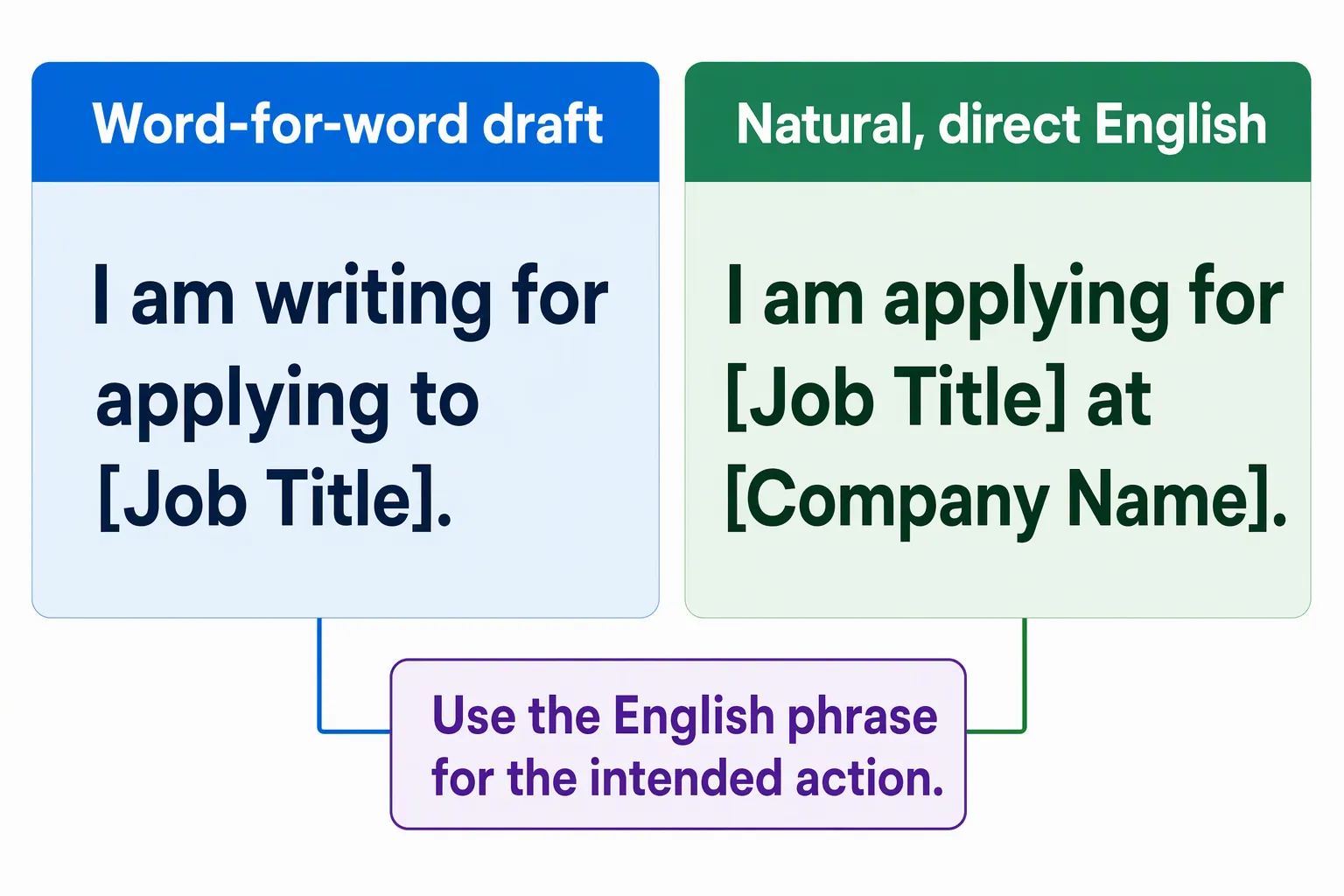
- A phrase that sounds persuasive or formal in one language may become long or unclear when translated word for word. For example, “I am writing for applying to [Job Title]” is less direct than simply naming the role.
- What your letter should prove
- Draft the message you intend, then express it in plain English: “I am applying for [Job Title] at [Company Name].” This illustrates one possible literal translation. It is not a pattern shared by all Turkish speakers or by speakers of any other language.
Grammar checks work best when you check one pattern at a time
- Hiring manager concern
- Articles, prepositions, verb tense, and singular or plural forms can all need attention. Which choices are challenging depends on the writer and the languages they use; there is no single set of errors shared by non-native English speakers.
- What your letter should prove
- Make separate proofreading passes. On one, check articles such as “a,” “an,” and “the.” On another, check verb tense and phrases such as “apply for a role” or “responsible for a project.” Read the complete sentence to check its meaning, not only whether a spell-check tool flags it.
Unnecessarily formal wording can hide your evidence
- Hiring manager concern
- Long phrases, uncommon synonyms, and several compliments can make it harder to find the example that shows what you can do. A phrase that feels suitably formal in another language may not have the same effect in English.
- What your letter should prove
- Use a courteous tone without trying to imitate a style you associate with formal writing in another language. State what you did, give a true detail, and connect it to the role. Avoid idioms unless you understand their meaning and know they fit the context.
Structural approach: give each paragraph one clear job
A simple structure gives you a clear place for each idea and makes it easier to review your meaning. Follow any requested format or questions in the posting. The cover letter opening examples offer options for a direct first sentence; the short paragraphs below are separate examples, not a complete letter.
- 01
Name the role and give a real reason
Start with [Job Title] and [Company Name]. Add one reason connected to the actual work, product, service, or stated priority in the posting. Avoid a broad claim such as “Your company is the best.” A specific reason is easier to express clearly and lets the reader see what caught your attention.
- 02
Choose one relevant example
Pick a task, result, or responsibility that relates to a need in the posting. Explain what you did and include a factual detail, such as the scope or outcome, if you can support it. Do not invent a metric to make your English sound more persuasive. One true example is more useful than several general claims.
- 03
Explain the connection
Add a short sentence explaining how your example relates to the work described. Use the employer's wording only when it accurately describes your experience. If English communication matters for the role, describe a truthful example of how you use English. Do not claim a language level or qualification you cannot support.
- 04
Edit for meaning, then for English
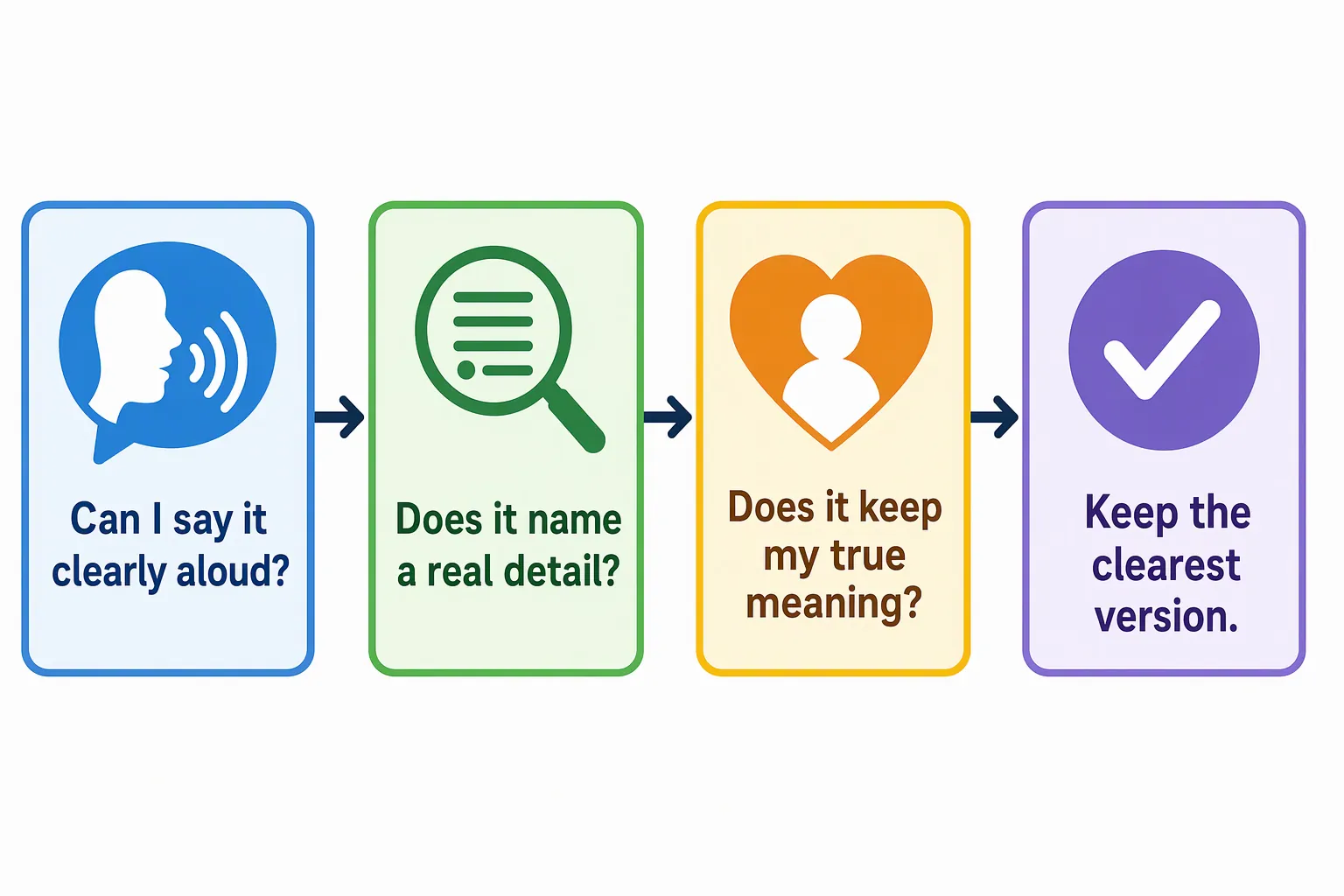
First check that your letter answers why you are applying and gives relevant evidence. Then check grammar, punctuation, and consistent spelling. Read it aloud or ask a trusted reader to identify unclear sentences. Keep your facts, job titles, and intended tone when accepting edits. Follow the employer's instructions for sign-off and document format.
A clear English cover letter in a simple format
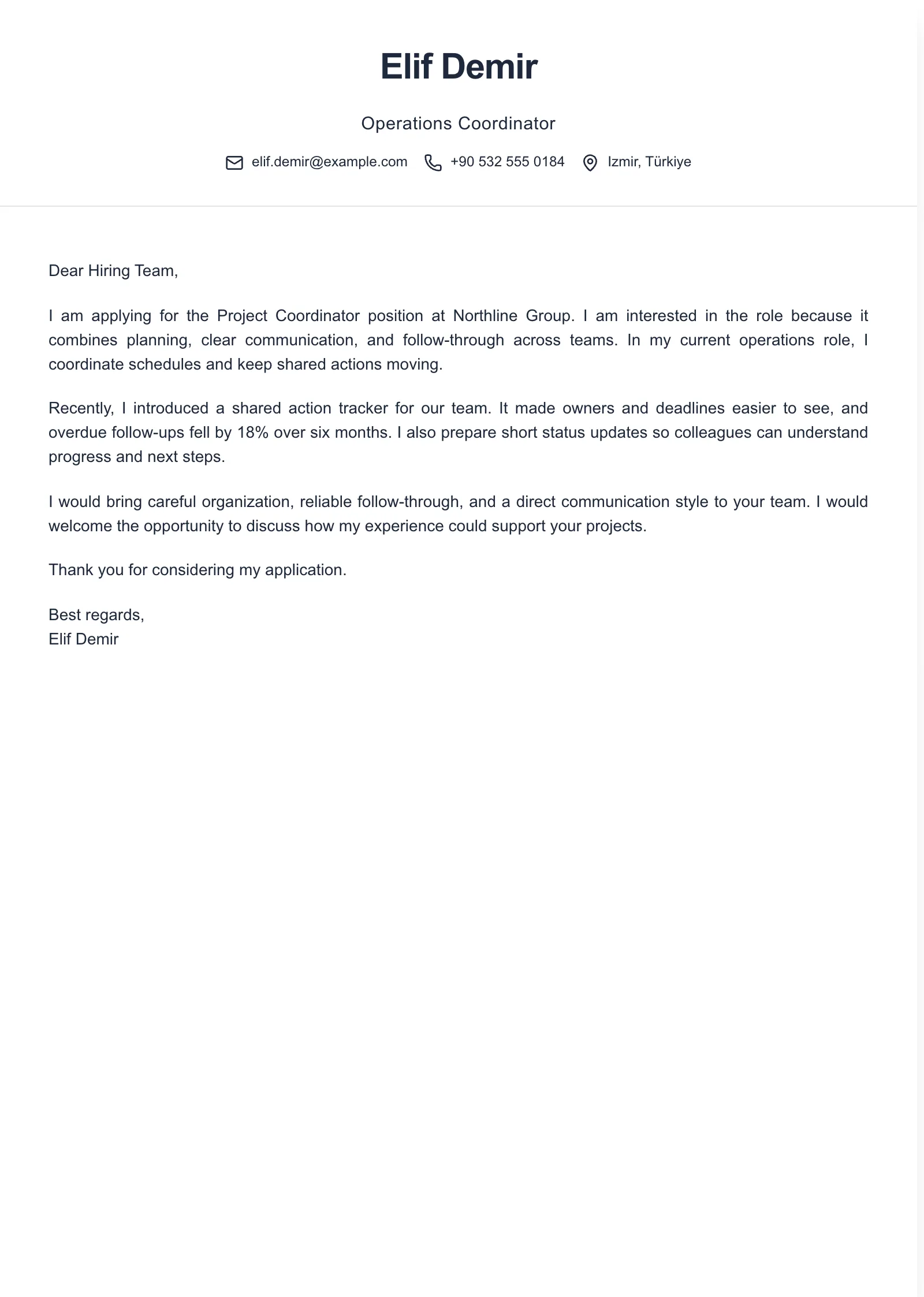
Preview a fictional example of a non-native English writer connecting relevant experience to a specific role with direct wording.
Example paragraphs
“I am applying for [Job Title] at [Company Name]. The role's focus on [specific responsibility] interests me because I have experience with [relevant task or area].”
“In my work at [Organization], I [specific action] to support [factual outcome or responsibility]. This experience relates to [requirement from the posting] because [clear connection].”
“I would welcome the opportunity to discuss how my experience with [relevant task] could support [Company Name]. Thank you for considering my application.”
Adapt the facts and wording to your own experience, not just the sentence pattern. Replace each bracketed phrase with a detail you can explain accurately. These are separate paragraph options, not a complete letter. Choose only what fits the posting, then check that each sentence communicates one clear idea. Read the result aloud. If a phrase is hard to say or explain, rewrite it with familiar words rather than making it more formal.
Common mistakes that make clear English harder to read
Translating a familiar phrase word for word
- What goes wrong
- A direct translation may sound unnatural in English or may not communicate the meaning you intend.
- Better approach
- Rewrite the sentence from its intended meaning. For example, use “I am applying for [Job Title]” rather than a longer phrase translated literally from another language.
Using complicated words to sound fluent
- What goes wrong
- Unfamiliar synonyms and idioms can make a genuine point harder to understand or change its tone.
- Better approach
- Choose precise words you know well. Clear wording lets the reader focus on your evidence; it does not require elaborate vocabulary.
Accepting edits without checking the facts
- What goes wrong
- A tool or reader may improve a sentence while changing a job title, responsibility, result, or intended meaning.
- Better approach
- Compare each suggested edit with your original facts. Check that dates, responsibilities, results, and qualifications remain accurate.
Assuming every employer uses the same conventions
- What goes wrong
- Spelling, greetings, tone, and requested documents can vary by employer, location, and application channel.
- Better approach
- Follow the posting and the employer's instructions. Use consistent spelling and a courteous tone, and do not add personal details simply because they appear in examples from another context.
Frequently asked questions
- Should I say that English is not my first language?
- In most applications, you do not need to mention it in the letter. Focus on the work, evidence, and communication skills relevant to the role. If the posting asks about your language ability, answer accurately in the application or the part of the letter where that information belongs.
- Should I use advanced words to sound more fluent?
- No. Choose the word that says what you mean. Clear, familiar language makes your evidence easier to follow and is less likely to sound unnatural than an idiom or an elaborate synonym.
- Can I use a translation tool or AI to check my letter?
- You can use a tool to suggest edits, but check each change against your intended meaning and facts. A tool may add claims, change your tone, or suggest wording that does not fit the employer. Review and approve the final version yourself.
- Should I use contractions in an English cover letter?
- Contracted and uncontracted forms can both be appropriate. Choose a consistent tone that fits the employer's instructions and the rest of your application. If you are unsure, use uncontracted forms such as “I am” rather than “I'm.”

Put this career change approach into practice
Choose sample data or build your own cover letter, then personalize it before you download.