
Introduction
This page is about whether to disclose your own disability in a cover letter, not about applying for a role that supports people with disabilities. You may choose to disclose, request an adjustment for the hiring process, do both, or keep disability information out of the letter. First decide what you want the reader to know at this stage.
In the United States, the EEOC guidance for job applicants says applicants generally do not need to disclose a disability in a cover letter. That guidance has a specific jurisdiction and scope. Do not assume it sets the rules for other locations. Also separate a request to participate in recruitment from evidence that you can do the job.
What to address directly
Whether disclosure is necessary
- Hiring manager concern
- You may worry that leaving out disability information makes your application incomplete, or that you must disclose before an employer can assess your qualifications.
- What your letter should prove
- For applicants in the United States, the EEOC guidance says disclosure in a cover letter is generally not required. Elsewhere, check the rules that apply rather than assuming the same answer. A cover letter can focus on your interest and relevant evidence without becoming a personal medical account.
How to make an adjustment request
- Hiring manager concern
- You may need an adjustment to take part in an application activity or interview, but be unsure whether to explain a diagnosis in the letter.
- What your letter should prove
- Identify the activity and the practical adjustment you are requesting. Follow the contact or process named in the posting or application. Do not assume that a cover letter is the right channel or that a brief request will answer every question the process may raise.
What personal detail belongs in the letter
- Hiring manager concern
- You may feel pressure to include a diagnosis, history, or explanation of your disability to make a request seem convincing.
- What your letter should prove
- Include only information that serves your purpose in the letter. You can keep a request practical and concise, then follow the stated process for any additional information. You do not need to turn the letter into a defense of your request or an account of your medical history.
Structural approach
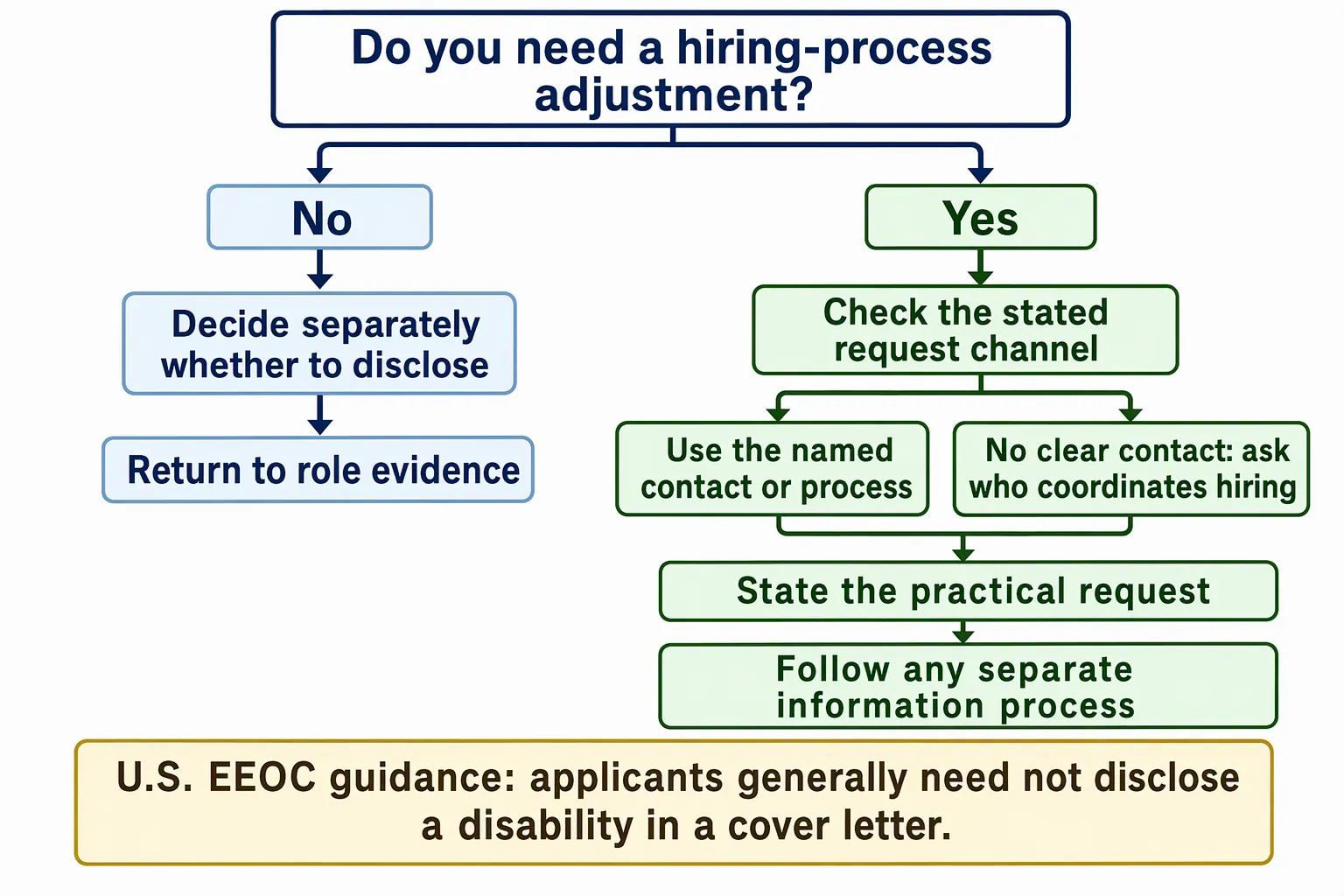
There is no special cover-letter format for disability disclosure. Keep the application focused on the role, and add a brief disclosure or adjustment request only if it serves your purpose. Use this sequence to choose what to include and where to send it.
- 01
Check the application instructions
Look for a named contact or process for adjustment requests, and note whether the application asks for information through a separate form. Use the route given for this application. Do not assume every employer uses the same channel.
- 02
Decide whether the letter needs to mention disability
If you do not need an adjustment during hiring, consider whether disclosure helps explain your interest or qualifications. If it does not, you can leave it out. If you do want to disclose, decide what you want the reader to understand rather than sharing details by default.
- 03
Make any request practical
Name the application activity and the adjustment you are requesting, using placeholders such as [specific interview adjustment] and [interview activity]. If you also choose to disclose, keep that statement brief. Follow the employer's process for any further discussion.
- 04
Return to evidence and review
Connect one accurate example to [Job Title] at [Company Name]. Before sending, check that the request is directed to the appropriate contact, the letter contains no unnecessary personal detail, and you have followed any separate application instructions.
Disability disclosure cover letter example
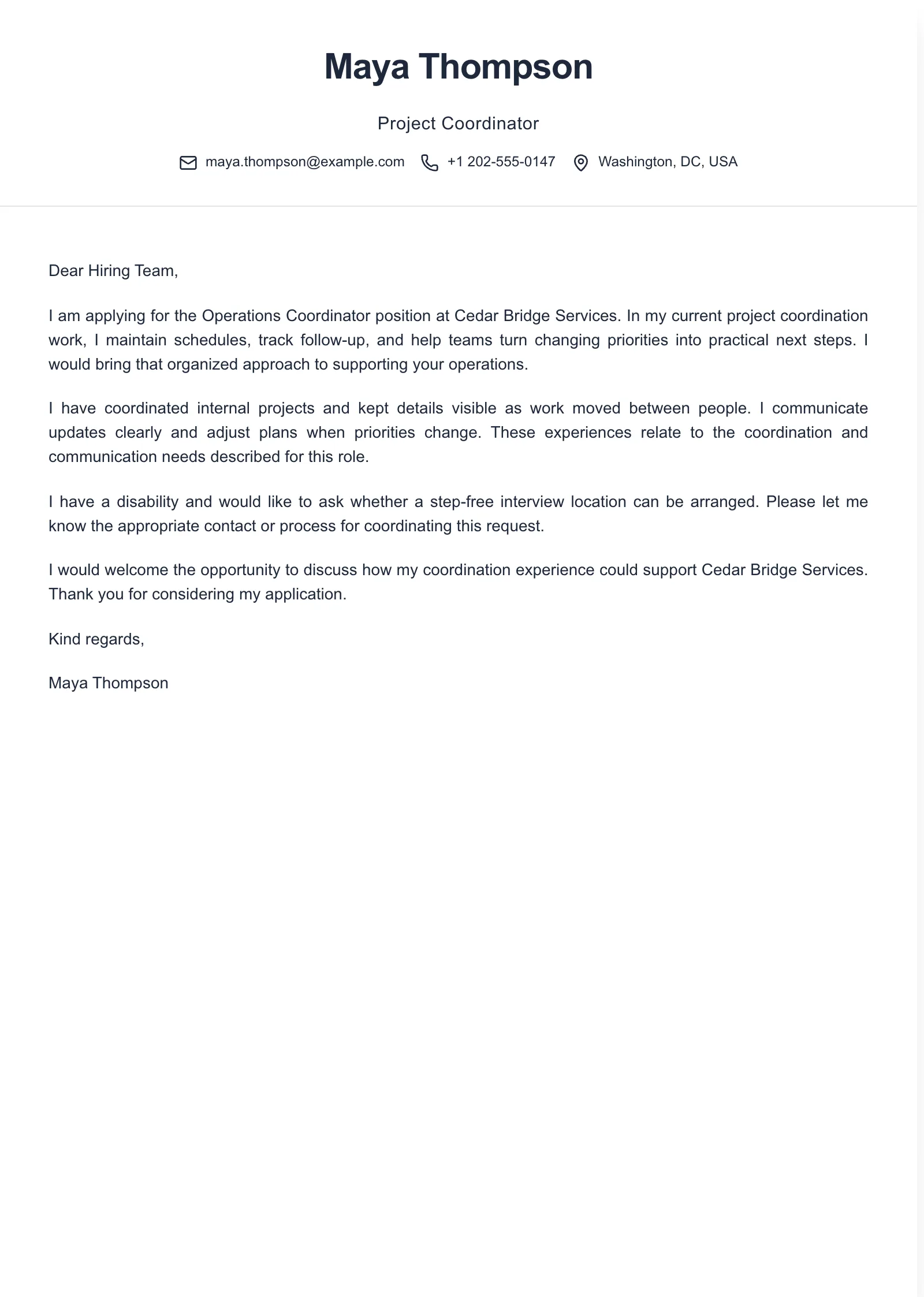
A fictional example that briefly discloses a disability, makes a practical interview adjustment request, and connects relevant experience to the role.
Example paragraphs
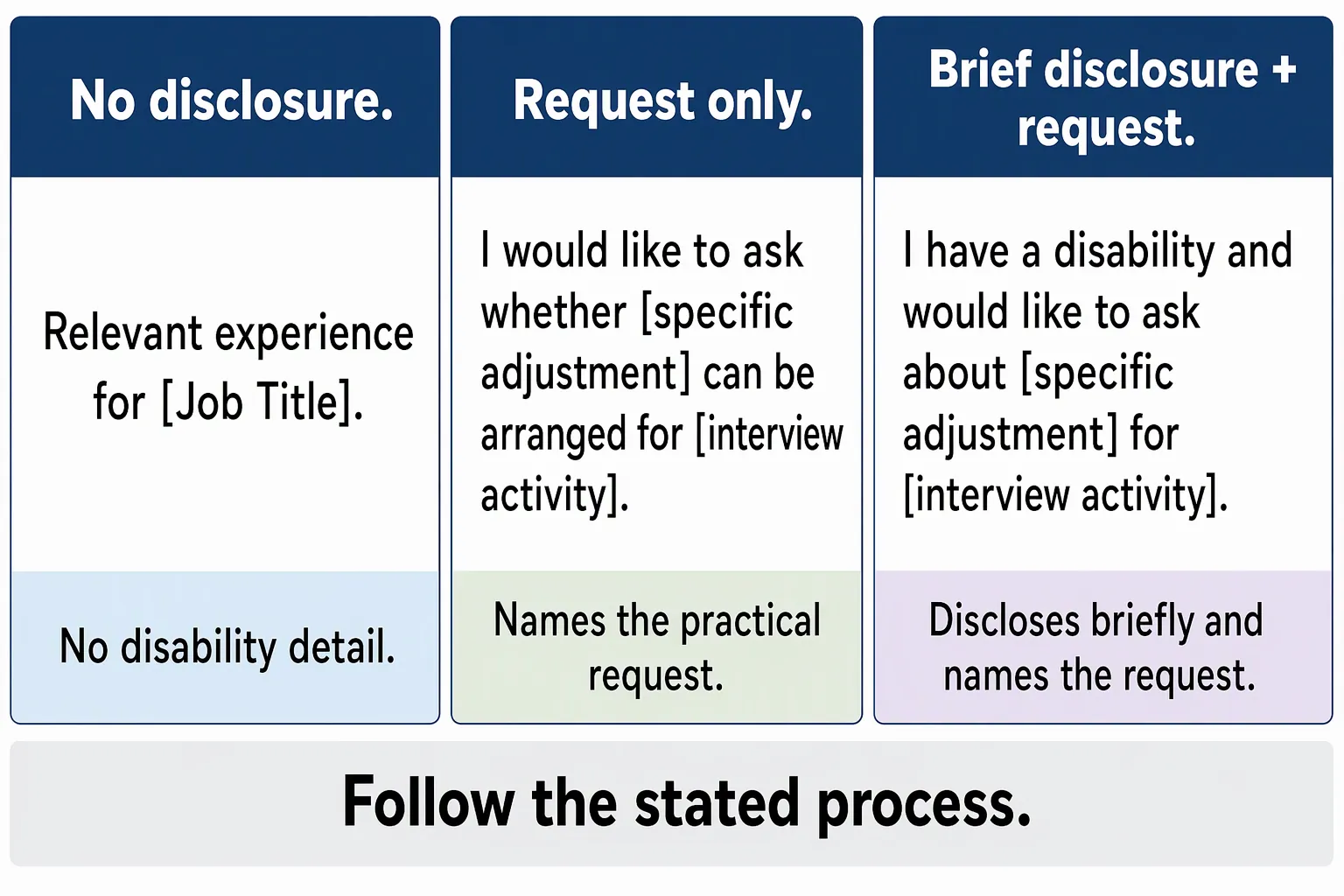
“My experience with [relevant project, task, or result] relates to the [Job Title] position at [Company Name]. I would welcome the opportunity to discuss how that experience could support [specific job requirement].”
“For [interview activity], I would like to ask whether [specific interview adjustment] can be arranged. Please let me know the appropriate contact or process for coordinating this request.”
“I have a disability and would like to ask about [specific adjustment] for [interview activity]. I can follow the stated process to discuss practical arrangements.”
Choose the wording that matches your purpose; these are short paragraphs, not complete letters. Replace bracketed text with accurate details. If the application names a separate route for adjustment requests, use that route instead of relying on a paragraph in the letter.
Scenario-specific mistakes
Treating one jurisdiction's guidance as universal
- What goes wrong
- The letter assumes that applicants everywhere follow the same disclosure rule.
- Better approach
- Use official guidance for your location. The EEOC statement in this guide is specific to the United States and its scope.
Including more medical detail than the letter needs
- What goes wrong
- A diagnosis or personal history takes over the letter without helping the reader understand the request or your qualifications.
- Better approach
- Keep the letter focused on your purpose. State the practical request if needed, and follow the appropriate process for any further discussion.
Assuming the request belongs in the cover letter
- What goes wrong
- The request is buried in an application document even though the posting directs applicants to another contact or process.
- Better approach
- Check the instructions first and use the stated route. If the contact is unclear, ask who coordinates hiring.
Letting the disclosure replace job evidence
- What goes wrong
- The letter explains personal information but gives the reader no relevant reason to consider your application.
- Better approach
- Keep any disclosure or request concise, then connect an accurate example to a requirement of [Job Title].
Frequently asked questions
- Do I have to disclose a disability in my cover letter?
- In the United States, the EEOC says applicants generally do not need to disclose a disability in a cover letter. That guidance applies to its US context and does not establish the rule everywhere. Check the official guidance for your location; this page is general information, not legal advice.
- Can I request an interview adjustment without naming my disability?
- You can describe the practical adjustment you are requesting, but do not assume that no further information will be needed. The EEOC treats an adjustment request to participate in recruitment as separate from explaining your qualifications. Follow the employer's stated process and the rules that apply to your situation.
- Should I mention a disability if I do not need an adjustment during hiring?
- You can keep personal information out of the letter if it does not serve your purpose. Use the space to explain your interest and relevant evidence. If you choose to disclose, keep the information relevant to what you want the reader to understand.
- What if an application asks about disability or an adjustment?
- Read the wording and instructions carefully, and distinguish a request to participate in recruitment from questions about qualifications. Do not ignore a required question or assume that one rule applies in every location. If you are unsure how to respond, consult relevant official guidance or a qualified adviser.

Put this career change approach into practice
Choose sample data or build your own cover letter, then personalize it before you download.