
Introduction
A sabbatical is commonly used to describe a planned break from work, but people use the label in different ways. For your cover letter, focus on the facts: whether you chose the break, its actual dates or current status, any useful context, and your plans to return. Do not describe a break as planned if it was not.
This task overlaps with explaining an employment gap: both call for an accurate timeline and selective context. This page focuses on the requested situation of a chosen career break and how to describe it, including when the original timing changed. See our guidance on explaining an employment gap for broader situations. You do not have to disclose private details or claim the break improved you.
What to address directly
Will the timeline be clear?
- Hiring manager concern
- A gap between roles can leave the dates or your current plans unclear, especially if the break lasted longer than expected.
- What your letter should prove
- Give the month and year the break began and ended when you know both. If it is ongoing, say so and give an expected return date only if you can confirm it. If your plan changed, use the actual timeline rather than implying the break ended as scheduled.
Do I need to prove I stayed productive?
- Hiring manager concern
- It can feel as if every month away needs a course, project, or measurable result.
- What your letter should prove
- You do not need to turn personal time into professional work. If you completed a course, volunteered, travelled, cared for someone, or pursued another activity, mention it only if it is true and useful here. If nothing from the break supports your application, leave it out.
How can I make my return plan clear?
- Hiring manager concern
- An explanation of the past may not tell the reader what you are ready to do now.
- What your letter should prove
- Connect a relevant strength or example from your experience to this opportunity, then state that you are ready to return. Give an availability date or schedule only if you know it and it is relevant to the application.
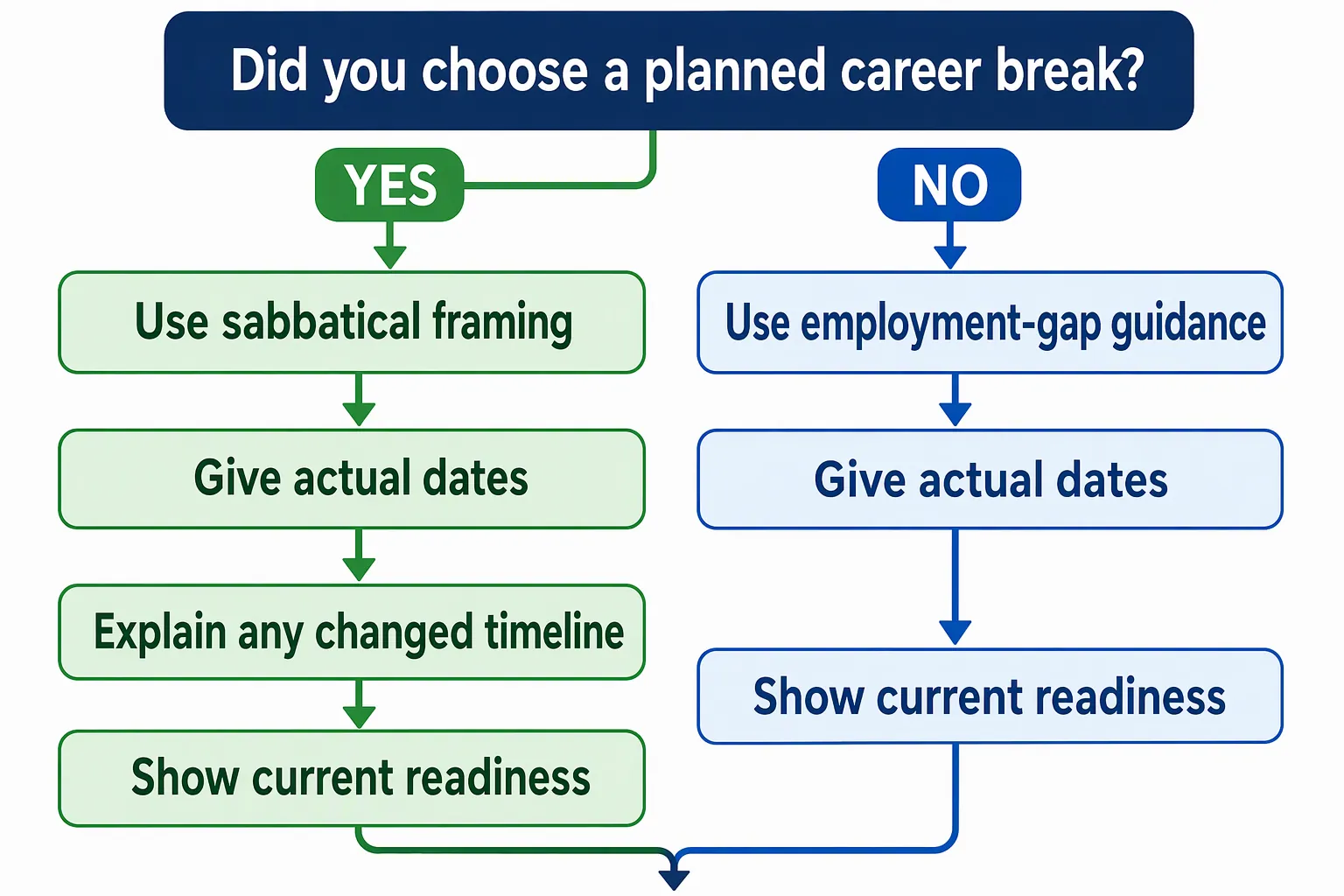
Structural approach: explain the break and your return
Keep the explanation focused so it gives context without taking over the letter. A few sentences can be a useful drafting target, not a universal length rule. Follow the employer's instructions if they ask for a particular detail or format.
Build the explanation around the actual timeline, optional context, and your present fit for the role. The break does not have to contain professional activity. If the original end date changed, say what happened accurately instead of trying to make the timeline sound more definite.
- 01
State the actual timeline
Use the dates you can verify, such as “I took a planned sabbatical from [month and year] to [month and year].” If the break is ongoing, say that. Do not imply that an expected date is certain.
- 02
Add brief context only if useful
Give a short, truthful reason if it helps explain your choice or changed plans. Keep family, health, travel, or other personal details at the level you are comfortable sharing. You can describe the break as personal without adding details.
- 03
Choose relevant evidence, if you have it
Mention one real activity, course, volunteer commitment, or recent example only when it supports your application. Say what you actually did and why it connects. If the break was mainly personal, do not invent an achievement to fill this step.
- 04
Bring the focus back to the role
Name a relevant strength or example from your experience, explain your interest in this opportunity, and state your readiness to return. Include an availability date only when it is accurate and useful.
A complete example after a planned sabbatical
Preview a fictional cover letter that gives the actual sabbatical timeline, relevant context, and a clear return to work.
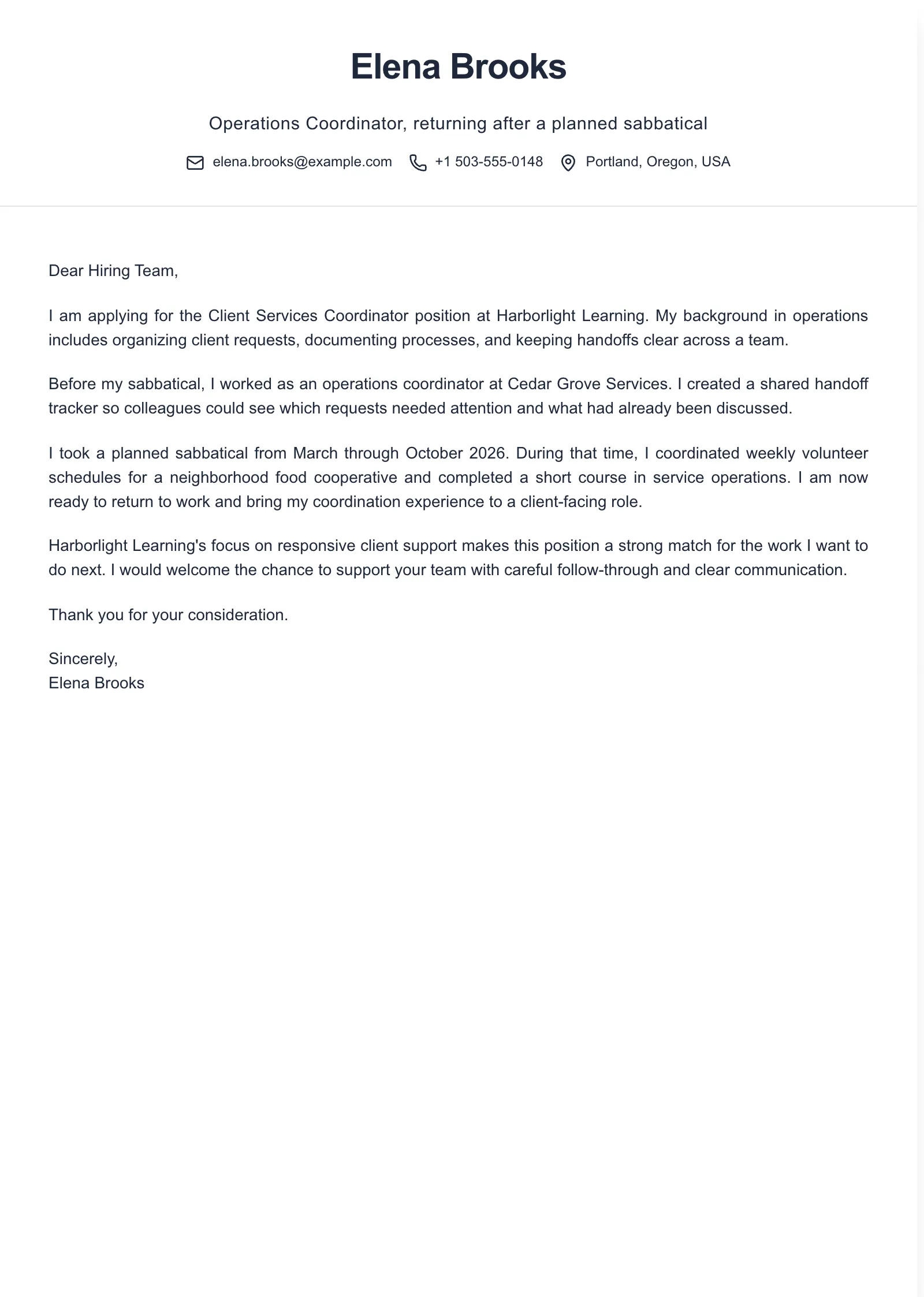
Example paragraphs
“I took a planned sabbatical from [month and year] to [month and year] for [brief, truthful reason or purpose]. I am now ready to return to work as a [Job Title].”
“During that period, I [specific activity you actually completed]. This gave me experience with [relevant skill or learning], which I would bring to the [Job Title] role at [Company Name].”
“I am ready to return to [type of work or responsibility] and am interested in [specific, verified reason the role fits]. My experience with [relevant evidence from a previous role] would help me contribute as a [Job Title].”
These are separate paragraphs to adapt, not a complete letter. Use only details that are true for you. The timeline comes first; context and an activity are optional. End by connecting your experience and readiness to this specific opportunity. Keep dates consistent with your resume and application, and follow any direct questions or instructions from the employer.
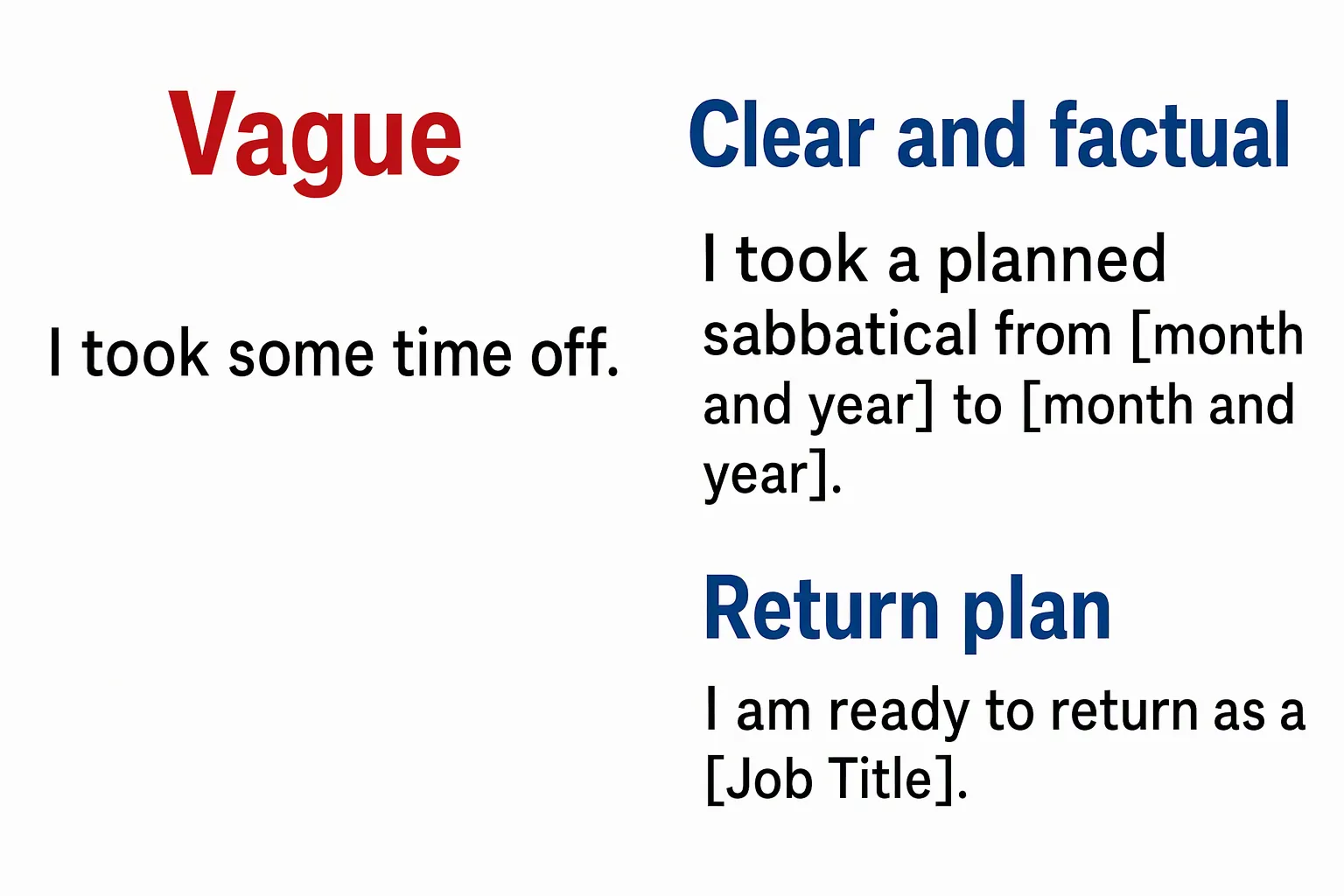
Common mistakes when explaining a sabbatical
Making the original dates sound final
- What goes wrong
- If your plans changed, describing the break as ending on its expected date gives an inaccurate timeline.
- Better approach
- State the actual dates or that the break is ongoing. Briefly explain a change only if it adds useful context, and give a return date only when you can confirm it.
Sharing more personal detail than you want to
- What goes wrong
- A long account of family, health, travel, or finances can distract from the application and disclose information that is not needed here.
- Better approach
- Choose a level of detail that feels appropriate. A short, truthful description such as “a planned personal sabbatical” may be enough; do not disclose private information to justify the break.
Presenting personal activity as employment
- What goes wrong
- Calling volunteering, study, or a personal project a job can misrepresent your work history.
- Better approach
- Name the activity accurately and describe your contribution truthfully. Keep employment dates consistent across the letter, resume, and application form.
Explaining the break but not your return
- What goes wrong
- A detailed account of time away can leave little room for your relevant experience and present plans.
- Better approach
- Give the timeline and any useful context briefly. Then connect a relevant strength or example to the opportunity and state your readiness to return.
Frequently asked questions
- Do I need to explain why I took a sabbatical?
- There is no single explanation that fits every application. You can give a brief, truthful reason if it helps explain your plans, but you do not need to share private details unless the employer asks for specific information. Keep the actual timeline clear.
- Should I include everything I did during my sabbatical?
- No. Mention an activity only if it is true and helps explain the period or connect your experience to the role. You do not need to turn personal time into a project list or present every week as productive.
- How do I explain a sabbatical that lasted longer than planned?
- Use the actual dates and describe the change honestly. You can briefly explain that the original plan changed if that context is useful. Then clarify your present plans and readiness without presenting the break as having ended on its original schedule.
- Should I put my sabbatical on my resume too?
- Follow the application instructions and keep dates consistent across your resume, cover letter, and application form. A simple entry may help make your timeline clear, but you do not have to list private activities.

Put this career change approach into practice
Choose sample data or build your own cover letter, then personalize it before you download.